

Parada piękności luty 1949 – An Artistic Journey Into Glamour And Intrigue
Wstęp: A Glimpse into the Past
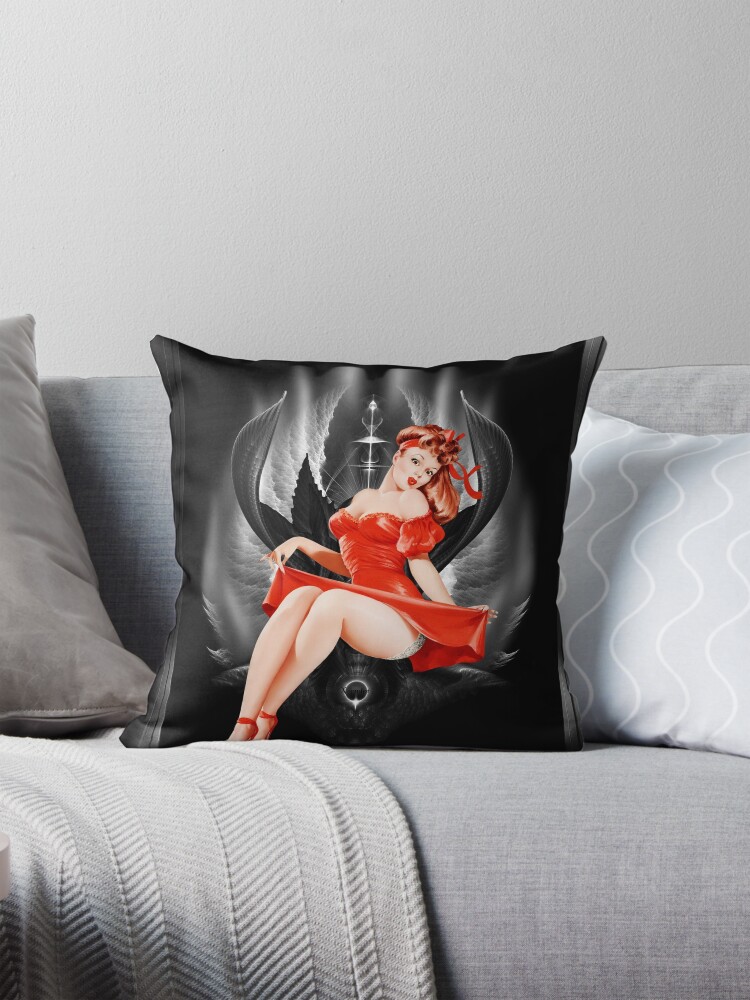
Petera Dribena Parada piękności luty 1949 captures an iconic moment of American glamour and vintage allure, bringing together the bold and seductive spirit of mid-20th-century pin-up art. Known for his mastery of the pin-up genre, Driben’s work was celebrated for its sophisticated yet playful depictions of women, often embracing a combination of sensuality and class. Ta grafika, malowane w 1949, exemplifies the refined yet bold portrayal of feminine beauty through a strategic balance of color, Formularz, i skład.
Spis treści
Główny temat: The Femme Fatale in a Red Dress
At the heart of the composition is the captivating figure of a woman, portrayed in a seductive and confident pose. She sits with one leg poised delicately over the other, her body turned slightly to the side, yet her gaze directly confronts the viewer. The figure exudes a sense of both allure and power, her crimson dress billowing slightly as if caught in a breeze, emphasizing her voluptuous form. Sukienka, with its off-the-shoulder cut, accentuates her graceful, feminine curves, while the bright red hue suggests passion and vitality.
Her expression is one of mischievous charm, a classic hallmark of Driben’s subjects, whose gaze often invites curiosity and intrigue. The woman’s red heels match her dress, a visual cue that reinforces her boldness and confidence. Na jej głowie, starannie wystylizowana masa fal i loków otacza jej twarz, ze wstążką dodającą zabawnej elegancji. Dbałość artystki o szczegóły widać w jej delikatnych rysach – wydatnych kościach policzkowych, delikatny uśmiech, i lekko uniesione brwi – tworząc harmonijną równowagę piękna i wdzięku.
Jej poza sugeruje również subtelną narrację. Opierając się lekko na jej udzie, jedna ręka trzyma długo, smukły przedmiot (może uchwyt na papierosy), dodając poczucie wyrafinowania i ponadczasowego uroku epoki.
Otaczające elementy: The Shadowed Background and Wings
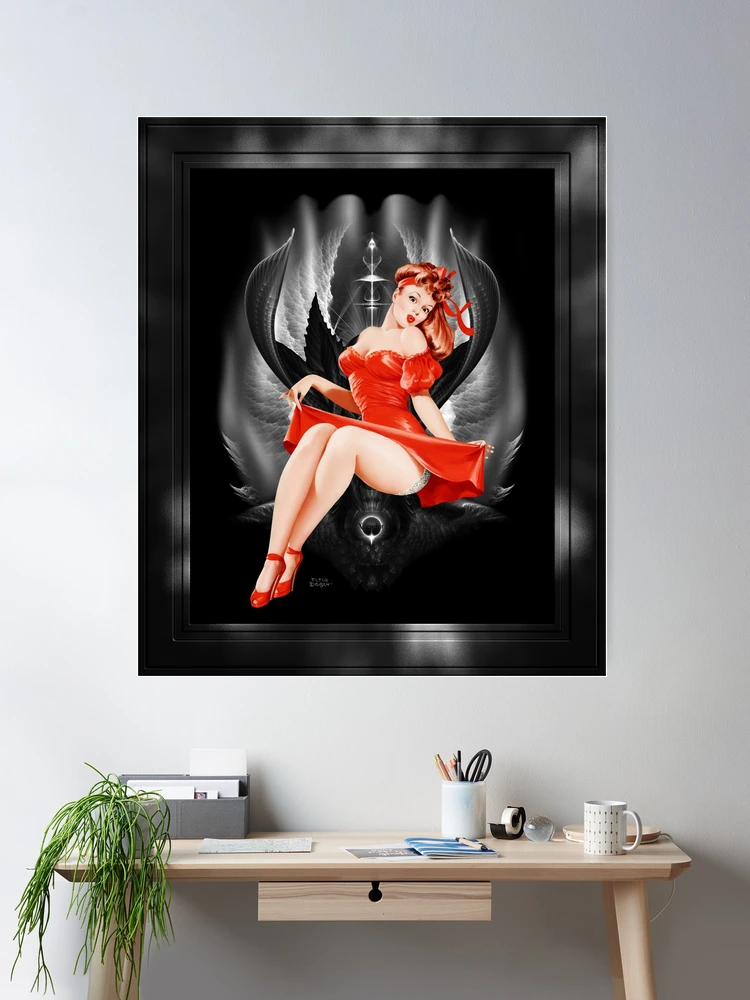
Tło dzieła jest równie fascynujące jak sama postać. Ciemny, niemal eteryczne cienie wyłaniają się z obu stron głównego bohatera, tworząc coś, co wygląda na skrzydła anioła lub ptaka. Te ciemne, contrasting elements not only serve to frame the woman but also add a dramatic sense of mystery and power. The wings are smooth and stylized, echoing the fashion trends of the time, which often included dramatic statements in art and design. These wings lend an air of fantasy and exaggerate the beauty of the subject, providing a striking contrast against the vivid red of her dress.
The composition is completed by a soft play of light that surrounds the figure, accentuating the curves of her body and the flowing fabric of her dress. The darker tones in the wings and background provide an aura of tension, as if the woman is both part of and removed from the mysterious world around her. There is an underlying sense of both elegance and danger, a reflection of the femme fatale archetype.
Materiały i techniki: Masterful Illustration
Peter Driben’s style is rooted in the traditions of commercial illustration, where detail and glamour are paramount. His use of bold, clean lines and the careful attention to proportions gives the figure a lifelike quality that remains faithful to the conventions of pin-up art. The application of colors is deliberate and evocative; the rich red of the dress contrasts starkly against the dark, muted background. Driben’s use of highlights and shadowing on the woman’s skin creates depth, emphasizing her form and the play of light across her body.
The technique is characterized by smooth gradations of light and dark, which give a three-dimensional quality to the figure. The background is softer, with fewer details, placing all focus on the central subject. This simplicity of the background serves to highlight the intricate details of the woman’s pose, facial features, i strój.
Styl: Pin-Up Art at Its Peak
This piece embodies the pinnacle of mid-20th-century pin-up art. It was during this period that pin-up art became a symbol of youthful exuberance, seduction, and American culture. The stylistic approach employed by Driben in Parada piękności luty 1949 is rich in its visual appeal, with a heightened sense of femininity, zaufanie, i urok. His figures, though idealized, are imbued with personality, suggesting that these women are not just objects of beauty, but active participants in their narratives.
Driben’s work often blurred the lines between commercial art and fine art, appealing to both mass audiences and collectors. Jego pin-upowe modele, z ich urzekającymi, ale dającymi się utożsamić cechami, miały celebrować zmysłowość kobiecej sylwetki, pozostając jednocześnie w granicach gustu i stylu.
Temat i nastrój: Seduction, Zaufanie, and Power
Głównym tematem Parada piękności luty 1949 to zmysłowość połączona z cichą, ale niezaprzeczalną siłą. Postawa i wyraz twarzy kobiety sugerują silną osobę — osobę w pełni świadomą jej piękna i mocy, jaką skrywa.. W jej postawie widać pewną żartobliwość, podkreślone subtelnymi szczegółami ułożenia jej dłoni i wdzięcznym sposobem, w jaki siedzi. Za nią skrzydła, choć ciemno, są eleganckie, nadając kompozycji niemal mistyczny charakter, który wzmacnia ideę piękna jako czegoś transcendentnego i nieziemskiego.
Nastrój utworu jest uwodzicielski i ponętny, ale jednocześnie przesiąknięty poczuciem tajemnicy. Bezpośrednie spojrzenie postaci przyciąga widza, jednak otaczające cienie i surrealistyczne skrzydła pozostawiają utrzymujące się poczucie dwuznaczności. Czy kobieta jest aniołem czy kusicielką, postać mityczną lub rzeczywistość z krwi i kości? To napięcie pomiędzy tym, co eteryczne, a tym, co uziemione, odgrywa znaczącą rolę w ogólnej atmosferze dzieła.
Wniosek: An Iconic Representation of 1940s Glamour
Petera Dribena Parada piękności luty 1949 pozostaje kultowym przedstawieniem przepychu połowy XX wieku i fascynacji zmysłowością, piękno, i fantazja. Poprzez użycie odważnego koloru, kompozycja dramatyczna, i dbałość o szczegóły, Driben stworzył dzieło, które nadal przywołuje urok i moc modelu pin-up. Jego połączenie elegancji, czar, and mysterious strength makes this artwork a lasting testament to the timeless appeal of the feminine form as depicted in the art of the 1940s.
O dziele artystycznym
Parada piękności luty 1949 przez amerykańskiego malarza Peter Driben (1903 – 1968); malarz, ilustrator i jeden z najbardziej płodnych artystów pin-up lat 40. i 50. XX wieku.
To zabawny kawałek z lutego 1949 Edition of Beauty Parade Magazine, which shows an attractive redhead, with red lipstick in mid length off shoulder red dress, a red bow bandana in her hair that is also wearing red strap high heel shoes.
Originally she was seated on a greyish-blue decorative pouf and was set against a black background; but decided to replace those and add in my fractal art composition portrait Taidushan Sai The Talons Of Time, to change the look as if she may be in for some enticing hot water.
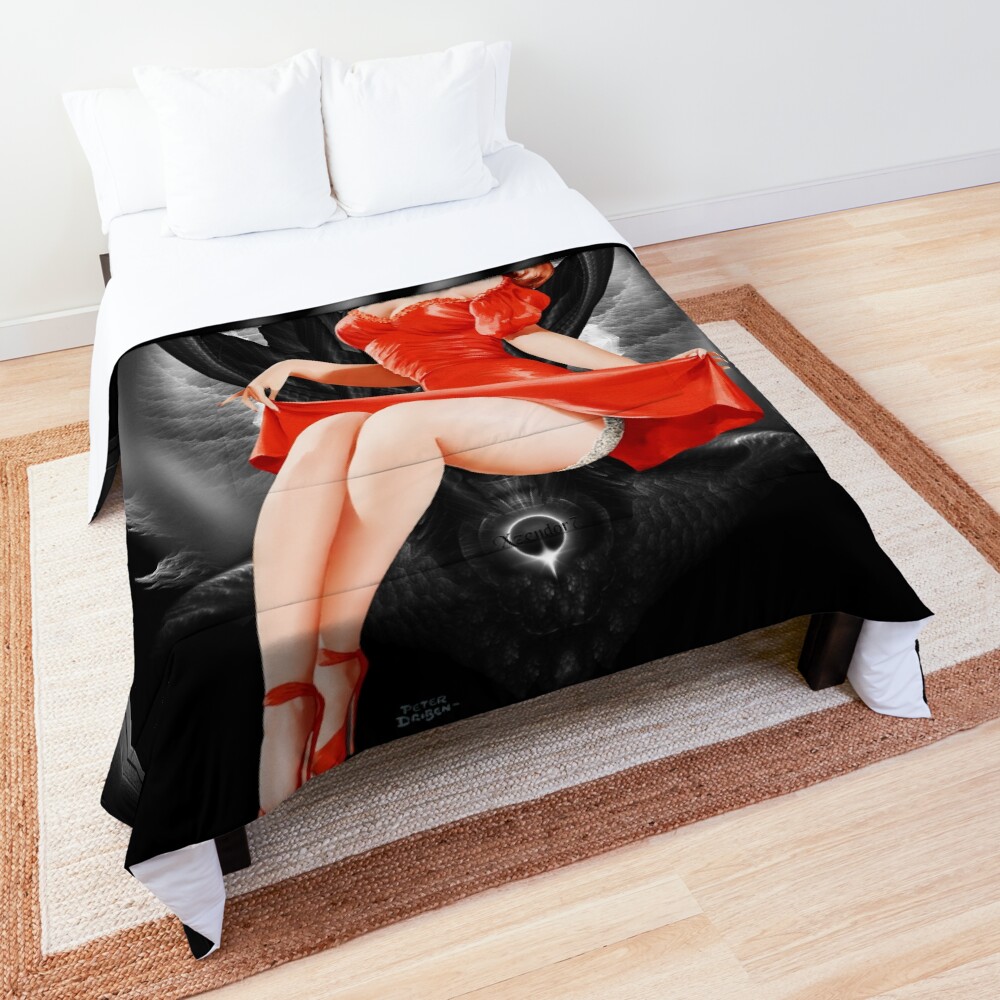
The young redhead has her dressed lifted and spread over her thighs using her two hands, which reveals her decorative panty and her beautiful full figured legs.
This is a remastered digital art old masters reproduction of a public domain image that is available as a canvas, akryl i metalowy druk online.
Artist Info
Informacje poniżej od Wikipedia.org
Peter Driben urodził się w Bostonie, i studiował w Vesper George Art School, zanim przeniósł się do Paryża 1925. Podczas zajęć na Sorbonie w 1925, rozpoczął serię bardzo popularnych rysunków piórem i tuszem przedstawiających miejskie tancerki.
W marcu 1934 Driben stworzył swój pierwszy znany pin-up, który był okładką La Paree Stories; i przez 1935, produkował okładki dla Snappy'ego, Energia, Noce Nowego Jorku, Francuskie życie nocne i Caprice.
Wraz ze wzrostem popularności Dribena pod koniec lat trzydziestych stworzył więcej okładek dla innych czasopism, w tym Silk Stocking Stories, Filmowa karuzela i prawdziwa zabawa na ekranie.
Kariera Dribena rozszerzyła się na reklamę, kiedy późno przeprowadził się do Nowego Jorku 1936. Tutaj stworzył oryginalne trójwymiarowe, wycinane wyświetlacze okienne dla Philco Radios, Ręczniki kąpielowe Cannon, oraz Firma Piekarska Weber.
Być może jego najsłynniejszym dziełem są oryginalne plakaty i grafiki reklamowe dla Sokoła maltańskiego. Peter Driben był także bliskim przyjacielem wydawcy Roberta Harrisona, i w 1941 zlecono mu produkcję okładek nowego magazynu Harrisona Beauty Parade.
Stamtąd Peter namalował setki okładek tej publikacji i pozostałych siedmiu tytułów, które Harrison miał wypuścić na rynek – Flirt, Szept, Dozorujący, Puścić oczko, Spojrzenie, Chichocze, i Jokera.
Driben często publikował aż sześć lub siedem swoich okładek co miesiąc. Praca Dribena dla Harrisona uczyniła go jednym z najbardziej rozpoznawalnych i odnoszących sukcesy amerykańskich artystów pin-up i glamour. Tuż przed rozpoczęciem pracy dla Harrisona, Driben poślubił artystę, aktorka i poetka, Louise Kirby.
W 1944 zaoferowano mu niezwykłą okazję, dla artystki pin-up; który miał zostać dyrektorem artystycznym „New York Sun”., stanowisko, które piastował do 1946. Podczas wojny, jego popularny obraz przedstawiający amerykańskich żołnierzy podnoszących flagę na Iwo Jimie wzbudził duże zainteresowanie mediów.
W 1956, Driben i Louise przeprowadzili się do Miami Beach, gdzie spędził lata emerytalne malując portrety (w tym jeden z Dwighta D. Eisenhowera) i inne dzieła sztuki, które jego żona zorganizowała w udane wystawy. Driben zmarł w 1968, Luiza w 1984.