

Czerwony Przylądek: A Timeless Elegance Of Mid-Century Glamour
Wprowadzenie do dzieła sztuki
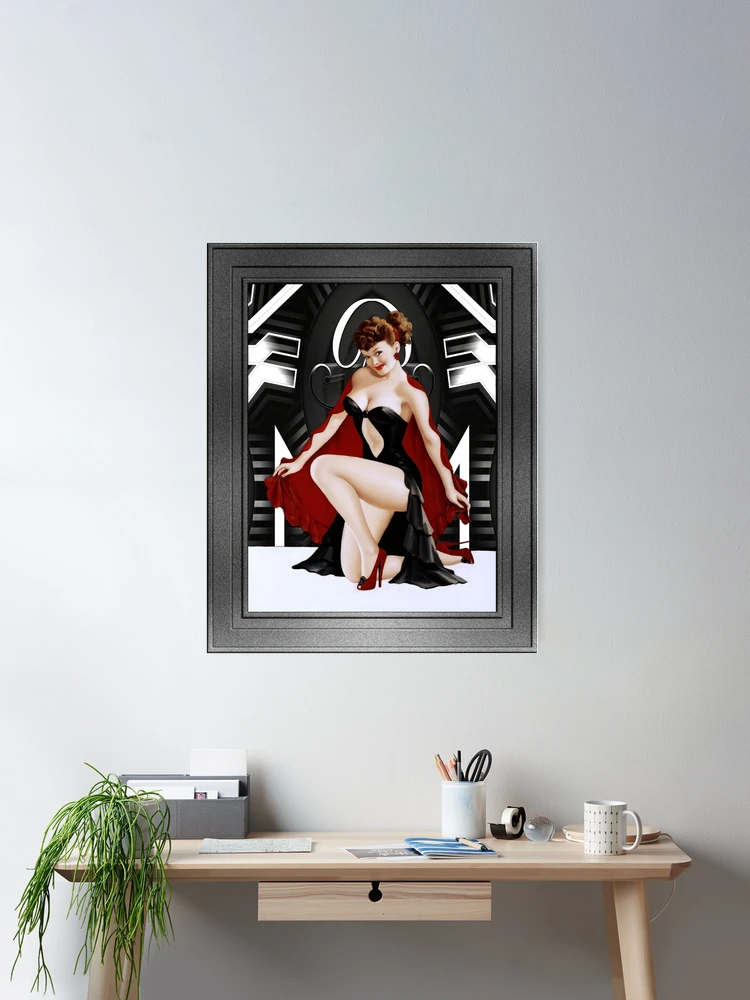
“Czerwony Przylądek” is a quintessential work by the American artist Peter Driben, a celebrated figure known for his pin-up art in the mid-20th century. Driben’s mastery in creating seductive and lively compositions is well represented in this piece. The artwork captures the essence of glamour, nęcić, and sophisticated femininity, themes that resonate throughout his body of work. “Czerwony Przylądek” is a vivid portrayal of a woman embodying confidence and charm, set against a striking, almost cinematic backdrop.
Spis treści
Główny temat: A Seductive Femme Fatale
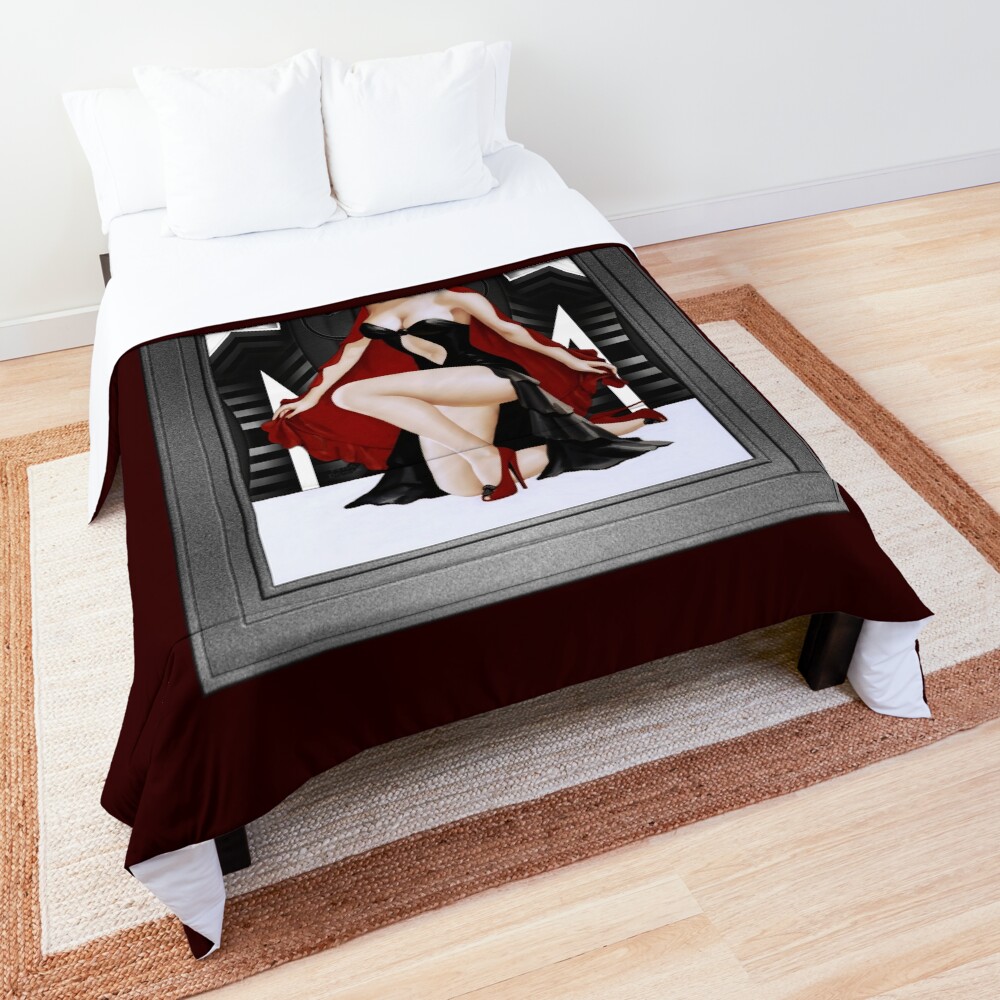
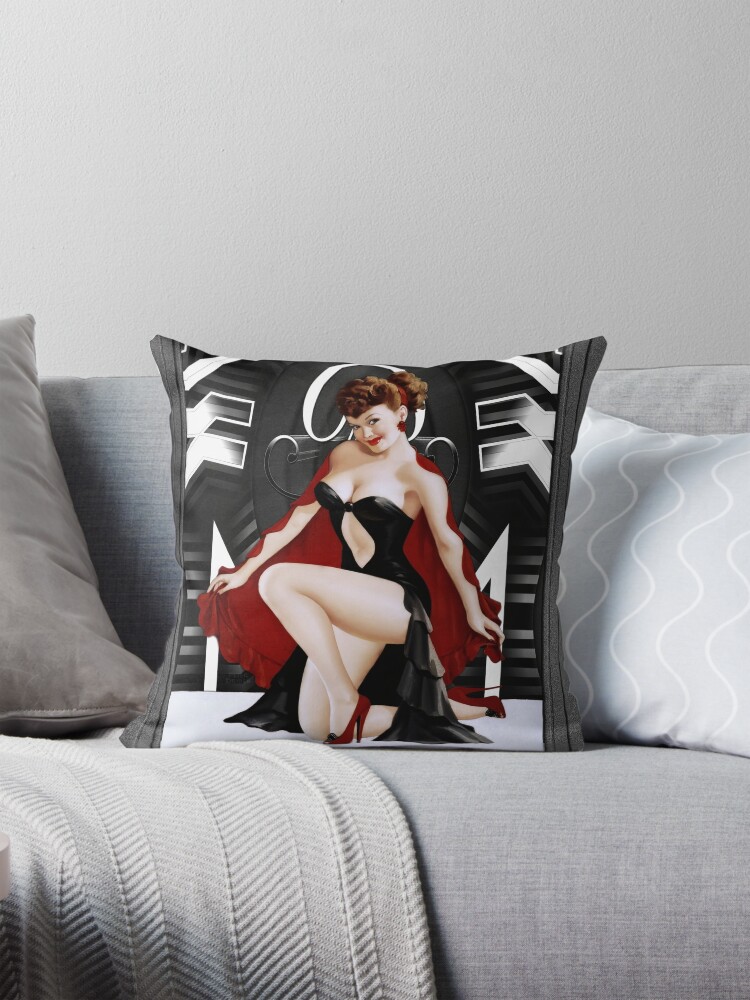
Centralna postać w “Czerwony Przylądek” is a young woman in an arresting pose, exuding an irresistible charm. Jej postawa jest pewna, sitting on the ground with one knee raised, her body slightly turned to the side. She gazes directly at the viewer with a playful yet enticing expression, her lips slightly parted in a smile. Her hairstyle is carefully styled into soft curls that frame her face, adding to the sophistication of her appearance. The woman’s strikingly seductive look is enhanced by the rich color contrasts in her attire and surroundings.
She wears a fitted black dress with a daring plunging neckline, the silhouette of which accentuates her curves. The black dress, a classic emblem of elegance, is complemented by a flowing red cape that drapes behind her, extending across her shoulders and fluttering like a vivid extension of her powerful femininity. The red cape contrasts dramatically against the dark tones of the background and the black dress, drawing the eye directly to the central figure. Her bold red lipstick and matching earrings mirror the deep hue of the cape, underscoring her glamorous allure.
Tło i nastrój
Tło “Czerwony Przylądek” further enhances the sense of grandeur and stylized sophistication. The background is composed of striking geometric elements, with sharp, angular lines creating a dynamic contrast with the soft, curvaceous lines of the model’s figure. The black and white tones in the background, along with the radial design, evoke a sense of art deco elegance and modernity. These elements work in tandem with the central figure, accentuating the timeless quality of the image while also grounding it in the mid-century aesthetic that Driben is known for.
The overall mood of the artwork is one of glamour and power. The woman in the piece is not merely a passive subject but an active, confident figure, fully aware of her beauty and the impact it has on those around her. The red cape, zwłaszcza, acts as a symbol of strength and boldness, much like the heroic personas in the stories of classic cinema. The color red, both sensual and commanding, highlights her dominance in the composition, turning her into an almost mythical figure—a heroine wrapped in the elegance of vintage Hollywood.
Symbolism and Thematic Elements
“Czerwony Przylądek” is a portrayal of more than just a fashionable woman; it conveys a deeper narrative of empowerment, nęcić, and independence. The woman is portrayed as a figure of control, unapologetically seductive yet regal. The flowing red cape could symbolize both a cloak of protection and a dramatic visual extension of her persona. The cape, in its voluminous fluidity, brings a sense of movement to an otherwise static scene, suggesting that the woman is not only a passive subject in the image but also an active force in her environment.
The composition itself echoes the optimism and post-war exuberance of the 1940s and 1950s. This period in American history saw a cultural explosion of confidence and self-expression, much of which was embodied in the burgeoning pin-up culture. Driben’s work encapsulates the sense of freedom and charm that characterized this era, an era where art and fashion collided to elevate everyday femininity to the level of art. The subject’s confident posture and seductive smile reflect the desire for attention and admiration that was often captured in pin-up art of the time.
The Medium and Artistic Style
Peter Driben’s work is rooted in the commercial and illustration art tradition, which is evident in “The Red Cape.” His style, influenced by the pin-up art movement and commercial illustration of the 1940s and 1950s, is both vivid and approachable. While it is clear that Driben’s work was intended for mass consumption—often for advertisements, plakaty, and magazine covers—he elevated the genre through his attention to detail, kolor, i skład.
W “Czerwony Przylądek,” Driben’s use of sharp contrasts between light and dark enhances the focal point of the image. The model’s face and body are brightly illuminated against the deep shadows of the background, creating a three-dimensional quality that draws the viewer’s eye. The smooth lines of the dress and cape contrast with the geometric lines in the background, suggesting a balance between softness and strength.
The vivid use of color in the artwork is key to its overall appeal. The combination of deep reds, blacks, and whites adds to the visual drama of the scene, while the bold lines in the background contribute a sense of modernist movement. The painting’s glossy finish and clean contours reflect the aesthetic preferences of the time, showcasing a blend of realism with the stylized and idealized beauty characteristic of pin-up art.
Wniosek: A Timeless Icon of Mid-Century Beauty
“Czerwony Przylądek” by Peter Driben stands as a classic example of mid-century pin-up art that continues to captivate audiences with its timeless blend of glamour, nęcić, and sophisticated femininity. The figure of the woman, with her powerful gaze and poised posture, represents the confidence and independence that was becoming more prevalent in American culture during the post-war years. Driben’s use of color, kompozycja, and dramatic mood creates a piece that transcends its commercial origins, elevating it to the status of fine art.
This artwork is not merely a visual representation of a beautiful woman but a statement of power, zaufanie, i ponadczasowa elegancja, rendered in the perfect balance of style and substance. Through “Czerwony Przylądek,” Driben’s ability to capture the essence of his era—its optimism, piękno, and emerging social dynamics—remains as relevant and arresting as ever.
O dziele artystycznym
Czerwona peleryna autorstwa amerykańskiego malarza Peter Driben (1903 – 1968); malarz, ilustrator i jeden z najbardziej płodnych artystów pin-up lat 40. i 50. XX wieku.
A hot and sexy beautiful young brunette with a red ribbon in her hair and red earrings that is a wearing a large red cape over a black revealing evening dress and red high heel shoes with high a black polka-dot ribbons on top.
I decided to replace the black background with a digital art background to create a more dynamic look.
Jest to zremasterowana cyfrowa reprodukcja starych mistrzów obrazu z domeny publicznej, która jest dostępna jako druk na płótnie online.
O Artystce
Informacje poniżej od Wikipedia.org
Peter Driben urodził się w Bostonie, i studiował w Vesper George Art School, zanim przeniósł się do Paryża 1925. Podczas zajęć na Sorbonie w 1925, rozpoczął serię bardzo popularnych rysunków piórem i tuszem przedstawiających miejskie tancerki.
W marcu 1934 Driben stworzył swój pierwszy znany pin-up, który był okładką La Paree Stories; i przez 1935, produkował okładki dla Snappy'ego, Energia, Noce Nowego Jorku, Francuskie życie nocne i Caprice.
Wraz ze wzrostem popularności Dribena pod koniec lat trzydziestych stworzył więcej okładek dla innych czasopism, w tym Silk Stocking Stories, Filmowa karuzela i prawdziwa zabawa na ekranie.
Kariera Dribena rozszerzyła się na reklamę, kiedy późno przeprowadził się do Nowego Jorku 1936. Tutaj stworzył oryginalne trójwymiarowe, wycinane wyświetlacze okienne dla Philco Radios, Ręczniki kąpielowe Cannon, oraz Firma Piekarska Weber.
Być może jego najsłynniejszym dziełem są oryginalne plakaty i grafiki reklamowe dla Sokoła maltańskiego. Peter Driben był także bliskim przyjacielem wydawcy Roberta Harrisona, i w 1941 zlecono mu produkcję okładek nowego magazynu Harrisona Beauty Parade.
Stamtąd Peter namalował setki okładek tej publikacji i pozostałych siedmiu tytułów, które Harrison miał wypuścić na rynek – Flirt, Szept, Dozorujący, Puścić oczko, Spojrzenie, Chichocze, i Jokera.
Driben często publikował aż sześć lub siedem swoich okładek co miesiąc. Praca Dribena dla Harrisona uczyniła go jednym z najbardziej rozpoznawalnych i odnoszących sukcesy amerykańskich artystów pin-up i glamour. Tuż przed rozpoczęciem pracy dla Harrisona, Driben poślubił artystę, aktorka i poetka, Louise Kirby.
W 1944 zaoferowano mu niezwykłą okazję, dla artystki pin-up; który miał zostać dyrektorem artystycznym „New York Sun”., stanowisko, które piastował do 1946. Podczas wojny, jego popularny obraz przedstawiający amerykańskich żołnierzy podnoszących flagę na Iwo Jimie wzbudził duże zainteresowanie mediów.
W 1956, Driben i Louise przeprowadzili się do Miami Beach, gdzie spędził lata emerytalne malując portrety (w tym jeden z Dwighta D. Eisenhowera) i inne dzieła sztuki, które jego żona zorganizowała w udane wystawy. Driben zmarł w 1968, Luiza w 1984.