

Beauty Under The Orange Tree
“Beauty Under The Orange Tree” is a remarkable work of art created by the French painter אמיל ורנון ב 1910. Known for his contributions to the Belle Époque period, Vernon was skilled in capturing the elegance of the feminine form with great attention to detail. הציור הזה, much like many of his other works, showcases a young woman in a serene, nature-filled setting. The subject’s beauty is enhanced by her tranquil pose and the lush surroundings that provide a perfect complement to her natural grace. With a keen focus on light and texture, Vernon creates a harmonious blend of realism and idealized beauty, characteristic of the time.
תוכן העניינים
הנושא המרכזי
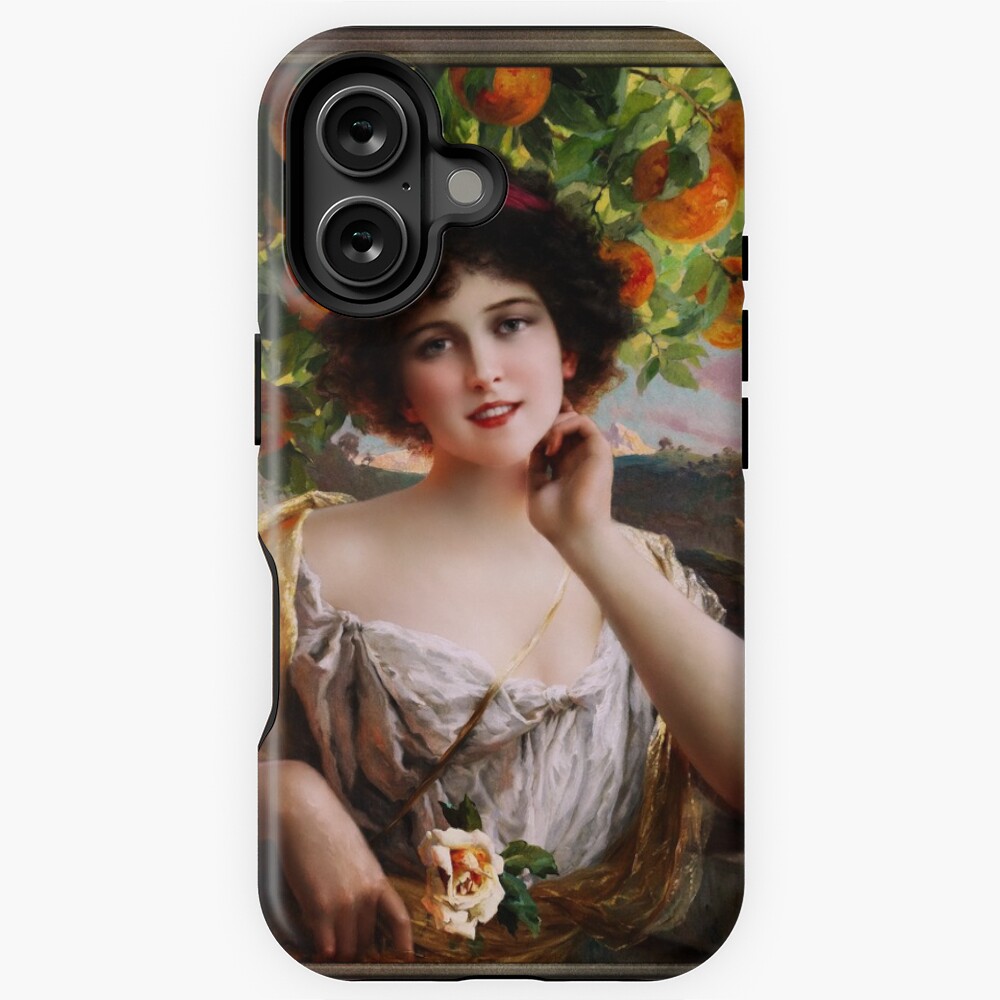
At the heart of the composition stands the young woman, her youthful innocence conveyed through her soft features and serene expression. Her light skin tone contrasts beautifully with the vivid backdrop of orange trees. שערה, styled in soft curls, is crowned by a deep red ribbon that complements the rich tones of the surrounding scene. The woman’s gaze is directed just slightly off-center, as if lost in thought, evoking a sense of calm and quiet introspection. Her bare shoulders and exposed skin further emphasize the purity and natural beauty that Vernon sought to highlight in his work.
She is dressed in a simple yet elegant gown, made from flowing white fabric that catches the light in soft, radiant folds. A golden sash wrapped around her waist adds a touch of opulence, its gleaming hue echoing the brightness of the oranges hanging from the tree above her. The gown’s soft material contrasts with the vivid oranges in the background, which seem to symbolize abundance and vitality, themes often found in works of this period. The woman’s soft smile and the gentle manner in which she touches her neck contribute to her portrayal as a delicate, almost ethereal figure within this idyllic scene.
הנוף והתפאורה
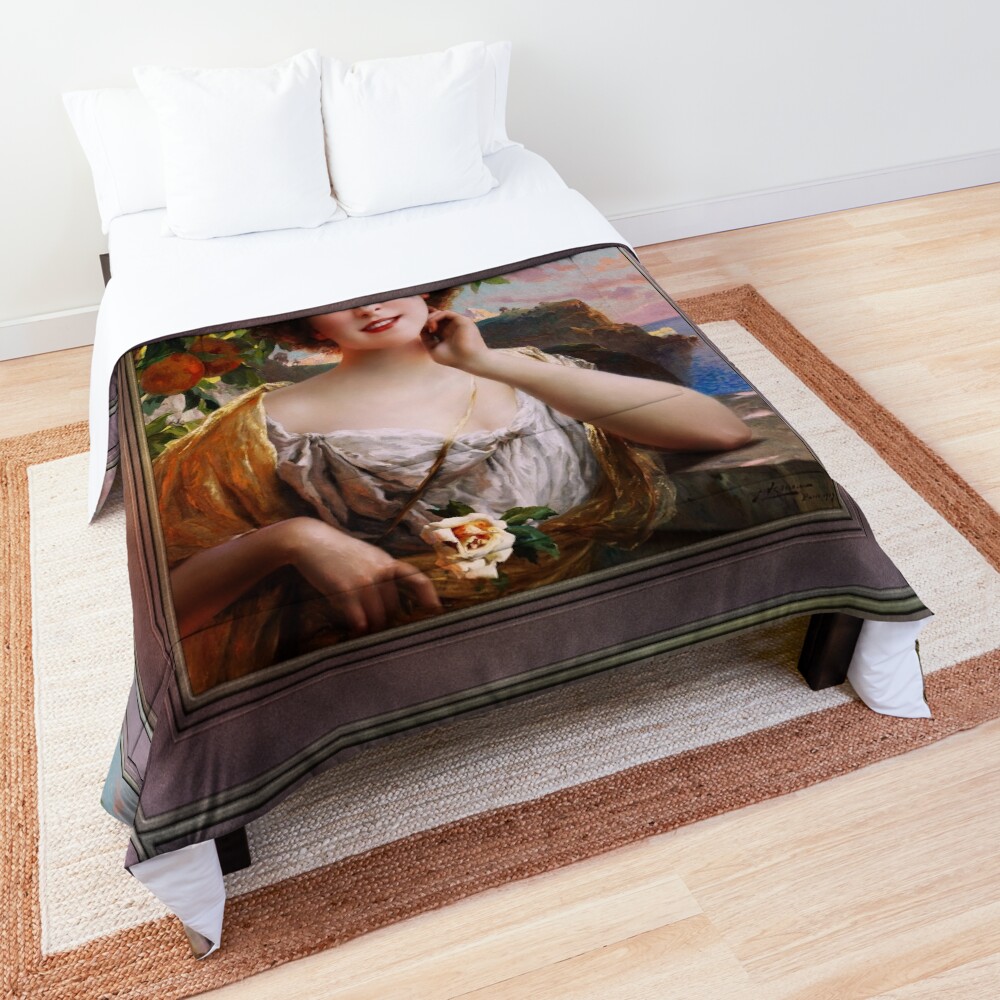
The backdrop of this painting is equally important, setting the tone and mood of the piece. A lush orange tree, heavy with fruit, arches over the woman, framing her in a natural embrace. The leaves of the tree are painted with fine attention to detail, their deep green color providing a striking contrast to the warm oranges, which glow with an almost lifelike intensity. These oranges not only contribute to the painting’s vibrant color palette but also add to the overall sense of calm and bounty that permeates the work. The tree’s canopy seems to provide both shade and shelter, creating a space of peace for the subject.
Beyond the tree, the terrain transitions into a soft, rocky landscape leading toward the ocean. The horizon is painted with a subtle gradient of pastel hues, from soft pinks and purples to the cool blues of the distant water. The light from the setting or rising sun casts a warm glow on the scene, lending the entire piece a romantic and peaceful atmosphere. The artist’s masterful use of light not only highlights the subject but also enhances the feeling of tranquility that flows through the work.
The scene is bathed in the soft glow of daylight, which pours through the canopy, casting dappled shadows onto the ground. The artist’s choice to include the seaside in the background adds depth and a sense of vastness to the scene. The water’s calm, almost reflective surface mirrors the stillness of the subject, reinforcing the theme of serenity that dominates the painting.
מצב הרוח והאווירה
מצב הרוח של “Beauty Under The Orange Tree” is one of quiet contemplation and natural beauty. הצעירה, at ease in her surroundings, embodies the ideals of femininity that were celebrated during the Belle Époque period. Her pose is relaxed, suggesting that she is both at peace with herself and in harmony with the environment. הרך, almost pastel-like colors used throughout the composition further emphasize the peaceful, serene mood. The gentle play of light on the woman’s skin and the natural surroundings invites the viewer to experience a sense of calm and admiration.
This mood is also enhanced by the soft textures used throughout the painting. Vernon’s careful attention to detail in the rendering of the fabrics of the woman’s gown, the leaves of the tree, and the waves of the distant ocean, creates an overall sense of softness and tranquility. The scene evokes a timeless beauty, one that could belong to any period but is uniquely tied to the turn-of-the-century fascination with idealized beauty and harmony with nature.
סגנון וטכניקה אומנותית
Émile Vernon’s painting exemplifies the style of the late 19th and early 20th centuries, where artists sought to bridge the gap between realism and idealism. His ability to blend these two approaches allows the viewer to experience both the realism of the natural world and the idealized vision of beauty. The fine details of the painting, especially in the portrayal of the woman’s skin, שֵׂעַר, and clothing, demonstrate Vernon’s mastery of texture and light.
Vernon uses rich, saturated colors that give depth to the figures and natural elements in the scene. The oranges of the tree, בִּפְרָט, seem to leap from the canvas, bringing a vibrant energy to the otherwise tranquil composition. The soft blending of colors, especially in the sky and water, reflects the artist’s skill in capturing light, creating a harmonious balance between the figure, the tree, and the distant landscape.
The brushwork is subtle yet deliberate, with gentle strokes that form a cohesive whole. The blending of soft, muted tones in the background contrasts with the more defined, radiant forms of the subject and the fruit-laden tree. This contrast further emphasizes the central figure, making her the focal point of the composition.
מַסְקָנָה
“Beauty Under The Orange Tree” by Émile Vernon is a painting that celebrates the natural world, feminine beauty, and tranquility. Through his careful use of light, צֶבַע, ומרקם, Vernon creates a scene that is at once intimate and expansive, inviting the viewer to pause and appreciate the simplicity and peace found within nature. The painting captures an idealized moment of serenity, offering a window into a world where beauty and nature exist in perfect harmony.
זהו רפרודוקציה של אמנות דיגיטלית משוחזרת של תדמית ברשות הרבים שתוכל לרכוש בתור הדפסת קנבס באינטרנט.
יצירת אמנות דיגיטלית זו, כמו כל יצירות האמנות שניתן למצוא באתר Xzendor7 זמין לרכישה אונליין במגוון פורמטים חומריים כולל הדפסי קנבס, הדפסי אקריליק, הדפסי מתכת, הדפסי עץ, הדפסים ממוסגרים, עמוד הבית של Xzendor7, וכהדפסי קנבס מגולגלים במגוון גדלים מ 12 אינצ'ים ל 72 אינצ'ים בהתאם לגודל הגרפיקה בפועל ולחנות ההדפסה לפי דרישה ממנה תבחר לקנות את האמנות.
יצירות האמנות זמינות גם במגוון רחב של בגדי גברים ונשים, ספלים, טוטס, צעיפים, מחברות ויומנים ומוצרי עיצוב לבית רבים.
על האמן
מידע למטה מ גלריה ויאן
אמיל ורנון היה תלמיד בבית הספר לאמנויות יפות בטורס, שם זכה בפרס הראשון על הציור 1888; לאחר מכן הוא קיבל הדרכה על ידי וויליאם בוגרו ואוגוסט טרופה.
ואז פנימה 1898 הוא השתתף בתערוכת סיורים לאמנויות יפות ואמנות דקורטיבית ומאוחר יותר באותה שנה, בתערוכת האמנים הצרפתים והציג שם עבודות קבועות 1898 ל 1913; הצגת דיוקנאות, נופים, סצנות מבריטני, זרי טבע דומם שצייר בצבעי מים, כמו גם דמויות נשיות, שלימים הפכה למומחיות.
אמיל הצטיין בציוריו של מואר בעדינות, דמויות מקסימות של ילדים וצעירות אלגנטיות, איתו הוא קשר לעתים קרובות חיית מחמד כגון חתול, כלב או ציפור, ועיטר את תמונותיו בזרים או בזרי פרחים, לאורך הקריירה שלו; אבל הוא היה גם אמן רב-תכליתי שיכול לצייר בקפדנות ובעוצמה כמו ביצירותיו את דיוקנם של מאדאם ורנון וסוס לה לאמפה (מתחת למנורה).