

Architects Dream c1840
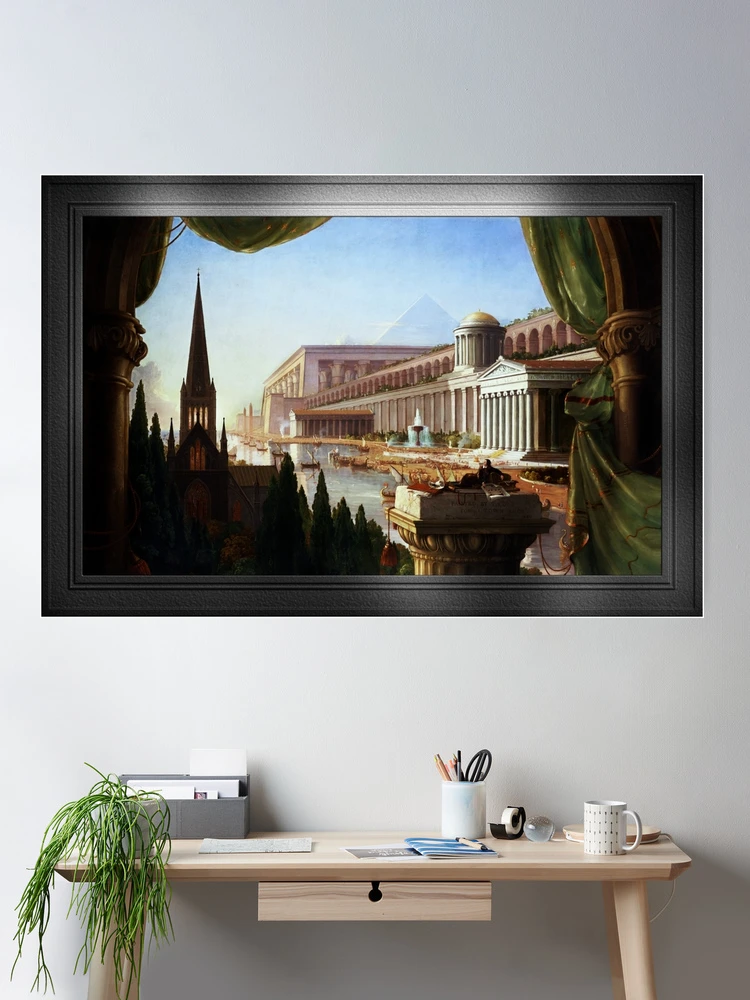
“Architect’s Dream,” נוצר ב 1840 by American artist תומאס קול (1801 – 1848), is an awe-inspiring oil painting that invites viewers to contemplate the grandeur of architectural ambition set against the backdrop of a vast, idealized landscape. Cole, known as the founder of the Hudson River School, often infused his works with deep philosophical and spiritual meanings, reflected here through the exploration of man’s drive to create and build monumental structures. היצירה הזו, בִּפְרָט, addresses themes of progress, the interplay between nature and human endeavor, and the vision of what might be achieved when the natural world and human architecture collide in harmony.
תוכן העניינים
הנושא העיקרי: The Dream of Architecture
The painting depicts a scene that blurs the line between the real and the imagined, with an expansive view of a river valley showcasing a procession of classical buildings and monuments. The central focus is on the figure of an architect, positioned in the foreground. He stands on a balcony, looking out over the dreamscape of his vision. The architecture in this landscape appears to be both inspired by and homage to the great civilizations of antiquity, specifically Greek and Roman influences, with the structures taking on monumental proportions. The presence of the architect in the painting draws attention to the theme of human aspiration and the deep intellectual and artistic pursuit involved in the creation of architecture.
חפצים ושטח
השטח פנימה “Architect’s Dream” is sprawling and idyllic. מִשְׂמֹאל, the dark Gothic spires of a cathedral rise up, hinting at the influence of European medieval architecture. The buildings in the painting are set in a rich landscape that contrasts sharply with the grandeur of the constructed elements. Lush green trees and open fields surround the distant waterways that reflect the warm, golden light of the setting sun. The terrain transitions into mountainous areas in the distance, which suggests a perfect synthesis between nature’s beauty and human-built environments.
In the middle of the painting, the river flows gently through the land, winding between the monumental structures that seem to emerge from the earth. A series of boats dot the river’s surface, with a few visible figures navigating the water, further adding to the sense of scale and movement within the painting. The intricate details of the boats, some drawn by oars and others by sails, suggest that human industry and commerce still play a vital role in this serene but constructed world.
The architecture itself is classical in style, evoking grand temples, colonnades, and public squares, with columns and porticos making up the central designs of the structures. ברקע, an ancient pyramid looms, its purpose and construction a testament to a civilization long past, and a symbol of human achievement and ambition. The distant cityscape, bathed in the soft light of the horizon, implies that the creation of such architecture is timeless, as if the dream of civilization never ends.
סגנון וטכניקה
Thomas Cole’s signature style is evident in the intricate detailing and emotional tone of the painting. The foreground features the crisp and realistic depiction of the figures and the architectural details. His mastery of light is also notable, particularly in the way it subtly illuminates both the architect and the buildings, creating a dynamic interplay between the shadows and light. In Cole’s paintings, light often plays a symbolic role, representing the presence of divine inspiration or the illumination of intellectual and artistic enlightenment. The colors in the painting are rich and warm, with a golden tone washing over the entire scene, lending an almost ethereal quality to the landscape and structures.
The use of perspective is masterful, as the artist stretches the dimensions of the scene to evoke a sense of grandeur and importance. The distant horizon is dominated by a sky full of soft, fading light, enhancing the reflective and dreamlike quality of the composition. The water in the river mirrors this delicate lighting, reflecting the towering buildings and sky with an uncanny clarity.
נוֹשֵׂא: The Dream of Human Achievement
הכותרת, “Architect’s Dream,” suggests the deep philosophical underpinnings of the painting. It explores the idea that the act of designing and constructing monumental buildings is a deeply imaginative and transcendent endeavor. The artist presents the architect not merely as a builder but as a visionary, dreaming of great works that blend the natural with the human-made. Cole subtly criticizes the potential for human endeavor to become excessive or disconnected from nature, but he also acknowledges the magnificence of human creativity and ambition.
The image can be interpreted as a metaphor for civilization itself, symbolizing both the potential for human greatness and the fleeting nature of all things. The presence of the pyramid in the background could be seen as a symbol of ancient civilization, while the more modern buildings could represent the future. The juxtaposition of nature’s sublime beauty with the engineered environment alludes to the tension between progress and preservation, a recurring theme in Cole’s works. Through this balance, the artist suggests that while architectural dreams may soar to incredible heights, they remain tethered to the earth and ultimately subject to time’s passing.
מצב רוח והשפעה רגשית
מצב הרוח של “Architect’s Dream” is contemplative and awe-inspiring. The artist’s use of soft light and gentle colors creates a serene atmosphere, inviting viewers to reflect on the boundless possibilities of human achievement. עדיין, this serenity is tinged with a sense of melancholy as the viewer is reminded that such grand visions may be impossible to realize fully. The dreamlike quality of the scene further enhances this sense of timelessness and the fleeting nature of human ambitions.
The presence of the architect in the foreground creates a focal point for this reflection. His gaze directed towards the horizon suggests that he, גַם, is lost in contemplation, possibly questioning the limits of human imagination or contemplating the intersection of beauty, טֶבַע, ויצירה. The architectural dream before him is a vision not just of stone and mortar but of something far grander, an idealized world shaped by human hands, yet rooted in the natural landscape.
מַסְקָנָה
“Architect’s Dream” is a deeply philosophical and evocative painting that explores themes of human creativity, the tension between nature and architecture, and the grandeur of human achievement. Through meticulous detail and masterful use of light and perspective, Thomas Cole creates an artwork that serves as both a reflection on the past and a visionary gaze into the future. It is a meditation on the dream of building something lasting, something transcendent, while acknowledging the impermanence of all things.
Architects Dream is a retouched digital art old masters reproduction of a public domain image.
אמן ביו שמקורו Wikipedia.org
תומאס נולד בבולטון לה מורס, לנקשייר אנגליה ב 1801 וב- 17 בן שנים היגר לארצות הברית עם משפחתו, מתיישבים בסטיובנוויל, אוהיו ב 1818.
ב 1823 הוא עזב את אוהיו ועבר לפילדלפיה ואז משם פנימה 1825 עבר לקאטסקיל, ניו יורק, שבו הוא חי למשך הבא 23 שנים עם אשתו וילדיו.
תומס החל את הקריירה שלו כחרט והיה כמעט לגמרי אוטודידקט כצייר, באמצעות ספרים כדי ללמוד את מלאכתו וגם לימוד יצירות של אמנים אחרים.
ואז פנימה 1822 תומס החל לעבוד כצייר פורטרטים ועם הזמן העביר את המיקוד שלו מדיוקנאות לציור נוף והיסטורי.
תומס נחשב לאחד הציירים האמריקאים הבולטים של המאה ה-19 ומייסד תנועת אסכולת נהר ההדסון שהושפעה מתקופת הרומנטיקה של סוף המאה ה-18 ואמצע המאה ה-19..
למרות שקול היה בעיקר צייר נוף, הוא גם הפיק יצירות אמנות אלגוריות; כשהמפורסם ביותר שלו הוא סדרת חמשת החלקים The Course of Empire; המתארים את אותו נוף לאורך דורות, ממצב טבע קרוב להשלמה של האימפריה, ואחר כך ירידה ושממה.