

バラのある長椅子に横たわるベルエポックの美しさ
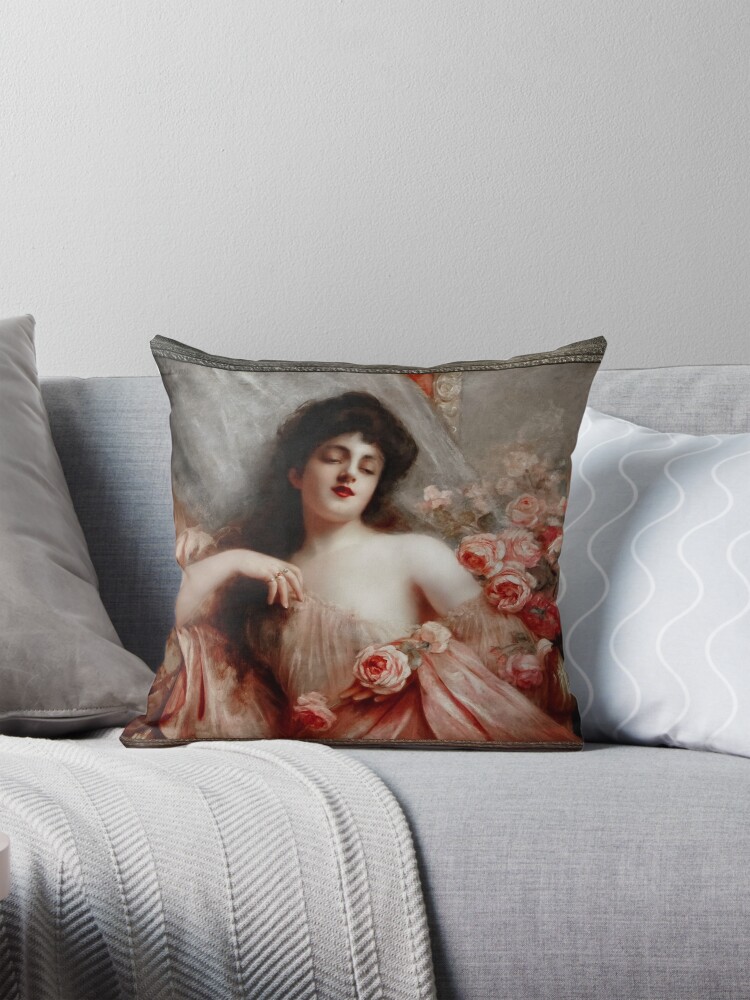
というタイトルの絵の中で、 “バラのある長椅子に横たわるベルエポックの美しさ,” に作成されました 1907 尊敬されるフランスの画家による ポール・アントワーヌ・デ・ラブレイユ (1849 – 1926), 鑑賞者は、ベル エポック時代の魅力と優雅さを美しく凝縮した親密なシーンに誘われます。. この作品は若い女性を生き生きと描いています, 豪華な長椅子に寄りかかる, 繊細なバラに囲まれて.
ソフト, 流れるような筆致とロマンティックな構図は、20 世紀初頭の美的精神を呼び起こすドゥ ラ ブーレーの卓越した能力の特徴です。. 絵画の柔らかな色調と豊かな質感は、主題と彼女が住む環境の両方の美しさを生き生きとさせます。. 細部への注意を払って, ドゥ・ラ・ブーレーは、静謐でありながら少し官能的な雰囲気を醸し出します。, 豪華な内装と被写体のリラックスしたポーズが特徴的.
目次
本題
The focal point of the painting is the young woman who lies languidly across a plush settee, enveloped in soft fabrics. Her posture is one of ease and comfort, evoking a sense of relaxation and quiet elegance. She gazes gently to the side, her eyes half-closed, adding to the tranquility of the scene. 彼女の青白い, smooth skin contrasts delicately with her dark, ボリュームのある髪, which cascades in gentle waves around her face and shoulders. The artist’s meticulous attention to her facial features, particularly the slight curve of her lips and the softness of her expression, conveys a serene beauty and a contemplative air.
The woman’s attire is a sheer gown with layers of soft pink fabric, which adds to her ethereal quality. 衣服, while suggestive of the fashion trends of the time, is draped in such a way that it enhances the graceful lines of her figure. A sense of fragility is portrayed, as though she is an embodiment of beauty that exists outside the realm of time. Her right hand rests lightly on her lap, adorned with an elegant ring, while her other hand is gently placed among the roses that surround her, reinforcing her connection with nature and the refined world of beauty that De La Boulaye so often sought to depict.
The Roses and the Settle
The surrounding elements in the painting play a significant role in enhancing the overall mood and themes of the composition. The settee, a key piece of furniture in the scene, is a sumptuous piece of furniture upholstered in rich, warm hues that mirror the softness of the woman’s gown. The upholstery has a slight sheen to it, which contrasts with the delicate textures of the roses resting against it.
These roses, scattered about her on the settee and spilling onto the floor, symbolize beauty, ロマンス, and fragility. ソフト, muted pinks of the flowers complement the woman’s attire and the room’s overall palette, blending harmoniously with the serene ambiance of the painting. The roses also serve to symbolize a timeless connection between woman and nature, as though the woman herself is part of the organic beauty that surrounds her.
The artist’s choice to include the roses with such prominence in the composition draws attention to the fleeting nature of beauty and youth. ソフト, almost translucent petals of the roses contrast against the solidity of the settee, inviting the viewer to ponder the relationship between the transient beauty of the woman and the material world in which she exists.
The Environment and Mood
The background of the painting contributes significantly to the mood of the piece. It is soft and diffused, with gentle, almost dreamlike light filtering across the canvas. This light creates a sense of depth and warmth, which envelops the subject and the space. The palette is one of muted tones—subtle shades of pink, beige, and gray—creating an overall sense of softness and calm. The mood is serene and nostalgic, evoking a sense of peace and quiet luxury that was so prized during the Belle Epoque period.
The scene is intimate, yet grand. It suggests an upper-class setting, a private moment of repose in a luxurious home or salon. The painting captures the essence of a time when life seemed to slow down, when leisure was valued, and beauty was admired for its own sake. 背景, though simple, implies a sense of opulence through the textures and softness of the drapery, giving the piece a refined and aristocratic atmosphere.
スタイルとテクニック
“バラのある長椅子に横たわるベルエポックの美しさ” is painted in a style that blends realism with the romanticized approach often seen in late 19th and early 20th-century French art. De La Boulaye’s technique emphasizes delicate, almost velvety brushstrokes that soften the details of the subject and environment, lending the painting a sense of timelessness.
The soft modeling of the woman’s face and figure highlights the artist’s skill in capturing the subtleties of human beauty, while the roses and fabric folds are rendered with remarkable detail, enhancing the overall texture and depth of the scene.
De La Boulaye’s use of light in the piece is particularly noteworthy. The warm light gently bathes the subject and her surroundings, creating an ethereal glow that speaks to the sense of tranquility and gentleness associated with the Belle Epoque period. This use of light heightens the sensual and romantic qualities of the painting, reinforcing its connection to the art and culture of the time.
結論
に “バラのある長椅子に横たわるベルエポックの美しさ,” Paul Antoine De La Boulaye offers a masterful portrayal of feminine grace, 美しさ, そして静けさ. Through his delicate rendering of the subject and her surroundings, he captures the essence of an era that valued elegance, 洗練, and the celebration of life’s fleeting beauty.
The painting serves as a reminder of a time when the quiet, intimate moments of repose were cherished, and when beauty was not just seen, but felt in the very fabric of existence. This work stands as a testament to the enduring allure of the Belle Epoque period and to the artist’s remarkable ability to capture the spirit of the time.
これは、パブリックドメインの画像のレタッチされたデジタルアートオールドマスターの複製です.
このデジタルアート作品は、, Xzendor7 Web サイトにあるすべてのアートワークと同様に、キャンバス プリントを含むさまざまな素材形式でオンラインで購入できます。, アクリルプリント, メタルプリント, 木版, 額入りプリント, ポスター, ロール状のキャンバス プリントとしてさまざまなサイズでご利用いただけます。 12 インチから 72 インチは、実際のアートワークのサイズと、アートを購入するために選択したオンデマンド プリント ショップによって異なります。.
このアートワークは、幅広いメンズおよびウィメンズのアパレルでも利用可能です, マグカップ, トートバッグ, スカーフ, ノートや日記帳、その他多くの室内装飾品.
アーティスト略歴
以下の情報から派生 Wikipedia.org
ポール・アントワーヌ・デ・ラブレイユのフルネームはチャールズ・アントワーヌポール・ジョルジェット・デュ・ブイソン・デ・ラブレイユはフランスのブールカンブレスで生まれました。 1849, EugèneGeorgetteduBuissonde LaBoulayeへ (1810 – 1888) とAdriennede Graindorge d'Orgeville deMesnil-Durand (1811 – 1859).
ポールはフランスのポートレート画家レオン・ジョセフ・フロレンティン・ボナの指導を受けました (1833 – 1922); とで 1873 パウロは彼の宗教画デビッドを展示しました, 殉教, サロンでの羊飼いの崇拝; クララヴァッジョのスタイルに似た絵. ひざまずく聖母は、子供イエスと一緒に白い光の光輪の中で白い服を着て見えます.
彼のキャリアが進むにつれて、彼は徐々に彼の作品Au説教から始まる地域の参照に基づいた画像へのアートワークにシフトしました, ブレッセの影響を受けたブレッセc1879のお土産 (フランス東部のオーヴェルニュ=ローヌ=アルプとブルゴーニュ=フランシュ=コンテの地域); 彼の作品もそうです孤児の洗礼c1884, ブルボネーズを示しています (フランスの中心部にある歴史的な州でした) 影響.