

Belshazzars Feast Engraving c1598
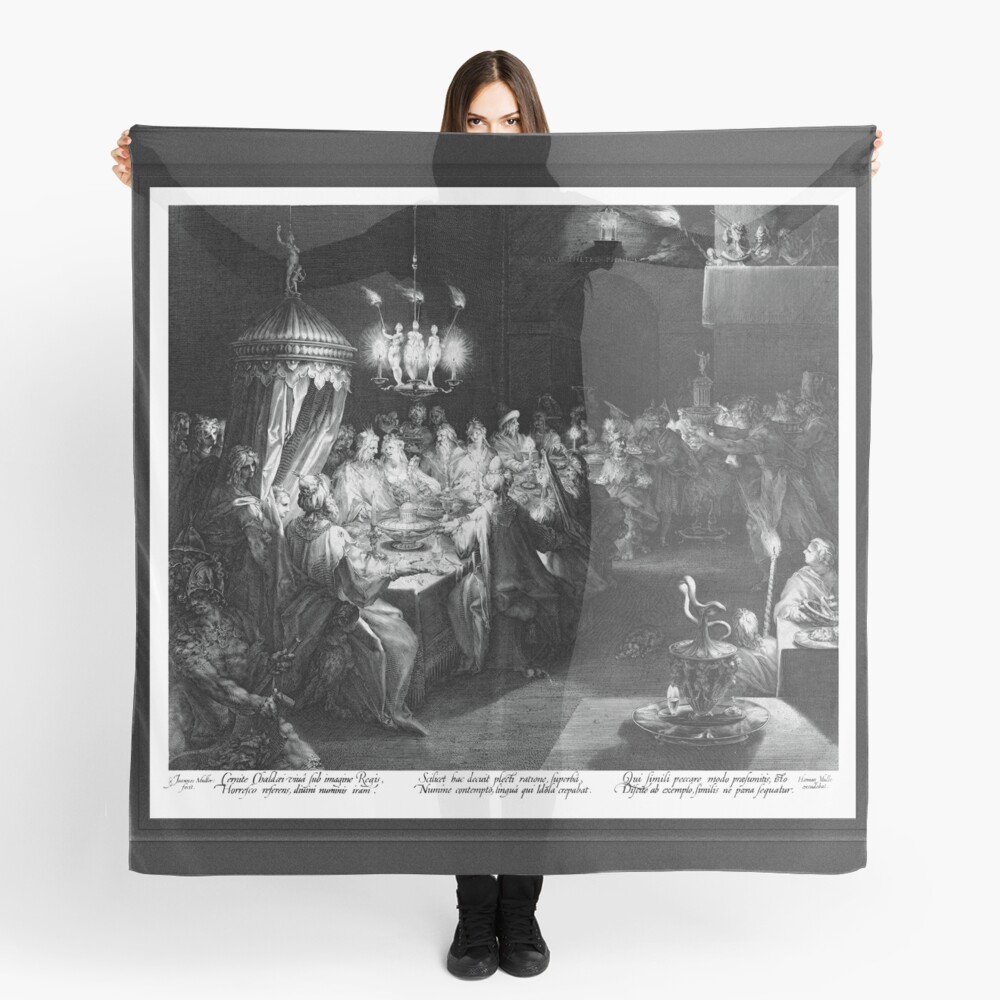
Grabado de la fiesta de Belsasar c1598 por el grabador holandés Jan Harmensz. Müller (1571 – 1628); así como un pintor de la Edad de Oro holandesa.
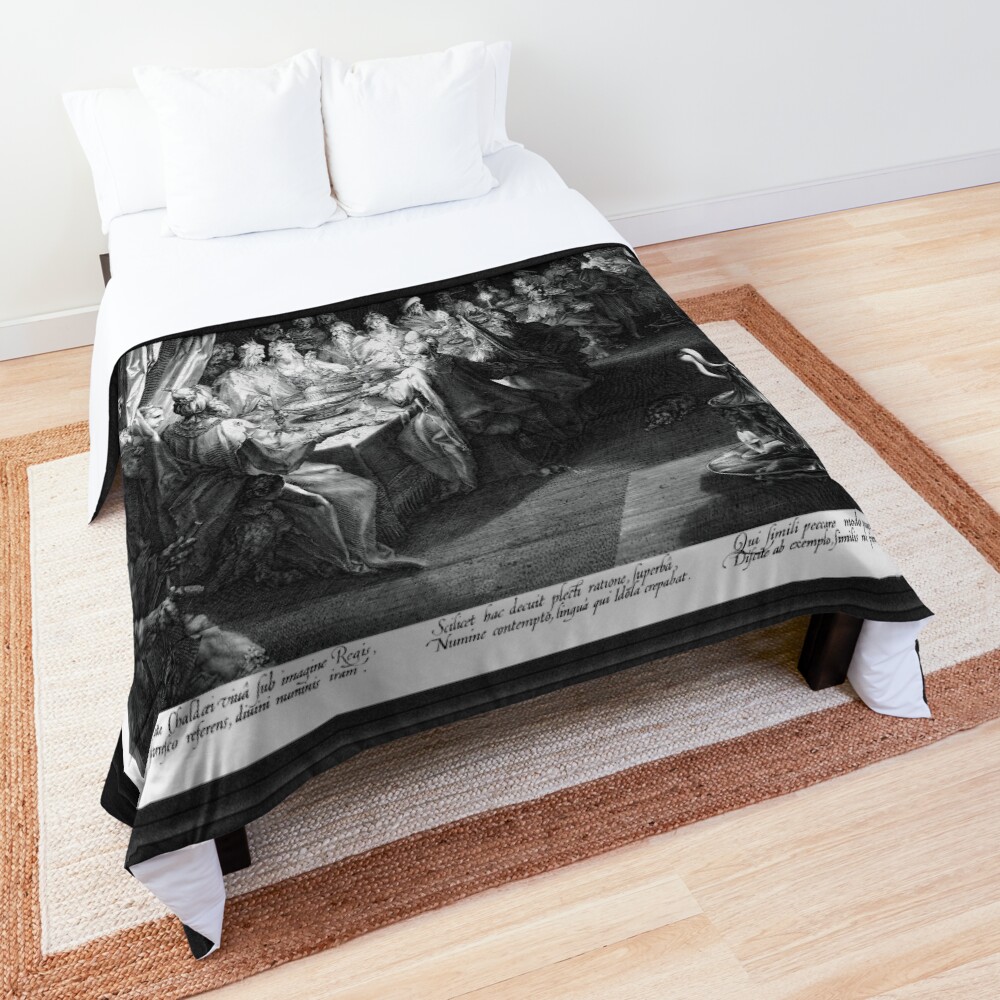
This engraving depicting the Biblical tale of Fiesta de Belsasar, depicts the story of The Writing on the Wall from the Book of Daniel, chapter 5.
It shows Belshazzar, the Crown Prince of Nabonidus, holding a grand feast and drinking from vessels that were looted from the First Temple in Jerusalem; that was destroyed by the Babylonian King Nebuchadnezzar II in 586/587 BCE and who exiled the Jewish people to Babylon.
In the engraving , a hand of a spirit appears and writes on the wall above the arched entrance to the feasting hall, terrifying Belshazzar and his guests as related in the Bible.
To understand what the writing means, Belshazzar calls for his wise men to decipher the writing, but they are unable to do so; thus his queen advises him to send for Daniel, who is renowned for his wisdom.
As it is hoped Daniel is able to interpret the message, which states that Belshazzar’s kingdom will be divided among the Medes and Persians and be no more.
Esta es una reproducción remasterizada de viejos maestros de arte digital de una imagen de dominio público que está disponible en línea como lienzo enrollado.
Sobre el artista
Jan Muller fue un grabador y pintor holandés de la Edad de Oro que nació en Amsterdam el 1571 y aprendió el oficio de grabado de su padre Harmen Jansz. Müller (1540 – 1617) quien fue impresor de libros, grabador, y editor.
Jan fue un grabador prolífico y hábil conocido por su atención al detalle., y produjo dibujos hechos, grabados, pinturas, y fue especialmente conocido por sus retratos de figuras políticas, realeza, y otras personalidades de la época.
Las obras más famosas de Jan incluyen sus grabados de las figuras mitológicas de Minerva y Mercurio., sus retratos de la familia real holandesa, y sus colaboraciones con el escultor Adriaen de Vries (1545 – 1626), pintor holandés del siglo de oro, Rembrandt Harmenszoon van Rijn (1606 – 1669), y el grabador flamenco, Jan Sadeler (1550 – 1600).
También fue conocido por sus dibujos del gran paisajista holandés., jan van goyen (1596 – 1656), que se realizaron para una edición de las obras de van Goyen; y se convirtió en una figura importante en el grabado holandés, y sus obras son vistas como un testimonio de la edad de oro del arte holandés..
Jan también fue un maestro respetado., transmitiendo sus habilidades a sus alumnos, que incluía al grabador y pintor holandés, Pedro de Molyn (1597 – 1661); y fue un importante contribuyente a la Edad de Oro holandesa del arte.