

Belshazzars Feast Engraving c1598
Festa di Baldassarre incisione c1598 dell'incisore olandese Jan Harmensz. Muller (1571 – 1628); così come un pittore dell'età dell'oro olandese.
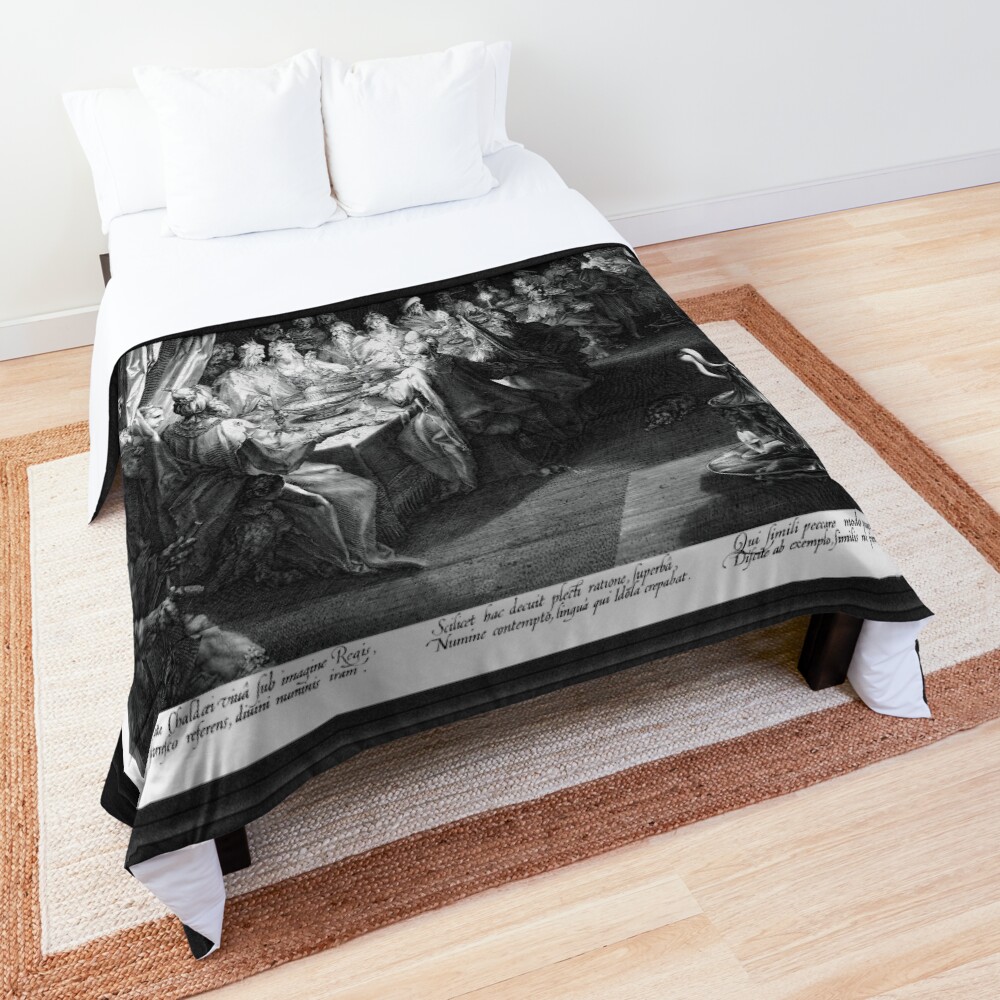
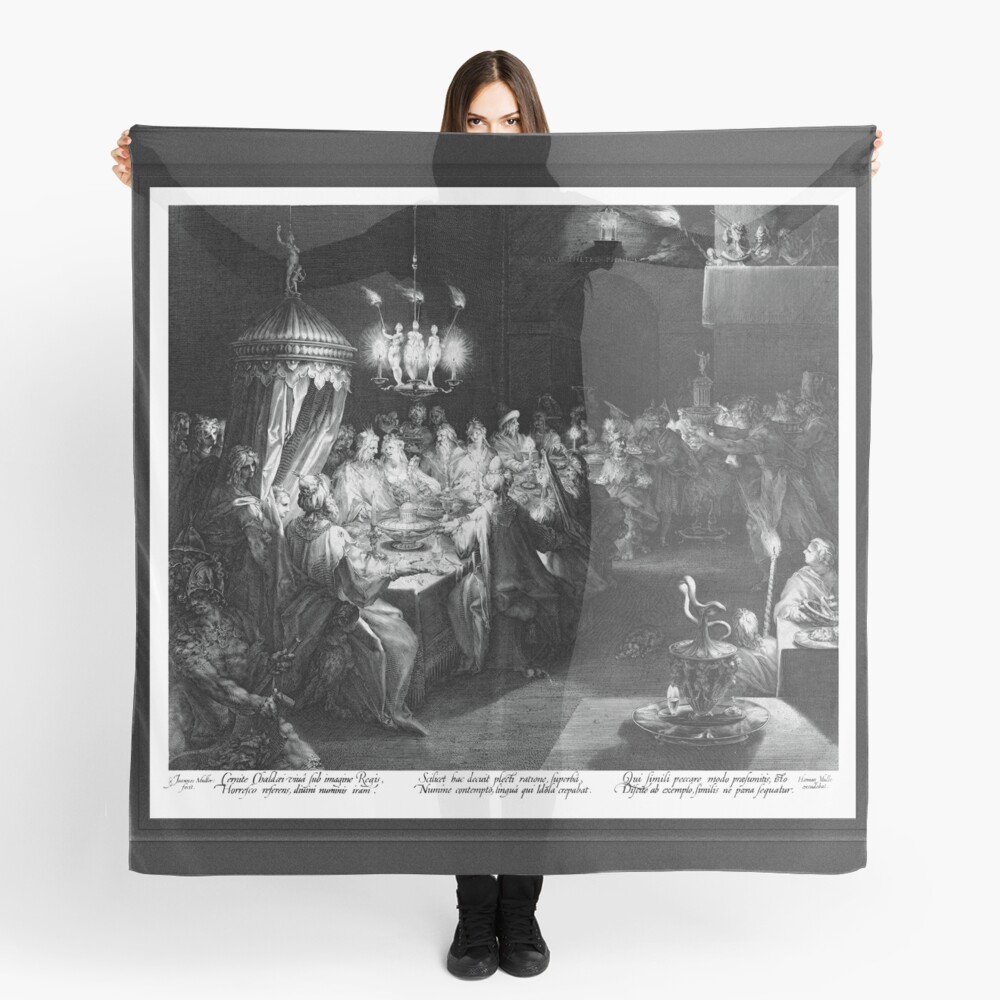
This engraving depicting the Biblical tale of Belshazzar’s Feast, depicts the story of The Writing on the Wall from the Book of Daniel, chapter 5.
It shows Belshazzar, the Crown Prince of Nabonidus, holding a grand feast and drinking from vessels that were looted from the First Temple in Jerusalem; that was destroyed by the Babylonian King Nebuchadnezzar II in 586/587 BCE and who exiled the Jewish people to Babylon.
In the engraving , a hand of a spirit appears and writes on the wall above the arched entrance to the feasting hall, terrifying Belshazzar and his guests as related in the Bible.
To understand what the writing means, Belshazzar calls for his wise men to decipher the writing, but they are unable to do so; thus his queen advises him to send for Daniel, who is renowned for his wisdom.
As it is hoped Daniel is able to interpret the message, which states that Belshazzar’s kingdom will be divided among the Medes and Persians and be no more.
Si tratta di una riproduzione rimasterizzata di vecchi maestri di arte digitale di un'immagine di pubblico dominio disponibile online come file stampa su tela arrotolata.
Informazioni sull'artista
Jan Muller è stato un incisore e pittore olandese del Secolo d'oro, nato ad Amsterdam il 1571 e imparò il mestiere dell'incisione da suo padre Harmen Jansz. Muller (1540 – 1617) che era uno stampatore di libri, incisore, ed editore.
Jan era un incisore prolifico e abile, noto per la sua attenzione ai dettagli, e ha prodotto disegni realizzati, incisioni, dipinti, ed era noto soprattutto per i suoi ritratti di personaggi politici, regalità, e altri personaggi di spicco dell'epoca.
Le opere più famose di Jan includono le sue incisioni delle figure mitologiche di Minerva e Mercurio, i suoi ritratti della famiglia reale olandese, e le sue collaborazioni con lo scultore Adriaen de Vries (1545 – 1626), Pittore olandese dell'età dell'oro, Rembrandt Harmenszoon van Rijn (1606 – 1669), e l'incisore fiammingo, Jan Sadeler (1550 – 1600).
Era noto anche per i suoi disegni del grande paesaggista olandese, Jan van Goyen (1596 – 1656), realizzati per un’edizione delle opere di van Goyen; e divenne una figura importante nell'incisione olandese, e le sue opere sono viste come una testimonianza dell'età d'oro dell'arte olandese.
Jan era anche un insegnante rispettato, trasmettere le sue competenze ai suoi studenti, che includeva l'incisore e pittore olandese, Pieter de Molyn (1597 – 1661); e fu un importante contributore all'età d'oro dell'arte olandese.