

Il Martirio di S. Sebastian
Il Martirio di S. Sebastian c1600-1604 by Dutch Engraver Jan Muller (1571 – 1628); così come un pittore dell'età dell'oro olandese.
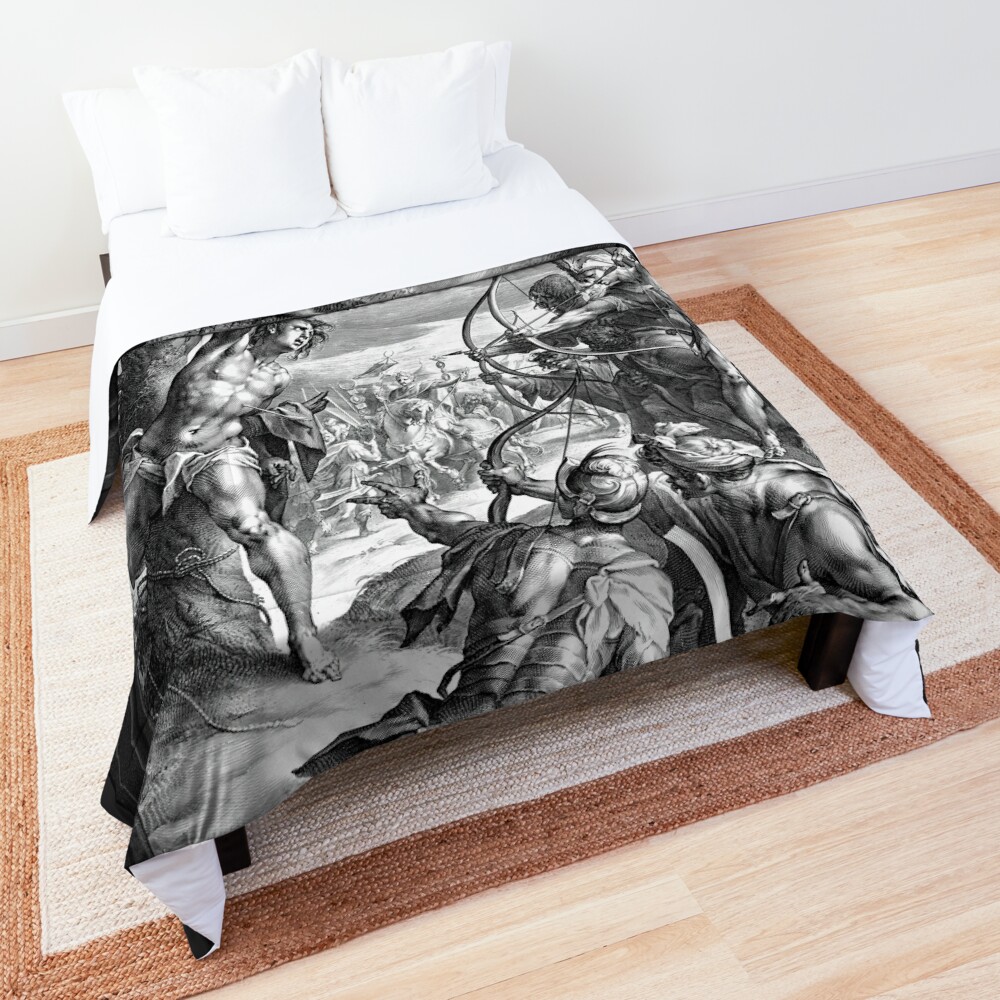
This engraving depicts Sebastian a Prætorian Guard, who would later be known as St. Sebastian The Martyr as he is being executed; which is based on a painting by the German Painter Hans van Aachen (1552 – 1615); who was a court painter and art collector for Holy Roman Emperor Rudolf II (1552 – 1612).
ns. Sebastian was born in what now is Southern France during the mid-third century, and was a member of the Prætorian Guard; which were soldiers that made up the personal security for the Roman Emperors.
It was during this period in Roman history that Christians were being actively persecuted by the Roman Empire for their beliefs in one GOD, and it is during the pursuit of anyone following the Christian faith, that Sebastian’s superiors discover that he is a Christian, and that he is actively converting other soldiers to Christianity.
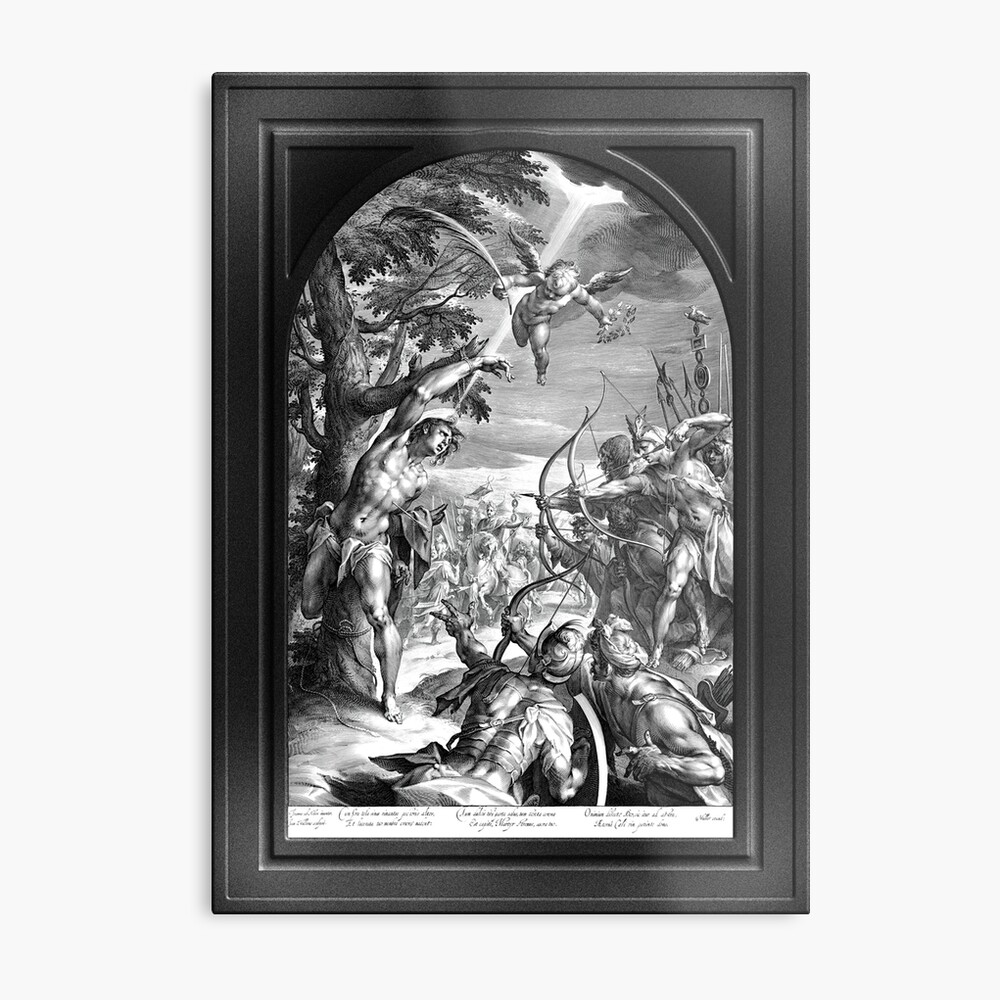
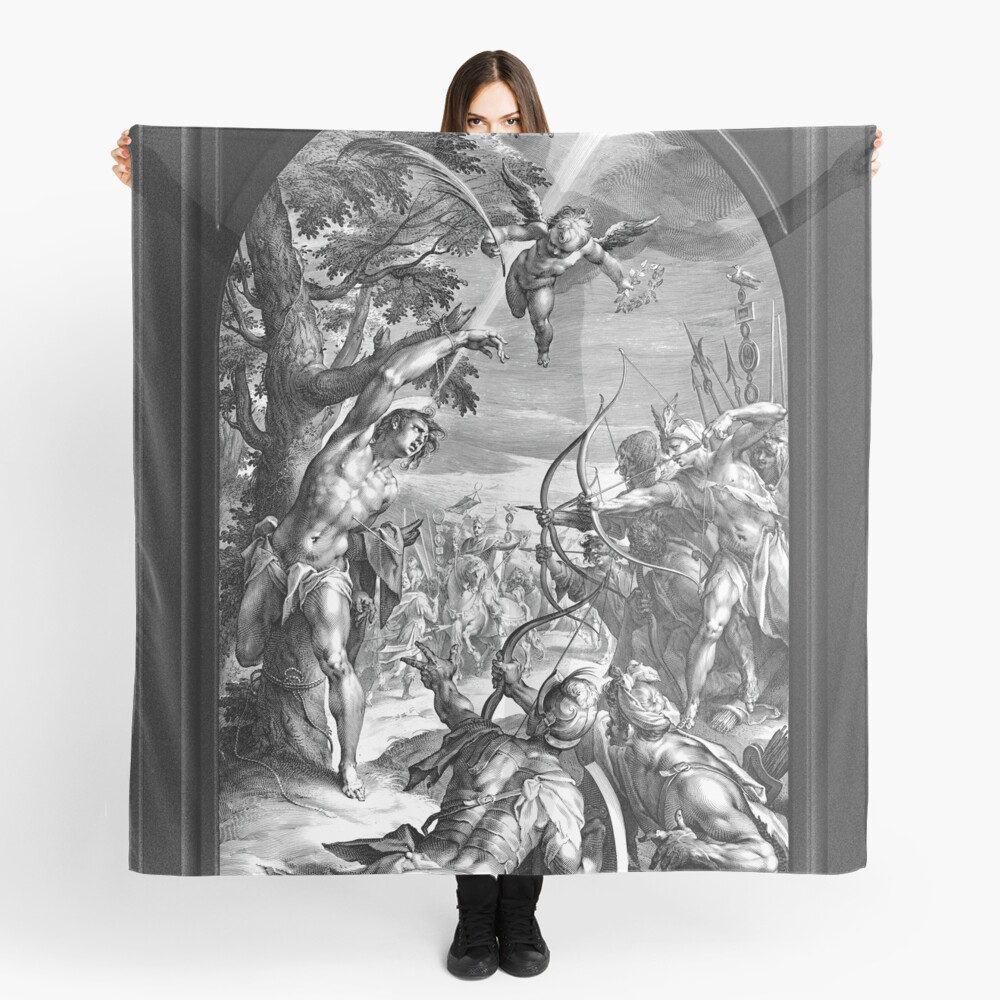
Sebastian is thus condemned to death; and in this depiction of the story we see that he has been stripped of his clothing by the very soldiers he had served with, and tied to a tree; with a single arrow shot into his chest by a soldier being given commands from his commander, with other soldiers prepared to fire more arrows at him.
In the background center of the engraving we see what may be the Roman Emperor on horseback with is guard detail behind him and a few soldiers in front of him;while above him the light of heaven streams on to his head forming a partial halo, as an angel above him carries a palm branch in its right hand and a wreath in its left hand.
The palm and the wreath symbolize GODs protection; because even though Sebastian was gravely injured and was left for dead, he did not die; as he was found by Irene of Rome, who was married to a devout Christian and who nursed him back to health.
Questa è una riproduzione di vecchi maestri di arte digitale rimasterizzata di un'immagine di pubblico dominio disponibile come file a stampa su tela arrotolata.
Informazioni sull'artista
Jan Muller è stato un incisore e pittore olandese del Secolo d'oro, nato ad Amsterdam il 1571 e imparò il mestiere dell'incisione da suo padre Harmen Jansz. Muller (1540 – 1617) che era uno stampatore di libri, incisore, ed editore.
Jan era un incisore prolifico e abile, noto per la sua attenzione ai dettagli, e ha prodotto disegni realizzati, incisioni, dipinti, ed era noto soprattutto per i suoi ritratti di personaggi politici, regalità, e altri personaggi di spicco dell'epoca.
Le opere più famose di Jan includono le sue incisioni delle figure mitologiche di Minerva e Mercurio, i suoi ritratti della famiglia reale olandese, e le sue collaborazioni con lo scultore Adriaen de Vries (1545 – 1626), Pittore olandese dell'età dell'oro, Rembrandt Harmenszoon van Rijn (1606 – 1669), e l'incisore fiammingo, Jan Sadeler (1550 – 1600).
Era noto anche per i suoi disegni del grande paesaggista olandese, Jan van Goyen (1596 – 1656), realizzati per un’edizione delle opere di van Goyen; e divenne una figura importante nell'incisione olandese, e le sue opere sono viste come una testimonianza dell'età d'oro dell'arte olandese.
Jan era anche un insegnante rispettato, trasmettere le sue competenze ai suoi studenti, che includeva l'incisore e pittore olandese, Pieter de Molyn (1597 – 1661); e fu un importante contributore all'età d'oro dell'arte olandese.