

Belshazzars Feast Engraving c1598
Grawerowanie uczty Baltazara ok. 1598 r. autorstwa holenderskiego rytownika Jana Harmensza. Mullera (1571 – 1628); a także malarz holenderskiego złotego wieku.
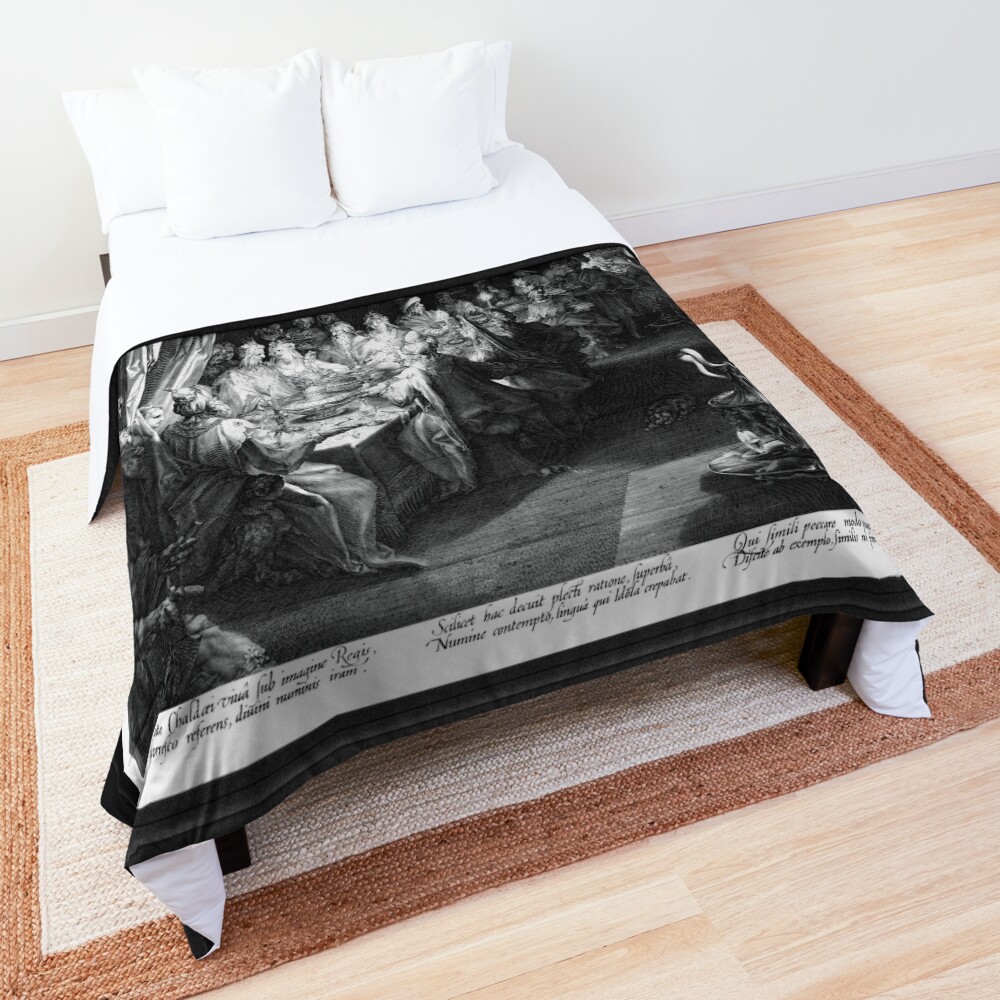
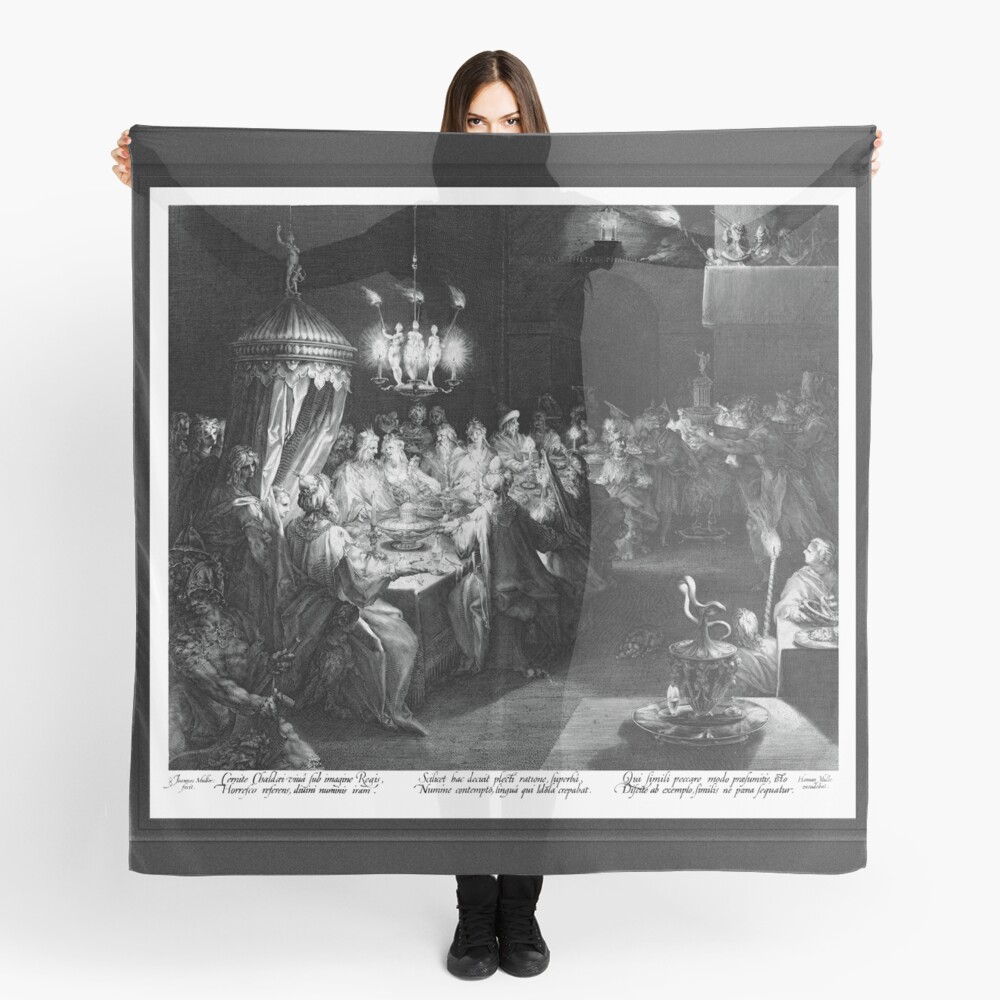
This engraving depicting the Biblical tale of Święto Belszaccara, depicts the story of The Writing on the Wall from the Book of Daniel, chapter 5.
It shows Belshazzar, the Crown Prince of Nabonidus, holding a grand feast and drinking from vessels that were looted from the First Temple in Jerusalem; that was destroyed by the Babylonian King Nebuchadnezzar II in 586/587 BCE and who exiled the Jewish people to Babylon.
In the engraving , a hand of a spirit appears and writes on the wall above the arched entrance to the feasting hall, terrifying Belshazzar and his guests as related in the Bible.
To understand what the writing means, Belshazzar calls for his wise men to decipher the writing, but they are unable to do so; thus his queen advises him to send for Daniel, who is renowned for his wisdom.
As it is hoped Daniel is able to interpret the message, which states that Belshazzar’s kingdom will be divided among the Medes and Persians and be no more.
Jest to zremasterowana cyfrowa reprodukcja obrazu należącego do domeny publicznej, autorstwa starych mistrzów, która jest dostępna online jako plik zrolowany obraz na płótnie.
O Artystce
Jan Muller był holenderskim rytownikiem i malarzem ze Złotego Wieku, urodzonym w Amsterdamie 1571 i zawodu grawera uczył się od swojego ojca Harmena Jansza. Mullera (1540 – 1617) który był drukarzem książek, grawer, i wydawca.
Jan był płodnym i utalentowanym rytownikiem, znanym ze swojej dbałości o szczegóły, i wykonał wykonane rysunki, ryciny, obrazy, i był szczególnie znany ze swoich portretów polityków, królewskość, i inne wybitne osobistości tamtych czasów.
Do najsłynniejszych dzieł Jana należą ryciny przedstawiające mitologiczne postaci Minerwy i Merkurego, jego portrety holenderskiej rodziny królewskiej, oraz jego współpraca z rzeźbiarzem Adriaenem de Vriesem (1545 – 1626), Holenderski malarz złotego wieku, Rembrandta Harmenszoona van Rijna (1606 – 1669), i rytownik flamandzki, Jana Sadelera (1550 – 1600).
Znany był także z rysunków wielkiego holenderskiego malarza pejzażu, Jana van Goyena (1596 – 1656), which were made for an edition of van Goyen’s works; and he became an important figure in Dutch engraving, and his works are seen as a testament to the golden age of Dutch art.
Jan was also a respected teacher, passing on his skills to his students, who included the Dutch engraver and painter, Pieter de Molyn (1597 – 1661); and was an important contributor to the Dutch Golden Age of art.