

Bent op jo te behagen
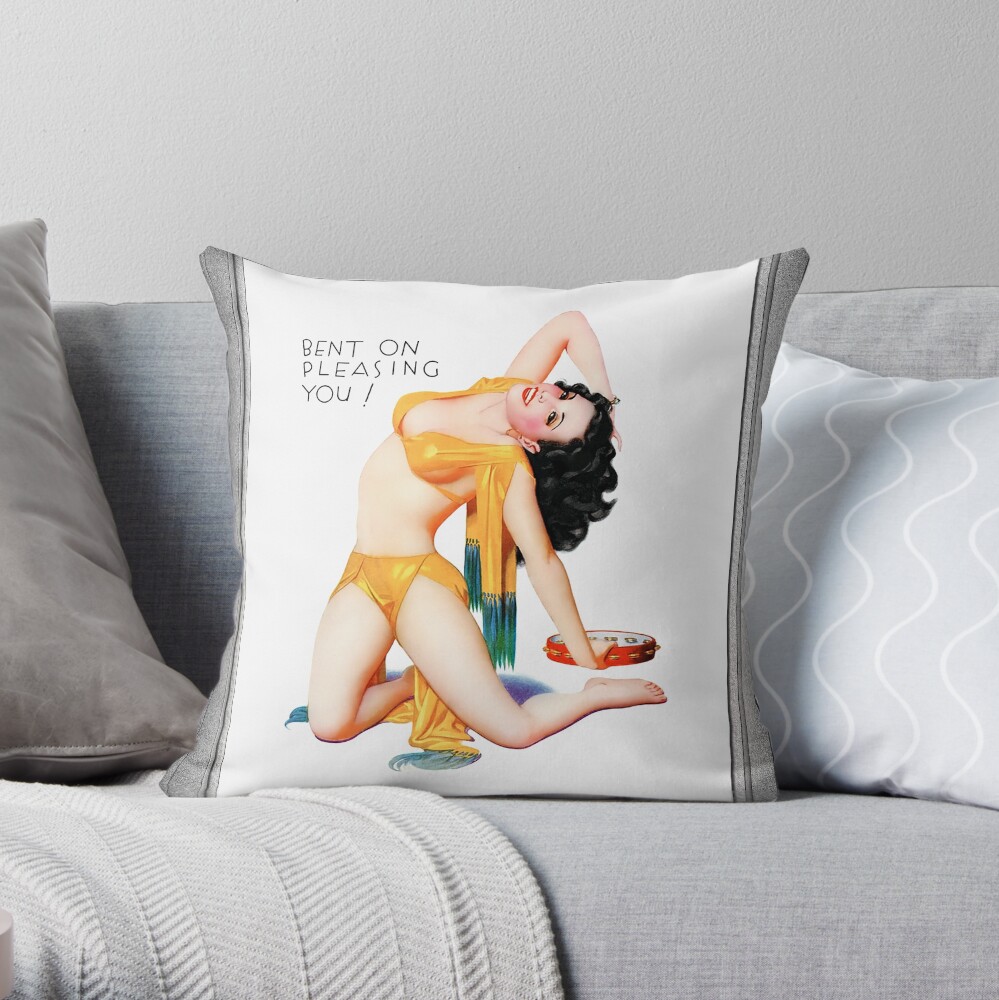
Enoch Bolles (1883 – 1976) skilderij mei de titel “Bent op jo te behagen!” vangt in boeiend momint dat elegânsje kombinearret mei boartlikens. Bolles, in byldbepalend Amerikaanske yllustrator en pin-up artyst, wie bekend om syn sensuele noch smaakfol ôfbyldings fan froulju yn it begjin fan de 20e ieu. It skilderij hat in lizzende froulike figuer, pleatst yn in hast teatrale pose, dat is karakteristyk foar de pin-up art styl dêr't Bolles bekend om is. Troch de delikate borstelwurk en subtyl gebrûk fan kleur fan 'e keunstner, hy skept in gefoel fan flirtaasje, skientme, en sjarme dy't bedoeld wie om de sjogger te boeien en te amusearjen.
Ynhâldsopjefte
Haadûnderwerp en komposysje
Yn it sintrum fan 'e komposysje is in frou mei tsjuster, volumineus hier dat oer har skouders streamt, har blik rjochte op de sjogger. Her posture is both alluring and playful, bending backward in a languid curve that exudes confidence and grace. Her facial expression is one of cheerful seduction, with a broad smile that enhances the painting’s lighthearted tone. De klean fan de frou is minimaal, consisting of a golden yellow, translucent garment that drapes sensuously around her body. The choice of this warm color draws attention to the curves of her form, highlighting the contours of her body while remaining within the constraints of modesty, a key feature of the pin-up style.
The woman is kneeling on the ground with her right leg bent and her left leg stretched out in front of her. Her left hand holds a tambourine, which seems almost like a prop that complements the overall playful and musical vibe of the piece. De tamboerine sels is helder kleure, mei read, giel, en oranje aksinten, it tafoegjen fan levendichheid oan it toaniel en prachtich kontrastearje mei de sêfte tinten fan 'e eftergrûn. De posysje fan de frou, tegearre mei har útdrukking, ferbyldet de essinsje fan froulikens en flirtaasje, mienskiplike tema's yn Bolles’ wurket.
Objekten en Details
D'r binne in pear wichtige objekten yn it keunstwurk, elk foarsichtich pleatst om by te dragen oan it algemiene gefoel fan beweging en ritme fan it toaniel. De tamboeryn, dy't se yn 'e lofterhân hâldt, stiet sintraal yn de komposysje. De sirkulêre foarm fan 'e tamboerine komplementeart de kromme fan' e rêch fan 'e frou en de sierlike linen fan har lichem. It yngewikkelde ûntwerp fan 'e tamboerine, mei syn metalen jingles en libbene kleuren, foeget in tactile elemint ta oan it skilderij. It suggerearret net allinich muzyk, mar ek in gefoel fan freugde, carefree spirit, and spontaneity.
The background of the piece is relatively simple, consisting mainly of soft pastel colors, creating a harmonious backdrop that allows the figure of the woman to stand out. The fluidity of the background complements the woman’s posture and the overall fluidity of the composition. The muted tones of the background also enhance the gold and yellow colors of her attire, making the figure appear luminous and almost ethereal against the softer pastel tones.
Terrein en ynstelling
The setting of the painting is unclear, with no clear indication of a specific place or environment. The absence of a detailed backdrop emphasizes the figure and her pose, allowing the viewer to focus entirely on her expression and form. The setting could be interpreted as a dreamlike or fantasy space, one that is not bound by the constraints of reality. The lack of a defined space or terrain further strengthens the surreal quality of the work, allowing the viewer to engage with the subject without distraction.
Bolles’ ability to evoke an almost fantastical mood through a minimalistic setting shows his mastery in focusing on the emotional and visual aspects of his subjects. The figure, although not grounded in a specific place, feels very much alive, existing in a world of her own creation—a world of lightheartedness, sjarme, en allure.
Styl en technyk
Bolles was an accomplished artist known for his involvement in the pin-up genre during the 1920s and 1930s, en “Bent op jo te behagen!” exemplifies the key elements of this artistic movement. The painting exudes a soft and polished aesthetic, with smooth contours, delikate details, en in gefoel fan idealisearre skientme.
De kleuren binne libbendich noch kontrolearre, wjerspegelje it optimisme en boartlike geast fan 'e tiid. Bolles 'gebrûk fan ljocht en skaad is benammen effektyf by it útbringen fan' e foarm fan 'e frou, de klam op har bochten en de streamende stof fan har klean. De skaden op har hûd en de sêfte hichtepunten op har hier jouwe de figuer djipte, it kreëarjen fan in libbensechte kwaliteit dy't balansearre is mei de idealisearre skientme fan it skilderij.
Wat komposysje oanbelanget, Bolles hâldt him oan de prinsipes fan symmetry en lykwicht, dy't yntegraal wiene foar de pin-up-styl. De posysje fan 'e frou en it pleatsen fan har tamboerine meitsje in gefoel fan ritmyske stream, wylst it wikselwurk fan ljocht en kleur der foar soarget dat de fokus op har bliuwt. The use of space around her further emphasizes her presence, drawing the viewer’s attention to her expression and form. Bolles’ use of perspective is subtle, reinforcing the sense of movement and fluidity within the piece.
Tema en stimming
The mood of the painting is playful, flirtatious, and seductive, yet it maintains an air of innocence and charm. The woman’s joyful expression, combined with the light colors and simple setting, evokes a sense of carefree elegance. De titel “Bent op jo te behagen!” reflects the spirit of the artwork—one of self-assuredness and playful seduction, but without crossing into overt sensuality. The painting encapsulates the idealized femininity of the time, combining beauty, betrouwen, and an undeniable allure.
The theme of the painting can be interpreted as a celebration of femininity and the power of charm. The woman’s posture and expression suggest a sense of empowerment, as if she is aware of her allure and is confidently offering it to the viewer. This representation of women as both strong and playful was a defining characteristic of the pin-up art genre, and Bolles, with his refined technique and sense of style, captured this balance effortlessly.
Konklúzje
Enoch Bolles’ “Bent op jo te behagen!” is a prime example of early 20th-century American pin-up art, characterized by its sensuality, sjarme, and lightheartedness. The painting’s subject—an alluring, confident woman posed in a playful, almost theatrical manner—captures the viewer’s attention and transports them to a world of beauty and joy. Through his masterful use of color, komposysje, and mood, Bolles makket in tiidleas stik dat de idealen fan froulikens en flirtaasje wjerspegelet dy't it pin-up sjenre definieare.
Dit is in retouchearre reproduksje fan âlde masters fan digitale keunst fan in ôfbylding yn it iepenbier domein.
Dizze digitale keunst skepping, lykas mei al it keunstwurk dat te finen is op 'e Xzendor7-webside is online te keap yn in ferskaat oan materiaalformaten, ynklusyf canvasprints, acryl prints, metalen prints, hout prints, framed prints, posters, en as rôlde canvasprints yn in ferskaat oan grutte fan 12 inches oan 72 inch ôfhinklik fan de grutte fan it eigentlike keunstwurk en de print-on-demand winkel wêrfan jo kieze om de keunst te keapjen.
It keunstwurk is ek te krijen op in breed oanbod fan klean foar manlju en froulju, mokken, totes, sjaals, notebooks en tydskriften en in protte home decor produkten.
Artist Bio
Info hjirûnder ôflaat fan Wikipedia.org
Enoch waard berne ta parfumchemist Enoch Bolles, Jr en Catherine Keep yn Marion County, Florida op maart 3, 1883.
Hy studearre oan 'e New York National Academy of Design (is. 1825), en publisearre syn earste yllustraasje op 'e omslach fan humortydskriften; Rjochter en Puck yn 1914; bekend wurden troch it yllustrearjen fan it pulptydskrift Film Fun.
Dan yn 1923 hy waard de eksklusive cover artyst foar Film Magazine en soe bliuwe yn dy posysje oant 1943, doe't it tydskrift it slachtoffer waard fan de kampanje fan de doetiidske postmaster-generaal tsjin sljochtsinnich materiaal.
Yn 'e tiid fan Enoch mei Film Fun Magazine makke hy 200 stikken cover art, en op syn minst 300 ekstra covers foar oare pittige pulp tydskriften, ynklusyf Breezy Stories, Pep en New York Nights.
Enoch's moanlikse opstelling fan 'e All-American Beauty presys posearre yn ferbyldingryk kostúm is ferantwurdlik foar it definiearjen fan' e keunst fan 'e Amerikaanske Pin Up Illustration. Hy wie ek in alsidige yllustrator dy't advertinsjekeunst makke foar in protte produkten fan 'e tiid, lykas Sun-Maid Raisins en Zippo Lighters.
Yn de âldens fan 60, yn 1943 Enoch moast syn profesjonele karriêre beëinigje fanwegen psychologyske problemen, en waard him foar it grutste part fan syn libben beheind ta Greystone Park Psychiatric Hospital yn New Jersey; mar hy bleau te skilderjen yn opdracht portretten en foar persoanlik genot.
Hy waard úteinlik frijlitten út it Greystone Park Psychiatrysk Sikehûs yn 1969 en hy stoar sân jier letter fan hertfalen yn 'e âldens fan 93.