

Carole Lombard Photoplay Magazine
Carole Lombard Photoplay Magazine June Edition by the renowned American illustrator F. hrabia Christy (1882 – 1961) showcases the golden age of Hollywood and the glamour of early 20th-century cinema. Christy, a celebrated figure in the art world known for his vibrant, dynamic magazine covers and promotional illustrations, was instrumental in capturing the allure of film stars of his era. Ten konkretny utwór, featured on the cover of Photoplay magazine, is a vibrant portrayal of actress Carole Lombard, one of the most beloved actresses of the time, exuding both grace and seduction through Christy’s masterful brushwork.
Spis treści
Główny temat
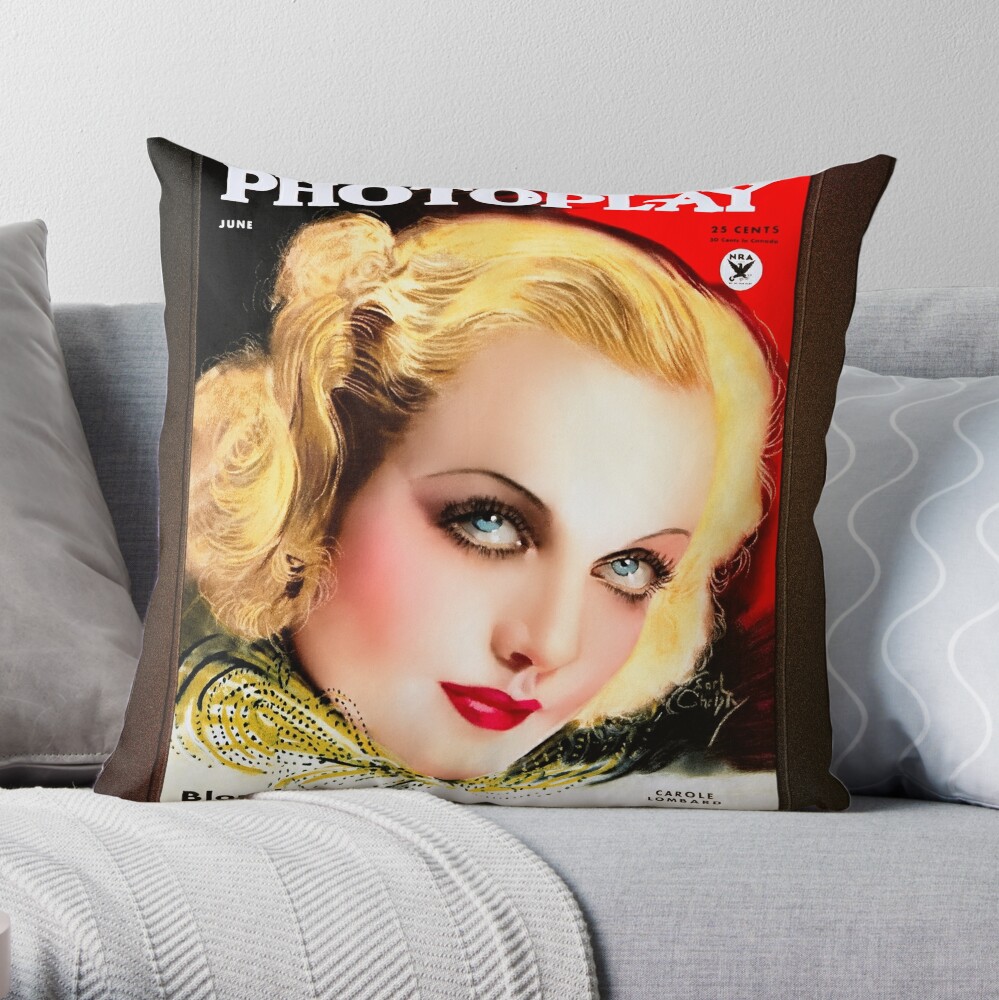
Ta grafika, is a close-up portrait of Carole Lombard, painted in such vivid detail that her facial features appear to come alive. Lombard is depicted in a glamorous, slightly exaggerated manner, her platinum blonde hair styled in soft curls that frame her face, while her eyes gaze directly at the viewer, creating a compelling, almost ethereal connection. Jej usta, painted in a bold, crimson hue, stand out against the pale complexion, adding an air of sophistication and elegance. The emphasis on her beautiful face and expressive eyes suggests an attempt to capture not just her physical features but her captivating screen presence.
Styl, Technika, i Średni
F. Earl Christy’s technique in this artwork is quintessentially Art Deco, with its fluid lines, bold color contrasts, and dynamic composition. Styl ten był popularny na początku XX wieku, zwłaszcza na ilustracjach towarzyszących magazynom filmowym, gdzie skupiano się na przepychu i wyidealizowanym pięknie. Christy użyła miękkości, płynne linie na włosach i twarzy Lombarda, kontrastujące z odważniejszymi, wzory geometryczne w tle. Paleta kolorów jest bogata, z odcieniami głębokiej czerwieni, złoto, i żółty, tworząc uderzający kontrast pomiędzy obiektem a tłem. Dzięki temu dzieło sztuki zyskuje wrażenie ruchu i głębi, jakby sama Lombard wyłaniała się z płótna.
Użycie światła i cienia przez Christy jest szczególnie skuteczne w dodawaniu wymiaru dziełu. Miękkie oświetlenie twarzy Lombarda podkreśla gładkość, porcelanowa faktura jej skóry, podczas gdy ciemniejszy, shaded areas around her eyes and beneath her cheekbones lend the portrait a three-dimensional feel. This careful attention to light is part of the artist’s ability to imbue his subjects with a life-like quality, emphasizing the beauty of the subject in a way that makes the viewer feel as though they are peering into the world of Hollywood glamour from the 1930s.
Przedmioty i kompozycja
The composition of the piece is dominated by Carole Lombard’s face, which takes up the majority of the canvas. Behind her is a bold, sweeping background of fiery red that complements the tones in her hair and lips. The contrast of bright red against the pale, almost alabaster skin of Lombard creates a powerful visual effect. Wokół jej twarzy znajduje się ciemny, zacieniony obszar, który podkreśla platynowe blond loki, jeszcze bardziej wzmacniając kontrast i przyciągając wzrok widza do jej zniewalających oczu i ust.
Nazwa magazynu, Photoplay, jest wyraźnie widoczny w górnej części obrazu w dużym formacie, biały, blokowe litery. Typografia jest czysta i ostra, typowe dla okładek magazynów z tego okresu, przyczyniając się do retro, ilustracja w stylu vintage. Podtytuł “Blondynki i krągłości oznaczają wojnę” pod tytułem magazynu dodaje intrygi i podkreśla zabawę, nieco prowokacyjny charakter mediów epoki, co często wywoływało sensację wdzięku i mocy hollywoodzkich gwiazdek.
Kolejną godną uwagi cechą jest umieszczenie podpisu Christy w prawym dolnym rogu obrazu. This subtle yet important detail highlights the personal touch of the artist, reminding the viewer that this illustration is not merely an advertisement, but a carefully crafted work of art.
Temat i nastrój
The theme of the artwork revolves around the glamorization of Hollywood stars, capturing the essence of the film industry during its heyday. Christy’s illustration reflects the prevailing attitude of the time toward actresses, who were often portrayed as larger-than-life figures, embodying both beauty and strength. The theme of femininity, piękno, and allure is amplified by the title, which suggests that the combination of blondes and curves is a powerful force—perhaps even dangerous or capable of inciting conflict. This was a time when Hollywood and its stars were idolized, a Christy doskonale uchwycił to uwielbienie, odgrywając rolę Lombarda.
Nastrój tego dzieła jest pełen wyrafinowanego uroku. Bezpośrednie spojrzenie i pewna postawa Lombarda wyrażają zarówno siłę, jak i zmysłowość, sprawiając, że widz ma wrażenie, że jest świadkiem chwili filmowej magii. Bogaci, żywe kolory i odważne użycie cieni przyczyniają się do intensywności, niemal tajemniczy nastrój, podczas gdy luksusowy portret samej Lombard przywołuje na myśl przepych i ekskluzywność.
W całości, obraz oddaje poczucie romantycznego piękna, które było kluczowe dla złotej ery kina hollywoodzkiego. Portret Carole Lombard przez Christy nie tylko uwiecznia jej wygląd – uwiecznia ją jako symbol łaski, moc, i urok, który rezonuje poza ekranem.
Wniosek
W Carole Lombard Photoplay Magazine June Edition, F. Earl Christy created a timeless piece of artwork that not only celebrates the actress’s captivating beauty but also encapsulates the mood of Hollywood in the 1930s. Through his distinctive Art Deco style, Christy has brought Lombard to life, capturing the essence of a film star whose image dominated the silver screen. The illustration serves as a powerful reminder of a bygone era when magazine covers were works of art in themselves, designed to captivate and entertain audiences.
Background Info On The Magazine Cover
This June Edition of Photoplay Magazine features the Hollywood Starlet Carole Lombard (one of her best comedy roles was in My Man Godfrey with Dick Powell) of the Golden Age of Hollywood.
Her portrait is surrounded by a swirling combo of fiery red and black that transitions to stripes of violet on the lower right.
Her golden blonde hair is beautifully accented by this color combination, that brings out her blue-grey eyes and fiery red lips.
Below her chin is a flow of yellow gold loops with black solid and dotted lines that create bow type look; and on the side of her hair is the signature of the artist.
Below that on a white background to the right is the actress name and off to the left the words Blondes Plus Curves Mean War.
The magazine at the top on the right above her hair, but below the cost of the publication has the NRA Eagle Symbol.
The NRA or National Recovery Administration, was a prime agency created by this Nations Greatest President Franklin D. Roosevelt (FDR 1882 – 1945) w 1933 (The only president to be elected four times to the White House).
The goal of the administration was to eliminate “cut throat competition” by bringing industry, labor, and government together to create codes of “fair practices” and set prices. Ref NRA
Jest to zremasterowana cyfrowa reprodukcja starych mistrzów obrazu z domeny publicznej, która jest dostępna jako druk na płótnie online.
Bio artysty pochodzące z Askart.com
Christy urodziła się w 1882 Filadelfia, Pensylwania; i w 1899 w dojrzałym wieku 17 was painting original art for the Boardwalk Atlantic City Picture company.
Many of his early artworks were also published by the J. Hoover and Sons Calendar Company of Philadelphia; when he was 23 years of age he attended the Pennsylvania Academy of Arts from 1905 do 1907.
During his career Christy created dozens of magazine covers, illustrations and calendar prints for publications like the Dell Publishing Company, Modern Screen and Radio Stars, Ainslee’s magazine, American Magazine, Leslie’s Illustrated Weekly, McClure’s Photoplay Magazine, and many others.