

Gaztelu Neguko Paisaia Ibai Izoztu batean Patinatzaileekin
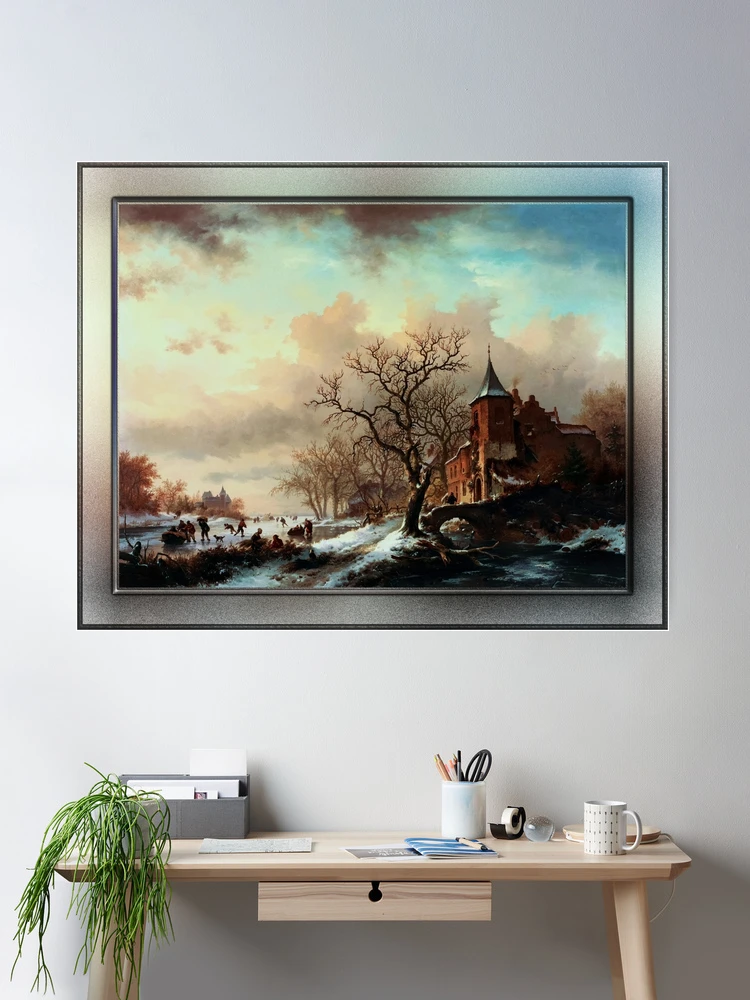
Gaztelu Neguko Paisaia Ibai Izoztu batean Patinatzaileekin inguruan sortua 1855 neguko paisaia iradokitzailea da Frederik Marinus Kruseman, urtean jaiotako margolari holandarra 1816 eta sartu 1882 Kruseman, mendean zehar Herbehereetako landa-esentzia harrapatzeko maisu trebea, sarritan errealismo deigarria duten paisaiak eta naturaren irudikapen zehatzak irudikatzen dituzten bere lan atmosferikoengatik da ezaguna..
Margolan hau Krusemanek handitasuna egunerokoarekin ezkontzeko duen gaitasunaren adibide bikaina da, naturaren dotoretasuna eta landa-bizitzaren soiltasun lasaia transmititzen dituen neguko eszena lasaia harrapatzen. Argiaren erabilera, itzalak, eta perspektiba, kolore paleta ñabardu batekin batera, Holandako neguaren edertasun lasaia eta gizakiak lurrarekin duen loturaren ikuspegia eskaintzen du denboraldi honetan.
Edukien taula
The Setting and Composition
The composition of the painting unfolds before us in a wide and panoramic landscape, with a focus on a grand, almost ancient castle nestled in the background. The artist skillfully places the fortress slightly off-center, giving the viewer a sense of depth and allowing the natural environment to interact harmoniously with the built structure. Gaztelu ikaragarria, bere harlandu zakarra denborak eguraldia egin zuen, malda leun baten gainean dago, Hezur-adarrak zerurantz luzatzen dituzten zuhaitz antzuez inguratuta, kontenplazio lasaiko une batean harrapatuta balego bezala.
Ibai izoztu batek mihisearen beheko erdia zeharkatzen du, bere izotza leun baten azpian distira, neguko eguzki zabala. Ibaia, elurrezko estalki batez estalita, eszenaren ardatza da, patinatzen eta jolasten jende taldeekin, beren forma ilunak atzealde zuri eta zurbilaren aurka kontraste egiten dute. Patinatzaile hauek, mendeko jantzi sinple baina beroekin jantzita, gehitu giza elementu bizia bestela baketsua den paisaiari, irudien eta haien inguruaren arteko elkarrekintza dinamikoa sortzea.
Winter Landscape and Atmospheric Effects
Krusemanen neguko paisaia ez da naturaren irudikapena soilik forma estatiko batean, but a carefully constructed atmosphere. The coldness of the winter air is palpable, artistaren pintzelkatze delikatuarekin elurrez estalitako lurraren ehundura jasotzen, zeruaren zorroztasuna, eta neguko hotzarekin batera sarritan laino txikia. Elurra errealismo nabarmenarekin egiten da, maluta bakoitzak zorroztasun izoztu batez distira egiten duela dirudi, inguruko zuhaitzen eta gazteluaren tonu isilekin kontrastatuz.
Zerua, arrosa koloreko hodei leunez beteta, izpilikua, eta urdin zurbila, Arratsaldearen hasieran edo goizaldean iradokitzen du, non argia baxua den baina oraindik nahikoa distiratsua luzatzeko, itzal leunak paisaian zehar. Pieza honetako argiztapen atmosferikoak elurraren eta izotzaren ehundura areagotzeaz gain, eszena aldarte lasai eta malenkoniatsuaz txertatzen du.. Margolanaren barruan argi eta itzalen arteko elkarreragina Krusemanen teknikaren alderdi maisu bat da, ikuslearen neguko giroan murgiltzeko sentsazioa areagotuz.
The Human Element: Skaters and Everyday Life
Margoaren alderdi nagusi bat patinatzaileen presentzia da, eszenari bizitza eta bizitasuna ematen diotenak. Hainbat figura dotore lerratzen dira izotzean zehar, beren mugimenduak ekintza erdian izoztuta, neguko aisialdiaren betiko erretratua eskainiz. Patinatzaileak talde txikitan agertzen dira, batzuk elkarren atzetik joatea bezalako jardueretan aritzen ziren, beste batzuk, berriz, atseden hartzeko, aire hotzean arnasa ikusten dute. Zifra hauek, paisaia naturalaren bigarren mailakoa izan arren, Krusemanek landa-bizitzaren irudikapenean giza elementu garrantzitsu bat adierazten du. Haien arropa iluna, gehienbat berokiz osatua, zapiak, eta txanoak, kontraste nabarmena du elurraren zuriarekin, neguaren gogortasunaren aurrean gizakiaren erresistentzia azpimarratuz.
Patinatzaile hauek XIX. mendeko Herbehereetako neguko hilabeteetan eguneroko bizitzaren kontakizuna gehitzen dute.. Izotz patinajea zaletasun ezaguna zen negu gogorretan, ibaiak eta ubideak izozten zirenean. Irudiak ez dira eszenaren gehigarri hutsak, baizik eta koadroaren gizakiaren eta naturaren arteko harmoniaren gaiari laguntzen diote., elementuekiko elkarrekintza alaia erakutsiz.
Architectural Elements: The Castle and Its Surroundings
Gaztelua, egitura bikaina baina ilun samarra, arreta nabarmentzen du bere lerro angelutsuekin eta gailur altuarekin. Estilo gotiko edo errenazentistan eraikia, bere forma erortzaileak denboraren proba eta negu gogorrak jasan dituela iradokitzen du. Gazteluak paisaiaren barruan egoteak historiaren zentzua sartzen du, eskualde hau mendeetan zehar bizi izan dela iradokiz. The structure stands as a silent witness to the passing of time, while the skaters below are a reminder of life continuing on, despite the cold and the passage of seasons.
Around the castle, the land is dotted with trees that appear barren, their branches twisted and bare, signaling the end of autumn and the full embrace of winter. These trees, like the castle, stand in stark contrast to the skaters, who are in motion. The stillness of the natural elements surrounding the human figures enhances the sense of a serene, almost timeless moment, as if capturing the fleeting essence of winter itself.
Artelanaren aldartea eta gaia
ren aldartea Gaztelu Neguko Paisaia Ibai Izoztu batean Patinatzaileekin is one of tranquility, mixed with a quiet sense of nostalgia. There is a peaceful solitude conveyed through the desolate trees and the vastness of the snow-covered landscape. Hala ere, there is also an underlying warmth in the activity of the skaters, which serves as a contrast to the coldness of the environment. The scene evokes a sense of connection between human activity and the natural world, where even in the coldest of seasons, life continues with joy and vigor.
The theme of winter as both a challenge and a beauty is central to the work. Kruseman’s representation of a landscape covered in snow reflects the harshness of winter, yet the skaters provide an optimistic counterpoint, reminding the viewer that even in the coldest months, life has its moments of grace and liveliness.
Castle Winter Landscape With Skaters On A Frozen River is a retouched digital art old masters reproduction of a public domain image.
Arte digitalaren sorkuntza hau, Xzendor7 webgunean aurki daitezkeen artelan guztiak bezala sarean erosteko eskuragarri dago hainbat material formatutan, mihise inprimatuak barne., estanpatu akrilikoak, metal estanpatuak, egur estanpatuak, marko estanpatuak, kartelak, eta ijetzitako mihise estanpatu gisa hainbat tamainatan 12 zentimetroetara 72 hazbeteko artelanaren eta artea erosteko aukeratzen duzun eskaeraren arabera inprimatzeko dendaren tamainaren arabera.
Artelana gizonezkoen eta emakumezkoen arropa sorta zabal batean ere eskuragarri dago, katiluak, totes, zapiak, koadernoak eta aldizkariak eta etxeko dekorazio produktu ugari.
Artistari buruz
Informazioa Behean Deribatua Wikipedia.org
Frederik-ek Jan Reekers natura hilen margolariaren eskutik jaso zituen bere lehen marrazketa ikasgaiak (1790 – 1858), garai hartan Amsterdameko Arte Ederren Errege Akademiako zuzendaria zena; eta bere lehengusu Jan Adam ere tutore izan zuena[ Haarlemeko lanbide eskola batean parte hartzen ari zen bitartean 1832 to 1833.
In 1833 orduan hasi zen pintura ikasten Holandako pintorearekin, Grabatzailea, Litografoa, Nicolaas Johannes Roosenboom akuarelista eta ilustratzailea (1805 – 1880).
Gero sartu 1835 Herbehereen erdialdean dagoen Het Gooira joan zen bizitzera, bertan, ikasketak aurreratuak egin zituen Jan van Ravenswaay paisaia-margolari holandarrarekin (1789 – 1869); baita denbora labur batez ikasi ere Barend Cornelis Koekkoek paisaia margolari eta litografo holandarrarekin (1803 – 1862).
Geroago Haarlemera itzuli zen eta handik Alemaniako ipar-mendebaldeko Kleve-ra non paisaiak margotu zituen, etxera itzuli aurretik 1839.
In 1841 Bruselara joan eta han egon zen arte 1852, Parisera joan zen hilabete batzuetako epe labur bat izan ezik. In 1852 etxera itzuli zen Haarlemera eta han egon zen lau urtez, ondoren, Belgikara joan zen, bertan egon zen hil arte 1882.