

Cruth-tìre Geamhraidh a’ Chaisteil le luchd-spèilidh air Abhainn Reòta
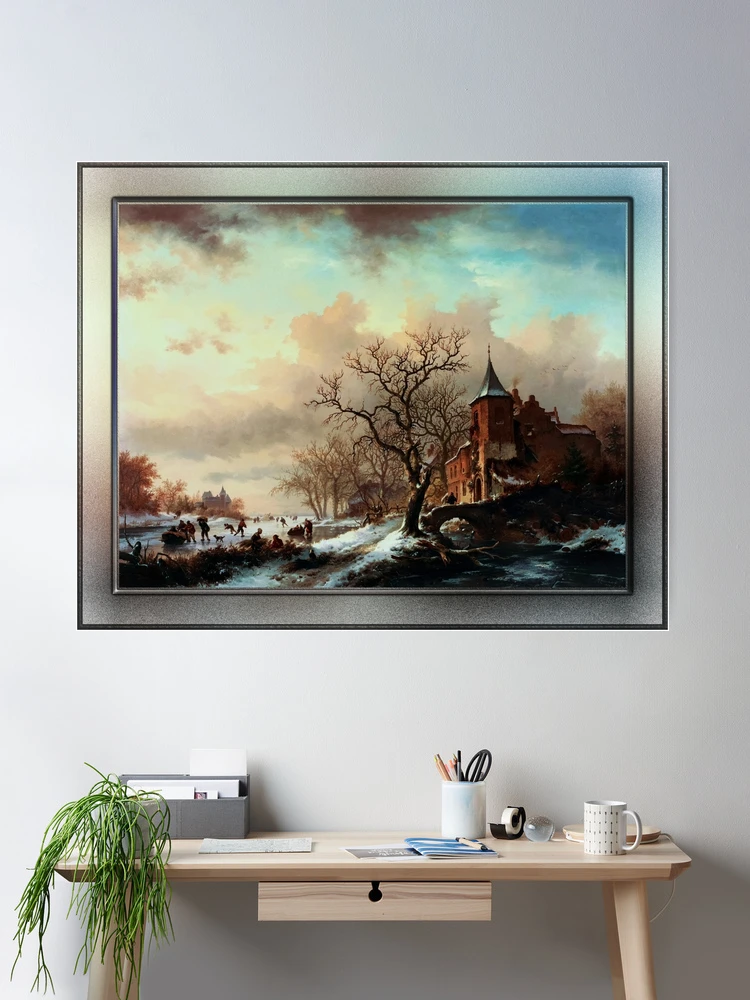
Cruth-tìre Geamhraidh a’ Chaisteil le luchd-spèilidh air Abhainn Reòta air a chruthachadh timcheall 1855 na chruth-tìre geamhraidh inntinneach le Frederik Marinus Kruseman, peantair Duitseach a rugadh ann an 1816 agus a’ dol a-steach 1882 Krusman, maighstir sgileil ann a bhith a’ glacadh brìgh dùthaich na h-Òlaind san 19mh linn, Tha e ainmeil airson a chuid obraichean àile a bhiodh gu tric a’ sealltainn chruthan-tìre le fìor-eòlas iongantach agus dealbhan mionaideach de nàdar.
Tha an dealbh seo na fhìor eisimpleir de chomas Kruseman an grandiose a phòsadh leis an latha làitheil., a’ glacadh sealladh ciùin geamhraidh a tha a’ nochdadh an dà chuid mòrachd nàdur agus sìmplidheachd shàmhach beatha dhùthchail. An cleachdadh aige de sholas, sgàile, agus sealladh, còmhla ri paileas dath ùr-nodha, a’ toirt sealladh dhuinn air bòidhchead ciùin geamhradh na h-Òlaind agus an ceangal daonna ris an fhearann rè an t-seusan seo.
Clàr-innse
An suidheachadh agus an co-sgrìobhadh
Tha cothlamadh an deilbh a’ leudachadh romhainn ann an sealladh-tìre farsaing agus farsaing, le fòcas air grand, cha mhòr aosda chaisteal na laighe air a' chùl. Bidh an neach-ealain gu sgileil a’ cur an dùn beagan far a’ mheadhan, a’ toirt faireachdainn doimhneachd don neach-coimhead agus a’ leigeil leis an àrainneachd nàdarra eadar-obrachadh gu co-chòrdail ris an structar thogte. An caisteal eireachdail, bha an obair-cloiche gharbh aige air a caitheamh le ùine, 'na shuidhe air mullach leathad socair, air an cuairteachadh le craobhan neo-thorrach a tha a’ sìneadh an cuid chnàmhan a dh’ionnsaigh na speuran, mar gum biodh e air a ghlacadh ann am mionaid de mhothachadh sàmhach.
Tha abhainn reòta a’ ruith thairis air an leth ìosal den chanabhas, a deigh a' deàrrsadh fo bhog, grian geamhraidh sgaoilte. An abhainn, còmhdaichte ann am plaide sneachda, a tha aig cridhe an t-seallaidh, le buidhnean de dhaoine a’ spèileadh agus a’ cluich, tha na cruthan dorcha aca eadar-dhealaichte an aghaidh cùl-raon geal is bàn. Na skaters seo, air a sgeadachadh ann an èideadh sìmplidh ach blàth bhon 19mh linn, cuir eileamaid bheothail daonna ris an t-sealladh-tìre a tha air dhòigh eile sìtheil, cruthachadh eadar-obrachadh fiùghantach eadar na figearan agus na tha mun cuairt orra.
Cruth-tìre Geamhraidh agus Buaidhean Àile
Chan e dìreach dealbh de nàdar ann an cruth statach a th’ ann an cruth-tìre geamhraidh Kruseman, ach àile air a thogail gu faiceallach. Tha fuachd an adhair gheamhraidh ri fhaicinn, le obair bhruis fìnealta an neach-ealain a’ glacadh inneach na talmhainn còmhdaichte le sneachda, criosduidh nan speur, agus am beagan ceò a tha gu tric an cois fuachd a' gheamhraidh. Tha an sneachda air a thoirt seachad le fìor-eòlas iongantach, gach flake a rèir coltais a’ deàrrsadh le geur reòthte, an coimeas ri tònaichean ciùin nan craobhan agus an caisteal mun cuairt.
An speur, air a lìonadh le sgòthan bog ann an dathan pinc, lavender, agus gorm bàn, a’ moladh feasgar tràth no anmoch sa mhadainn, far a bheil an solas ìosal ach fhathast soilleir gu leòr airson a thilgeil fada, faileasan bog air feadh na tìre. Tha an soillseachadh àile sa phìos seo chan ann a-mhàin a’ neartachadh inneach an t-sneachda is na deigh ach bidh e cuideachd a’ toirt buaidh air an t-sealladh le faireachdainn ciùin ach melancholic.. Tha an eadar-chluich de sholas is dubhar taobh a-staigh an deilbh na phàirt shàr-mhath de dhòigh-obrach Kruseman, ag àrdachadh mothachadh an neach-coimhead air bogadh a-steach don t-suidheachadh geamhraidh.
An Eilein Daonna: Luchd-spèilidh agus Beatha Làitheil
Is e prìomh phàirt den pheantadh làthaireachd an luchd-sgèilidh, a tha a’ cuir a-steach an sealladh le beatha agus spionnadh. Bidh grunn fhigearan a’ deàrrsadh gu gràsmhor thairis air an deigh, reòthadh na gluasadan aca meadhan-gnìomha, a’ tabhann dealbh gun ùine de chur-seachad geamhraidh. Bidh na skaters a’ nochdadh ann am buidhnean beaga, bha cuid an sàs ann an gnìomhan spioradail leithid a bhith a’ ruith a chèile, agus cuid eile a' gabhail fois, an anail ri fhaicinn anns an adhar fhuar. Na figearan seo, ged a tha e àrd-sgoile don t-sealladh-tìre nàdarra, riochdachadh eileamaid chudromach daonna ann an dealbh Kruseman de bheatha dhùthchail. An aodach dorcha aca, sa mhòr-chuid air a dhèanamh suas de chòtaichean, sgarfaichean, agus adan, gu tur eadar-dhealaichte ri geal an t-sneachda, a’ cur cuideam air fulangas an duine an aghaidh cruadal a’ gheamhraidh.
Bidh an luchd-sgèilidh sin a’ cur ris an aithris air beatha làitheil tro mhìosan a’ gheamhraidh san Òlaind san 19mh linn. Bha spèileadh deighe na chur-seachad mòr-chòrdte ann an geamhraidhean cruaidh nuair a bhiodh aibhnichean is canalan a’ reothadh. Chan e dìreach cur ris an t-sealladh a th’ anns na figearan ach tha iad a’ cur ri cuspair a’ pheantadh co-sheirm eadar duine agus nàdar, a 'sealltainn an eadar-obrachadh toilichte leis na h-eileamaidean.
Feartan ailtireachd: An Caisteal agus na tha timcheall air
An caisteal, structar eireachdail ach caran borb, ag àrach aire le a loidhnichean ceàrnach agus a stìoball àrd. Air a thogail ann an stoidhle Gothic no Renaissance, tha an cruth crùbach aige a’ nochdadh gu bheil e air seasamh an aghaidh deuchainn ùine agus geamhraidhean cruaidh. Tha làthaireachd a' chaisteil taobh a-staigh na tìre a' toirt a-steach mothachadh air eachdraidh, a’ moladh gu bheil daoine air a bhith a’ fuireach san sgìre seo airson linntean. Tha an structar na sheasamh mar fhianais shàmhach air dol seachad ùine, fhad ‘s a tha na skaters gu h-ìosal nan cuimhneachan air beatha a’ leantainn, a dh'aindeoin fuachd agus gluasad nan ràithean.
Timcheall air a’ chaisteal, tha an talamh làn de chraobhan a tha a 'coimhead neo-thorrach, bha na geuga aca toinnte agus lom, a’ comharrachadh deireadh an fhoghair agus làn chòmhdach a’ gheamhraidh. Na craobhan seo, mar an caisteal, seasamh gu tur eadar-dhealaichte bho na skaters, a tha ann an gluasad. Tha sàmhchair nan eileamaidean nàdarra timcheall air na figearan daonna a’ cur ris an fhaireachdainn de shàmhchair, mionaid cha mhòr gun ùine, mar gum biodh e a’ glacadh brìgh a’ gheamhraidh fhèin.
Mood agus Cuspair an Obair-ealain
Faireachdainn de Cruth-tìre Geamhraidh a’ Chaisteil le luchd-spèilidh air Abhainn Reòta tha aon de shàmhchair, measgta le cianalas sàmhach. Tha aonaranachd sìtheil air a ghiùlan tro na craobhan fàsail agus cho farsaing sa tha an sealladh-tìre còmhdaichte le sneachda. Gidheadh, tha cuideachd blàths bunaiteach ann an gnìomhachd an luchd-spèilidh, a tha diofraichte ri fuachdachd na h-àrainneachd. Tha an sealladh a’ nochdadh faireachdainn de cheangal eadar gnìomhachd daonna agus an saoghal nàdarra, far a bheil eadhon anns na ràithean as fhuaire, tha beatha a' leantainn le aoibhneas agus spionnadh.
Tha cuspair a’ gheamhraidh mar dhùbhlan agus bòidhchead aig cridhe na h-obrach. Tha riochdachadh Kruseman de chruth-tìre còmhdaichte le sneachda a’ nochdadh cruas a’ gheamhraidh, ach tha an luchd-sgèilidh a’ toirt seachad sealladh dòchasach, a’ cur an cuimhne an neach-coimhead sin eadhon anns na mìosan as fhuaire, tha amannan de ghràs agus de bheòthalachd aig beatha.
Tha Cruth-tìre Geamhraidh a’ Chaisteil le luchd-spèilidh air Abhainn Reòta na ath-riochdachadh seann mhaighstirean ealain didseatach de ìomhaigh raon poblach.
An cruthachadh ealain didseatach seo, mar a tha leis a h-uile obair-ealain a gheibhear air làrach-lìn Xzendor7 ri fhaighinn airson a cheannach air-loidhne ann an grunn chruthan stuth a’ gabhail a-steach clò-bhualaidhean canabhas, dealbhan acrylic, clò-bhualaidhean meatailt, clò-bhualaidhean fiodha, lèileagan frèam, postairean, agus mar chlò-bhualadh canabhas air a roiligeadh ann an grunn mheudan bho 12 òirlich gu 72 òirlich a rèir meud an fhìor obair-ealain agus a’ bhùth clò-bhualaidh air iarrtas a thaghas tu airson an ealain a cheannach.
Tha an obair-ealain cuideachd ri fhaighinn air raon farsaing de dh’ aodach fireannaich is boireannaich, mugaichean, toitean, sgarfaichean, leabhraichean notaichean agus irisean agus mòran stuthan sgeadachaidh dachaigh.
Mu dheidhinn an Neach-ealain
Fiosrachadh gu h-ìosal a thàinig bho Wikipedia.org
Fhuair Frederik a’ chiad leasanan tarraing aige bhon pheantair beatha fhathast Jan Reekers (1790 – 1858), a bha aig an àm na Stiùiriche air Acadamaidh Rìoghail nan Ealan Fine ann an Amsterdam; agus a bha mar an ceudna air teagasg a cho-ogha Ion Adhaimh[ nuair a bha e a ’frithealadh sgoil dhreuchdail ann an Haarlem bho 1832 gu 1833.
Ann an 1833 thòisich e an uairsin a ’sgrùdadh peantadh le Dutch Painter, Engraver, Lithographer, Dealbh-uisge agus dealbhadair Nicolaas Johannes Roosenboom (1805 – 1880).
An uairsin a-steach 1835 ghluais e gu Het Gooi ann am meadhan nan Nertherlands, far an do rinn e sgrùdaidhean adhartach leis a ’Pheantair Cruth-tìre Duitseach Jan van Ravenswaay (1789 – 1869); a bharrachd air a bhith ag ionnsachadh airson ùine ghoirid le Peantair Cruth-tìre Duitseach agus Lithographer Barend Cornelis Koekkoek (1803 – 1862).
Thill e às deidh sin gu Haarlem agus às an sin gu Kleve ann an iar-thuath na Gearmailt far an do pheant e cruthan-tìre, mus till e dhachaigh a-steach 1839.
Ann an 1841 ghluais e dhan Bhruiseal agus dh'fhuirich e an sin gus 1852, ach a-mhàin airson beagan mhìosan nuair a chaidh e gu Paris. Ann an 1852 chaidh e air ais dhachaigh gu Haarlem agus dh'fhuirich e an sin airson ceithir bliadhna, às deidh sin chaidh e dhan Bheilg, far an do dh'fhuirich e gus an do chaochail e a-steach 1882.