

Vase of Flowers c1645
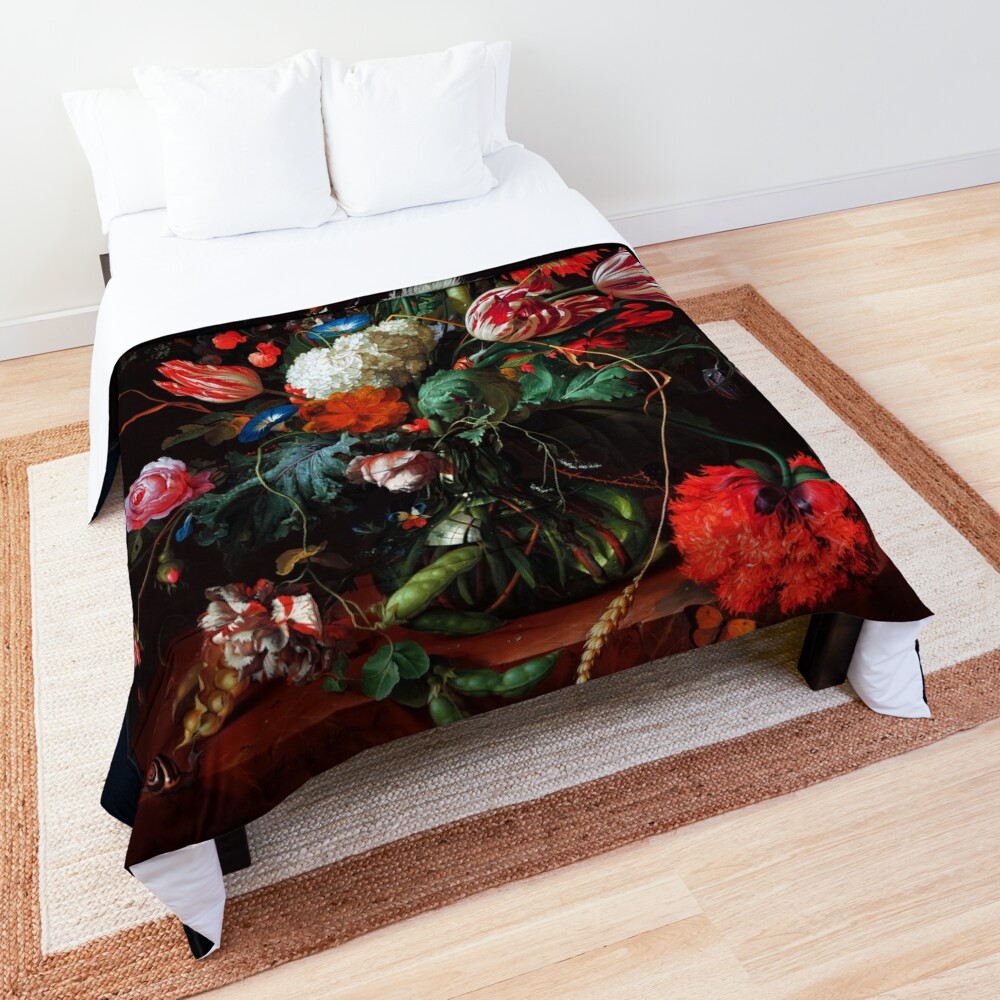
“Vase of Flowers,” air a chruthachadh a-steach 1645 by the renowned Dutch Artist Jan Davidsz de Heem (1606 – 1684), is an exquisite example of the flourishing genre of Dutch still life painting during the Golden Age. Known for his mastery of rendering floral arrangements, de Heem captures the complexity of nature with remarkable detail and technical skill. An dealbh, which depicts an elaborate bouquet of flowers arranged in a fine vase, is a prime representation of the Baroque period, marked by its rich textures, mion-fhiosrachadh iom-fhillte, and vibrant use of color.
Clàr-innse
Cuspair agus sgrìobhadh
The focal point of this painting is the large, overflowing vase brimming with an assortment of flowers, which include tulips, ròsan, peonies, and lilies, am measg eile. De Heem’s ability to present the organic forms of the flowers with such lifelike accuracy reflects his profound understanding of botanical subjects. The flowers in the vase are placed atop a dark, wooden table, and their vivid hues contrast sharply with the deep, almost velvety background. This contrast between the colorful foreground and the dark background draws the viewer’s attention to the flowers’ delicate textures and intricate forms.
To the left of the bouquet, a butterfly flutters above the arrangement, symbolizing the fleeting nature of life, a common theme in Dutch vanitas still life paintings. The butterfly, along with a few insects delicately perched on the petals, adds an element of life to the otherwise serene and static composition. At the lower section of the vase, an assortment of foliage and fruits can be seen spilling over the edge, further emphasizing the opulence and abundance of nature. The way de Heem captures the subtle translucency of the rose petals and the texture of the velvety leaves demonstrates his technical expertise.
Rudan agus samhlachas
The flowers themselves carry layers of symbolic meaning, typical of the period. Tulips, mar eisimpleir, were highly prized in the Netherlands during the 17th century, especially during the “Tulip Mania” period, when tulips were considered symbols of wealth and status. The roses and peonies in the bouquet also carry their own symbolism, often associated with love, bòidhchead, and transience, reinforcing the vanitas theme. The inclusion of fruit and other organic elements serves as a reminder of the cycle of life, fàs, decay, agus bàs. Tha an cothlamadh seo de fhlùraichean sòghail agus measan lobhaidh a’ cruthachadh teannachadh eadar bòidhchead agus neo-sheasmhachd bàsmhorachd, comharradh air peantadh beatha fhathast Baróc.
Talamh agus àrainneachd
Tha na flùraichean anns an vase air an suidheachadh an aghaidh dorchadas, cùl-raon cha mhòr ethereal, a bha na dhòigh àbhaisteach aig luchd-ealain Baróc Duitseach. An cùl-raon dorcha seo, gu tric air ainmeachadh mar “chiaroscuro,” a 'leigeil leis na flùraichean seasamh a-mach ann am faochadh geur, a’ soilleireachadh an dathan beòthail agus an inneach bog. Tha am bòrd air a bheil am vase na shuidhe air a thoirt seachad le mionaideachd iongantach, tha a ghràin fiodha a' nochdadh mothachadh air seasmhachd, a’ stèidheachadh bòidhchead nam flùraichean a tha air dhòigh eile.
Tha mothachadh air doimhneachd anns an sgrìobhadh, oir tha coltas gu bheil na flùraichean air aghaidh an deilbh a 'dòrtadh a-mach às a' bhèas agus a-steach gu pàirt ìseal an deilbh, le cuid de bhileagan nan laighe air uachdar a’ bhùird. Tha an cùl-raon fhathast na bheàrn dubhar, ag àrdachadh mothachadh doimhneachd agus a’ cuimseachadh aire an neach-amhairc gu tur air rèiteachadh fhlùraichean.
Stuthan agus dhòighean
Bha Jan Davidsz de Heem ainmeil airson an aire mhionaideach a rinn e air mion-fhiosrachadh agus a chomas air inneach a thoirt seachad le fìor-eòlas iongantach.. Tha an dealbh air a chur gu bàs ann an ola, meadhan a leig leis na daoine beairteach a choileanadh, càileachd luminous nam flùraichean agus na h-ìrean seòlta de sholas is dubhar. Le cleachdadh an neach-ealain de pheant ola leig e leis sreathan dathach fìnealta a chruthachadh a thug trì-thaobhachd dha na flùraichean, toirt orra nochdadh cha mhòr faicsinneach. Na caiseadan bog air na bileagan, mion-fhiosrachadh mu na veins anns na duilleagan, and the shimmer of light on the dewdrops reflect his thorough understanding of light, inneach, and materiality.
An cùl-raon, which is painted in deep, tònaichean dubha cha mhòr, creates a striking contrast against the flowers and enhances their brightness. This technique draws attention to the vase’s intricate floral display and emphasizes the symbolism of nature’s beauty amid the darkness of mortality. De Heem’s use of light, sgàil, and color is masterful, resulting in a work that seems to glow with vitality, yet carries an underlying sense of impermanence.
Stoidhle, Cuspair, agus Mood
“Vase of Flowers” is quintessentially Baroque in style, with its emphasis on detail, inneach beairteach, and the use of chiaroscuro to create dramatic contrast. The opulence of the flowers and the meticulous care with which they are painted speak to the wealth and sophistication of the period, while the symbolic elements suggest deeper reflections on the fleeting nature of life. The mood of the painting is both celebratory and contemplative, evoking awe at the beauty of nature while reminding the viewer of the transience of life.
The Baroque style, with its emotional intensity and attention to minute details, was particularly well-suited to the still life genre, allowing artists like de Heem to explore the interplay of life and death, beauty and decay. Ann an “Vase of Flowers,” de Heem successfully combines naturalistic representation with a poignant philosophical commentary, a hallmark of the Baroque era’s fascination with both the splendor and fragility of existence.
Co-dhùnadh
Ann an co-dhùnadh, “Vase of Flowers” by Jan Davidsz de Heem is a stunning example of Dutch Baroque still life painting. Through his masterful technique and careful selection of flowers, measan, agus eileamaidean samhlachail, de Heem captures not only the exquisite beauty of nature but also the deeper philosophical reflections on life and death. The painting is both a feast for the eyes and a meditation on the passage of time, inviting the viewer to marvel at the fleeting beauty of life while contemplating its inevitable end.
Is e seo ath-riochdachadh seann mhaighstirean ealain didseatach ath-leasaichte de ìomhaigh raon poblach a tha ri fhaighinn mar a clò-bhualadh canabhas air-loidhne.
Neach-ealain Bio
Gu h-ìosal a thàinig bho Wikipedia.org
Rugadh Jan do Dhaibhidh de Heem an t-èildear (1570 – 1631), agus rinn e sgrùdadh an toiseach còmhla ri athair mus do rinn e sgrùdadh fo Pheantair Still Life Age Òir Duitseach Balthasar van der Ast (1593-94 – 1657); an uairsin a-steach 1629 aig aois 23 sgrùdadh fo Pheantair Linn Òir Duitseach David Bailly (1584 – 1657).
Nuair a bha e 29 ghluais e dhan Òlaind a Deas agus chaidh e dhan Guild of Saint Luke burger (neach fa leth clas meadhan àrd) anns a' bhaile sin 1637.
Gu tric air a mheas mar aon de na peantairean a bu mhotha na àm, bha iarrtas mòr air an-còmhnaidh agus bha e air a phàigheadh gu math airson an obair-ealain a rinn e ri linn Linn Òir na h-Òlaind.