

Children Fishing c1788
“ילדים דיג” c.1788 by British Painter George Morland (1763 – 1804)
George Morland’s painting Children Fishing, נוצר מסביב 1788, is a vivid portrayal of childhood innocence and the simple pleasures of life during the late 18th century. נוֹלָד בְּ 1763, Morland became famous for his works that often depicted rural scenes, domestic life, and animals. His artistic style was grounded in the traditions of English realism, a style that he developed with remarkable skill, and his ability to capture the nuances of light and color became one of his defining characteristics. This artwork reflects Morland’s fascination with depicting children and their interactions with nature, capturing a moment of leisure and joy.
תוכן העניינים
Main Subject and Theme
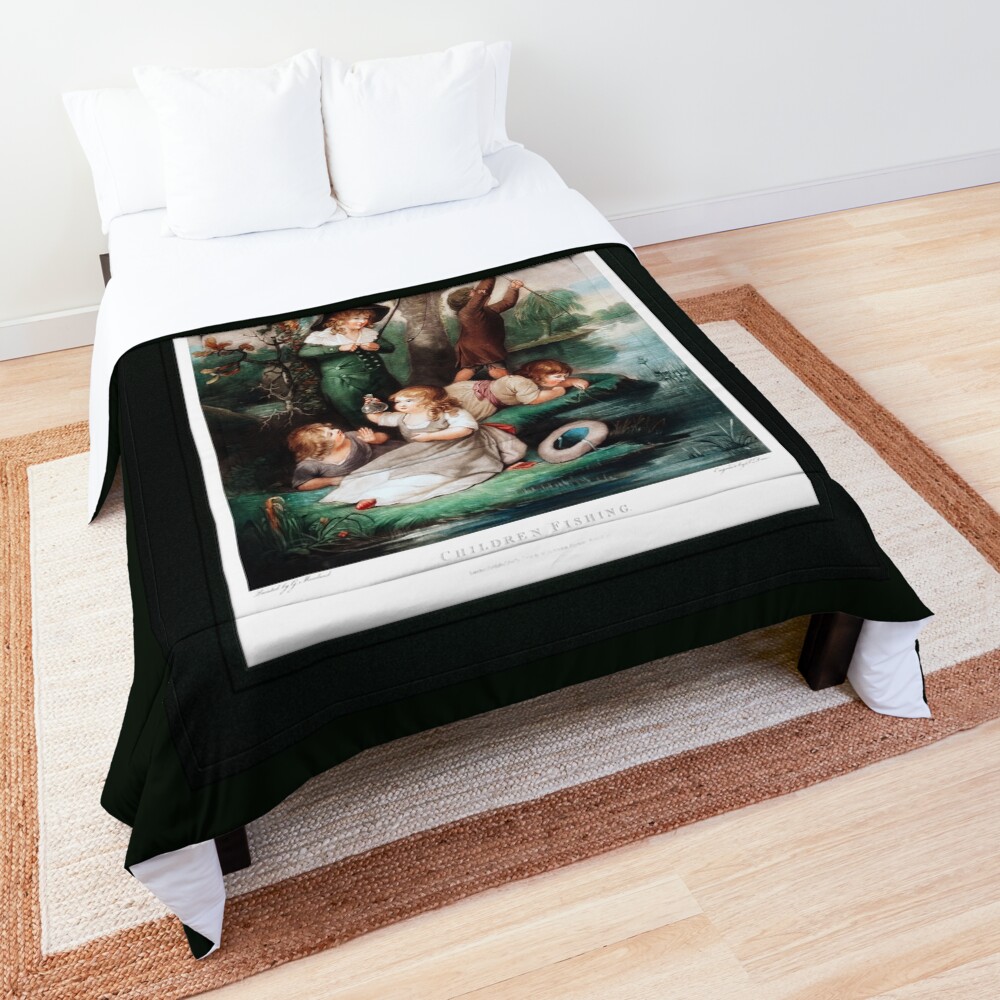
הנושא המרכזי של ילדים דיג is a group of young children engaging in the timeless activity of fishing by a calm river. The children’s expressions and posture suggest an idyllic scene of rural life, filled with both innocence and a gentle spirit of adventure.
There are five children in the painting, each with distinct roles in the activity. A boy, dressed in a green jacket, stands on the bank with a fishing rod in hand, his stance one of focus and concentration. Another boy, similarly dressed in a brown coat, casts his line into the water with skillful precision. לעומת זאת, a girl with golden curls is seated on the bank, engaged in conversation with a younger child, whose eyes are wide with wonder as she holds a small bottle, perhaps a jar of bait or a playful trinket.
The diverse range of poses and interactions between the children creates a sense of movement and vitality. Each figure, while small in comparison to the landscape, stands out due to the way their clothing is rendered with vibrant hues that contrast with the natural tones of the surrounding environment. The painting captures a sense of peaceful enjoyment, portraying a moment of tranquility where childhood and nature exist in harmony.
שטח ורקע
The scene is set in a serene rural landscape, typical of Morland’s work, where nature takes center stage. The children are surrounded by a lush forest and the soft ripples of a river or pond. A large tree with sprawling branches provides shade, creating a cool, dappled light over the figures. The tree’s canopy stretches above the children, its leaves in a state of gentle motion, indicating the breeze that stirs the atmosphere.
The terrain itself is soft and lush, with patches of green grass and wildflowers carpeting the ground, further enhancing the sense of serenity and calm. The children’s feet rest upon this soft terrain, while their fishing poles extend into the water, adding a gentle dynamic element to the otherwise peaceful scene.
The water in the background is reflective and placid, allowing the viewer to see the quiet interaction between the figures and their surroundings. Morland uses the reflection in the water as a visual technique, heightening the sense of calm and stillness within the landscape.
The sky above is light and cloud-filled, lending a softness to the overall mood of the painting. The use of soft blues and light browns in the sky contrasts with the richer tones of the tree foliage and the children’s clothing, creating a harmonious balance between land, מַיִם, and sky.
חפצים וחומרים
Morland’s rendering of the children’s clothing is noteworthy for its attention to detail. The children wear simple, yet carefully depicted, late 18th-century attire that suggests both their social standing and the period in which they lived. The clothing is crafted from a variety of materials such as wool, cotton, and leather, אופייני לזמן.
The green jacket of the standing boy contrasts with the brown coat of the other child, whose posture suggests both focus and excitement. The children’s accessories, such as the small bottles and the wide-brimmed hats, further enhance the sense of realism in the painting. The objects in the scene, such as the fishing poles and the nearby straw hat, are rendered with impressive attention to detail, making them almost tangible to the viewer.
The presence of the fishing gear itself — poles, lines, and small baskets — speaks to a time when outdoor pastimes were integral to the rural experience. The simple fishing poles, with their straight rods and hand-tied lines, provide a subtle connection to the past, adding historical context to the artwork. The girl’s bottle might hint at an earlier tradition of collecting small, delicate creatures or perhaps even an innocent curiosity about the natural world.
סגנון ומצב רוח
מבחינת הסגנון, ילדים דיג embodies a soft realism that is characteristic of Morland’s approach. The colors are rich but not overpowering, with a gentle use of light and shadow to define the figures. The soft palette of greens, בלוז, and browns creates a naturalistic environment that feels both real and dreamlike, inviting the viewer into the scene. Morland’s use of light is particularly notable, as he captures the soft illumination of the sun filtering through the trees, casting a gentle glow on the children and the surrounding landscape.
The mood of the painting is one of peacefulness, תְמִימוּת, and quiet joy. The children, while engaged in a common activity, seem removed from the chaos of the outside world, existing in a moment of pure bliss and simplicity. The scene evokes a sense of nostalgia, a longing for a simpler time when nature and childhood were intertwined, and leisure was found in the quiet moments of everyday life.
The tender expressions on the children’s faces convey an emotion of calm contentment, suggesting that the act of fishing is not just about catching fish but about the shared experience of being in nature, free from the pressures of society.
מַסְקָנָה
ילדים דיג by George Morland is an exquisite representation of 18th-century childhood, capturing a moment of serenity and harmony with nature. באמצעות השימוש שלו באור, צֶבַע, והרכב, Morland creates an environment where time seems to slow, allowing the viewer to pause and appreciate the beauty of youth and the natural world.
The figures of the children are imbued with life and energy, while the surrounding landscape enhances the sense of peace that permeates the painting. This work is not only a depiction of a pastime but also an exploration of innocence, פְּנַאִי, and the enduring connection between people and the world around them.
זהו רפרודוקציה של אמנות דיגיטלית מחודשת של אמן ישן של תמונה ברשות הרבים הזמינה בתור א הדפסת קנבס באינטרנט.
ביו אמן
המידע להלן נגזר מ: Wikipedia.org ו NGA.gov
ג'ורג' נולד בלונדון, אנגליה ביוני 26, 1763 לצייר הדיוקנאות הבריטי הנרי רוברט מורלנד (1716-19 – 1797) וג'ני לקאם; והיה נכדו של צייר הדיוקנאות הבריטי ג'ורג' הנרי מורלנד (? – 1789).
הוא היה הבכור מבין חמישה ילדים והחל את הקריירה האמנותית שלו בגיל שלוש בהפקת רישומים שהיו העתקים של תמונות ויציקת גבס, ובגיל עשר שנים הפך למציג כבוד של סקיצות באקדמיה המלכותית לאמנויות.
לראות את בניו כישרון עצום, אביו הנרי פנימה 1777 לקח אחריות מלאה על הכשרת בניו וג'ורג' החל להעתיק עוד יותר יצירות אמנות לטובת הרווח של אביו.
יצירת האמנות הראשונה שלו שנחרטה התרחשה בה 1780 ובתוך 1781 הוא הציג את הציור הראשון שלו באקדמיה המלכותית לאמנויות; תוך כדי 1782 הוצגו 26 עובד באגודת האמנים החופשית.
למרות שלמורלנד היה כישרון קיצוני והיה מפיק פורה של אמנות חיי השתייה שלו והבחירה הגרועה בחבריו השתלטו עליו ולעתים קרובות הוא היה בחובות, עושה כמיטב יכולתו כדי להימנע מנושים.
זה הוביל לבסוף למעצר בפנים 1799 שם הוא נעצר והוכנס לספסל המלכים במשך שלוש שנים; ועם שחרורו פנימה 1802, הוא בילה את השנתיים שנותרו לחייו עם אחיו שהיה בעל חנות תמונות ברחוב דין בסוהו; ככל שעבודתו ובריאותו הידרדרו, הוא מת לבסוף מקדחת המוח באוקטובר 29, 1804.