

The Dovecote c1758
פרנסואה בושר‘s painting “The Dovecote” (ג. 1758) is a captivating example of the French Rococo style. בוצ'ר (1703 – 1770), one of the foremost painters of the 18th century, היה ידוע בתוססת שלו, delicate compositions and a distinctive lightness that characterized the era. This artwork embodies the Rococo spirit with its emphasis on nature, פְּנַאִי, and an idyllic, almost dreamlike world. Boucher’s work often focused on the themes of aristocratic enjoyment, tender moments, and pastoral beauty, which are all reflected here in this serene, enchanting scene.
תוכן העניינים
נושא עיקרי והרכב
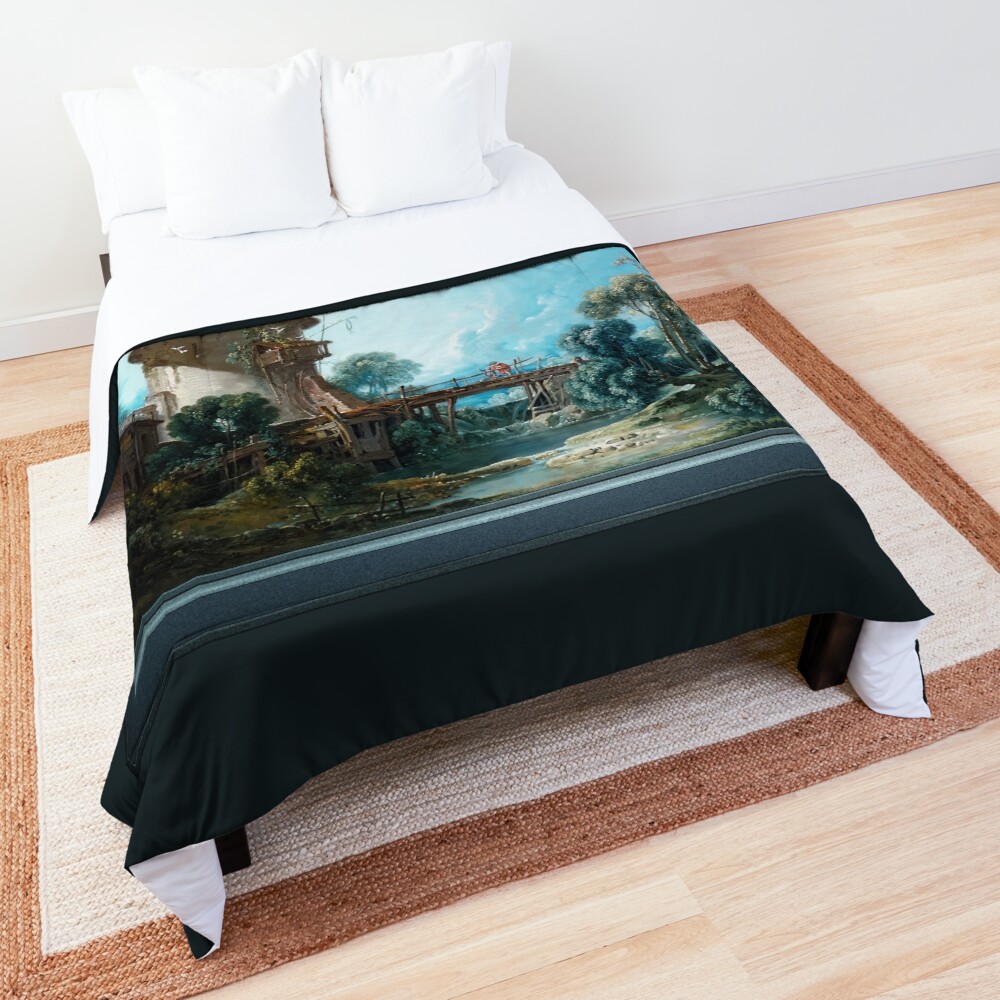
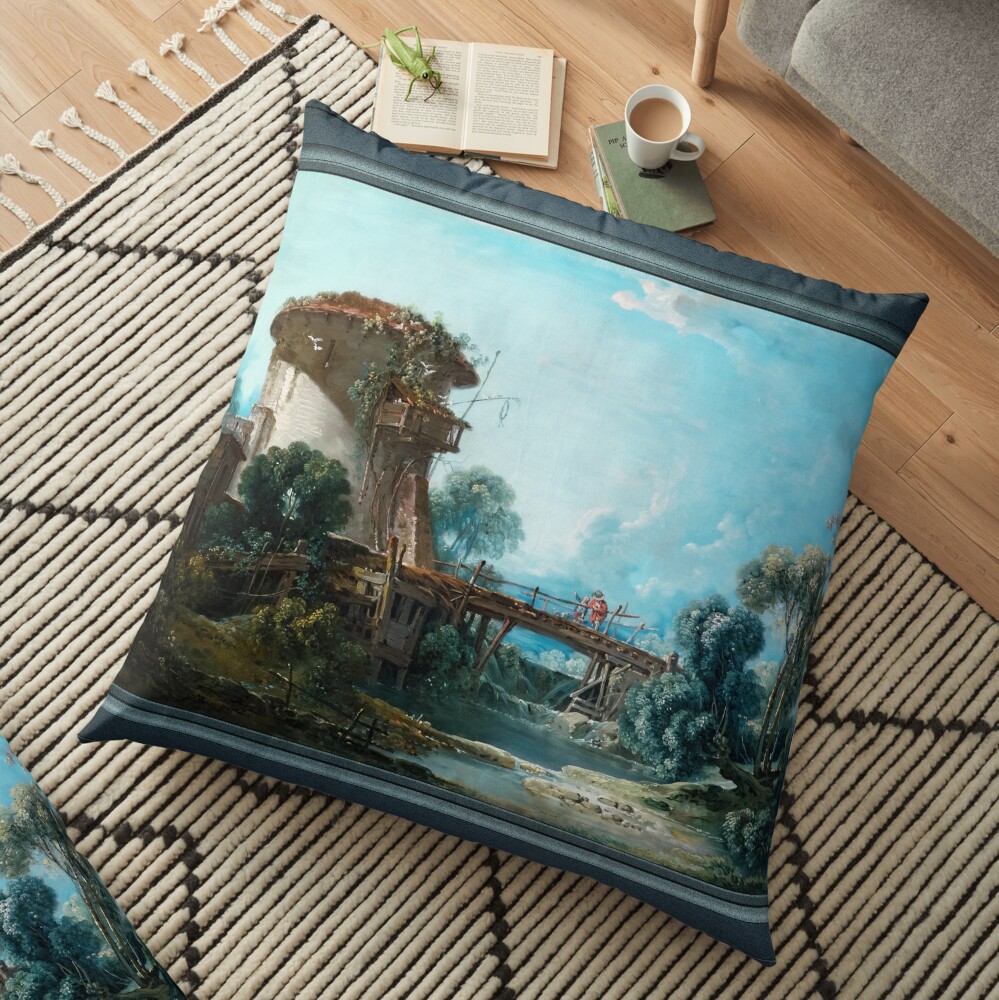
ב “The Dovecote,” the central focus is a tranquil rural setting that captures the idyllic beauty of nature. A man and a woman are depicted in the foreground, casually conversing, while standing on a rustic wooden bridge. The bridge spans a calm river, which reflects the soft hues of the sky and surrounding greenery. The figures are dressed in fashionable, yet simple 18th-century attire, their clothing bright and vibrant, contrasting with the natural tones around them. Their relaxed postures and the peacefulness of their interaction suggest a moment of quiet harmony in the countryside.
The scene’s setting, a rural landscape dotted with trees, gently rolling hills, and a distant stone structure—possibly a dovecote itself—evokes a pastoral life of leisure. The man and woman seem to be at ease in this bucolic world, their peaceful presence adding to the calm atmosphere of the composition.
חפצים וסמלים
ברקע, we see a distinctively constructed stone dovecote, a structure used for housing doves or pigeons. This is where the painting’s title comes from, symbolizing perhaps a quiet, secluded part of nature that complements the tranquil lives of the individuals depicted. The dovecote is placed prominently on the left side of the canvas, with the trees encircling it, drawing attention to its importance as both a physical object and a symbol of rural life.
The wooden bridge that spans the river adds another layer of meaning to the painting. It not only serves as a functional element connecting two areas but also becomes a metaphorical bridge between the viewer and the tranquil world of the figures, inviting them into a space of calm contemplation. The landscape itself, with its harmonious blend of natural and architectural elements, underscores the Rococo fascination with combining beauty and nature.
בנוסף, the soft, delicate brushwork captures the lush greenery, the water’s reflective qualities, and the atmosphere’s lightness, evoking a sense of serenity. The birds in flight above the dovecote add to the mood of freedom and peace, echoing the peaceful existence of the figures below.
שטח וסביבה
The terrain is depicted with lush, vibrant greenery, characteristic of the Rococo love for lush nature. The rolling hills in the distance are soft and inviting, bathed in a warm golden light that suggests either the early morning or late afternoon sun. The gentle curves of the hills lead the eye toward the horizon, giving a sense of depth to the landscape.
The flowing water at the bottom of the scene is tranquil, its surface gently disturbed by the occasional ripple, mirroring the calmness of the figures. The trees lining the riverbank are rich with foliage, their forms rounded and almost soft, contributing to the overall sense of gentleness that pervades the painting. The sky above is expansive and vibrant, painted with light, airy blues, and soft cloud formations, adding to the tranquil, almost dreamlike atmosphere of the scene.
חומרים וטכניקה
Boucher’s signature technique of soft brushstrokes is evident throughout “The Dovecote.” The composition feels effortlessly fluid, with no harsh lines or contrasts, reflecting the Rococo aesthetic’s preference for lightness and grace. The use of light and shadow is subtle, contributing to the overall softness of the piece. The warm golden light that bathes the scene enhances the mood of serenity and the sense of timeless beauty.
Boucher’s handling of color is masterful. The contrast between the lively tones of the figures’ clothing and the natural greens and blues of the environment draws the viewer’s attention to the human subjects while still maintaining a balanced, harmonious composition. The vibrancy of the figures’ attire, with rich reds and muted yellows, echoes the playfulness and elegance of the Rococo period, where fashion and art were inextricably linked.
סִגְנוֹן, נוֹשֵׂא, ומצב רוח
“The Dovecote” מדגים את סגנון הרוקוקו, characterized by its focus on lightness, אֵלֶגַנטִיוּת, and the beauty of the natural world. The subject matter—the peaceful rural landscape, the leisurely figures, and the idyllic surroundings—speaks to the Rococo fascination with beauty, טֶבַע, and the simple pleasures of life. There is no sense of urgency or conflict in the painting; אלא, the viewer is invited into a world where time slows down and the natural world offers peace and harmony.
The mood of the painting is gentle and soothing, enhanced by the soft color palette, the tranquil water, and the idyllic rural scene. The figures themselves appear content and relaxed, their quiet interaction suggesting a sense of contentment and ease. The painting evokes a sense of nostalgia for a simpler, more peaceful time, free from the concerns of the bustling urban world.
מַסְקָנָה
של פרנסואה בוצ'ר “The Dovecote” is a quintessential Rococo painting that encapsulates the period’s love for nature, יוֹפִי, ופנאי מעודן. With its serene landscape, tender figures, and masterful technique, it invites the viewer into a world of tranquility and grace. The subtle use of symbolism, combined with Boucher’s soft brushwork and vibrant color palette, creates a harmonious composition that remains a delightful representation of 18th-century French art.
זהו רפרודוקציה של אמנות דיגיטלית מחודשת של אמן ישן של תמונה ברשות הרבים הזמינה בתור א הדפסת קנבס באינטרנט.
ביו אמן
מידע למטה נגזר Wikipedia.org
יליד פריז, בוצ'ר היה בנו של צייר פחות מוכר ניקולא בושר, שנתן לו את הכשרתו האמנותית הראשונה. בגיל שבע עשרה, ציור של בוצ'ר נערץ על ידי הצייר פרנסואה למוין. למויין מינה מאוחר יותר את בוצ'ר כשוליה שלו, אך לאחר שלושה חודשים בלבד, הוא הלך לעבוד אצל החרטה ז'אן פרנסואה מכוניות.
ב 1720, הוא זכה בגרנד פרי דה רומא העילית על ציור, אך לא ניצל את ההזדמנות כתוצאה מכך ללמוד באיטליה אלא כעבור חמש שנים, בגלל בעיות כלכליות באקדמיה המלכותית לציור ופיסול.[1] בשובו מלימודיו באיטליה הוא התקבל לפסל האקדמי המחודש והמחודש של 24 נוֹבֶמבֶּר 1731. קטע הקבלה שלו (חתיכת קבלה) היה רינאלדו וארמידה שלו 1734.
בושה התחתן עם מארי-ז'אן בוזו בשנת 1733. לזוג נולדו שלושה ילדים יחד. בוצ'ר הפך לחבר סגל ב 1734 והקריירה שלו הואצה מנקודה זו כשהוא הועלה לפרופסור אז לרקטור האקדמיה, להיות מפקח במפעל רויאל גובלינס ולבסוף ראש הממשלה פיינטרה דו רועי (צייר המלך הראשון) ב 1765. דיוקנה של מארי לואיז או'מורפי ג. 1752
בוצ'ר מת ביום 30 מאי 1770 במולדתו פריז. השם שלו, יחד עם זו של פטרונו מאדאם דה פומפדור, הפך לשם נרדף לסגנון הרוקוקו הצרפתי, מה שהוביל את האחים גונקורט לכתוב: “בוצ'ר הוא אחד מאותם גברים המייצגים את טעם המאה, שמבטאים, לגלם ולגלם אותו.”
בוצ'ר מפורסם באומרו כי הטבע הוא “ירוק מדי ולא מואר” (ירוק מדי ותאורה גרועה).
בוצ'ר היה מזוהה עם חרט אבן החן ז'אק גואי, את מי הוא לימד לצייר. הוא גם הדריך את הצייר המורבי-אוסטרי מרטין פרדיננד קוודל כמו גם את הצייר הניאו-קלאסי ז'אק לואי דייויד 1767.[4] מאוחר יותר, בוצ'ר ערך סדרת רישומים של יצירות מאת גואי שאותם חרטה מאדאם דה פומפדור והפיצה בהיקף כרוך היטב לחצרות מועדפות.