

Kristus v bouři na Galilejském jezeře
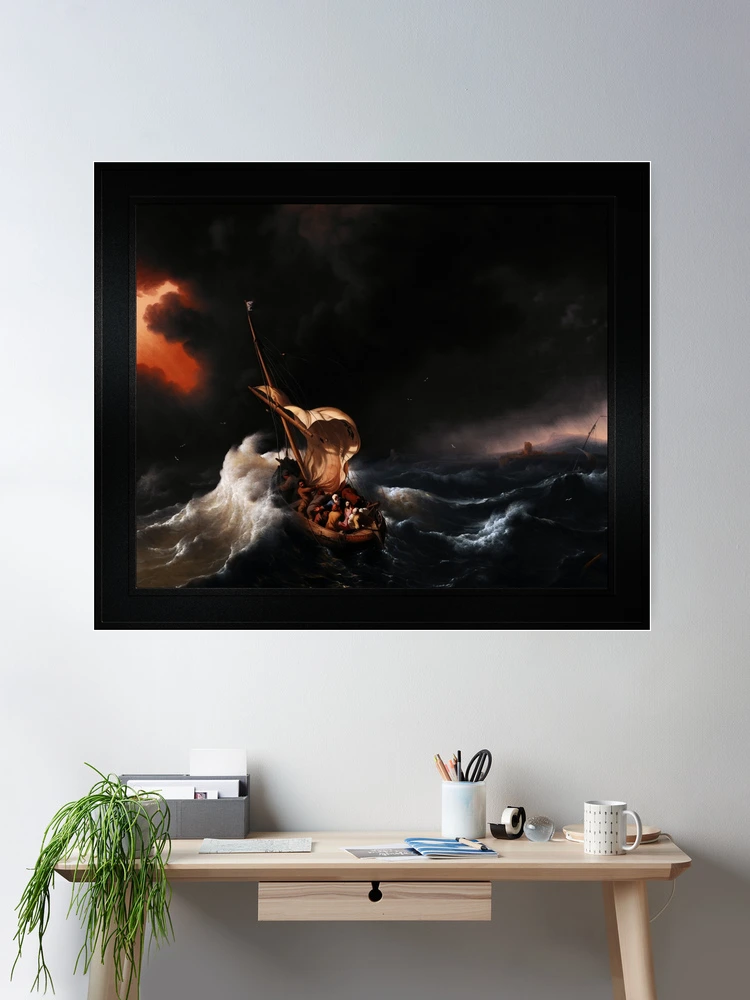
Umělecká díla s názvem “Kristus v bouři na Galilejském jezeře”, vytvořeno v 1695 by the German-Dutch painter Ludolf Backhuysen (1630 – 1708), powerfully conveys a dramatic moment of biblical history. Backhuysen, known for his skillful mastery of maritime landscapes, utilizes his expertise to depict both the ferocity of nature and the calm authority of Christ amidst a violent storm. This painting is part of a broader tradition of maritime paintings during the Dutch Golden Age, with a specific focus on the themes of human struggle against nature, Božský zásah, and the Christian narrative.
Obsah
Main Subject and Narrative
The primary subject of the painting is the biblical story from the Gospel of Matthew, where Jesus Christ calms the storm on the Sea of Galilee. Backhuysen chooses to focus on the intense moment of chaos aboard the boat, capturing the panic of the disciples and the calm demeanor of Christ. V popředí, the viewer sees a group of men, likely disciples, struggling against the wind and waves. Their expressions reveal fear and desperation as the storm rages around them. The turbulent sea, dark clouds, and relentless waves all serve to heighten the sense of danger that envelops the boat.
Amidst the turmoil, Christ remains serene and composed, the central figure of the composition. His presence is both reassuring and commanding, symbolizing divine authority over nature and the human condition. The artist uses the contrast between the violent sea and the peaceful figure of Christ to underscore the miraculous nature of the event. Christ’s stillness contrasts with the frenetic energy of the storm, making His divine role clear.
Objects and Symbolism
The boat itself is a critical object in this piece, representing both the literal vessel in the biblical story and the symbolic “ship” of the Christian church navigating through the turbulent waters of the world. The ship is crafted with great detail, and the artist’s ability to render the movement of the water around it adds a sense of realism. The storm is not just a natural occurrence, but also a visual metaphor for the trials and tribulations of life, which are often beyond human control.
The figures in the boat are also symbolic. The disciples, depicted in various stages of panic and struggle, reflect the human response to overwhelming challenges. One figure leans over the edge of the boat, possibly to throw up, while another clutches the mast, his face twisted in fear. These expressions of human vulnerability are contrasted by Christ’s calmness, suggesting faith and the belief that divine intervention will provide salvation.
dodatečně, the elements of the storm—raging waves, dark clouds, and flashes of lightning—add to the intensity of the scene. The dark sky, with its dramatic lighting, represents the chaotic forces of nature and, metaphorically, the trials of life. Yet the light breaking through the clouds hints at hope and the divine presence that promises peace and guidance.
Terén a materiály
The scene unfolds on the turbulent waters of the Sea of Galilee, which, in Backhuysen’s portrayal, are dark, foamy, and churning. The waves are masterfully painted, showing a range of textures from the frothy white caps to the deep, threatening blue and green depths. The artist’s command of light is particularly notable in the way it reflects off the surface of the water and highlights the contours of the figures, lending a sense of realism to the otherwise supernatural scene.
nebe, a striking backdrop to the action, is filled with ominous dark clouds, their heavy masses suggesting the sheer power and chaos of the storm. The dramatic interplay of light and dark contributes to the overall mood of the painting, amplifying the tension in the narrative. A small area of light appears through a break in the clouds, potentially indicating the divine presence, adding an aura of hope amidst the turmoil.
Styl, Téma, a nálada
Ludolf Backhuysen’s style is one of the defining characteristics of the Dutch Golden Age. Known for his ability to capture the mood and texture of the sea, Backhuysen demonstrates an extraordinary talent for conveying motion and emotion. The turbulence of the water, the billowing sails, and the energy of the storm all exhibit a mastery of the seascape genre.
The theme of the painting merges the natural with the divine, showing human struggle against the overpowering forces of nature, only to be saved through divine intervention. The mood is one of awe and reverence, evoking a sense of the sublime in the viewer. The dynamic clash between the forces of the storm and the calm figure of Christ is a powerful visual metaphor for faith, trust, and divine power.
Barevná paleta, while dominated by darker hues of stormy skies and deep ocean blues, also contains areas of lighter tones that reflect the divine light shining through the chaos. The contrast between light and dark creates a dramatic tension in the composition, emphasizing the miracle at the heart of the scene.
In terms of technique, Backhuysen uses fine brushwork to create a vivid depiction of the storm, with each wave and cloud rendered in intricate detail. The fluidity of the water and the dramatic effects of the sky demonstrate Backhuysen’s technical prowess and his ability to transport the viewer into the heart of the storm.
Závěr
“Kristus v bouři na Galilejském jezeře” by Ludolf Backhuysen stands as a testament to both the artistic skill of the artist and the theological depth of the subject matter. The painting is a dramatic visualization of the biblical narrative, combining natural and divine elements in a way that speaks to the viewer on both an emotional and spiritual level. The intensity of the storm, the vulnerability of the disciples, and the calm authority of Christ all combine to create a powerful visual experience, offering a meditation on faith, divine protection, and human endurance.
A Back Story Of The Artwork
Zdá se, že jde o dílo, které bylo zkopírováno od Rembrandta van Rijna (1606 – 1669) kus, “The Bouře na Galilejském jezeře c1633″.
Zatímco původní verze vytvořená Rembrandt je blízko s celým zaměřením na loď s Ježíšem a jeho 12 učedníci na lodi s ním; tato verze má mnohem širší pohled.
Tato verze ukazuje Ježíše na plachetnici s dodatkem 8 muži, jak je udeřen na bok velkou vlnou; a napravo od scény vidíme část stěžně trčící z vody a dále vzadu další plachetnici zachycenou v mořské bouři.
V dálce vidíme na břehu dvě stavby vzdálené od sebe několik kilometrů, některé hory za jednou ze staveb a také velké tmavé bouřkové mraky s malou pasekou v mracích, která má kvůli slunci oranžovou barvu; zatímco loď je osvětlena jasným bílým světlem.
Kristus v bouři na Galilejském jezeře je remasterovaná digitální umělecká reprodukce starých mistrů obrázku ve veřejném vlastnictví, který je dostupný jako tisk na plátno online.
Tato digitální umělecká tvorba, stejně jako všechna umělecká díla, která lze nalézt na webu Xzendor7, je k dispozici ke koupi online v různých materiálových formátech včetně tisků na plátno, akrylové tisky, kovové potisky, otisky dřeva, zarámované tisky, plakáty, a jako rolované obrazy na plátně v různých velikostech od 12 palce až 72 palce v závislosti na velikosti skutečného uměleckého díla a obchodu s tiskem na vyžádání, ve kterém se rozhodnete umění koupit.
Umělecká díla jsou k dispozici také na široké škále pánského a dámského oblečení, hrnky, totes, šátky, sešity a deníky a mnoho produktů pro domácí dekoraci.
Životopis umělce
Níže uvedené informace jsou odvozeny z Wikipedia.org
Ludolf se narodil v Emdenu, Východní Frísko, dolní oblast v Dolním Sasku Německo v 1630 a zhruba ve věku let 20 odjel do Amsterdamu, Nizozemsko a získal zaměstnání jako kaligraf a obchodní úředník.
Během této doby zjistil, že má velký malířský talent, a tak věnoval svůj čas tomuto úsilí, odchod ze současného zaměstnání; zpočátku kreslil perem a také studoval u významného holandského malíře zlatého věku Allaerta van Everdingena (1621 – 1675), malíř, tiskař a lept, stejně jako Hendrick Dubbels (1621 – 1707), malíř mořských a zimních krajinářů.
Jako student přírody Ludolf často vyjížděl na moře na otevřené lodi, aby studoval povahu vln během bouřkových událostí.; protože jeho hlavním zaměřením bylo námořní umění, s důrazem na scény s bouřlivými vlnami oceánu.