

Ships In Distress Off A Rocky Coast
“Ships In Distress Off A Rocky Coast” is a remarkable piece of marine art created in 1667 by the German-born Dutch painter Ludolf Bakhuizen (1630 – 1708). Known for his seascapes, Bakhuizen’s works are a blend of technical mastery and emotive narrative, capturing the power and unpredictability of the sea. This painting, executed in oil on canvas, showcases his signature style, which emphasizes dramatic weather conditions and the complex interplay of light, voda, and ships in perilous circumstances. The viewer is transported to a tumultuous moment in maritime history, evoking the treacherous environment that sailors often faced on the open sea.
Obsah
Předmět a kompozice
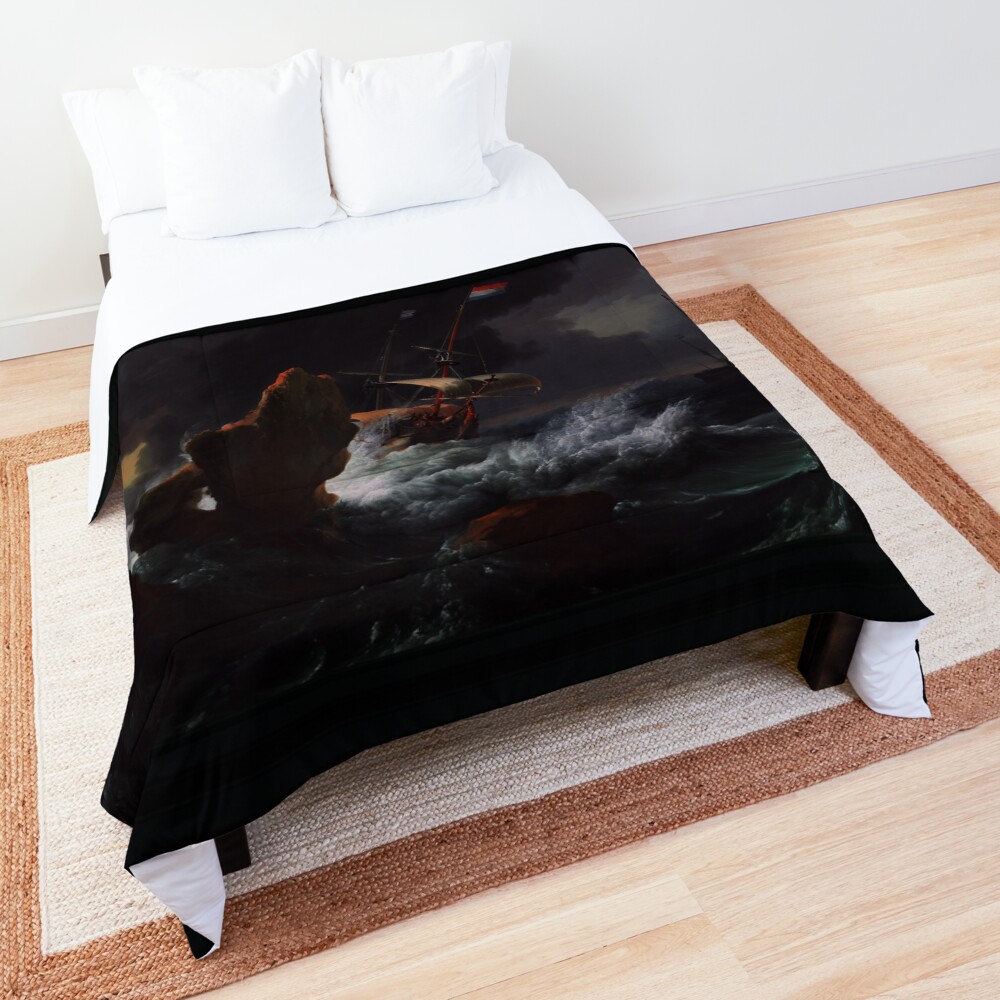
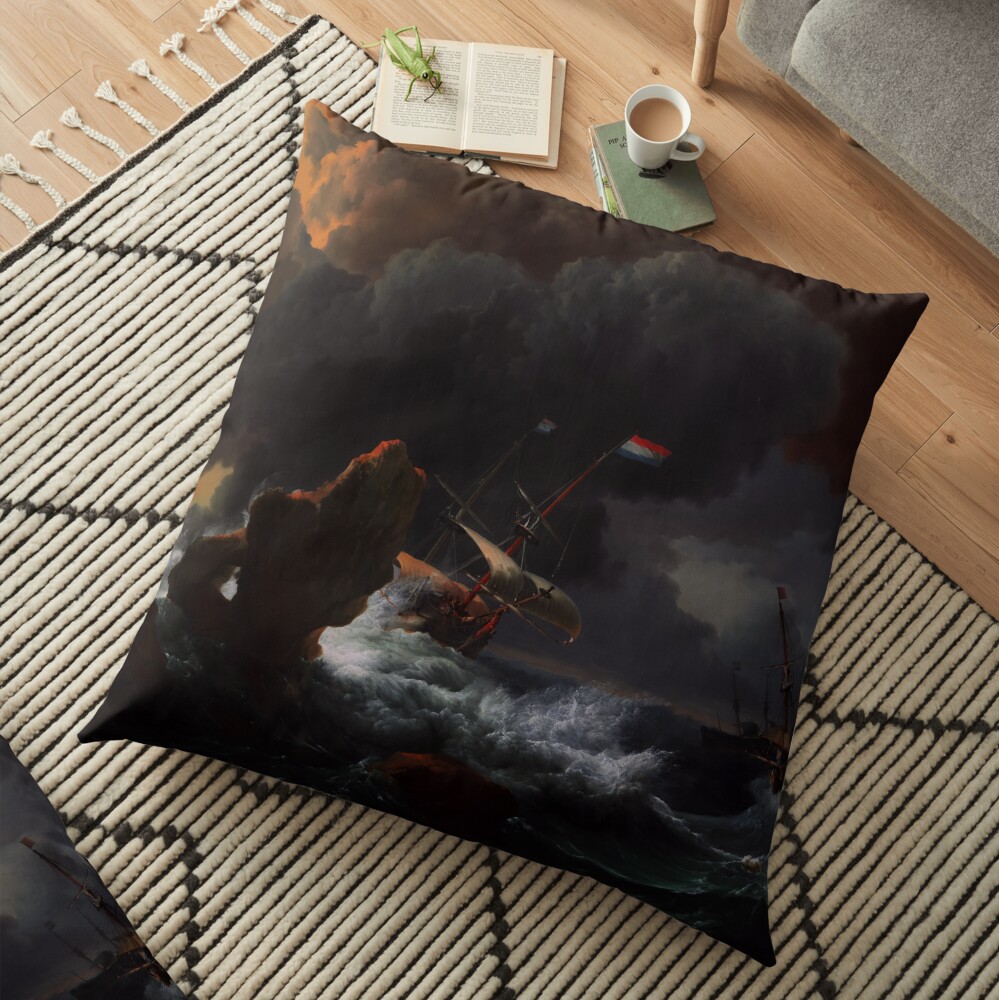
The central theme of “Ships In Distress Off A Rocky Coast” revolves around two ships caught in a violent storm. Lodě, one seemingly in the process of sinking and the other struggling to remain afloat, are surrounded by sharp, jagged rocks that threaten to crush them. The rocky terrain on the coast serves as a stark contrast to the vast expanse of the wild ocean, and the fierce crashing waves create an immediate sense of chaos and danger. The distressed vessels are depicted in mid-crisis, their sails caught in the wind, and their fragile structures seem to be at the mercy of the waves.
V popředí, the artist captures a highly detailed depiction of the waves, with foam surging around the rocks and cascading down from the towering swells. The sea appears both beautiful and dangerous, its dark waters reflecting the turbulent skies above. The ships’ crew is not shown in detail, but their presence is implied through the dramatic actions of the vessels and the desperate atmosphere that permeates the scene.
Bakhuizen’s skillful use of perspective gives the viewer a sense of being an observer of this moment in time. The ships seem to be caught between the forces of nature and their imminent fate. The use of space within the painting makes the viewer feel small and insignificant in the face of the grandeur of the natural world. It is as though the viewer is witnessing a battle between human craftsmanship and the raw, untamable power of nature.
Nálada a atmosféra
The mood of the painting is one of impending doom and tension, underscored by the stormy atmosphere. The dark clouds that dominate the sky create a sense of foreboding, casting an almost apocalyptic tone over the scene. The intensity of the storm is conveyed not only through the movement of the waves and the ships but also through the deep contrasts of light and shadow that Bakhuizen employs. The violent winds and the threatening sea suggest a struggle between man and nature, an eternal theme that was particularly resonant in the age of exploration and naval power.
The dramatic lighting that Bakhuizen uses intensifies the emotional impact of the painting. While the skies remain heavily clouded, a faint light from an unseen source is evident in the reflections on the turbulent water. This subtle illumination serves to highlight the vulnerable nature of the ships and their precarious position against the power of the storm. It is as though the viewer is witnessing a moment frozen in time, a dramatic event unfolding before their eyes.
Styl a technika
Bakhuizen’s style reflects the Baroque period’s emphasis on realism and dramatic contrasts. His technical skill in rendering the natural elements, such as the turbulent ocean and the billowing sails, demonstrates his ability to capture the dynamic qualities of the scene. The precision in his depiction of the waves and the jagged rocks shows his meticulous attention to detail, which was a hallmark of Dutch Golden Age painters. The texture of the painting, with its thick layers of paint in certain areas, adds to the sense of realism and depth, especially in the portrayal of the foamy waves crashing against the ships.
In addition to his meticulous attention to detail, Bakhuizen’s use of light and shadow is essential to the painting’s emotional depth. The contrast between the stormy sky and the illuminated water below enhances the feeling of drama, while the dark, ominous clouds overhead suggest that the situation is dire. This interplay of light and dark in the composition enhances the tumultuous mood of the painting and highlights the artist’s technical mastery.
The Importance of the Scene
“Ships In Distress Off A Rocky Coast” is more than just a depiction of a storm at sea; it represents the vulnerability and struggle of the ships and their crews, as well as the power of nature that could overwhelm even the most skilled sailors and the most advanced ships of the time. In the 17th century, the Netherlands was a dominant naval power, and the painting reflects both the pride of the Dutch maritime industry and the ever-present dangers faced by those who worked at sea. Během tohoto období, sailors frequently encountered perilous storms and unpredictable seas, and Bakhuizen’s artwork captures this theme with both drama and realism.
Dále, the painting is a testament to the Baroque interest in dynamic compositions and emotional intensity. By depicting a moment of extreme distress, Bakhuizen emphasizes the power of nature and the fragility of human endeavors. The artwork serves as a reminder of the tumultuous nature of life during the Age of Sail, where danger was a constant companion on the high seas.
Závěr
Ludolf Bakhuizen’s “Ships In Distress Off A Rocky Coast” is an exemplary piece of 17th-century Dutch marine painting. Svým mistrovským využitím světla, textura, and dramatic composition, Bakhuizen invites the viewer to witness the turmoil of a storm at sea and the fragility of ships caught in its grip. The painting not only captures the beauty and danger of the natural world but also reflects the uncertainties and challenges faced by those who ventured into the ocean during the Golden Age of Dutch naval power.
Ships In Distress Off A Rocky Coast is a retouched digital art old masters reproduction of a public domain image that is available online as a rolovaný tisk.
Tato digitální umělecká tvorba, stejně jako všechna umělecká díla, která lze nalézt na webu Xzendor7, je k dispozici ke koupi online v různých materiálových formátech včetně tisků na plátno, akrylové tisky, kovové potisky, otisky dřeva, zarámované tisky, plakáty, a jako rolované obrazy na plátně v různých velikostech od 12 palce až 72 palce v závislosti na velikosti skutečného uměleckého díla a obchodu s tiskem na vyžádání, ve kterém se rozhodnete umění koupit.
Umělecká díla jsou k dispozici také na široké škále pánského a dámského oblečení, hrnky, totes, šátky, sešity a deníky a mnoho produktů pro domácí dekoraci.
Životopis umělce
Info níže z Wikipedia.org
Ludolf Bakhuizen was born in Emden, Východní Frísko, and came to Amsterdam in about 1650, working as a merchant’s clerk and a calligrapher.
He discovered so strong a genius for painting that he relinquished the business and devoted himself to art from the late 1650s, initially in pen drawings.
He studied first under Allart van Everdingen and then under Hendrik Dubbels, two eminent masters of the time, a brzy se stal oslavovaným pro své kousky moře, která měla často rozbouřená moře.
Byl horlivým studentem přírody, a často se vystavoval na moři na otevřené lodi, aby studoval účinky bouří.
Jeho skladby, kterých je mnoho, jsou téměř všechny variace jednoho předmětu, moře, a zvláštním stylem, poznamenané intenzivním realismem nebo věrnou imitací přírody.
V pozdějších letech Bakhuizen uplatnil své schopnosti v leptání; namaloval také několik příkladů z několika dalších žánrů malby, such as portraits, landscapes and genre paintings.
During his life Bakhuizen was visited by Cosimo III de’ Medici, Peter the Great and also worked for various German princes. v 1699 he opened a gallery on the top floor of the famous Amsterdam town hall. After a visit to England he died in Amsterdam on 17 listopad 1708.
Bakhuizen painted portraits of his large circle of friends. These are of lesser artistic value but provide an insight into his good relations with contemporary scholars and literary figures.