

Kristus yn 'e stoarm op 'e See fan Galilea
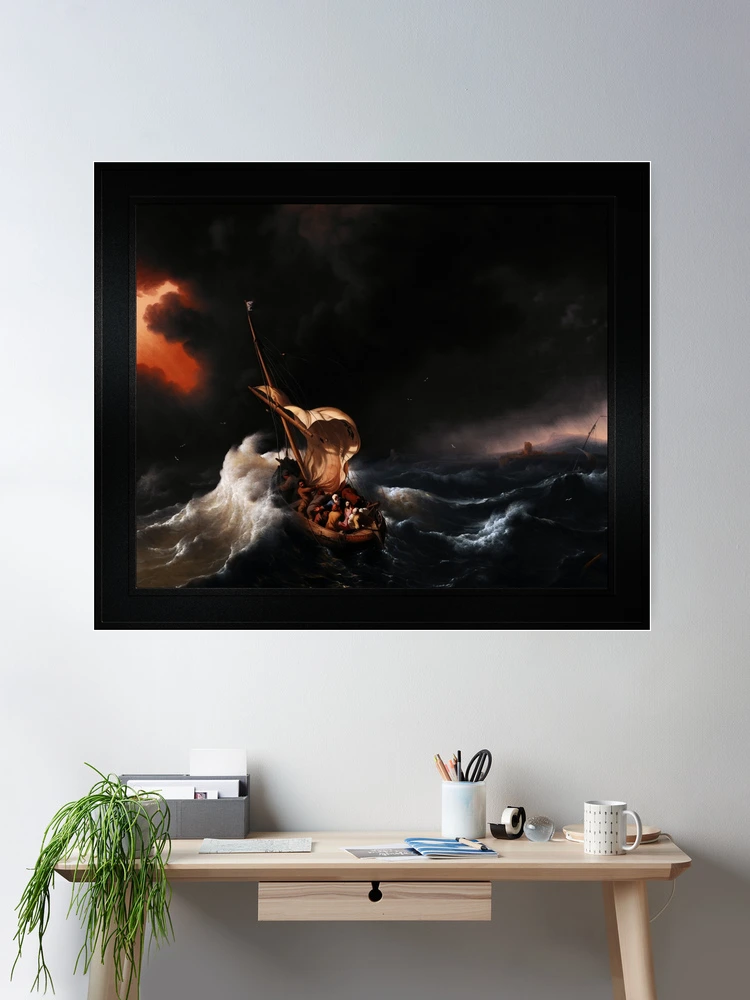
It keunstwurk mei de titel “Kristus yn 'e stoarm op 'e See fan Galilea”, oanmakke yn 1695 by the German-Dutch painter Ludolf Backhuysen (1630 – 1708), powerfully conveys a dramatic moment of biblical history. Backhuysen, known for his skillful mastery of maritime landscapes, utilizes his expertise to depict both the ferocity of nature and the calm authority of Christ amidst a violent storm. This painting is part of a broader tradition of maritime paintings during the Dutch Golden Age, with a specific focus on the themes of human struggle against nature, godlike yntervinsje, and the Christian narrative.
Ynhâldsopjefte
Main Subject and Narrative
The primary subject of the painting is the biblical story from the Gospel of Matthew, where Jesus Christ calms the storm on the Sea of Galilee. Backhuysen chooses to focus on the intense moment of chaos aboard the boat, it fêstlizzen fan de panyk fan 'e learlingen en de kalme hâlding fan Kristus. Op de foargrûn, de sjogger sjocht in groep manlju, wierskynlike learlingen, wrakselje tsjin de wyn en weagen. Harren útdrukkings litte eangst en wanhoop sjen as de stoarm om har hinne raast. De turbulente see, tsjustere wolken, en relentless weagen tsjinje allegear om it gefoel fan gefaar te ferheegjen dat de boat omfettet.
Midden yn de ûnrêst, Kristus bliuwt serene en gearstald, de sintrale figuer fan 'e komposysje. Syn oanwêzigens is sawol gerêststellend en befelhawwend, symbolisearret godlik gesach oer de natuer en de minsklike tastân. De keunstner brûkt it kontrast tusken de gewelddiedige see en de freedsume figuer fan Kristus om de wûnderlike aard fan it barren te ûnderstreekjen. De stilte fan Kristus stiet yn kontrast mei de frenetyske enerzjy fan 'e stoarm, syn godlike rol dúdlik te meitsjen.
Foarwerpen en symbolisme
The boat itself is a critical object in this piece, representing both the literal vessel in the biblical story and the symbolic “ship” of the Christian church navigating through the turbulent waters of the world. The ship is crafted with great detail, and the artist’s ability to render the movement of the water around it adds a sense of realism. The storm is not just a natural occurrence, but also a visual metaphor for the trials and tribulations of life, which are often beyond human control.
The figures in the boat are also symbolic. The disciples, depicted in various stages of panic and struggle, reflect the human response to overwhelming challenges. One figure leans over the edge of the boat, possibly to throw up, while another clutches the mast, his face twisted in fear. These expressions of human vulnerability are contrasted by Christ’s calmness, suggesting faith and the belief that divine intervention will provide salvation.
Oanfoljend, the elements of the storm—raging waves, tsjustere wolken, and flashes of lightning—add to the intensity of the scene. The dark sky, with its dramatic lighting, represents the chaotic forces of nature and, metaphorically, the trials of life. Yet the light breaking through the clouds hints at hope and the divine presence that promises peace and guidance.
Terrein en materialen
The scene unfolds on the turbulent waters of the Sea of Galilee, hokker, in Backhuysen’s portrayal, are dark, foamy, and churning. The waves are masterfully painted, showing a range of textures from the frothy white caps to the deep, threatening blue and green depths. The artist’s command of light is particularly notable in the way it reflects off the surface of the water and highlights the contours of the figures, lending a sense of realism to the otherwise supernatural scene.
De himel, a striking backdrop to the action, is filled with ominous dark clouds, their heavy masses suggesting the sheer power and chaos of the storm. The dramatic interplay of light and dark contributes to the overall mood of the painting, amplifying the tension in the narrative. A small area of light appears through a break in the clouds, potentially indicating the divine presence, adding an aura of hope amidst the turmoil.
Styl, Tema, en Mood
Ludolf Backhuysen’s style is one of the defining characteristics of the Dutch Golden Age. Known for his ability to capture the mood and texture of the sea, Backhuysen demonstrates an extraordinary talent for conveying motion and emotion. The turbulence of the water, the billowing sails, and the energy of the storm all exhibit a mastery of the seascape genre.
The theme of the painting merges the natural with the divine, showing human struggle against the overpowering forces of nature, only to be saved through divine intervention. The mood is one of awe and reverence, evoking a sense of the sublime in the viewer. The dynamic clash between the forces of the storm and the calm figure of Christ is a powerful visual metaphor for faith, trust, and divine power.
It kleurenpalet, while dominated by darker hues of stormy skies and deep ocean blues, also contains areas of lighter tones that reflect the divine light shining through the chaos. The contrast between light and dark creates a dramatic tension in the composition, emphasizing the miracle at the heart of the scene.
In terms of technique, Backhuysen uses fine brushwork to create a vivid depiction of the storm, with each wave and cloud rendered in intricate detail. The fluidity of the water and the dramatic effects of the sky demonstrate Backhuysen’s technical prowess and his ability to transport the viewer into the heart of the storm.
Konklúzje
“Kristus yn 'e stoarm op 'e See fan Galilea” by Ludolf Backhuysen stands as a testament to both the artistic skill of the artist and the theological depth of the subject matter. The painting is a dramatic visualization of the biblical narrative, combining natural and divine elements in a way that speaks to the viewer on both an emotional and spiritual level. De yntinsiteit fan 'e stoarm, de kwetsberens fan 'e learlingen, en de kalme autoriteit fan Kristus kombinearje allegear om in krêftige fisuele ûnderfining te meitsjen, it oanbieden fan in meditaasje oer leauwen, godlike beskerming, en minsklik úthâldingsfermogen.
A Back Story Of The Artwork
Dit blykt in wurk te wêzen dat kopiearre is fan Rembrandt van Rijn (1606 – 1669) stik, “De Stoarm op 'e See fan Galilea c1633″.
Wylst de oarspronklike ferzje makke troch Rembrandt is fan tichtby mei de heule fokus op 'e boat mei Jezus en syn 12 learlingen yn 'e boat mei him; dizze ferzje nimt in folle breder sicht.
Dizze ferzje toant Jezus yn 'e sylboat mei in ekstra 8 manlju, sa't it troch in grutte weach op 'e kant slein wurdt; en rjochts fan it toaniel sjogge wy in diel fan in mêst út it wetter stekke en fierder werom in oare sylboat dy't fongen is yn 'e seestoarm.
Yn 'e fierte kinne wy sjogge twa struktueren ferskate kilometers útinoar op' e kust, guon bergen efter ien fan 'e struktueren en ek grutte donkere stoarmwolken mei in lyts opljochting yn 'e wolken dy't oranje fan kleur is troch de sinne; wylst de boat wurdt ferljochte troch in fel wyt ljocht.
Christ in the Storm on the Sea of Galilee is in remastered digitale keunst âlde masters reproduksje fan in ôfbylding yn it iepenbier domein dat beskikber is as in canvas print online.
Dizze digitale keunst skepping, lykas mei al it keunstwurk dat te finen is op 'e Xzendor7-webside is online te keap yn in ferskaat oan materiaalformaten, ynklusyf canvasprints, acryl prints, metalen prints, hout prints, framed prints, posters, en as rôlde canvasprints yn in ferskaat oan grutte fan 12 inches oan 72 inch ôfhinklik fan de grutte fan it eigentlike keunstwurk en de print-on-demand winkel wêrfan jo kieze om de keunst te keapjen.
It keunstwurk is ek te krijen op in breed oanbod fan klean foar manlju en froulju, mokken, totes, sjaals, notebooks en tydskriften en in protte home decor produkten.
Artist Bio
Ynformaasje hjirûnder ôflaat fan Wikipedia.org
Ludolf waard berne yn Emden, East Frisia, in legere regio yn Nedersaksen Dútslân yn 1630 en op likernôch de leeftyd fan 20 gie nei Amsterdam, Nederlân en krige wurk as kalligraaf en keapmansklerk.
It wie yn dizze tiid dat hy ûntduts dat hy in grut talint hie foar skilderjen, en sa wijd syn tiid oan dit stribjen, syn hjoeddeistige wurkgelegenheid ferlitte; yn earste ynstânsje pinnetekeningen dwaan en ek studearje by de foaroansteande Nederlânske Gouden Iuw skilders Allaert van Everdingen (1621 – 1675), in skilder, printmaker en etser en ek Hendrick Dubbels (1621 – 1707), in marine- en winterlânskipsskilder.
As natuerlearling gie Ludolf faaks yn in iepen boat nei see om de aard fan de weagen by stoarmeveneminten te bestudearjen; as syn wichtichste fokus wie op marine keunst, mei in klam op sênes mei stoarmige oseaan weagen.