

갈릴리 바다의 폭풍 속의 그리스도
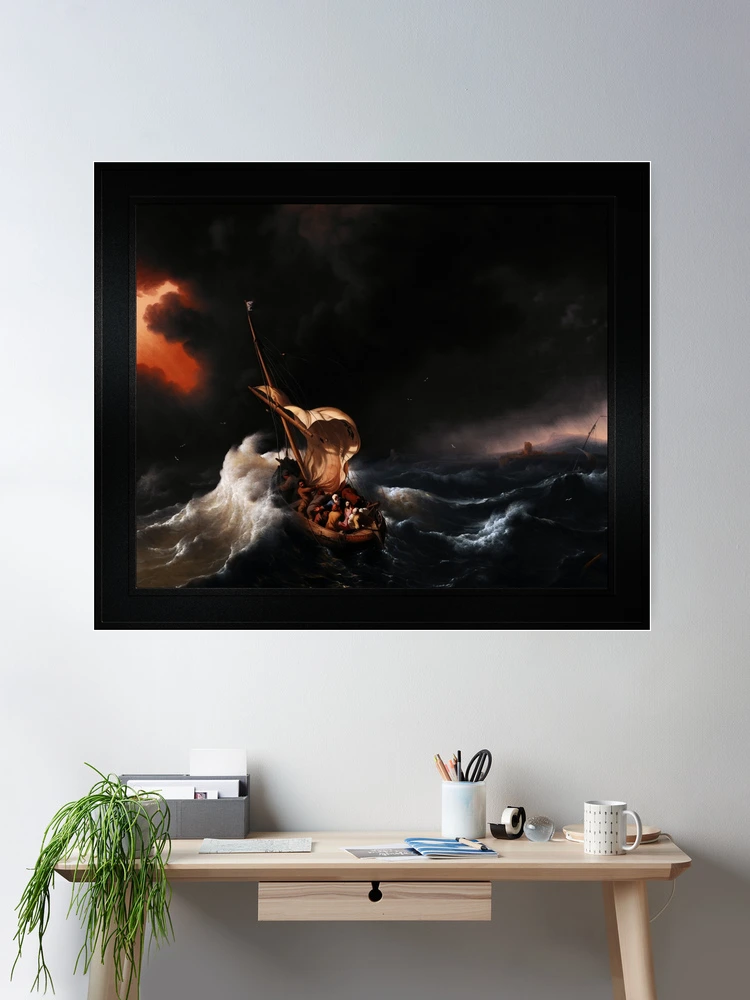
제목의 작품 “갈릴리 바다의 폭풍 속의 그리스도”, 다음에서 생성됨 1695 by the German-Dutch painter Ludolf Backhuysen (1630 – 1708), powerfully conveys a dramatic moment of biblical history. Backhuysen, known for his skillful mastery of maritime landscapes, utilizes his expertise to depict both the ferocity of nature and the calm authority of Christ amidst a violent storm. This painting is part of a broader tradition of maritime paintings during the Dutch Golden Age, with a specific focus on the themes of human struggle against nature, divine intervention, and the Christian narrative.
목차
주요 주제와 서사
The primary subject of the painting is the biblical story from the Gospel of Matthew, where Jesus Christ calms the storm on the Sea of Galilee. Backhuysen chooses to focus on the intense moment of chaos aboard the boat, capturing the panic of the disciples and the calm demeanor of Christ. 전경에서, the viewer sees a group of men, likely disciples, struggling against the wind and waves. Their expressions reveal fear and desperation as the storm rages around them. The turbulent sea, dark clouds, and relentless waves all serve to heighten the sense of danger that envelops the boat.
Amidst the turmoil, Christ remains serene and composed, the central figure of the composition. His presence is both reassuring and commanding, symbolizing divine authority over nature and the human condition. The artist uses the contrast between the violent sea and the peaceful figure of Christ to underscore the miraculous nature of the event. Christ’s stillness contrasts with the frenetic energy of the storm, making His divine role clear.
사물과 상징주의
The boat itself is a critical object in this piece, representing both the literal vessel in the biblical story and the symbolic “ship” of the Christian church navigating through the turbulent waters of the world. The ship is crafted with great detail, and the artist’s ability to render the movement of the water around it adds a sense of realism. The storm is not just a natural occurrence, but also a visual metaphor for the trials and tribulations of life, which are often beyond human control.
The figures in the boat are also symbolic. The disciples, depicted in various stages of panic and struggle, reflect the human response to overwhelming challenges. One figure leans over the edge of the boat, possibly to throw up, while another clutches the mast, his face twisted in fear. These expressions of human vulnerability are contrasted by Christ’s calmness, suggesting faith and the belief that divine intervention will provide salvation.
추가적으로, the elements of the storm—raging waves, dark clouds, and flashes of lightning—add to the intensity of the scene. The dark sky, with its dramatic lighting, represents the chaotic forces of nature and, metaphorically, the trials of life. Yet the light breaking through the clouds hints at hope and the divine presence that promises peace and guidance.
지형과 재료
The scene unfolds on the turbulent waters of the Sea of Galilee, 어느, in Backhuysen’s portrayal, are dark, foamy, and churning. The waves are masterfully painted, showing a range of textures from the frothy white caps to the deep, threatening blue and green depths. The artist’s command of light is particularly notable in the way it reflects off the surface of the water and highlights the contours of the figures, lending a sense of realism to the otherwise supernatural scene.
하늘, a striking backdrop to the action, is filled with ominous dark clouds, their heavy masses suggesting the sheer power and chaos of the storm. The dramatic interplay of light and dark contributes to the overall mood of the painting, amplifying the tension in the narrative. A small area of light appears through a break in the clouds, potentially indicating the divine presence, adding an aura of hope amidst the turmoil.
스타일, 주제, 그리고 기분
Ludolf Backhuysen’s style is one of the defining characteristics of the Dutch Golden Age. Known for his ability to capture the mood and texture of the sea, Backhuysen demonstrates an extraordinary talent for conveying motion and emotion. The turbulence of the water, the billowing sails, and the energy of the storm all exhibit a mastery of the seascape genre.
The theme of the painting merges the natural with the divine, showing human struggle against the overpowering forces of nature, only to be saved through divine intervention. The mood is one of awe and reverence, evoking a sense of the sublime in the viewer. The dynamic clash between the forces of the storm and the calm figure of Christ is a powerful visual metaphor for faith, 신뢰하다, and divine power.
색상 팔레트, while dominated by darker hues of stormy skies and deep ocean blues, also contains areas of lighter tones that reflect the divine light shining through the chaos. The contrast between light and dark creates a dramatic tension in the composition, emphasizing the miracle at the heart of the scene.
In terms of technique, Backhuysen uses fine brushwork to create a vivid depiction of the storm, with each wave and cloud rendered in intricate detail. The fluidity of the water and the dramatic effects of the sky demonstrate Backhuysen’s technical prowess and his ability to transport the viewer into the heart of the storm.
결론
“갈릴리 바다의 폭풍 속의 그리스도” by Ludolf Backhuysen stands as a testament to both the artistic skill of the artist and the theological depth of the subject matter. The painting is a dramatic visualization of the biblical narrative, combining natural and divine elements in a way that speaks to the viewer on both an emotional and spiritual level. The intensity of the storm, the vulnerability of the disciples, and the calm authority of Christ all combine to create a powerful visual experience, offering a meditation on faith, divine protection, and human endurance.
A Back Story Of The Artwork
이것은 렘브란트 반 레인(Rembrandt van Rijn)의 작품을 카피한 것으로 보입니다. (1606 – 1669) 조각, “NS 갈릴리 바다의 폭풍 c1633″.
원본 버전은 렘브란트 예수님과 그분의 배에 전체 초점이 맞춰져 있는 모습입니다. 12 그와 함께 배를 탄 제자들; 이 버전은 훨씬 더 넓은 시각을 가지고 있습니다.
이 버전은 범선에 탄 예수를 추가로 보여줍니다. 8 남자들, 큰 파도에 옆으로 부딪히면서; 그리고 장면의 오른쪽에는 물 위로 튀어나온 돛대의 일부가 보이고, 더 멀리 뒤에는 바다 폭풍에 휘말린 또 다른 범선이 보입니다..
저 멀리 해안에 몇 마일 떨어진 두 개의 구조물이 보입니다., 구조물 중 하나 뒤에 있는 일부 산과 태양으로 인해 주황색으로 변하는 구름에 작은 개간이 있는 크고 어두운 폭풍 구름; 보트가 밝은 흰색 조명으로 조명되는 동안.
갈릴리 바다의 폭풍 속의 그리스도(Christ in the Storm on the Sea of Galilee)는 공개 도메인 이미지를 리마스터링한 디지털 아트 옛 거장의 복제품입니다. 캔버스 프린트 온라인.
이 디지털 아트 창작, Xzendor7 웹사이트에서 찾을 수 있는 모든 예술 작품과 마찬가지로 캔버스 인쇄를 포함한 다양한 재료 형식으로 온라인에서 구매할 수 있습니다., 아크릴 프린트, 금속 지문, 목판화, 액자 인쇄, 포스터, 그리고 압연 캔버스로 다양한 크기로 인쇄됩니다. 12 인치에 72 실제 작품의 크기와 작품을 구매하기로 선택한 주문형 인쇄소에 따라 인치.
이 작품은 다양한 남성복과 여성복에서도 볼 수 있습니다., 머그, 토트백, 스카프, 노트북, 저널 및 다양한 홈 데코 제품.
아티스트 약력
아래에서 파생된 정보 Wikipedia.org
루돌프는 엠덴에서 태어났다., 동프리시아, 독일 니더작센의 저지대 1630 그리고 대략 나이에 20 암스테르담으로 갔다, 네덜란드에서 서예가 및 상인 사무원으로 취업.
이때 그가 그림에 뛰어난 재능이 있다는 것을 알게 되었다., 그리고 이 노력에 시간을 할애했습니다, 현재 직장을 그만두고; 처음에는 펜 그림을 그리고 저명한 네덜란드 황금시대 화가 Allaert van Everdingen 밑에서 공부했습니다. (1621 – 1675), 화가, 판화 제작자 및 동판화 제작자, Hendrick Dubbels (1621 – 1707), 해양 및 겨울 풍경화가.
자연을 연구하는 루돌프는 종종 폭풍우가 치는 동안 파도의 성질을 연구하기 위해 열린 배를 타고 바다로 나갔습니다.; 그의 주요 관심은 해양 예술에 있었기 때문에, 폭풍우가 치는 파도가 있는 장면을 강조하여.