

The Storm on the Sea of Galilee
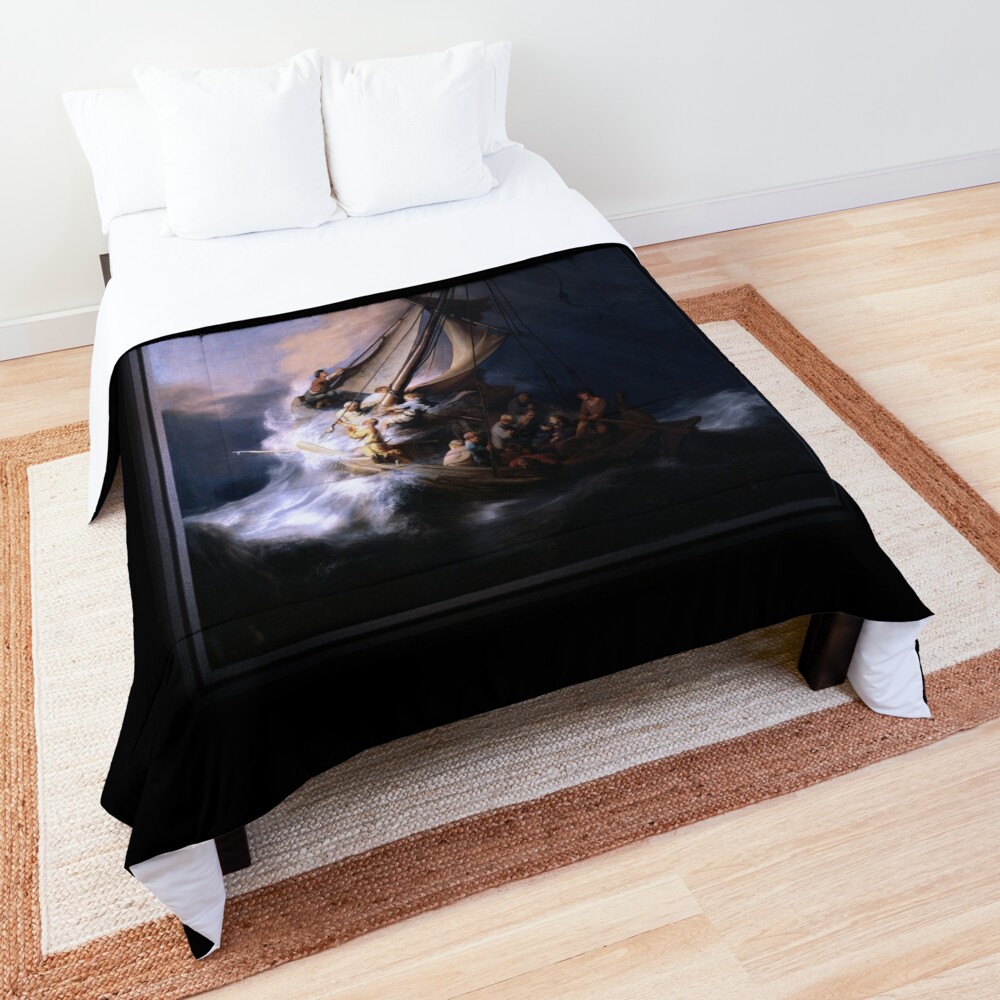
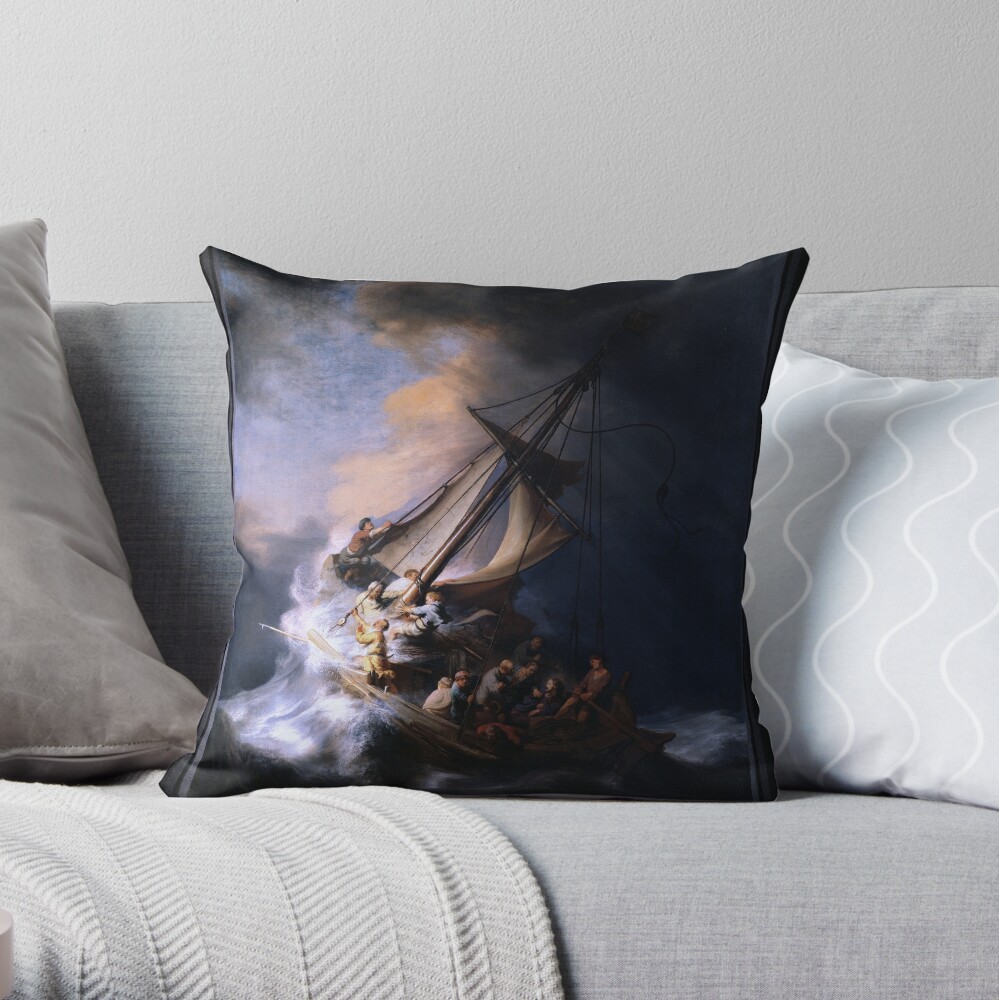
The Storm on the Sea of Galilee, 다음에서 생성됨 1633 by Dutch painter 렘브란트 반 라인 (1606 – 1669), stands as one of the most celebrated works of the artist’s early career. This monumental painting captures a pivotal biblical moment with striking realism, 감정, and drama, showcasing the artist’s extraordinary talent in portraying light, 그림자, and human emotion. The painting was commissioned as part of a set of paintings for a wealthy patron and depicts the moment when Christ and his disciples, aboard a small boat, are caught in a violent storm on the Sea of Galilee, as described in the Gospel of Mark, Chapter 4. The turbulent scene resonates with powerful themes of faith, 두려움, 그리고 신의 개입.
목차
주제: Christ and His Disciples
At the center of this chaotic scene is the figure of 예수 그리스도, whose calm and serene posture provides a stark contrast to the raging storm surrounding him. He is depicted sitting at the stern of the boat, his hands resting on the side, unfazed by the wind and waves crashing against the boat. Christ’s gaze is forward, embodying a sense of divine assurance that transcends the chaos. 그의 옷, a simple tunic and robe, are rendered with fine detail, reflecting the painter’s skill in portraying fabric textures. The light falling on his face highlights his central role in the narrative, symbolizing his divine nature and the peace he offers amidst turmoil.
Around Christ are the disciples, each responding to the storm in their own distinct ways. Some are visibly frightened, their faces contorted with fear and anxiety, while others are actively attempting to control the boat. One disciple, gripping the sail tightly, appears as if he is trying to maintain control, 또 다른 동안, kneeling by the side of the boat, prays desperately for safety. The diversity of expressions adds to the intensity of the composition, emphasizing the human emotions that contrast with Christ’s calm demeanor. Rembrandt uses the disciples’ fear as a visual representation of mankind’s vulnerability in the face of the unknown, drawing viewers into the emotional heart of the scene.
사물: The Boat, The Sea, and the Storm
The boat in the painting is a small fishing vessel, realistically depicted as a sturdy craft designed for traversing the turbulent waters of the Sea of Galilee. The boat’s detailed construction, including the visible planks of wood and ropes, is a testament to Rembrandt’s skill in capturing intricate textures. The boat tilts precariously to one side as the storm surges, with water pouring over the edges and into the boat, emphasizing the perilous nature of the situation.
NS 바다 itself is depicted with dramatic intensity. Rembrandt masterfully renders the waves, using sweeping brushstrokes that convey their movement and violence. The water is frothy and turbulent, crashing against the boat and adding to the sense of impending disaster. The waves appear almost alive, reflecting the raw power of nature as it responds to the storm. The artist uses contrasting light and dark elements to heighten the drama, with the turbulent waters on the left side of the painting being darker and more menacing, while the right side of the composition contains a hint of light breaking through the clouds, suggesting hope and divine presence.
백그라운드에서, 그만큼 storm clouds swirl ominously in shades of dark blue and gray, filling the sky with an oppressive and foreboding atmosphere. The turbulence of the clouds mirrors the emotional storm taking place within the boat, as the disciples’ anxiety is mirrored by the chaotic environment around them. A small hint of light peeks through the clouds, but it is minimal, further reinforcing the tumultuous mood of the scene. The use of light and dark is a key feature of Rembrandt’s style, known as Chiaroscuro, which he utilizes here to create a stark contrast between the dark, stormy elements and the calm serenity of Christ.
재료 및 기술: Oil on Canvas
Rembrandt’s choice of 캔버스에 오일 as his medium allows him to achieve a level of depth and detail that is both striking and evocative. His skillful use of oil paint enables him to render both the fine details of the figures and the broader, sweeping elements of the storm with equal precision. The light falling on the figures and the texture of the water are achieved through layered application of paint, with light hues reflecting the effects of the storm’s light and shadows giving depth to the scene. The dynamic quality of the painting, particularly the movement of the waves and the figures, is achieved through brushstrokes that appear energetic and alive, contributing to the intensity of the composition.
NS 조직 of the painting also serves to heighten the emotional impact. The rough, tumultuous sea is contrasted by the soft, almost ethereal rendering of Christ’s figure, whose calmness and serenity are made even more pronounced by the surrounding chaos. The figures of the disciples are given individual attention, with their expressions and movements captured with a remarkable sense of realism. Their facial expressions, the folds of their clothing, and their body language are portrayed with the utmost care, allowing the viewer to feel their fear, 고심하다, and desperation.
스타일, 주제, 그리고 기분: Dramatic Realism
Rembrandt’s signature style of dramatic realism is fully displayed in this painting. The focus on emotional depth and psychological complexity is a hallmark of his work, 그리고 The Storm on the Sea of Galilee, he uses the moment of crisis to explore profound themes of faith, divine intervention, and human frailty. The storm is not just a physical event but a metaphor for the turmoil that can engulf the human spirit, while Christ represents the unwavering presence of divinity that offers comfort and peace.
NS 분위기 of the painting is one of tension and contrast. The disciples’ fear and desperation are palpable, while Christ’s calmness offers a sense of hope and divine assurance. The viewer is drawn into the storm, both in terms of the physical intensity of the scene and the emotional struggle of the figures. The contrasting elements of light and dark, calm and chaos, invite reflection on the nature of faith and the way in which belief can offer solace in times of greatest distress.
결론
에 The Storm on the Sea of Galilee, Rembrandt van Rijn captures a biblical moment of profound significance with both artistic mastery and emotional depth. Through his dramatic use of light and shadow, 세부 사항에 대한 관심, and careful portrayal of human emotion, the painting becomes more than just a visual narrative, it is a meditation on the nature of divine intervention and the power of faith in the face of fear. The emotional intensity of the storm and the tranquil presence of Christ invite viewers to contemplate their own responses to life’s storms, whether internal or external.
The Storm on the Sea of Galilee is a retouched digital art old masters reproduction of a public domain image that is available as a 압연 인쇄 온라인.
이 디지털 아트 창작, Xzendor7 웹사이트에서 찾을 수 있는 모든 예술 작품과 마찬가지로 캔버스 인쇄를 포함한 다양한 재료 형식으로 온라인에서 구매할 수 있습니다., 아크릴 프린트, 금속 지문, 목판화, 액자 인쇄, 포스터, 그리고 압연 캔버스로 다양한 크기로 인쇄됩니다. 12 인치에 72 실제 작품의 크기와 작품을 구매하기로 선택한 주문형 인쇄소에 따라 인치.
이 작품은 다양한 남성복과 여성복에서도 볼 수 있습니다., 머그, 토트백, 스카프, 노트북, 저널 및 다양한 홈 데코 제품.
아티스트 약력
아래 정보 Wikipedia.org
신생 네덜란드 공화국은 유럽에서 가장 번영한 국가였으며 유럽 무역을 주도했습니다., 과학, 그리고 예술. The northern Netherlands provinces that made up the new state had traditionally been less important artistic centers than cities in Flanders in the south. 전쟁의 격변과 대규모 인구 이동, 그리고 오래된 군주제와 가톨릭 문화 전통과의 급격한 단절, 네덜란드 예술이 스스로를 재창조해야 한다는 것을 의미했습니다.. 종교적 주제의 그림은 급격히 감소했습니다., 그러나 많은 세속적인 주제를 위한 대규모의 새로운 시장이 개발되었습니다..
황금시대의 네덜란드 회화는 유럽 바로크 회화 전반에 포함되지만, 종종 그 특성을 많이 보여줍니다., most lacks the idealization and love of splendor typical of much Baroque work, including that of neighboring Flanders. 대부분의 일, 그 기간이 가장 잘 알려진 것을 포함하여, reflects the traditions of detailed realism inherited from Early Netherlands painting.
이 시대의 특징은 독특한 장르의 회화가 확산되었다는 것이다., 대부분의 예술가는 이들 중 하나에서 대부분의 작품을 제작합니다.. 이 전문 분야의 완전한 발전은 1620년대 후반부터 볼 수 있습니다., 그리고 그 이후부터 프랑스의 침공까지의 기간은 1672 황금시대 회화의 핵심이다. 예술가들은 대부분의 경력을 초상화에만 소비합니다., 장르 장면, 풍경, 바다 풍경과 배, 아니면 정물, 그리고 종종 이러한 카테고리 내의 특정 하위 유형. 이러한 유형의 주제 중 다수는 서양 회화에서 새로운 것이었습니다., 이 시기에 네덜란드인들이 그림을 그린 방식은 미래의 발전에 결정적인 영향을 미쳤습니다..