

Cleopatra c1725
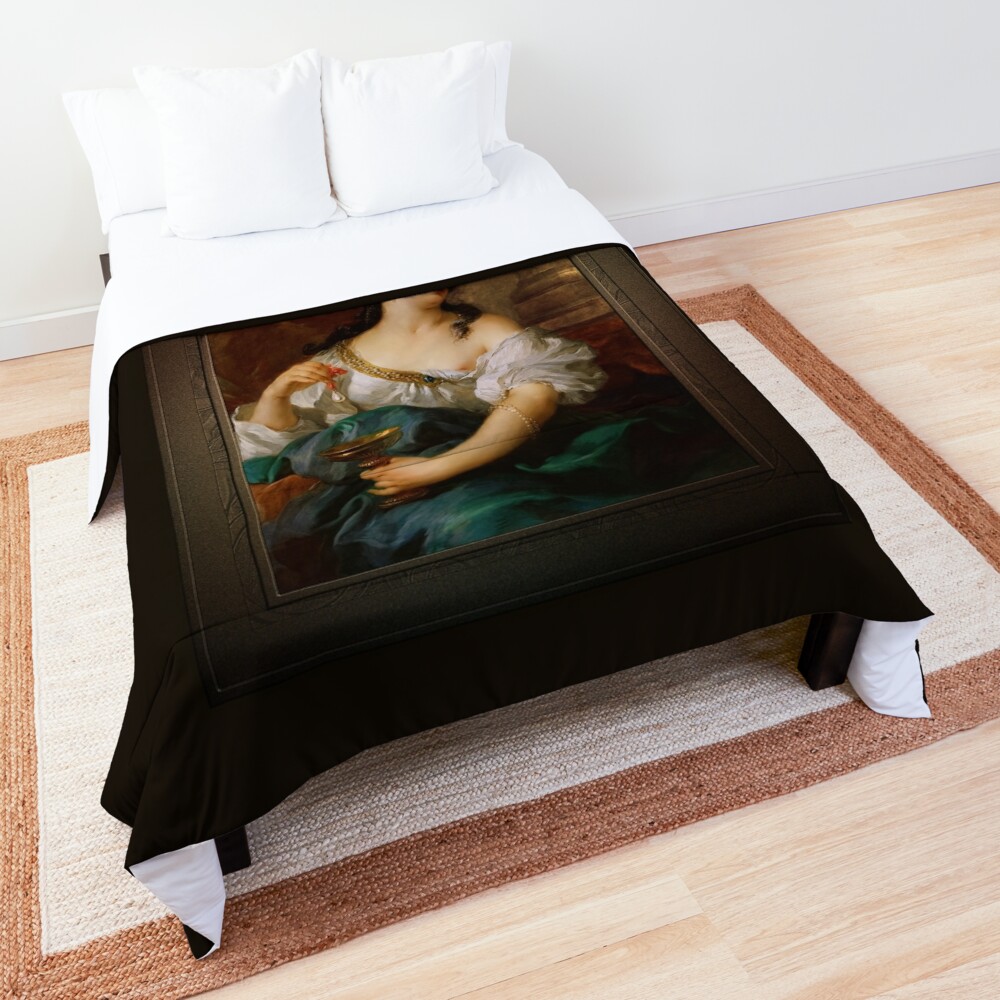
“Cleopatra c1725” is an exquisite work of art painted by the renowned French Rococo artist François Lemoyne (1688 – 1737). The painting showcases the legendary Egyptian queen, Kleópatra, captured in a moment of grace and poise, set against an opulent backdrop that reflects the artist’s signature mastery in blending dramatic emotion with sensual elegance. Through the lens of Lemoyne’s meticulous brushwork and captivating composition, this artwork merges the mythological and historical into a stunning portrayal of femininity, krafti, and tragedy.
Efnisyfirlit
Aðalviðfangsefnið: Cleopatra’s Graceful Poise
The central figure in the painting is Kleópatra, drottning Egyptalands, sem konungleg nærvera drottnar yfir tónverkinu. Túlkun Lemoyne á Cleopatra er viðkvæm, samt ákveðin mynd. Hún er sýnd í sitjandi stöðu, halla sér aðeins aftur í glæsilegri stellingu, sem undirstrikar bæði líkamlega fegurð hennar og vexti hennar sem einvalds. Augnaráð drottningarinnar beinist upp og til hliðar, miðla tilfinningu um íhugun og innri óróa, eins og hún sé týnd í hugsun um gríðarlega þunga ábyrgðar sinnar eða örlagaríku vali sem hún stendur frammi fyrir.
Glæsilegur klæðnaður hennar er mikilvægur þungamiðja málverksins. Cleopatra er klædd í glæsilegan slopp úr hvítum og glansandi efnum, sem ljómar lúmskur þegar ljósið leikur um fellingar á klútnum. The gown itself appears as though it has been carefully draped around her body, with the fabric cascading in soft, fluid lines, enhancing her graceful form. Her ensemble is further adorned with intricate gold jewelry, including a chain of beads and gemstones that rests on her neckline, drawing attention to her elegant features.
Hluti og táknfræði: Cleopatra’s Symbols of Power
Cleopatra’s pose is complemented by two prominent objects in the painting that serve as potent symbols of her royal status. Í hægri hendi hennar, she delicately holds a small cup, crafted from an ornate gold chalice. The chalice, rich in detail and texture, could symbolize Cleopatra’s influence over matters of state or perhaps the dire fate she faces, symbolizing both the pleasures and the burdens of power. Í vinstri hönd hennar, she holds a small item, potentially a piece of jewelry or a symbolic artifact, sem gæti verið tilvísun í vel skjalfesta töfra Cleopötru og hlutverk hennar í alþjóðlegum erindrekstri og ráðabruggi..
Báðir hlutir eru fíngerðir, sýnir ótrúlega getu Lemoyne til að fanga fín smáatriði, allt frá fíngerðum glans málmsins til endurskinsflatanna sem leika við ljósið. Þessir hlutir benda til mikillar félagslegrar stöðu Cleopötru og eru notaðar af Lemoyne til að undirstrika flókin lög í persónu hennar, fegurð, visku, og harmleikur renna allir saman í samspili hennar við hlutina.
Landslag og bakgrunnur: An Opulent Setting
Bakgrunnur málverksins er annar mikilvægur þáttur í að setja stemningu og tón listaverksins. Landslagið er ógreinilegt og náttúrulegt, lögun draperað, mjúkt efni og hlýtt, jarðbundnir tónar sem virðast umvefja Kleópötru á nánast draumkenndan hátt. Efnið í bakgrunni, with its soft folds and rich texture, complements Cleopatra’s attire and adds a sense of continuity and harmony within the composition.
Although the setting is ambiguous in terms of specific location, it evokes the grandeur and decadence associated with Cleopatra’s reign, particularly the mythical representations of her court. The use of fabric and drapery in the background enhances the sense of luxury and elegance, evoking the lavishness of the royal courts of ancient Egypt, while also paying homage to the artistic style of the Rococo period. Mjúkt, warm tones of the background juxtapose Cleopatra’s more subdued and reserved mood, creating a striking contrast that emphasizes her poised and contemplative nature.
Stíllinn: Rococo Refinement
François Lemoyne’s style is unmistakably Rococo, a movement known for its emphasis on ornate detail, delicate colors, and the celebration of beauty in all its forms. Í “Cleopatra c1725,” Lemoyne channels these principles with a deep attention to texture and light. The use of light and shadow plays a pivotal role in the painting, highlighting Cleopatra’s soft features, her fine gown, and the rich surface of the golden chalice. The artist’s brushwork is refined and fluid, adding to the sense of softness and movement in the fabric and Cleopatra’s attire.
The Rococo style also embraces a focus on sensuality and elegance, both of which are beautifully realized in this portrait of Cleopatra. Hún mjúk, rounded face, with its delicate features, and the luxurious textures of her gown and jewels speak to a feminine ideal that was celebrated during the 18th century. Auk þess, the soft rendering of the skin tones, combined with the rich contrasts of the background and attire, enhance the painting’s sense of depth, creating a visual experience that draws the viewer’s eye into the subtle details of the subject.
Stemningin: Tragic Royalty and Contemplation
Stemningin á “Cleopatra c1725” can be described as one of tragic contemplation. Despite the richness and grandeur surrounding Cleopatra, her expression is distant, næstum depurð. The slight tilt of her head, the way her gaze appears to look beyond the viewer, suggests a woman lost in thought, perhaps contemplating her fate or the political maneuvering that defined her reign. This mood aligns with the historical narrative of Cleopatra, who was both a powerful ruler and a tragic figure in history, surrounded by political intrigue and the complexities of her relationships with the Roman Empire.
Lemoyne’s portrayal of Cleopatra in this reflective state conveys a sense of vulnerability, which contrasts with the stereotypical image of Cleopatra as a domineering and seductive ruler. This nuanced portrayal adds depth to the artwork, inviting the viewer to ponder the internal struggles of a woman caught in a web of power, Ást, and impending loss.
Niðurstaða
Í “Cleopatra c1725,” François Lemoyne captures not only the physical beauty and grandeur of one of history’s most famous women but also the quiet, reflective nature of her character. Through delicate brushwork, nákvæmar áferð, and an evocative setting, Lemoyne invites the viewer to experience the emotional and intellectual complexity of Cleopatra, while also offering a visual feast of Rococo elegance and opulence. The result is a painting that is both a tribute to royal beauty and a meditation on the timeless nature of power and tragedy.
Þetta er endurgerð stafræn list af gömlum meistara eftirgerð af mynd í almenningseign sem er fáanleg sem strigaprentun á netinu.