

Kleopatra ok. 1725 r
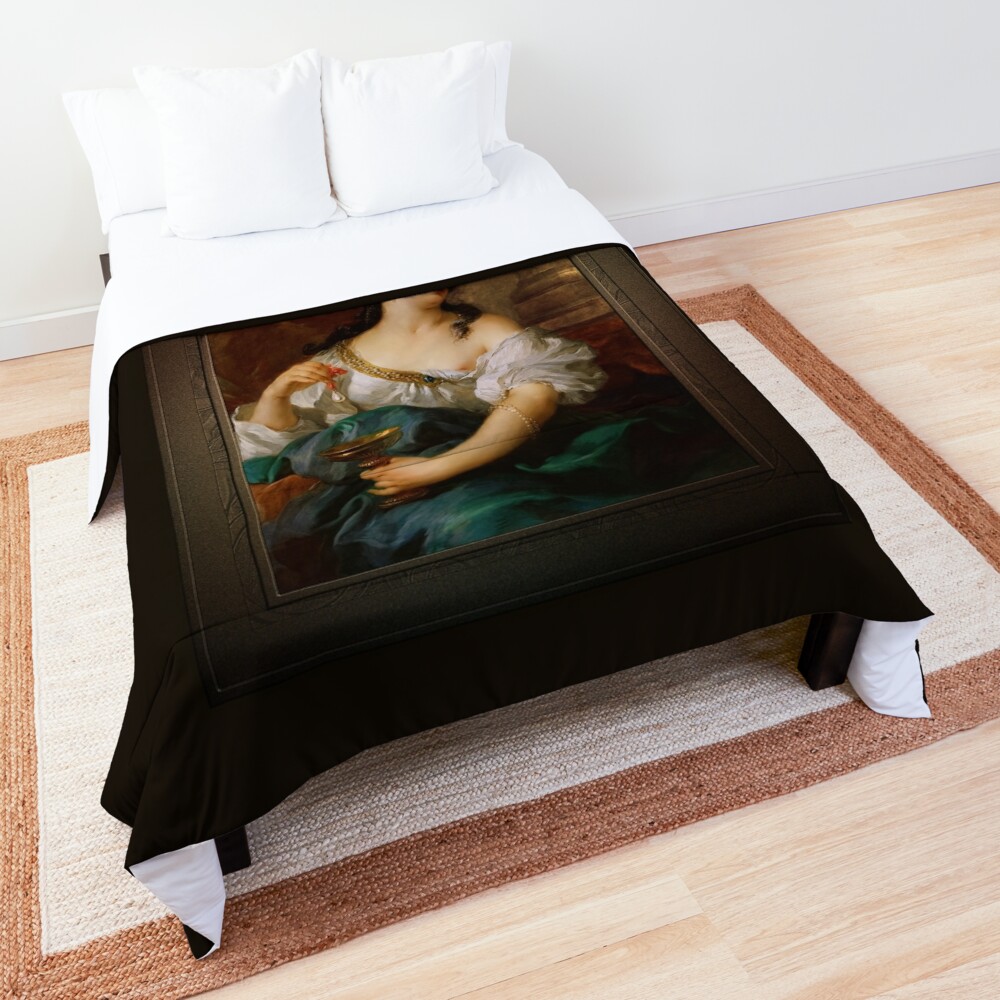
“Kleopatra ok. 1725 r” to znakomite dzieło sztuki namalowane przez znanego francuskiego artystę rokokowego François Lemoyne’a (1688 – 1737). Obraz przedstawia legendarną egipską królową, Kleopatra, uchwycone w chwili wdzięku i opanowania, na tle bogatego tła, które odzwierciedla charakterystyczne mistrzostwo artysty w łączeniu dramatycznych emocji ze zmysłową elegancją. Przez pryzmat starannego malowania pędzlem i urzekającej kompozycji Lemoyne’a, To dzieło sztuki łączy elementy mitologiczne i historyczne w oszałamiający obraz kobiecości, moc, i tragedia.
Spis treści
Główny temat: Pełen wdzięku spokój Kleopatry
Centralną postacią obrazu jest Kleopatra, królowa Egiptu, którego królewska obecność dominuje w kompozycji. Lemoyne interpretuje Kleopatrę jako delikatną, ale zdecydowana postać. Przedstawiana jest w pozycji siedzącej, lekko odchylony do tyłu w eleganckiej postawie, co podkreśla zarówno jej piękno fizyczne, jak i pozycję monarchy. Wzrok królowej skierowany jest w górę i na boki, przekazując poczucie kontemplacji i wewnętrznego niepokoju, jakby była pogrążona w myślach o ogromnym ciężarze swoich obowiązków i fatalnych wyborach, przed którymi stoi.
Centralnym punktem obrazu jest jej luksusowy strój. Kleopatra ubrana jest w bogatą suknię wykonaną z białych i opalizujących tkanin, które subtelnie mienią się pod wpływem światła padającego na fałdy tkaniny. The gown itself appears as though it has been carefully draped around her body, with the fabric cascading in soft, fluid lines, enhancing her graceful form. Her ensemble is further adorned with intricate gold jewelry, including a chain of beads and gemstones that rests on her neckline, drawing attention to her elegant features.
Przedmioty i symbolika: Symbole władzy Kleopatry
Cleopatra’s pose is complemented by two prominent objects in the painting that serve as potent symbols of her royal status. W jej prawej ręce, she delicately holds a small cup, crafted from an ornate gold chalice. The chalice, rich in detail and texture, could symbolize Cleopatra’s influence over matters of state or perhaps the dire fate she faces, symbolizing both the pleasures and the burdens of power. W jej lewej ręce, she holds a small item, potentially a piece of jewelry or a symbolic artifact, which could be a reference to Cleopatra’s well-documented allure and her role in international diplomacy and intrigue.
Both objects are finely rendered, showcasing Lemoyne’s extraordinary ability to capture fine details, from the delicate shine of the metal to the reflective surfaces that play with light. These items suggest Cleopatra’s high social position and are used by Lemoyne to underscore the complex layers of her character, piękno, mądrość, and tragedy all converge in her poised interaction with the objects.
Teren i tło: Bogate otoczenie
The backdrop of the painting is another crucial element in setting the mood and tone of the artwork. The landscape is indistinct and ethereal, featuring draped, soft fabrics and warm, earthy tones that seem to envelop Cleopatra in an almost dreamlike manner. The fabric in the background, with its soft folds and rich texture, complements Cleopatra’s attire and adds a sense of continuity and harmony within the composition.
Although the setting is ambiguous in terms of specific location, it evokes the grandeur and decadence associated with Cleopatra’s reign, particularly the mythical representations of her court. The use of fabric and drapery in the background enhances the sense of luxury and elegance, evoking the lavishness of the royal courts of ancient Egypt, while also paying homage to the artistic style of the Rococo period. Miękkie, warm tones of the background juxtapose Cleopatra’s more subdued and reserved mood, creating a striking contrast that emphasizes her poised and contemplative nature.
Styl: Rokokowe wyrafinowanie
François Lemoyne’s style is unmistakably Rococo, a movement known for its emphasis on ornate detail, delicate colors, and the celebration of beauty in all its forms. W “Cleopatra c1725,” Lemoyne channels these principles with a deep attention to texture and light. The use of light and shadow plays a pivotal role in the painting, highlighting Cleopatra’s soft features, her fine gown, and the rich surface of the golden chalice. The artist’s brushwork is refined and fluid, adding to the sense of softness and movement in the fabric and Cleopatra’s attire.
The Rococo style also embraces a focus on sensuality and elegance, both of which are beautifully realized in this portrait of Cleopatra. Her soft, rounded face, with its delicate features, and the luxurious textures of her gown and jewels speak to a feminine ideal that was celebrated during the 18th century. dodatkowo, the soft rendering of the skin tones, combined with the rich contrasts of the background and attire, enhance the painting’s sense of depth, creating a visual experience that draws the viewer’s eye into the subtle details of the subject.
Nastrój: Tragiczne tantiemy i kontemplacja
Nastrój “Kleopatra ok. 1725 r” can be described as one of tragic contemplation. Despite the richness and grandeur surrounding Cleopatra, her expression is distant, almost melancholic. The slight tilt of her head, the way her gaze appears to look beyond the viewer, suggests a woman lost in thought, perhaps contemplating her fate or the political maneuvering that defined her reign. This mood aligns with the historical narrative of Cleopatra, who was both a powerful ruler and a tragic figure in history, surrounded by political intrigue and the complexities of her relationships with the Roman Empire.
Lemoyne’s portrayal of Cleopatra in this reflective state conveys a sense of vulnerability, which contrasts with the stereotypical image of Cleopatra as a domineering and seductive ruler. This nuanced portrayal adds depth to the artwork, inviting the viewer to ponder the internal struggles of a woman caught in a web of power, Miłość, and impending loss.
Wniosek
W “Cleopatra c1725,” François Lemoyne captures not only the physical beauty and grandeur of one of history’s most famous women but also the quiet, reflective nature of her character. Through delicate brushwork, szczegółowe tekstury, and an evocative setting, Lemoyne zaprasza widza do doświadczenia emocjonalnej i intelektualnej złożoności Kleopatry, oferując jednocześnie wizualną ucztę rokokowej elegancji i bogactwa. W rezultacie powstał obraz będący zarówno hołdem dla królewskiego piękna, jak i medytacją nad ponadczasową naturą władzy i tragedii.
Jest to zremasterowana reprodukcja starych mistrzów sztuki cyfrowej obrazu należącego do domeny publicznej, która jest dostępna jako druk na płótnie online.