

Pater Noster
Pater Noster (Nasz Ojciec) c1900 by Czech Painter Alphonse Mucha (1860 – 1939); a także znakomity ilustrator i grafik, który był główną siłą w okresie secesji; znany ze swojej stylizowanej, ozdobne i dekoracyjne plakaty teatralne.
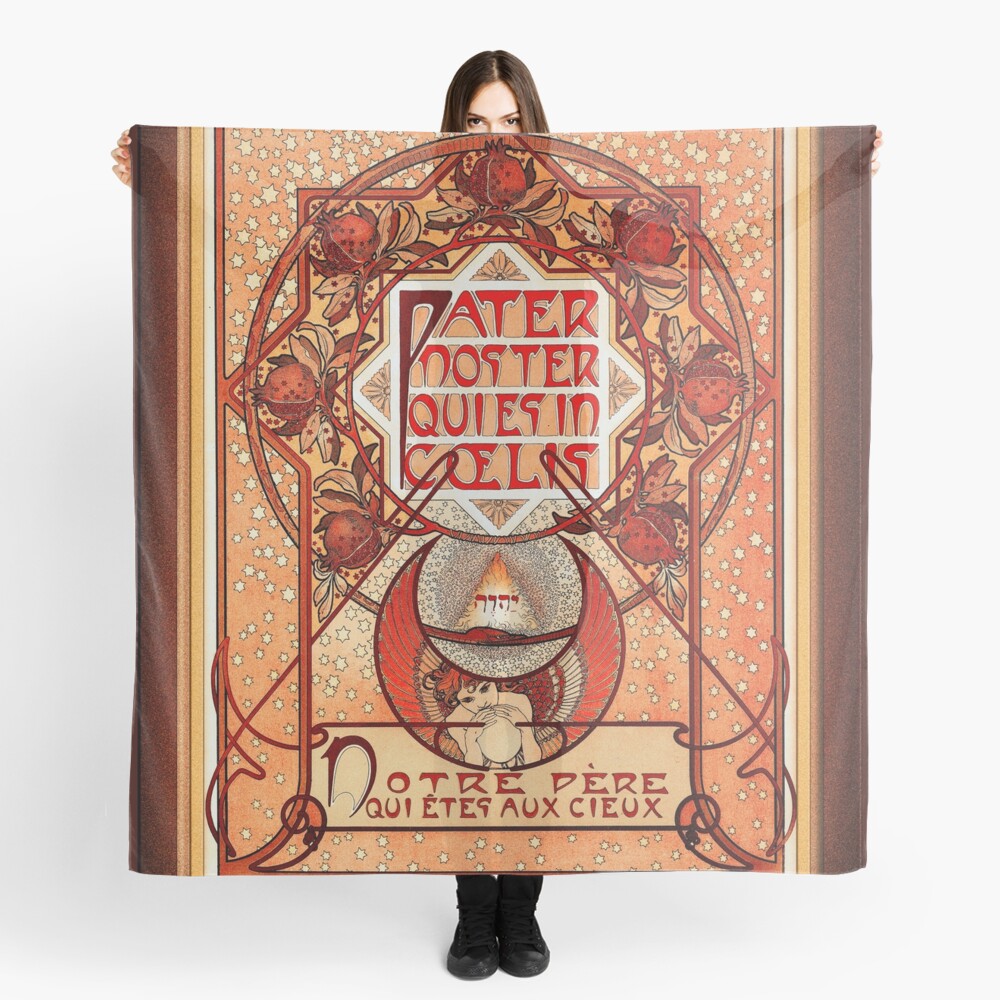
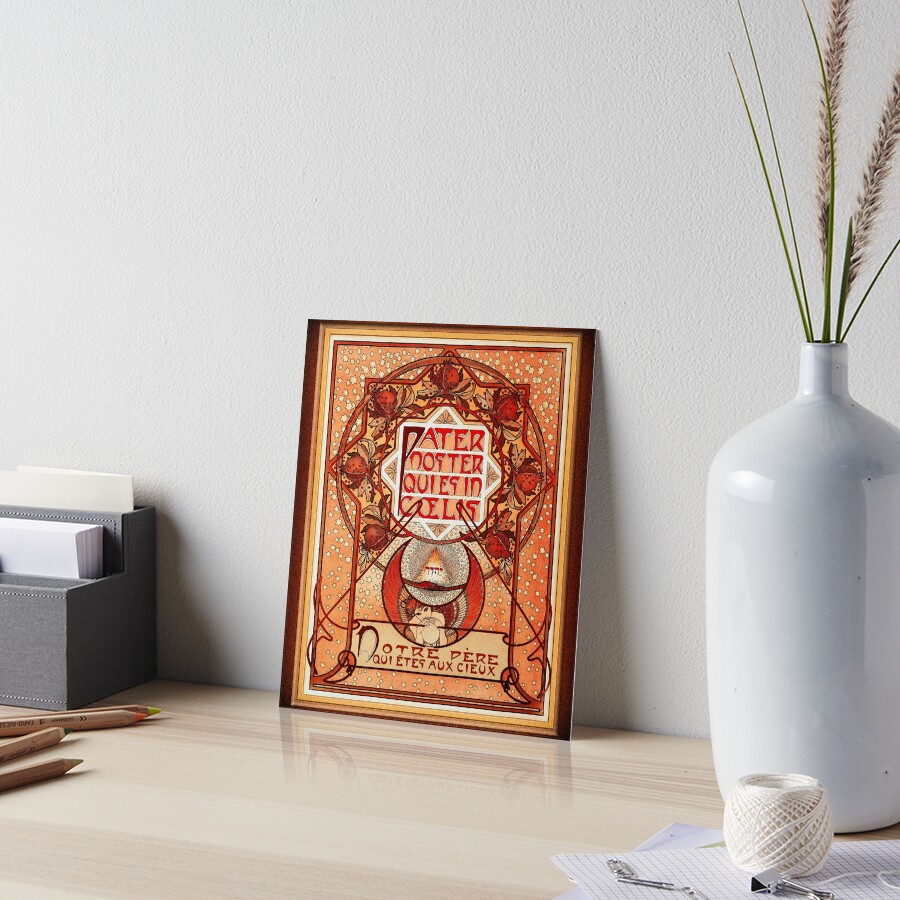
A beautiful illustrated poster that is a tribute to a beloved father that has passed away, with the words Pater Noster Quiesin Coelis (May Our Father Rest In Heaven) at the top and at the bottom the words Notre Pere Qui Etes Aux Cieux (Our Father Who Art In Heaven) that cite the beginning of he Lords prayer.
The top words are surrounded by a representation of the Star of David in the inner layer with a ring around it and a large like representation that also has open pomegranates at each point.
Below the words is another word in Hebrew that is placed in triangle with a fiery appearance, below that a woman grasping a sphere of sorts that has radiant orange, red and white wings; that may represent and angel.
Finally the rest of the illustration has flowing curves that also connect to the Star of David structure giving it a metal frame look with a multitude of starts filling every background space.
Jest to zremasterowana reprodukcja starych mistrzów sztuki cyfrowej obrazu domeny publicznej, która jest dostępna do zakupu online jako zrolowany obraz na płótnie.
Informacje poniżej od Wikipedia.org
Alfons Maria Mucha Lipiec 24, 1860 – lipiec 14, 1939), był znany na całym świecie jako Alphonse Mucha. Był wybitnym czeskim malarzem, ilustrator i grafik, mieszkający w Paryżu w okresie secesji, i jest najbardziej znany ze swoich wyraźnie stylizowanych i dekoracyjnych plakatów teatralnych, szczególnie te Sarah Bernhardt.
Tworzył ilustracje, reklamy, panele dekoracyjne, i projekty, który stał się jednym z najbardziej znanych obrazów tego okresu.
W drugiej części swojej kariery, w wieku 43, wrócił do ojczyzny Czech i Moraw w Austrii i poświęcił się namalowaniu serii dwudziestu monumentalnych płócien znanych jako Epopeja słowiańska, przedstawiający historię wszystkich narodów słowiańskich świata, które namalował między 1912 i 1926.
W 1928, w 10. rocznicę niepodległości Czechosłowacji, przedstawił serię narodowi czeskiemu. Uważał to za swoje najważniejsze dzieło. Jest teraz na wystawie w Pradze.