

Consuelo Vanderbilt c1906
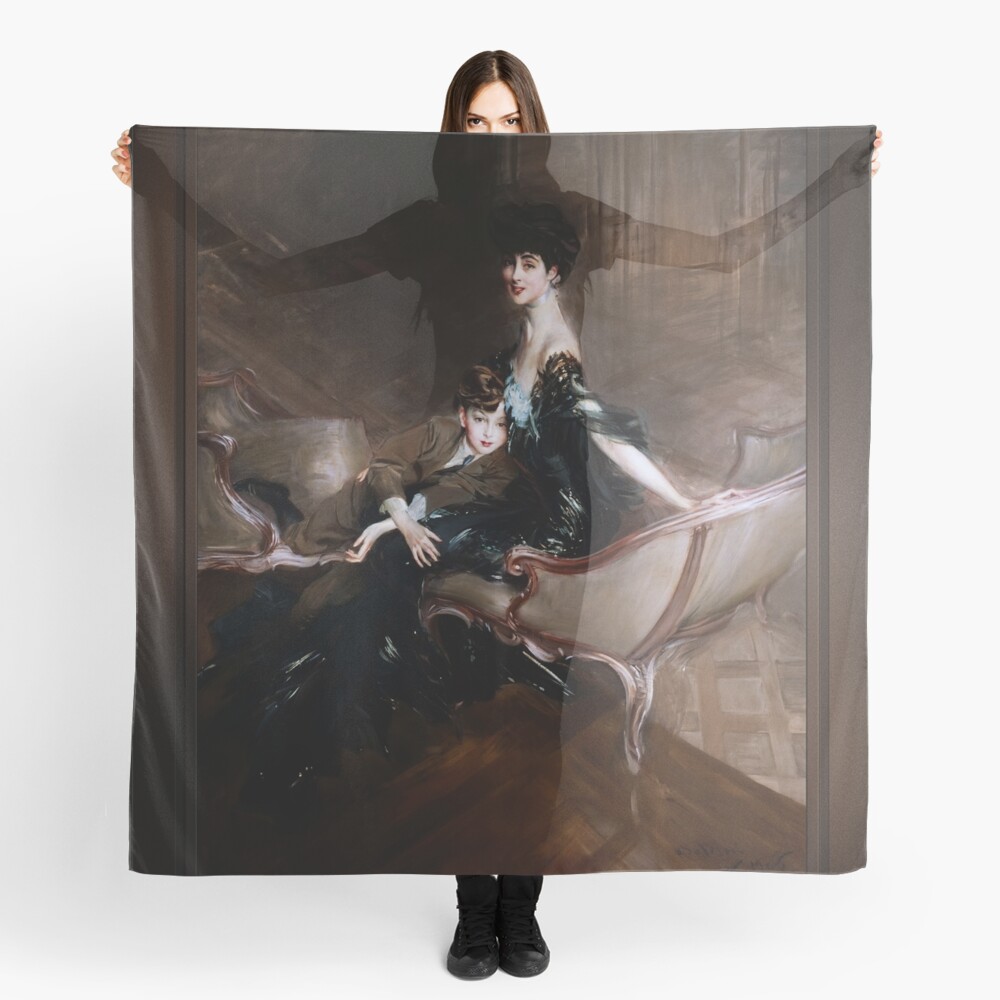
Y paentiad “Consuelo Vanderbilt c1906” gan yr arlunydd Eidalaidd enwog Giovanni Boldini (1842 – 1931) yn cynnig cipolwg trawiadol ar fyd opulence, harddaf, a diwylliant aristocrataidd ar droad yr 20fed ganrif. Yn y portread hwn, Mae Boldini yn cyfleu ceinder ac osgo Consuelo Vanderbilt (1876 -1964), Duges Marlborough, a'i Mab, Arglwydd Ivor Spencer-Churchill (1898 – 1956), aeres Americanaidd a oedd yn un o ffigurau mwyaf edmygu ei chyfnod.
Y campwaith hwn, creu o gwmpas 1906, yn enghreifftio swyn a dynameg soffistigedig y cyfnod Belle Époque, cyfnod a nodweddwyd gan ffyniant, harddwch, a chylchoedd cymdeithasol mireinio. Mae'r portread yn amlygu ymdeimlad o hudoliaeth oesol, gan gyfuno portreadau traddodiadol â thechnegau modern y cyfnod, sefydlu Boldini fel meistr ar ei grefft.
Tabl Cynnwys
Prif Bwnc a Chyfansoddiad
The focal point of the painting is Consuelo Vanderbilt herself, portrayed seated gracefully on a chaise longue. She is elegantly dressed in a black gown that shimmers with opulence, its billowing fabric almost flowing out of the canvas. The texture of the fabric is expertly rendered, capturing the luxurious quality of the material. Boldini’s use of broad, fluid brushstrokes lends the gown a sense of movement, as if the dress is caught in a moment of motion. Y cyferbyniad rhwng y meddal, flowing black fabric and the sharp details of Consuelo’s serene yet poised expression creates a striking balance between formality and vivacity.
Vanderbilt’s posture is one of relaxed confidence, exuding an aristocratic composure. Ei hosgo, with one arm placed delicately over the back of the chaise longue, contributes to the overall elegant demeanor. In the painting, she is seen looking slightly to the side, a gentle smile gracing her lips, suggesting an air of mystery and quiet introspection. Her dark hair, swept into an intricate updo, frames her face delicately, while the diamond earrings that dangle from her ears shimmer with understated elegance.
Beside Consuelo, sitting somewhat closer to her, is her son. The child is dressed in a brown suit, contrasting sharply with the grandeur of Vanderbilt’s attire. The child’s expression appears somewhat pensive, with a relaxed posture that mirrors the woman’s grace. This inclusion of the child adds a layer of narrative depth, symbolizing the continuation of the Vanderbilt legacy and perhaps hinting at the familial relationships that were often central to the societal dynamics of that time.
The Surrounding Environment and Objects
The background of the portrait is a softly blurred, almost abstract depiction of a lavish interior. The rich brown tones and the hazy light suggest a warm, luxurious atmosphere. The lack of specific detailing in the background, where the figure of the chaise longue blends into the undefined surroundings, directs the viewer’s focus entirely on the figures of Consuelo and her child. This technique exemplifies Boldini’s skill in emphasizing the human subjects while creating a sense of depth and sophistication in the overall composition.
The chaise longue itself is an elegant piece of furniture, upholstered in soft, muted tones, sy'n ategu palet lliw y paentiad cyfan. Mae ei grwm, mae llinellau ysgubol yn arwyddlun o'r arddulliau dodrefn a oedd yn boblogaidd ar ddiwedd y 19eg ganrif a dechrau'r 20fed ganrif, gan bwysleisio ffordd o fyw moethus. Mae arwyneb adlewyrchol ysgafn pren caboledig y gadair yn ychwanegu ychydig o lewyrch, dal llygad y gwyliwr. Fodd bynnag, nid yw'r dodrefn yn tynnu oddi ar y ffigurau yng nghanol y portread; yn hytrach, mae'n gwasanaethu eu fframio o fewn gosodiad mawreddog, cartref aristocrataidd.
Arddull, Techneg, a hwyliau
Mae arddull Boldini yn adnabyddadwy ar unwaith oherwydd ei hylifedd, bywiogrwydd, a symudiad. Roedd yn adnabyddus am ei waith brwsh meistrolgar a'i allu i gyfleu mudiant a bywyd trwy drin golau a chysgod. Yn y portread hwn, mae'r trawiadau brws yn ddeinamig ac yn llawn mynegiant, creu ymdeimlad o uniongyrchedd ac egni. Er bod y meysydd manwl, megis wyneb a dwylaw Consuelo, dangos sylw’r artist i realaeth, mae'r gŵn sy'n llifo a'r elfennau cefndir yn cael eu trin â rhyddiwr, techneg bron yn argraffiadol.
Mae naws y portread yn un o soffistigeiddrwydd tawel. Ymarweddiad hamddenol ond parod Consuelo, wedi'i gyfuno â'r meddal, gwahodd tonau o'r paentiad, yn cyfleu ymdeimlad o dawelwch hyder a harddwch bythol. Nid yw'r portread yn ceisio gorbwysleisio unrhyw emosiwn penodol, ond yn hytrach yn dal y pwnc ar foment o lonyddwch, o bosibl yn adlewyrchu ei safle mewn cymdeithas fel gwraig o gyfoeth a dylanwad mawr. Mae cynnwys y plentyn yn awgrymu bod ffigwr y fam yn un o bwysigrwydd personol a theuluol, gwella ymhellach awyrgylch aristocrataidd yr olygfa.
Boldini’s work is also marked by his ability to integrate the subject into the environment, making the background and surroundings essential to the narrative of the portrait. The slightly abstract treatment of the background allows the viewer to focus more on the subject while still giving the impression of a luxurious setting. The interplay between the formal portrait style and the more dynamic brushwork is characteristic of Boldini’s approach, making this work a powerful example of the Italian painter’s legacy.
The Legacy of Giovanni Boldini
Giovanni Boldini was an Italian painter who spent much of his career in Paris, where he became known for his portraits of the high society. His subjects were often wealthy and influential individuals, much like Consuelo Vanderbilt, who was a prominent figure in both American and European aristocracy. Boldini’s portraits are known for their graceful fluidity, exquisite technique, and emphasis on elegance and refinement. He captured the spirit of his time with a sense of movement and drama, making him one of the most celebrated portrait painters of the late 19th and early 20th centuries.
“Consuelo Vanderbilt c1906” is a prime example of Boldini’s ability to merge realism with an almost painterly abstraction. Through his vibrant brushwork and subtle tonal contrasts, he immortalized his subject not only as an individual but also as a reflection of the social and cultural environment in which she lived. The portrait remains a testament to the grandeur of the Belle Époque era, showcasing both the artist’s technical skill and his ability to capture the essence of his subjects.
Mae hwn yn atgynhyrchiad hen feistri celf ddigidol wedi'i ailfeistroli o ddelwedd parth cyhoeddus sydd ar gael fel a print cynfas ar-lein.
Bio artist yn deillio o Wikipedia.org
Ganed Boldini yn Ferrara, Eidal ym mis Rhagfyr 31, 1842, i fab peintiwr o bwnc crefyddol. Yn 1862 yn oed 20, aeth i Fflorens am chwe blynedd i astudio a dilyn paentio.
Dim ond yn anaml y byddai'n mynychu dosbarthiadau yn Academi'r Celfyddydau Cain, ond yn Fflorens, cwrdd ag arlunwyr realaidd eraill a elwir y Macchiioli, a oedd yn rhagflaenwyr Eidalaidd i Argraffiadaeth.
Gwelir eu dylanwad yn nhirweddau Boldini sy’n dangos ei ymateb digymell i fyd natur, er mai am ei bortreadau y daeth yn fwyaf adnabyddus
Symud i Lundain, Cafodd Boldini lwyddiant fel portreadwr. Cwblhaodd bortreadau o brif aelodau cymdeithas gan gynnwys y Fonesig Holland a Duges San Steffan.
Yn 1872 symudodd i Paris, lle y cyfarfu a daeth yn ffrindiau ag Edgar Degas. Ar ddiwedd y 19eg ganrif daeth yn arlunydd portreadau mwyaf ffasiynol ym Mharis, gydag arddull syfrdanol o beintio sy'n amlygu peth o ddylanwad Macchiioli a brio sy'n atgoffa rhywun o waith artistiaid iau, megis John Singer Sargent a Paul Helleu.
Yn 1889, enwebwyd ef yn gomisiynydd adran Eidalaidd y Paris Exposition, a derbyniodd y Légion d'honneur ar gyfer y penodiad hwn. Yn 1897 roedd ganddo arddangosfa unigol yn Ninas Efrog Newydd; a chymerodd ran hefyd yn Biennale Fenis yn 1895, 1903, 1905, a 1912.