

Consuelo Vanderbilt c1906
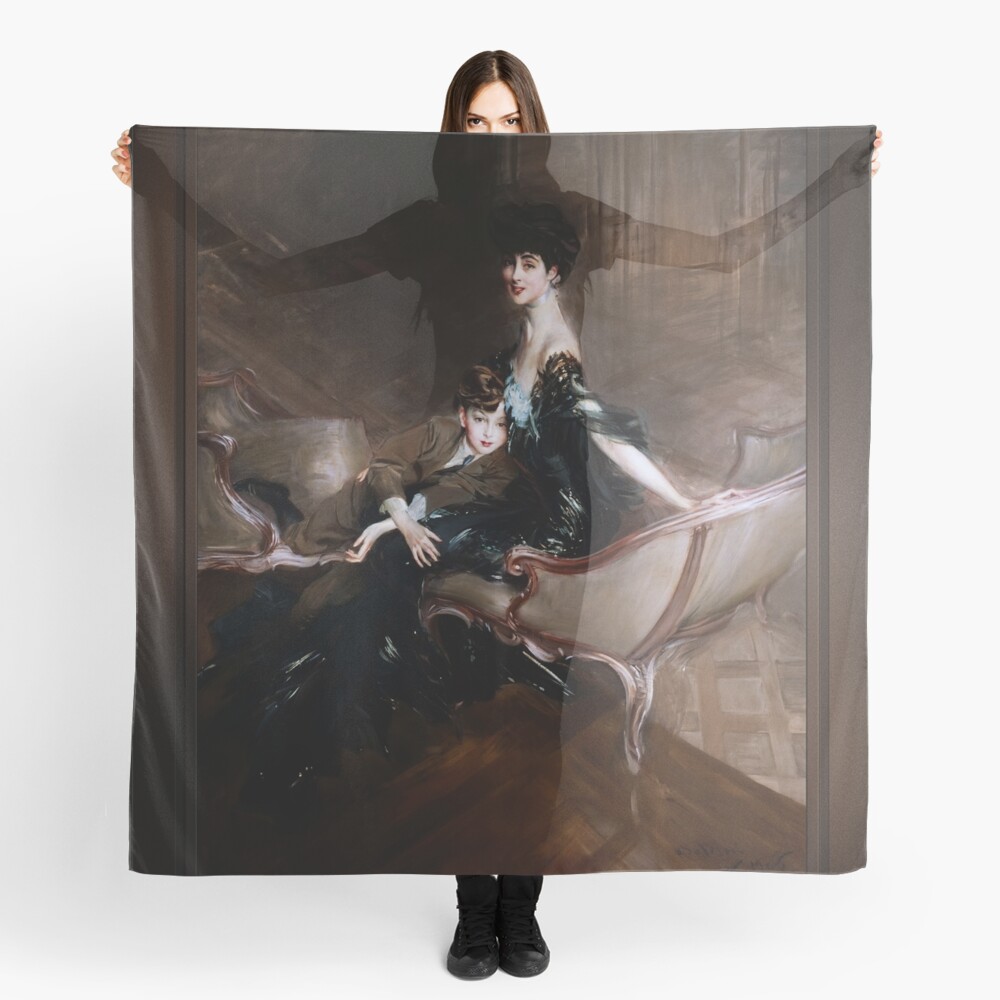
An dealbh “Consuelo Vanderbilt c1906” leis a’ pheantair ainmeil Eadailteach Giovanni Boldini (1842 – 1931) a’ toirt sealladh iongantach air saoghal na opulence, gràs, agus cultar uaislean aig toiseach an 20mh linn. Anns an dealbh seo, Bidh Boldini a’ glacadh eireachdas agus suidheachadh Consuelo Vanderbilt (1876 -1964), Ban-diùc Marlborough, agus a Mhac, Morair Ivor Spencer-Churchill (1898 – 1956), ban-oighre Aimeireaganach a bha air aon de na daoine a bu chliùitiche na h-ùine.
An sàr-obair seo, air a chruthachadh timcheall 1906, na eisimpleir de sheun agus spionnadh sòlaimte àm Belle Époque, àm a bha air a chomharrachadh le beairteas, bòidhchead, agus cearcallan sòisealta ath-leasaichte. Tha an dealbh a’ nochdadh mothachadh air glamour gun ùine, a’ measgachadh dhealbhan thraidiseanta le dòighean ùr-nodha an ama, stèidheachadh Boldini mar mhaighstir air a cheàird.
Clàr-innse
Prìomh chuspair agus sgrìobhadh
Is e prìomh amas an deilbh Consuelo Vanderbilt fhèin, air a dhealbh 'na shuidhe gu gràsmhor air chaise longue. Tha i air a h-èideadh gu grinn ann an gùn dubh a bhios a’ gluasad le opulence, cha mhòr nach eil an t-aodach billowing aige a’ sruthadh a-mach às a’ chanabhas. Tha inneach an aodach air a thoirt seachad gu h-eòlach, a 'glacadh càileachd sòghail an stuth. Tha cleachdadh Boldini farsaing, bidh bruis siùbhlach a’ toirt faireachdainn gluasaid don ghùn, mar gum biodh an èideadh air a ghlacadh ann am mionaid de ghluasad. An eadar-dhealachadh eadar bog, tha aodach dubh a tha a’ sruthadh agus mion-fhiosrachadh geur mu dhòigh-labhairt ciùin Consuelo a’ cruthachadh cothromachadh iongantach eadar foirmeileachd agus beòthalachd.
Tha suidheachadh Vanderbilt mar aon de mhisneachd socair, a' cur an ceill uaisleachd. An suidheachadh aice, le aon ghàirdean air a chuir gu socair thairis air cùl an t-seise longue, contributes to the overall elegant demeanor. In the painting, she is seen looking slightly to the side, a gentle smile gracing her lips, suggesting an air of mystery and quiet introspection. Her dark hair, swept into an intricate updo, a’ frèamadh a h-aghaidh gu socair, while the diamond earrings that dangle from her ears shimmer with understated elegance.
Beside Consuelo, sitting somewhat closer to her, is her son. The child is dressed in a brown suit, contrasting sharply with the grandeur of Vanderbilt’s attire. The child’s expression appears somewhat pensive, with a relaxed posture that mirrors the woman’s grace. This inclusion of the child adds a layer of narrative depth, symbolizing the continuation of the Vanderbilt legacy and perhaps hinting at the familial relationships that were often central to the societal dynamics of that time.
An Àrainneachd mun cuairt agus Rudan
The background of the portrait is a softly blurred, almost abstract depiction of a lavish interior. The rich brown tones and the hazy light suggest a warm, luxurious atmosphere. The lack of specific detailing in the background, where the figure of the chaise longue blends into the undefined surroundings, directs the viewer’s focus entirely on the figures of Consuelo and her child. This technique exemplifies Boldini’s skill in emphasizing the human subjects while creating a sense of depth and sophistication in the overall composition.
The chaise longue itself is an elegant piece of furniture, upholstered in soft, tònaichean sàmhach, a chuireas ri paileas dath an deilbh gu lèir. A lùbte, tha loidhnichean sguabaidh mar shamhla air na stoidhlichean àirneis a bha mòr-chòrdte aig deireadh an 19mh linn agus tràth san 20mh linn, a’ cur cuideam air dòigh-beatha sòghail. Tha uachdar socair meòrachail fiodh snasta a’ chathair a ’cur beagan deàrrsadh ris, a’ glacadh sùil an neach-amhairc. Ach, chan eil an àirneis a’ toirt air falbh bho na figearan aig meadhan an deilbh; An àite sin, tha e a 'frithealadh airson an fhrèam taobh a-staigh suidheachadh mòr, dachaigh uaislean.
Stoidhle, Teicneòlas, agus Mood
Tha stoidhle Boldini aithnichte sa bhad airson cho fileanta sa tha e, spionnadh, agus gluasad. Bha e ainmeil airson a shàr obair bhruis agus a chomas gluasad agus beatha a thoirt seachad tro bhith a’ làimhseachadh solais is dubhar. Anns an dealbh seo, tha na brusgan fiùghantach agus brìoghmhor, a’ cruthachadh mothachadh air luaths agus lùth. Fhad ‘s a tha na raointean mionaideach, such as the face and hands of Consuelo, show the artist’s attention to realism, the flowing gown and background elements are treated with a freer, almost impressionistic technique.
The mood of the portrait is one of serene sophistication. Consuelo’s relaxed yet poised demeanor, combined with the soft, inviting tones of the painting, conveys a sense of calm confidence and timeless beauty. The portrait does not try to overemphasize any particular emotion, but rather captures the subject at a moment of tranquility, possibly reflecting her position in society as a woman of great wealth and influence. The inclusion of the child suggests that the figure of the mother is one of both personal and familial importance, further enhancing the aristocratic atmosphere of the scene.
Boldini’s work is also marked by his ability to integrate the subject into the environment, making the background and surroundings essential to the narrative of the portrait. The slightly abstract treatment of the background allows the viewer to focus more on the subject while still giving the impression of a luxurious setting. The interplay between the formal portrait style and the more dynamic brushwork is characteristic of Boldini’s approach, making this work a powerful example of the Italian painter’s legacy.
Dìleab Giovanni Boldini
Giovanni Boldini was an Italian painter who spent much of his career in Paris, where he became known for his portraits of the high society. His subjects were often wealthy and influential individuals, much like Consuelo Vanderbilt, who was a prominent figure in both American and European aristocracy. Boldini’s portraits are known for their graceful fluidity, exquisite technique, and emphasis on elegance and refinement. He captured the spirit of his time with a sense of movement and drama, making him one of the most celebrated portrait painters of the late 19th and early 20th centuries.
“Consuelo Vanderbilt c1906” is a prime example of Boldini’s ability to merge realism with an almost painterly abstraction. Through his vibrant brushwork and subtle tonal contrasts, he immortalized his subject not only as an individual but also as a reflection of the social and cultural environment in which she lived. The portrait remains a testament to the grandeur of the Belle Époque era, a’ taisbeanadh an dà chuid sgil theicnigeach an neach-ealain agus a chomas air brìgh nan cuspairean aige a ghlacadh.
Is e seo ath-riochdachadh seann mhaighstirean ealain didseatach ath-leasaichte de ìomhaigh raon poblach a tha ri fhaighinn mar a clò-bhualadh canabhas air-loidhne.
Neach-ealain bi a thàinig bho Wikipedia.org
Rugadh Boldini ann am Ferrara, An Eadailt air an Dùbhlachd 31, 1842, do mhac peantair de chuspair cràbhach. Ann an 1862 aig aois 20, chaidh e gu Florence airson sia bliadhna airson sgrùdadh agus leantainn air peantadh.
Is ann ainneamh a bhiodh e a ’frithealadh chlasaichean aig Acadamaidh nan Ealan Fine, ach ann am Florence, choinnich iad ri peantairean fìor eile ris an canar Macchiaioli, a bha ann ron Eadailtis gu Impressionism.
Tha a ’bhuaidh aca ri fhaicinn ann an cruthan-tìre Boldini a tha a’ sealltainn a fhreagairt gun spionnadh do nàdar, ged is ann air na dealbhan aige a thàinig e gu bhith ainmeil
A ’gluasad a Lunnainn, Shoirbhich le Boldini mar neach-dhealbhan. Chuir e crìoch air dealbhan de phrìomh bhuill a ’chomainn a’ gabhail a-steach Lady Holland agus Ban-diùc Westminster.
Ann an 1872 ghluais e gu Paris, far na choinnich e agus thàinig e gu bhith na charaidean le Edgar Degas. Aig deireadh an 19mh linn thàinig e gu bhith na pheantair dhealbhan as fhasanta ann am Paris, le stoidhle dathach de pheantadh a tha a ’soilleireachadh cuid de bhuaidh Macchiaioli agus brio a’ cur nar cuimhne obair luchd-ealain nas òige, leithid John Singer Sargent agus Paul Helleu.
Ann an 1889, chaidh ainmeachadh mar choimiseanair air roinn Eadailteach Taisbeanadh Paris, agus fhuair e an Légion bliadhnahonneur airson an dreuchd seo. Ann an 1897 bha taisbeanadh aon-neach aige ann am Baile New York; agus ghabh e pàirt cuideachd ann am Biennale Venice ann an 1895, 1903, 1905, agus 1912.