

Consuelo Vanderbilt c1906
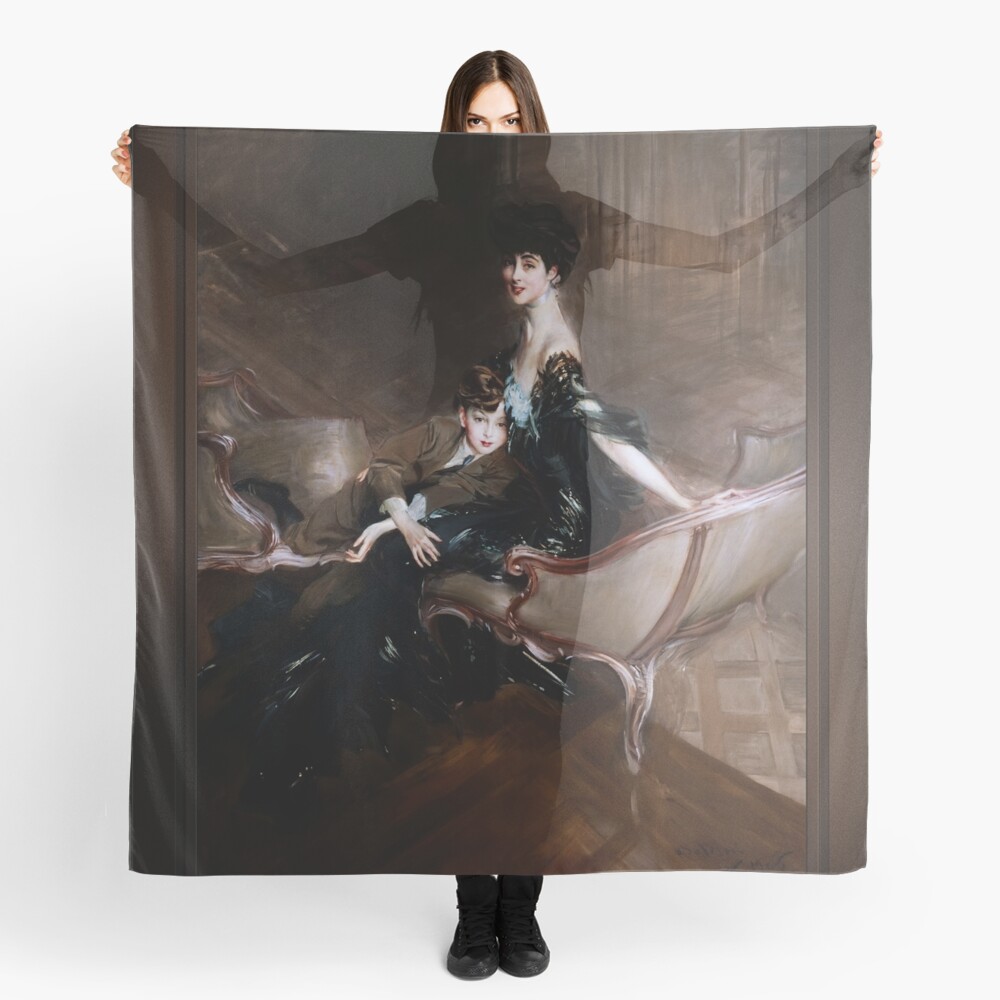
ペインティング “Consuelo Vanderbilt c1906” by the renowned Italian painter ジョヴァンニ・ボルディーニ (1842 – 1931) offers a striking glimpse into the world of opulence, 恵み, and aristocratic culture at the turn of the 20th century. この肖像画には, Boldini captures the elegance and poise of Consuelo Vanderbilt (1876 -1964), Duchess of Marlborough, and Her Son, Lord Ivor Spencer-Churchill (1898 – 1956), an American heiress who was one of the most admired figures of her time.
This masterpiece, 周りに作成されます 1906, exemplifies the sophisticated charm and dynamism of the Belle Époque period, an era that was characterized by prosperity, 美しさ, and refined social circles. The portrait exudes a sense of timeless glamour, blending traditional portraiture with the modern techniques of the time, establishing Boldini as a master of his craft.
目次
主な主題と構成
The focal point of the painting is Consuelo Vanderbilt herself, portrayed seated gracefully on a chaise longue. She is elegantly dressed in a black gown that shimmers with opulence, its billowing fabric almost flowing out of the canvas. The texture of the fabric is expertly rendered, capturing the luxurious quality of the material. Boldini’s use of broad, fluid brushstrokes lends the gown a sense of movement, as if the dress is caught in a moment of motion. ソフトのコントラスト, flowing black fabric and the sharp details of Consuelo’s serene yet poised expression creates a striking balance between formality and vivacity.
Vanderbilt’s posture is one of relaxed confidence, exuding an aristocratic composure. 彼女の姿勢, with one arm placed delicately over the back of the chaise longue, contributes to the overall elegant demeanor. In the painting, she is seen looking slightly to the side, a gentle smile gracing her lips, suggesting an air of mystery and quiet introspection. Her dark hair, swept into an intricate updo, frames her face delicately, while the diamond earrings that dangle from her ears shimmer with understated elegance.
Beside Consuelo, sitting somewhat closer to her, is her son. The child is dressed in a brown suit, contrasting sharply with the grandeur of Vanderbilt’s attire. The child’s expression appears somewhat pensive, with a relaxed posture that mirrors the woman’s grace. This inclusion of the child adds a layer of narrative depth, symbolizing the continuation of the Vanderbilt legacy and perhaps hinting at the familial relationships that were often central to the societal dynamics of that time.
The Surrounding Environment and Objects
The background of the portrait is a softly blurred, almost abstract depiction of a lavish interior. The rich brown tones and the hazy light suggest a warm, luxurious atmosphere. The lack of specific detailing in the background, where the figure of the chaise longue blends into the undefined surroundings, directs the viewer’s focus entirely on the figures of Consuelo and her child. This technique exemplifies Boldini’s skill in emphasizing the human subjects while creating a sense of depth and sophistication in the overall composition.
The chaise longue itself is an elegant piece of furniture, upholstered in soft, ミュートトーン, which complements the color palette of the entire painting. Its curved, sweeping lines are emblematic of the furniture styles that were popular during the late 19th and early 20th centuries, emphasizing a luxurious lifestyle. The gently reflective surface of the polished wood of the chair adds a slight gleam, catching the viewer’s eye. しかしながら, the furniture does not detract from the figures at the center of the portrait; それよりも, it serves to frame them within the setting of a grand, aristocratic home.
スタイル, 技術, と気分
Boldini’s style is immediately recognizable for its fluidity, vitality, and movement. He was known for his masterful brushwork and ability to convey motion and life through the manipulation of light and shadow. この肖像画には, the brushstrokes are dynamic and expressive, creating a sense of immediacy and energy. While the detailed areas, such as the face and hands of Consuelo, show the artist’s attention to realism, the flowing gown and background elements are treated with a freer, almost impressionistic technique.
The mood of the portrait is one of serene sophistication. Consuelo’s relaxed yet poised demeanor, ソフトと組み合わせると, inviting tones of the painting, conveys a sense of calm confidence and timeless beauty. The portrait does not try to overemphasize any particular emotion, but rather captures the subject at a moment of tranquility, possibly reflecting her position in society as a woman of great wealth and influence. The inclusion of the child suggests that the figure of the mother is one of both personal and familial importance, further enhancing the aristocratic atmosphere of the scene.
Boldini’s work is also marked by his ability to integrate the subject into the environment, making the background and surroundings essential to the narrative of the portrait. The slightly abstract treatment of the background allows the viewer to focus more on the subject while still giving the impression of a luxurious setting. The interplay between the formal portrait style and the more dynamic brushwork is characteristic of Boldini’s approach, making this work a powerful example of the Italian painter’s legacy.
The Legacy of Giovanni Boldini
Giovanni Boldini was an Italian painter who spent much of his career in Paris, where he became known for his portraits of the high society. His subjects were often wealthy and influential individuals, much like Consuelo Vanderbilt, who was a prominent figure in both American and European aristocracy. Boldini’s portraits are known for their graceful fluidity, exquisite technique, and emphasis on elegance and refinement. He captured the spirit of his time with a sense of movement and drama, making him one of the most celebrated portrait painters of the late 19th and early 20th centuries.
“Consuelo Vanderbilt c1906” is a prime example of Boldini’s ability to merge realism with an almost painterly abstraction. Through his vibrant brushwork and subtle tonal contrasts, he immortalized his subject not only as an individual but also as a reflection of the social and cultural environment in which she lived. The portrait remains a testament to the grandeur of the Belle Époque era, showcasing both the artist’s technical skill and his ability to capture the essence of his subjects.
これは、リマスターされたデジタルアートのオールドマスターであり、パブリックドメインの画像を複製したものです。 キャンバスプリント オンライン.
アーティスト略歴の由来 Wikipedia.org
ボルディーニはフェラーラで生まれました, 12月のイタリア 31, 1842, 宗教的な主題の画家の息子に. に 1862 歳の時に 20, 彼は絵画を学び、追求するために6年間フィレンツェに行きました.
彼は美術アカデミーのクラスにめったに出席しませんでした, でもフィレンツェでは, マッキアイオーリとして知られている他の現実主義の画家に会った, 印象派のイタリアの先駆者でした.
彼らの影響は、自然に対する彼の自発的な反応を示すボルディーニの風景に見られます, 彼が最もよく知られるようになったのは彼の肖像画のためですが
ロンドンへの移動, ボルディーニは肖像画家として成功を収めました. 彼は、ホランド夫人やウェストミンスター公爵夫人を含む社会の最高のメンバーの肖像画を完成させました.
に 1872 彼はパリに引っ越した, ここで彼はエドガー・ドガと出会い、友達になりました. 19世紀後半に彼はパリで最もファッショナブルな肖像画家になりました, マッキアイオーリの影響の一部を強調する威勢のいいスタイルの絵画と、若い芸術家の作品を彷彿とさせるブリオ, ジョンシンガーサージェントやポールヘレウなど.
に 1889, 彼はパリ博覧会のイタリアセクションのコミッショナーに指名されました, この任命のためにレジオンドヌール勲章を授与されました. に 1897 彼はニューヨーク市で個展を開催しました; 彼はまた、ヴェネツィアビエンナーレに参加しました 1895, 1903, 1905, そして 1912.