

Portrait of Contessa Ortensia Ianna Stella
Portrait of Contessa Ortensia Ianna Stella by Flemish Painter Jacob Ferdinand Voet (1639 – 1689); considered to be one of the most fashionable portrait painters of the late Baroque period.
This is a beautiful portrait of the Contessa in a seated pose, wearing a wreath of white and blue flowers on the back of her hair and wearing a gold colored off shoulder deep neck gown with pinned sleeves and a bouquet of red, white and pink flowers pinned to the center of her gown.
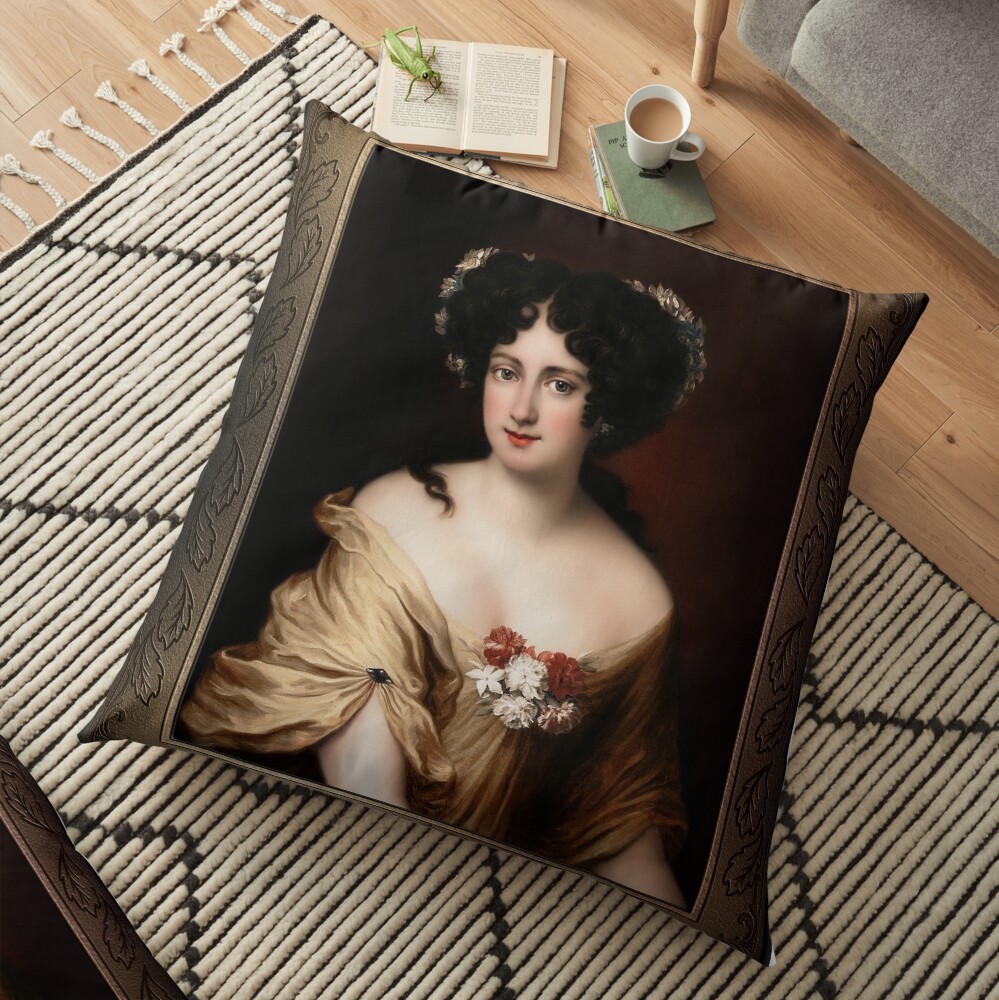
Domeinu publikoko irudi baten erreprodukzioa da arte digitaleko maisu zaharren erreprodukzioa canvas art print online.
Erabili esteka hau erosteko Ornament Assets used in the frame of this piece; the bundle includes 400 elements of beautifully designed ornaments.
Jarraian Informazioa Kortesia Wikipedia.org
Few details about Voet’s early life, training and career have been preserved. Voet was born in Antwerp as the son of the painter Elias Voet. He was one of the fifteen children; his older brother Carlo moved to Amsterdam and married in 1661 a daughter of the wealthy Joan Coymans and Sophia Trip. Jacob left his native Antwerp and travelled to Rome where he resided from 1663 to 1680.
Voet became a member of the Bentvueghels, an association of mainly Dutch and Flemish artists active in Rome. Voetek Bentvueghel-eko kide guztien koadroa marraztu zuen ikatzez, talde honen topaleku ezaguna zen Erromako ostatu bateko horma zuriz.. Irudia nahikoa altxorra zen hormak berriro margotzen ziren bakoitzean gordetzeko.
Erroman Voet-en erretratu-margolari trebetasunak asko eskatzen zituen Aita Santuen gortean eta erromatar aristokrazian., Colonna eta Odescalchi familia nabarmenak barne. Christinak babesten zuen, Suediako erregina, orduan Erroman bizi zena. Haren erretratua egin zuen, baita bere lagunarena ere, Azzolino kardinala. Itzuli Handian Erromara bisitatzen zuten ingelesek eta beste europar batzuek ere erretratuak eskatu zizkioten Voeten.
In 1671 – 1672 Voetek Chigi kardinalaren enkargua jaso zuen erromatar gizartean nabarmenak ziren emakume gazteen erretratuak margotzeko. He created a first series of 37 portraits of the most enchanting women of Rome (‘Galleria delle Belle’) artean 1672 eta 1678 for Cardinal Chigi’s dining room in his palace in Ariccia (in the Alban hills outside Rome). He later copied and even enlarged the series for other Roman and Italian noble families. This started a rage for portraits of young women in Rome and abroad.