

크레시다
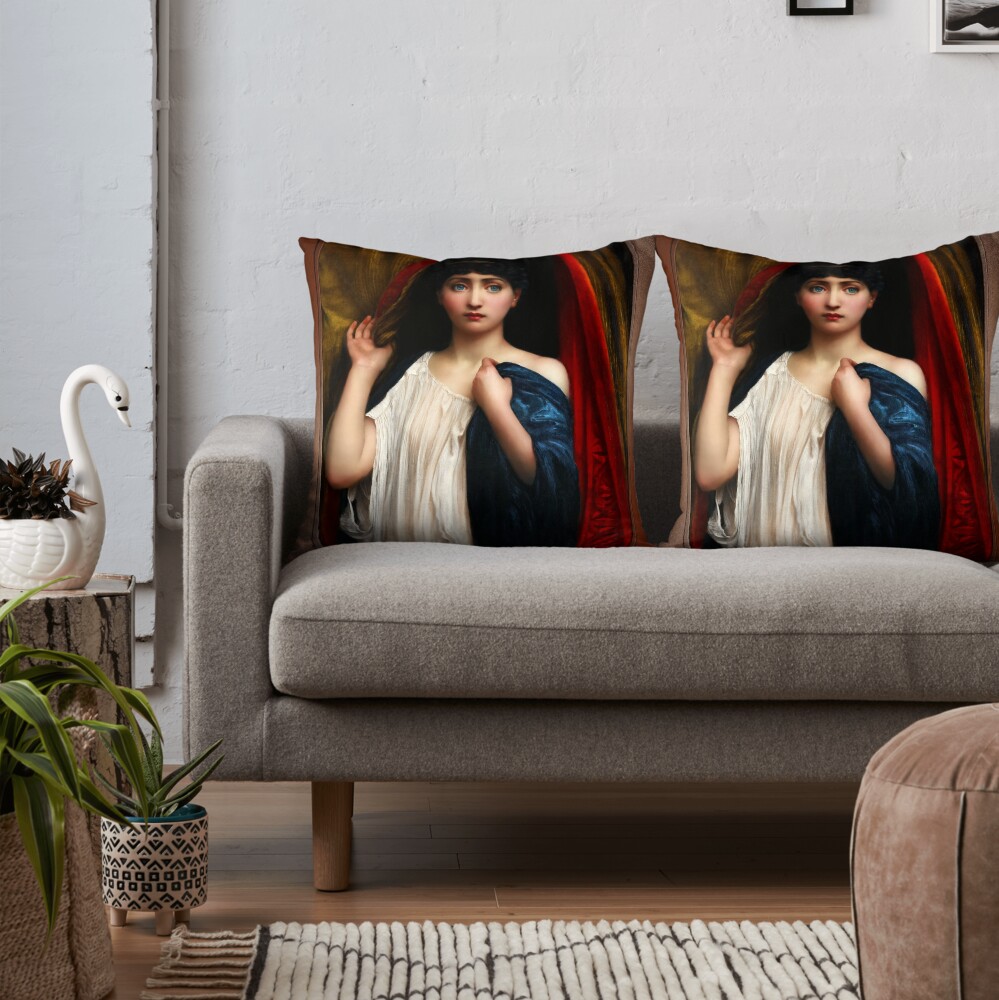
Introduction and Overview NS 초상화 삽화 “크레시다” by British painter Edward John Poynter (1836 – 1919), painted in the 19th century, showcases the artist’s expertise in capturing figures from classical mythology and Shakespearean drama with the refined techniques of the Academic tradition. This piece depicts the tragic figure of Cressida from Shakespeare’s Troilus and Cressida, a character whose beauty and emotional complexity have fascinated many artists. Poynter’s rendering of her, bathed in soft light and delicate hues, invites the viewer to step into a moment of quiet reflection, capturing her vulnerability and emotional depth. 그림, executed with precision and an almost photographic level of detail, draws upon classical themes, blending realism with allegory.
목차
주요 주제: 크레시다
At the heart of the composition is Cressida herself, a young woman with deep blue eyes that seem to gaze directly into the viewer’s soul, evoking a sense of melancholy. 그녀의 표정은 생각에 잠겨 있다, almost wistful, hinting at her inner turmoil and the conflicted emotions she endures in the play. Cressida stands in a poised, graceful position, her figure draped in a delicate, white garment that clings to her form, suggesting both her vulnerability and her beauty. The fabric is meticulously painted, capturing every fold and texture with remarkable realism. Over her shoulder, a rich, deep blue cloak cascades down, adding a striking contrast to the pale tones of her attire.
Her right hand gently touches the fabric of the cloak near her shoulder, while her left hand rests lightly against a curtain of deep red and golden hues. This placement of her hands creates a sense of composure, as if she is both at ease and yet emotionally caught in a moment of private contemplation. The luxurious materials, silk and velvet, play a significant role in enhancing the visual richness of the painting, adding depth and a sense of opulence to the scene. The artist’s attention to fabric and the way it interacts with the human form reveals his mastery over texture and material.
배경과 설정
The background of the painting is composed of dark, draped curtains in deep reds and golds, which frame the subject. 이들 부자, warm colors not only enhance the figure of Cressida but also convey a sense of intimacy and drama, creating a stage-like setting that echoes the themes of the play. The drapery is rendered in a way that emphasizes both its weight and softness, almost suggesting the presence of a theatrical space. The choice of such vivid tones behind Cressida acts as a visual metaphor for the passionate and often tragic emotions that she experiences throughout the play.
설정, although somewhat undefined beyond the drapery, contributes to the overall mood of the painting. The heavy, sumptuous fabrics suggest that Cressida exists within a world of aristocracy and courtly intrigue, a realm of opulence and moral complexity. This backdrop, though simple, enhances the psychological depth of the scene, suggesting a private moment of introspection in an otherwise tumultuous world.
기술, 재료, 그리고 스타일
Poynter’s approach to painting in “크레시다” reflects the precision and detail typical of the Academic style. His technique, often characterized by highly polished surfaces and an almost photographic attention to detail, is evident in every aspect of the piece. The meticulous rendering of textures, from the delicate sheen of Cressida’s garment to the soft, voluminous folds of her cloak, speaks to the artist’s deep understanding of materials and his ability to translate these onto canvas with remarkable fidelity.
The light in the painting is soft and diffused, highlighting the subject’s features in a naturalistic way. Poynter employs a careful balance between light and shadow, creating a sense of three-dimensionality and depth that draws the viewer’s eye to the subject’s face and posture. The use of light to accentuate Cressida’s facial features, particularly her eyes, further intensifies the emotional resonance of the piece, allowing the viewer to feel her vulnerability and the weight of her emotional state.
In terms of color palette, Poynter’s choices are both sophisticated and evocative. The cool tones of Cressida’s dress and the contrasting warm hues of the backdrop create a visual harmony that enhances the emotional impact of the painting. The artist’s use of vivid, saturated colors adds a dramatic effect, while the subtle transitions between light and dark convey the complex interplay of emotions that define Cressida’s character in Shakespeare’s play.
테마와 분위기
The overarching theme of the painting is one of emotional complexity and vulnerability. Poynter’s “크레시다” is not merely a portrait of a woman in an opulent setting; it is a study of a character caught between love, 충의, and betrayal. Cressida’s eyes, wide and filled with an almost innocent sadness, reflect her inner conflict and emotional turmoil. 그녀의 자세, composed yet delicate, suggests a woman who is in the midst of a private struggle, uncertain of her place in the world around her.
The mood of the painting is somber and reflective, underscored by the warm, dark tones of the background and the soft, diffused light that envelops Cressida. The emotional weight of her expression, coupled with the luxurious materials of her attire, suggests a tension between her outer beauty and the inner turmoil she faces. This duality is at the heart of the painting, as Poynter captures not only the physical beauty of his subject but also the emotional depth that lies beneath the surface.
결론
“크레시다” by Edward John Poynter is a masterful depiction of one of Shakespeare’s most complex and tragic female characters. 작가의 능숙한 색채 활용, 빛, and texture creates a rich visual experience that mirrors the emotional depth of the subject. The painting serves not only as a technical achievement but also as an exploration of the human condition, capturing a moment of introspection and emotional vulnerability. 이 작품을 통해, Poynter invites the viewer to engage with Cressida’s inner world, offering a poignant meditation on love, betrayal, and the complexities of the human heart.
이것은 공개 도메인 이미지의 리마스터링된 디지털 아트 올드 마스터 복제입니다. Boucher는 Guay의 작품으로 일련의 그림을 그리고 Madame de Pompadour가 조각하여 호의를 받는 궁정에게 잘 묶인 책으로 배포했습니다..
유래 된 아티스트 바이오 Wikipedia.org
에드워드는 파리에서 태어났다., 영국 건축가와 영국 건축가 협회 창립자에게 프랑스 (1834년경) 암브로스 포인터 (1796 – 1886) 엠마 포스터 (? – 1848); 그의 출생 직후 그의 부모는 영국으로 돌아갔다..
Edward는 Brighton College와 Ipswich 학교에 다녔습니다., 하지만 건강이 좋지 않아 일찍 떠날 수밖에 없었습니다.; 마데이라에서 겨울을 보내게 된 이유, 포르투갈과 로마, 이탈리아.
그가 있을 때 17 살이에요, 로마에서 그는 영국 화가 Frederick Leighton을 만났습니다., 그리고 그 회의는; 그가 런던으로 돌아왔을 때 그는 Leigh's Academy에 등록했습니다., James Mathews Leigh가 설립한 (1808 – 1860) 결국 오늘날 Heatherley School of Fine Art가 될 것입니다.; 그는 또한 Royal Academy Schools에서 공부할 것입니다..
그곳에서 그는 스위스 고전주의 화가 Marc Gabriel Charles Gleyre의 스튜디오에서 공부하기 위해 파리로 갔다. (1806 – 1874).
그의 경력 동안 Edward는 University College London의 Slade 교수를 포함한 여러 공식 직책을 맡았습니다. (1871 – 1875), 국립미술교육원 교장 (1875 – 1881) 그리고 내셔널 갤러리 관장 (1894 – 1904); 테이트 갤러리 개관식 감독.
Edward는 그의 경력 전반에 걸쳐 대규모 역사적 그림을 그린 화가로 유명했습니다., 1867년 이집트의 이스라엘과 같은 작품으로, 1869년 영국의 성 조지가 그 뒤를 이었습니다., 세인트 조지와 용을 묘사하고 아마도 1884-90년경 솔로몬 왕에게 시바 여왕의 방문으로 절정에 달할 것입니다..