

Diana und ihre Nymphen baden um 1722-24
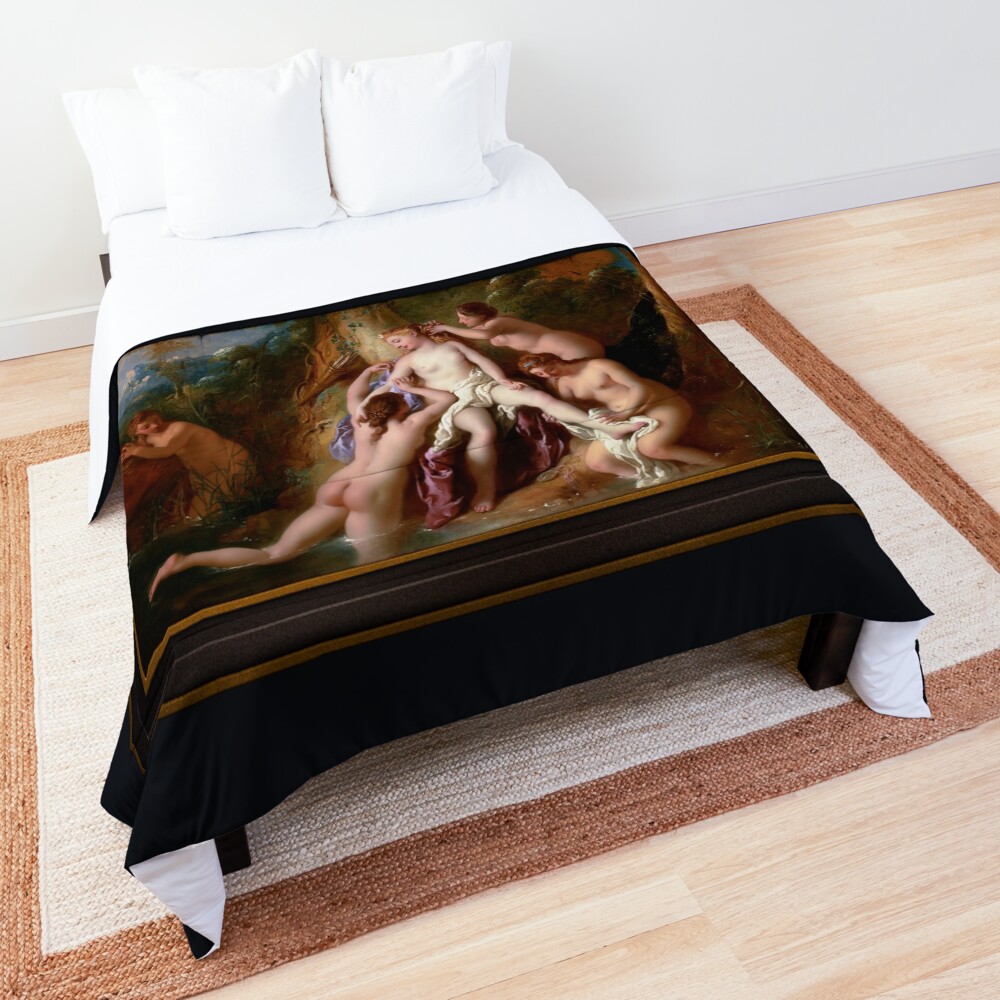
“Diana und ihre badenden Nymphen,” gemalt zwischen 1722 und 1724 vom französischen Künstler Jean-François de Troy (1679-1752), fängt einen Moment gelassener und dennoch sinnlicher Natürlichkeit ein. Das Gemälde, üppig in Szene gesetzt, bewaldete Landschaft, ist ein meisterhaftes Beispiel des Rokoko-Stils, der im 18. Jahrhundert seine Blütezeit erlebte. Der Schwerpunkt liegt auf mythologischen Themen und der anmutigen Darstellung des weiblichen Aktes, Dieses Kunstwerk verkörpert die Eleganz und Frivolität dieser Zeit. Diana, die römische Göttin der Jagd und des Mondes, wird neben ihren Nymphen dargestellt, wie sie an einem privaten Treffen teilnehmen, abgeschiedenes Bad. Die Szene ist sowohl ein Fest der natürlichen Schönheit als auch ein intimer Moment der Ruhe, getaucht in das sanfte Licht einer ruhigen Waldlandschaft.
Inhaltsverzeichnis
Das Hauptthema: Diana und ihre Nymphen
At the heart of the composition lies Diana, portrayed as an ethereal, goddess-like figure. Ihre Schönheit wird durch die Weichheit noch verstärkt, delicate treatment of her form, with a slight but confident presence in the midst of the scene. Diana is seated upon a large rock, her modesty preserved by the careful positioning of her hands and the drapery of a pink cloth that rests casually over her thighs. Her expression is composed, yet serene, and her interaction with the other nymphs reveals an air of aristocratic leisure, charakteristisch für den Rokoko-Stil. The artist’s careful rendering of her features and the flowing contours of her body draws attention to her divine qualities.
Around Diana, four other nymphs are depicted in various poses, each engaging with the environment and with each other in ways that highlight the playful, relaxed atmosphere of the moment. One nymph stands at Diana’s side, arranging her hair with the help of another, while a third nymph kneels beside the water, appearing to converse with two figures at the far left. Their nude forms are painted with a gentle touch, capturing both the smoothness and suppleness of their skin. The graceful poses of the nymphs emphasize the inherent beauty and harmony between the human form and the natural world, which was a central theme of Rococo art.
Umgebung und Landschaft
The setting for this mythological scene is a lush, verdant forest. The figures are placed in the foreground, with the trees and foliage of the woods stretching outward behind them. The play of light and shadow within the forest is subtle, creating a sense of depth and realism that contrasts with the idealized human forms. Soft dappled sunlight filters through the canopy above, illuminating the figures in a warm, einladender Glanz. This naturalistic depiction of the environment helps to elevate the figures of Diana and her nymphs, reinforcing the idea that these mythological beings are part of the world around them.
A small body of water flows gently through the composition, with its reflective surface adding an element of tranquility. The nymphs, half-submerged in the cool waters, seem to be bathed in the soft, watery light, further enhancing the sense of calm and relaxation that pervades the scene. The water’s smooth, shimmering surface also provides an effective counterpoint to the soft curves of the human figures, creating a harmony between the two elements.
Stil und Thema
Jean-François de Troy’s painting is a quintessential example of Rococo style, which is characterized by its light, luftige Kompositionen, sanfte Farben, and a focus on themes of love, Schönheit, und Natur. The sensual treatment of the human form, the idealized portrayal of the female body, and the interplay between light and shadow all reflect the Rococo desire to create a world of beauty and pleasure, free from the harsher realities of life.
Im “Diana und ihre badenden Nymphen,” de Troy adheres to the Rococo penchant for soft, Pastellfarben, using delicate pinks, Blues, and creams to convey a sense of gentleness and softness. The use of flowing drapery, the loose, natural hairstyles of the nymphs, and the fluid lines of the figures all contribute to the sense of movement within the scene, despite its tranquil nature. This attention to detail, gepaart mit der insgesamt romantischen und etwas verspielten Atmosphäre des Gemäldes, verstärkt die Rokoko-Betonung von Anmut und Sinnlichkeit.
Das Thema Baden in der Natur, insbesondere mit mythologischen Figuren, war ein beliebtes Motiv in der Kunst des 18. Jahrhunderts, im Einklang mit der Faszination dieser Zeit für die Erotik und die Naturwelt. Diana, als Göttin der Jagd, wird oft in Szenen der Reinheit und Keuschheit dargestellt. jedoch, in diesem Gemälde, Ihre Teilnahme an einem Bad mit ihren Nymphen verleiht ihrem Charakter eine Schicht Weichheit und Sinnlichkeit. Die Gegenüberstellung von Dianas göttlichem Status mit der ungezwungenen und intimen Natur der Szene unterstreicht die Vermischung mythologischer Themen mit alltäglichen Freuden.
Stimmung und Atmosphäre
Die Stimmung des Gemäldes ist geprägt von ruhiger Kontemplation und entspanntem Genuss. The nymphs’ Interaktionen untereinander, as well as their engagement with the natural surroundings, suggest a carefree existence, free from the constraints of everyday life. This sense of leisure is a hallmark of Rococo painting, where the focus was on capturing the pleasures of life, whether through scenes of romantic dalliance, Natur, oder, as in this case, moments of private indulgence.
Das Weiche, golden light that bathes the figures contributes to the tranquil mood, enhancing the dream-like quality of the scene. The viewer is invited to step into this intimate, idyllic world, where time seems to slow, and the boundaries between the human and natural worlds blur. This atmosphere of gentle beauty and pleasure is central to the appeal of Rococo art, and de Troy masterfully captures this essence in his portrayal of Diana and her nymphs.
Abschluss
Jean-François de Troy’s “Diana und ihre badenden Nymphen” is a vivid example of the Rococo style, combining mythological themes with a soft, sensual representation of the human form and nature. Through his delicate treatment of the figures, the serene landscape, and the overall mood of relaxed intimacy, de Troy invites the viewer into a world of beauty and tranquility, where the divine and the natural coexist in harmonious splendor. The painting captures the essence of the Rococo period’s emphasis on grace, Sinnlichkeit, und die Freuden des Lebens, while also offering a glimpse into the more personal, unguarded moments of the mythological figures who populate it.
Dies ist eine remasterte digitale Kunst-Reproduktion alter Meister eines gemeinfreien Bildes, das als verfügbar ist Leinwanddruck online.
Über den Künstler
Info unten abgeleitet von Wikipedia.org
Jean came from a long line of respected French painters and was the son of portrait painter and engraver François de Troy (1645 – 1730); principal painter to King James II (1633 – 1701), and Director of the Académie Royale de peinture et de sculpture; and his first teacher.
He became one of the leading French History painters of his time as well as a successful portrait, genre and decorative scene painter; and was the director of the French Academy in Rome from 1738.