

Diana and Her Nymphs In A Wooded Landscape
“Diana and her Nymphs in a Wooded Landscape” by Frans Francken the Younger (1581-1642)
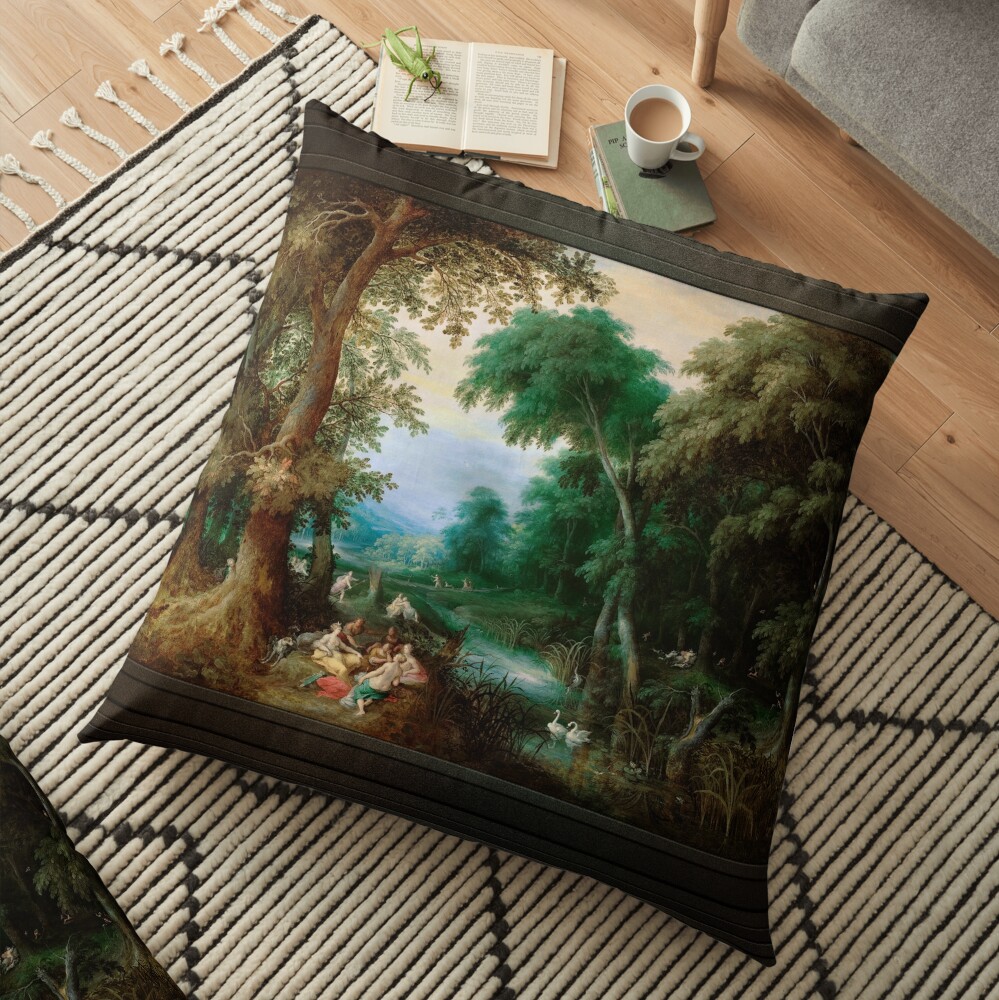
Frans Francken the Younger’s “Diana and her Nymphs in a Wooded Landscape,” created in the early 17th century, is a remarkable piece of Flemish Baroque art that explores themes of classical mythology, nàdur, and the divine feminine. The painting captures a moment from the myth of Diana, the Roman goddess of the hunt, torachas, and the moon.
Accompanied by her nymphs, Diana is portrayed in a serene and idyllic woodland setting, exuding the calm grace of a figure in harmony with nature. This work is emblematic of the Baroque period, showcasing intricate detail, deep contrasts of light and shadow, and a vivid portrayal of lush landscapes. An neach-ealain, Frans Francken the Younger, a prominent Flemish painter, ag obair ann an co-obrachadh le Alexander Keirincx, eòlaiche peantair cruth-tìre, gus an saoghal nàdair a thoirt beò gu mionaideach.
Clàr-innse
Am Prìomh Chuspair: Diana agus a nymphs
Is e prìomh fhòcas an deilbh a’ bhan-dia Diana, a tha air a nochdadh ann am mionaid de shàmhchair fhad 'sa tha i a' suidhe ann an nàdur, coille gun suathadh. Diana, gu traidiseanta co-cheangailte ris an t-sealg, gu tric air a riochdachadh ann an co-theacsa nas beothaile; ge-tà, anns a' chùis so, tha i sàmhach, cha mhòr smaoineachail, oir tha i a' gabhail fois am measg a nymphs.
Tha a’ bhan-dia air fhaicinn mar fhigear air leth freagarrach, air a sgeadachadh ann an trusgan geal a tha a’ sruthadh gu math eadar-dhealaichte bhon duilleach dorcha uaine mun cuairt. Her figure is graceful and elongated, exuding the divine purity often associated with her mythical persona.
Her nymphs, who are her companions and followers, are shown in various poses, engaged in the peaceful activities of their daily lives, such as gathering flowers, bathing, or resting. One nymph kneels by the water, gently touching the surface, while another reclines nearby, enjoying the stillness of the moment. The nymphs’ interaction with Diana and their proximity to the goddess enhances the idea of the sacred feminine and a harmonious relationship with nature.
Cruth-tìre agus eileamaidean nàdarra
The landscape itself is lush and enchanting, occupying a large portion of the composition. The dense trees, soft grass, and flowing water create a secluded, almost enchanted atmosphere. The background reveals an open, yet private space where the figures are immersed in nature’s embrace.
This choice of setting highlights the connection between the mythological figures and the natural world, a theme that was common in Baroque art. The trees are rich in texture, with their leaves casting dappled shadows that add depth and vibrancy to the scene.
The body of water, a small stream or pond that runs through the foreground, is gently rippling with the movement of the nymphs, and it reflects the soft light filtering through the trees. Two swans glide peacefully along the water’s surface, embodying the purity and grace that are central to Diana’s symbolism.
The artist’s skillful use of light enhances the scene’s mood, drawing the viewer’s eye to the central figures of Diana and her nymphs while allowing the surrounding landscape to unfold in a rich, atmospheric background.
The choice of a wooded landscape, with its dense trees and lush foliage, further emphasizes the theme of nature as a sanctuary for Diana and her followers. The forest setting serves as both a literal and symbolic representation of Diana’s domain—untamed, sacred, and a space where the goddess and her nymphs are free from the constraints of the human world.
Am Mood: Suaimhneas agus làthaireachd Dhiadhaidh
The overall mood of the painting is serene and peaceful. An solas bog, the delicate treatment of the figures, and the harmonious arrangement of the natural elements combine to create a sense of calm. There is no sense of urgency or struggle in the scene; An àite sin, the atmosphere is one of timeless tranquility, with the goddess and her nymphs embodying the eternal beauty and harmony of nature.
The use of light and shadow is particularly effective in evoking this mood. The soft light that bathes the figures highlights their serene expressions and the flowing forms of their bodies. Air an làimh eile, the deeper shadows in the surrounding forest suggest a quiet, sacred space, untouched by human hands. This interplay between light and dark, known as chiaroscuro, was a hallmark of Baroque painting and served to deepen the emotional resonance of the scene.
The viewer is invited into a world of divine peace, far a bheil e coltach gu bheil ùine a 'seasamh fhathast, and the forces of nature and mythology are woven together in a perfect balance. Diana, the moon goddess, is portrayed not as a fierce huntress, Ach mar fhigear de ghràs agus serreity diadhachd, A 'daingneachadh a' bheachd air a 'bhan-dia mar dhìonad an t-Saoghal Nàdarra agus an spiorad boireann.
An Stoidhle Ealain: Buaidh Baróc agus Flemish
“Diana and her Nymphs in a Wooded Landscape” a 'nochdadh stoidhle baroques, air a bheil fios airson a chleachdadh iongantach de sholas, dathan beairteach, agus faireachdainn inntinn inntinn. Tha na figearan air an toirt seachad ann am mion-fhiosrachadh exciverite, le cuideam sònraichte air inneach na h-aodach, craiceann, agus duilleach. Tha an sgàilean sruthadh de shàrachadh Diana air a pheantadh le mothachadh cha mhòr tactile de fhìor-eòlas, a 'soilleireachadh sgil an neach-ealain ann a bhith a' creachadh aodaich.
Ealain Flemish, a bha na Fromanke na phàirt de, tha e ainmeil airson na cruthan-tìre mionaideach aige agus cleachdadh dath beòthail. Tha tabhartas Alexander Keirincx san t-sealladh-tìre ri fhaicinn anns a 'bhog, Dealbh nàdurrach de na craobhan, uisge, agus aotrom. His technique of layering color to create depth in the foliage and water reflects the influence of Flemish traditions, while Francken’s figures bring the mythological narrative to life in a classical style.
Tha an co-chòrdadh air a chothromachadh agus cho-sheirm, with a clear foreground, middle ground, and background, drawing the viewer’s eye deeper into the landscape. The interaction between the figures and their environment is masterfully arranged, with each element contributing to the overall sense of peace and divine presence.
Co-dhùnadh
Frans Francken the Younger’s “Diana and her Nymphs in a Wooded Landscape” is a stunning representation of classical mythology and nature, rendered in the rich and detailed style of Flemish Baroque painting. The serene portrayal of Diana and her nymphs invites the viewer into a world of tranquility, where the divine and natural worlds coexist in perfect harmony. The lush woodland setting, the careful attention to detail, and the mood of peace and serenity make this painting a timeless example of the Baroque period’s fascination with light, nàdur, and mythological themes.
Diana and Her Nymphs is a remastered digital art old masters reproduction of a public domain image that is available as a clò-bhualadh canabhas air-loidhne.
An cruthachadh ealain didseatach seo, mar a tha leis a h-uile obair-ealain a gheibhear air làrach-lìn Xzendor7 ri fhaighinn airson a cheannach air-loidhne ann an grunn chruthan stuth a’ gabhail a-steach clò-bhualaidhean canabhas, dealbhan acrylic, clò-bhualaidhean meatailt, clò-bhualaidhean fiodha, lèileagan frèam, postairean, agus mar chlò-bhualadh canabhas air a roiligeadh ann an grunn mheudan bho 12 òirlich gu 72 òirlich a rèir meud an fhìor obair-ealain agus a’ bhùth clò-bhualaidh air iarrtas a thaghas tu airson an ealain a cheannach.
Tha an obair-ealain cuideachd ri fhaighinn air raon farsaing de dh’ aodach fireannaich is boireannaich, mugaichean, toitean, sgarfaichean, leabhraichean notaichean agus irisean agus mòran stuthan sgeadachaidh dachaigh.
Mu dheidhinn an Neach-ealain
Fiosrachadh gu h-ìosal a thàinig bho Wikipedia.org
Frans Francken The Younger
Frans was born into a family of artist and would become the most well known of the members of his family. He was born to Frans Francken the Elder (a student of Historical Flemish Painter Frans Floris (1519 – 1570)) and Elisabeth Mertens; and his father was one of the most important creators of altar pieces in Flanders.
Frans and his brother Hieronymus Francken II (1578 – 1623), both trained under their father Frans the Elder; and may have received additional training in their uncles workshop Hieronymus Francken I (1540 – 1610), which was located in Paris, An Fhraing.
After completing his training Frans worked in the family workshop, and from there became an independent master in the Antwerp Guild of Saint Luke in 1605; becoming a deacon of the Guild in 1616.
Frans was a diverse painter that created artwork in many different genres; with many of his works being based on historical and biblical figures; and over the years he became a very successful painter and operated a workshop, that produced copies of original compositions.
Alexander Keirincx
Alexander was the son of Matthijs Keirincx and Anna Mason and specialized as a landscape painter, that was known for his woodland scenes with figures, English castles and country houses; and became a master in the Antwerp Guild of St. Luke somewhere between 1618 no 1619.