

An Dovecote c1758
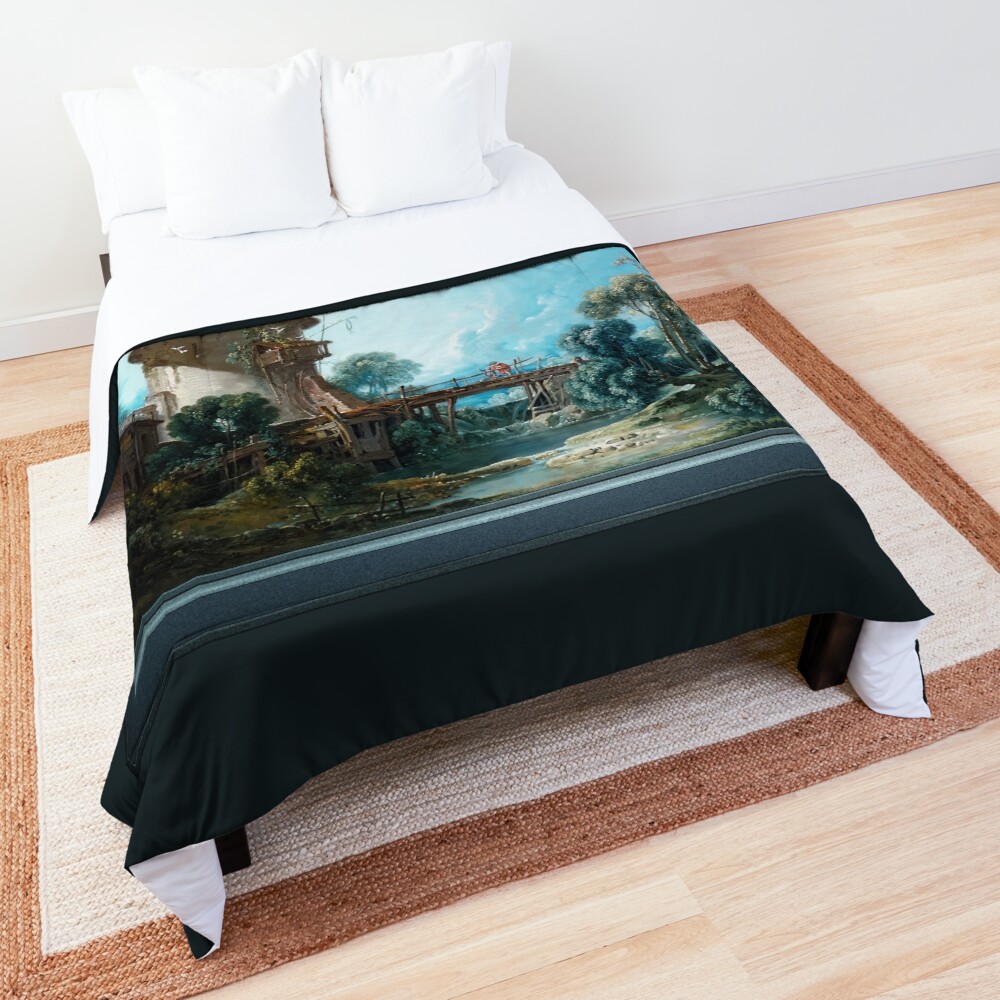
Francois Boucher'na peantadh “An Dovecote” (c. 1758) na eisimpleir tarraingeach de stoidhle Rococo na Frainge. Boucher (1703 – 1770), fear de na prìomh pheantairean san 18mh linn, bha e ainmeil airson a bheòthalachd, sgrìobhaidhean fìnealta agus aotromachd sònraichte a bha a’ comharrachadh na linn. Tha an obair ealain seo a’ toirt a-steach spiorad Rococo le cuideam air nàdar, cur-seachad, agus iodhal, saoghal cha mhòr bruadar. Bhiodh obair Boucher gu tric a’ cuimseachadh air cuspairean tlachd uaislean, amannan tairgse, agus maise aoghaireil, a tha uile air an nochdadh an seo anns an t-sàmhchair seo, sealladh inntinneach.
Clàr-innse
Prìomh chuspair agus sgrìobhadh
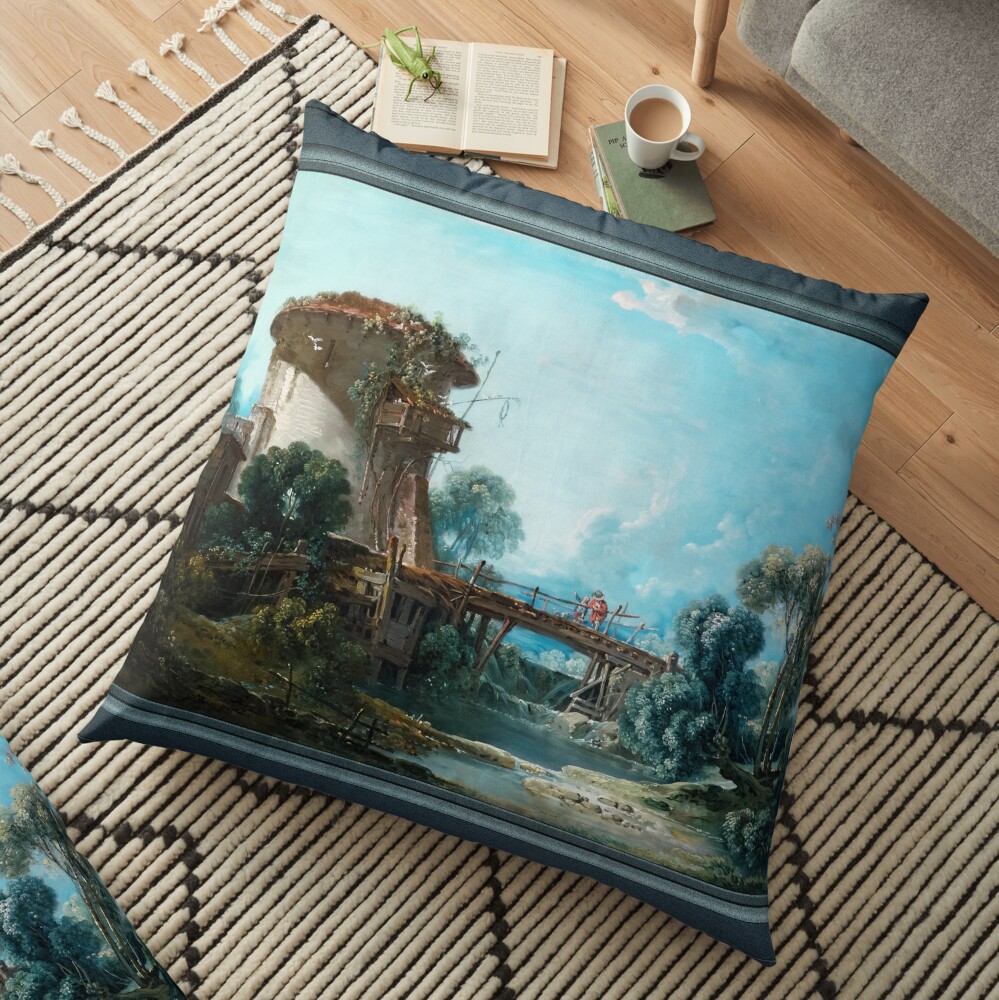
Ann an “An Dovecote,” tha am fòcas sa mheadhan na shuidheachadh dùthchail ciùin a tha a’ glacadh bòidhchead eireachdail nàdair. Tha fear agus boireannach air an sealltainn air beulaibh an deilbh, a' còmhradh gu cas, agus e na sheasamh air drochaid fhiodha dùthchail. Tha an drochaid a’ dol thairis air abhainn chiùin, a tha a’ nochdadh seallaidhean bog nan speur agus an uaine mun cuairt. Tha na figearan air an sgeadachadh ann am fasan, ach èideadh sìmplidh bhon 18mh linn, an aodach soilleir agus beothail, eadar-dhealaichte bho na tònaichean nàdarra timcheall orra. Tha an suidheachadh socair aca agus cho socair sa tha an eadar-obrachadh a’ nochdadh àm de cho-sheirm shàmhach air an dùthaich.
Suidheachadh an t-seallaidh, sealladh-tìre dùthchail làn de chraobhan, chnuic a' ruith gu socair, agus tha structar cloiche fad às - 's dòcha calman fhèin - a' nochdadh beatha aoghaireil de chur-seachad. Tha e coltach gu bheil an duine agus am boireannach aig fois anns an t-saoghal bucolic seo, tha an làthaireachd shìtheil aca a’ cur ri faireachdainn ciùin an t-suidheachaidh.
Nithean agus samhlaidhean
Air a 'chùl, we see a distinctively constructed stone dovecote, a structure used for housing doves or pigeons. This is where the painting’s title comes from, symbolizing perhaps a quiet, secluded part of nature that complements the tranquil lives of the individuals depicted. The dovecote is placed prominently on the left side of the canvas, with the trees encircling it, drawing attention to its importance as both a physical object and a symbol of rural life.
The wooden bridge that spans the river adds another layer of meaning to the painting. It not only serves as a functional element connecting two areas but also becomes a metaphorical bridge between the viewer and the tranquil world of the figures, inviting them into a space of calm contemplation. The landscape itself, with its harmonious blend of natural and architectural elements, underscores the Rococo fascination with combining beauty and nature.
A bharrachd air an sin, am bog, delicate brushwork captures the lush greenery, the water’s reflective qualities, and the atmosphere’s lightness, evoking a sense of serenity. The birds in flight above the dovecote add to the mood of freedom and peace, echoing the peaceful existence of the figures below.
Talamh agus àrainneachd
The terrain is depicted with lush, vibrant greenery, characteristic of the Rococo love for lush nature. The rolling hills in the distance are soft and inviting, bathed in a warm golden light that suggests either the early morning or late afternoon sun. The gentle curves of the hills lead the eye toward the horizon, giving a sense of depth to the landscape.
The flowing water at the bottom of the scene is tranquil, its surface gently disturbed by the occasional ripple, mirroring the calmness of the figures. The trees lining the riverbank are rich with foliage, their forms rounded and almost soft, contributing to the overall sense of gentleness that pervades the painting. The sky above is expansive and vibrant, painted with light, airy blues, and soft cloud formations, adding to the tranquil, almost dreamlike atmosphere of the scene.
Stuthan agus innleachd
Boucher’s signature technique of soft brushstrokes is evident throughout “The Dovecote.” The composition feels effortlessly fluid, with no harsh lines or contrasts, reflecting the Rococo aesthetic’s preference for lightness and grace. Tha cleachdadh solais agus sgàile gu math seòlta, contributing to the overall softness of the piece. The warm golden light that bathes the scene enhances the mood of serenity and the sense of timeless beauty.
Boucher’s handling of color is masterful. The contrast between the lively tones of the figures’ clothing and the natural greens and blues of the environment draws the viewer’s attention to the human subjects while still maintaining a balanced, co-dhunadh co-sheirm. The vibrancy of the figures’ attire, with rich reds and muted yellows, echoes the playfulness and elegance of the Rococo period, where fashion and art were inextricably linked.
Stoidhle, Cuspair, agus Mood
“An Dovecote” a’ nochdadh stoidhle Rococo, characterized by its focus on lightness, eireachdas, agus bòidhchead an t-saoghail nàdarra. The subject matter—the peaceful rural landscape, the leisurely figures, and the idyllic surroundings—speaks to the Rococo fascination with beauty, nàdur, agus toileachasan sìmplidh na beatha. There is no sense of urgency or conflict in the painting; An àite sin, the viewer is invited into a world where time slows down and the natural world offers peace and harmony.
The mood of the painting is gentle and soothing, enhanced by the soft color palette, the tranquil water, and the idyllic rural scene. The figures themselves appear content and relaxed, their quiet interaction suggesting a sense of contentment and ease. The painting evokes a sense of nostalgia for a simpler, more peaceful time, free from the concerns of the bustling urban world.
Co-dhùnadh
François Boucher's “An Dovecote” is a quintessential Rococo painting that encapsulates the period’s love for nature, bòidhchead, agus cur-seachad ath-leasaichte. With its serene landscape, tender figures, and masterful technique, it invites the viewer into a world of tranquility and grace. The subtle use of symbolism, combined with Boucher’s soft brushwork and vibrant color palette, creates a harmonious composition that remains a delightful representation of 18th-century French art.
Is e seo ath-riochdachadh seann mhaighstirean ealain didseatach ath-leasaichte de ìomhaigh raon poblach a tha ri fhaighinn mar a clò-bhualadh canabhas air-loidhne.
Neach-ealain Bio
Fiosrachadh gu h-ìosal a thàinig bho Wikipedia.org
Rugadh e ann am Paris, B ’e Boucher mac peantair nach robh cho ainmeil Nicolas Boucher, a thug dha a ’chiad trèanadh ealanta aige. Aig aois seachd bliadhna deug, chaidh am peantadh le Boucher fhaicinn leis a ’pheantair François Lemoyne. An dèidh sin chuir Lemoyne Boucher an dreuchd mar phreantas, ach às deidh dìreach trì mìosan, chaidh e a dh ’obair airson an gràbhalaiche Jean-François Cars.
Ann an 1720, bhuannaich e am mionlach Grand Prix de Rome airson peantadh, ach cha do ghabh iad an cothrom mar thoradh air sin sgrùdadh a dhèanamh san Eadailt gu còig bliadhna às deidh sin, air sgàth duilgheadasan ionmhais aig Acadamaidh Rìoghail Peantadh agus Snaidheadh.[1] Nuair a thill e bho bhith ag ionnsachadh san Eadailt chaidh a leigeil a-steach don obair-shnaighte Académie de peinture et de air 24 An t-Samhain 1731. Am pìos fàilteachaidh aige (pìos fàilteachaidh) bha a Rinaldo agus Armida de 1734.
Phòs Boucher Marie-Jeanne Buzeau a-steach 1733. Bha triùir chloinne aig a ’chàraid còmhla. Thàinig Boucher gu bhith na bhall dàimhe ann an 1734 agus luathaich a chùrsa-beatha bhon àm seo oir chaidh àrdachadh gu bhith na Àrd-ollamh aig an àm sin na Cheannard air an Acadamaidh, gu bhith na neach-sgrùdaidh aig an Royal Gobelins Manufactory agus mu dheireadh Premier Peintre du Roi (Ciad Peantair an Rìgh) a-steach 1765. Dealbh de Marie-Louise O’Murphy c. 1752
Bhàsaich Boucher air 30 A 'Chèitean 1770 ann am Paris bho thùs. Ainm, còmhla ri neach-taic Madame de Pompadour, air fàs co-cheangailte ri stoidhle Rococo na Frainge, a ’toirt air na bràithrean Goncourt sgrìobhadh: “Is e Boucher aon de na fir sin a tha a ’riochdachadh blas ceud bliadhna, a tha a ’cur an cèill, pearsanachadh agus cuir a-steach e.”
Tha Boucher ainmeil airson a bhith ag ràdh gu bheil nàdar “ro uaine agus air a lasadh gu dona” (ro uaine agus air a lasadh gu dona).
Bha Boucher co-cheangailte ris an gràbhalaiche gemstone Jacques Guay, a theagaisg e a tharraing. Thug e cuideachd taic don pheantair Moravian-Ostair Martin Ferdinand Quadal a bharrachd air a ’pheantair neoclassical Jacques-Louis David ann an 1767.[4] Nas fhaide air adhart, Rinn Boucher sreath de dhealbhan de dh ’obair le Guay a rinn Madame de Pompadour an uairsin a ghràbhaladh agus a sgaoileadh mar leabhar le ceangal eireachdail ri luchd-cùirte a b’ fheàrr leotha