

ダイアナとカリスト (木星がカリストを誘惑する) c1745 to 1749
“ダイアナとカリスト (木星がカリストを誘惑する) c1745-49” フランスの画家による ジャン・バティスト・マリー・ピエール (1714 – 1789) is a captivating example of French Rococo art, a style known for its exuberance, 優雅, そして官能性. このアートワーク, created during the mid-18th century, portrays a mythological scene from Ovid’s 変態, where Jupiter, in the guise of Diana, seduces Callisto, a follower of the goddess Diana.
The scene is rich in both emotional tension and dynamic composition, offering a glimpse into the complex interactions of deities and mortals in Greek and Roman mythology. Through delicate brushwork and soft color tones, Marie Pierre weaves a narrative that both enchants and intrigues the viewer, masterfully combining mythological storytelling with the lush beauty typical of the Rococo era.
目次
主な主題と数字
At the heart of the composition is the interaction between two central figures: Callisto, a young and innocent nymph, and the disguised Jupiter, who appears in the form of Diana, the huntress goddess. The figures are positioned in an intimate, almost dreamlike embrace, highlighting the sensual undertones of the mythological story. Callisto is seen lying on a lush, grassy surface, partially draped in a light fabric. Her body is curved in a way that suggests both vulnerability and submission to the embrace of Jupiter. The natural flow of her body is enhanced by the soft, delicate rendering of her skin, which contrasts with the more forceful, まだ穏やかです, presence of Jupiter.
木星, in the guise of Diana, hovers above Callisto with an outstretched arm, as if to envelop her in his seduction. The winged figure of Jupiter is portrayed with a flowing gown, indicative of the celestial realm from which he comes, and his confident, dominating posture reflects his godly nature.
彼の顔, while soft, reveals the cunning deception that is central to the story, with the goddess Diana’s attributes subtly included in his attire to maintain the illusion. The juxtaposition of the youthful beauty of Callisto and the godly yet deceptive nature of Jupiter creates an emotional dichotomy, one of innocence entangled with deceit.
The figures are rendered in soft, almost ethereal tones, typical of the Rococo style. This lends the piece a gentle, ほとんど別世界のような感覚, as if the figures are suspended in time and space, both within the moment of their interaction and beyond it. The use of delicate brushwork gives the flesh tones of the figures a radiant, luminous quality, making them appear both alive and otherworldly.
Setting and Terrain
絵の背景には緑豊かな植物が描かれています, 牧歌的な風景. The terrain is marked by a soft, undulating slope, where greenery spreads out in a natural, unforced manner. The grass and foliage are depicted in a manner that evokes the serenity of nature, providing a stark contrast to the tension of the figures’ interaction. This peaceful environment serves to highlight the innocence and purity of Callisto before the intrusion of Jupiter’s deceit.
Above the figures, the sky is expansive and calm, ソフトで, 渦巻く雲. ソフト, gradient transition from light blues to whites in the sky adds to the serene atmosphere of the composition. In Rococo style, backgrounds like these often have the effect of allowing the figures to float within a natural world that is both idealized and unreal, giving the scene a sense of timelessness.
オブジェクトと詳細
The lush terrain is not only a backdrop for the figures but also serves as an integral part of the atmosphere in the piece. 手前で, there are details of flowers and grass, which contribute to the overall natural and tranquil setting. These elements, although secondary to the central figures, are rendered with a great attention to detail, further enhancing the idyllic, almost utopian mood of the scene.
さらに, the soft drapery that partially covers Callisto’s body is exquisitely painted, suggesting both the fragility and vulnerability of her character. The texture of the fabric is rendered in such a way that it appears almost tangible, inviting the viewer to reach out and touch the scene. This delicate treatment of textures is a hallmark of the Rococo style, which sought to emphasize beauty and sensuality through elaborate detail.
スタイル, 気分, そしてテーマ
Jean-Baptiste Marie Pierre’s use of the Rococo style in this painting is evident in the lush details, soft color palette, and sensuous portrayal of the human form. The Rococo movement was known for its emphasis on grace, 優雅, and the depiction of lighthearted and often erotic subjects. この絵の中で, しかしながら, there is an undercurrent of darker themes, particularly the act of deception.
The mythological story at the core of the painting, Jupiter’s transformation into Diana to seduce Callisto, introduces an element of moral ambiguity. This complexity adds depth to the overall narrative, turning what could have been a simple depiction of divine love into a moment of divine treachery.
絵画の気分, while initially serene and almost dreamlike, is complicated by the tension between the figures. Callisto’s passive expression suggests her innocence and the forced nature of her seduction, while Jupiter’s assertive presence hints at the inevitability of the event. This contrast creates a mood that is both peaceful and disquieting, as the viewer is drawn into the moment of temptation, yet aware of its darker implications.
変換のテーマ, central to the myth of Callisto and Jupiter, is not visually evident in this painting but is implied through the context of the story. Callisto’s transformation into a bear and her subsequent place among the stars as the constellation Ursa Major are key elements of the myth that are not immediately apparent in the image, but they add a layer of narrative richness to the work.
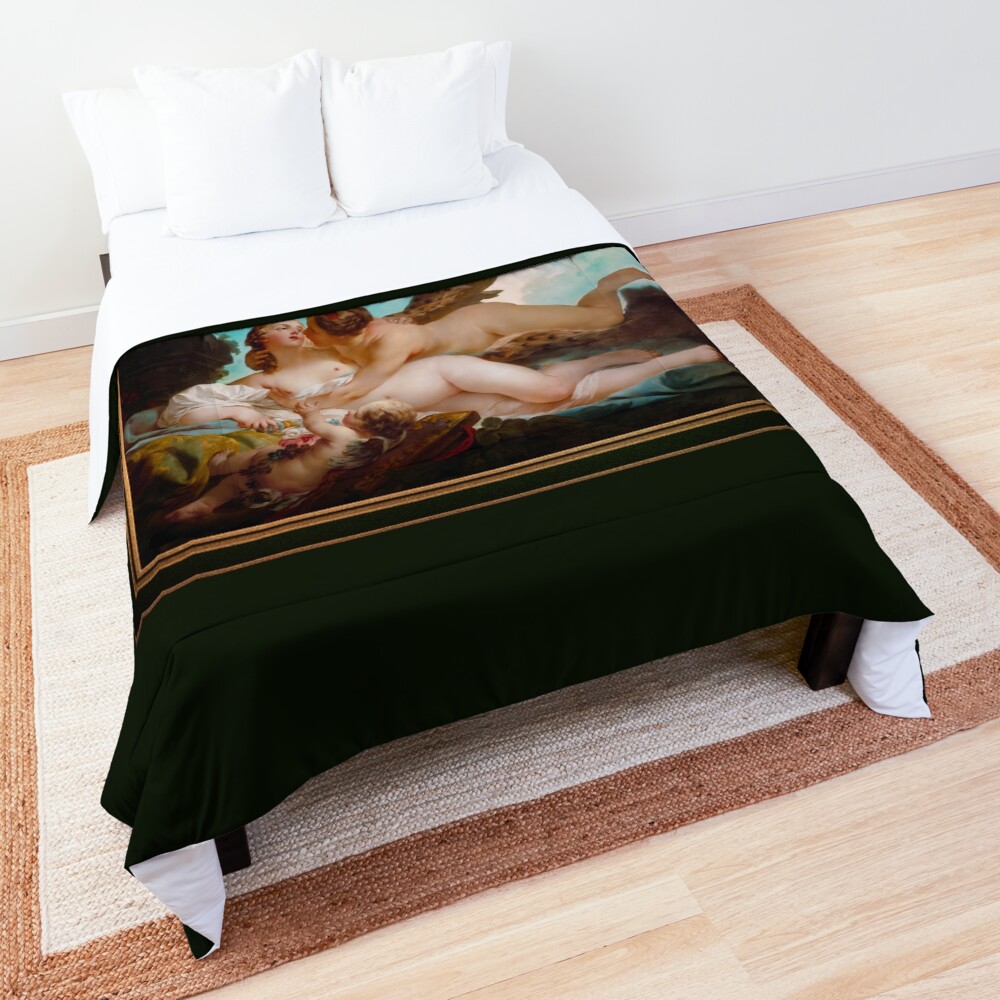
ダイアナとカリスト (木星がカリストを誘惑する) c1745-49 フランスの画家 ジャン・バティスト・マリー・ピエール (1714 – 1789); 製図工および版画家としてだけでなく、.
これはカリストの誘惑の別の解釈です, ダイアナのお気に入りのニンフ, ジュピターの狩猟の女神, 神々の王, 彼はダイアナを装って.
ローマ神話のこのバージョンでは、カリストが一種の大きな柱の近くに横たわっている様子が描かれています。, 地面に置かれた大きなキルトの上に、別の大きな刺繍素材が上半身の下に押し込まれています。.
カリストはほとんど服を脱いでいます, 右腕の一部を白い衣服の袖の中に入れた状態, 右脚の一部を覆う薄手の白い絹の衣服.
彼女はダイアナを装ったジュピターに抱きしめられている。ジュピターは部分的に空中に浮いているように見え、部分的にヒョウの皮を着てカリストにキスしようとしている。.
その下には、赤と白のバラの紐に包まれた天使がいます。, 装飾的な金のトリミングと赤いコード付きハンドルが付いた大きな矢筒の上に横たわっています。; 岩にもたれかかり、周囲には緑の植物が植えられている.
これは、リマスターされたデジタルアートのオールドマスターであり、パブリックドメインの画像を複製したものです。 キャンバスプリントオンライン.