

Y tri gras (Y Tri Gras)
Y tri gras (Y Tri Gras) c1899 gan Painter o Ffrainc Édouard Bisson (1856 – 1939); yn adnabyddus am baentiadau delfrydol a rhamantaidd o ferched mewn tirweddau atmosfferig.
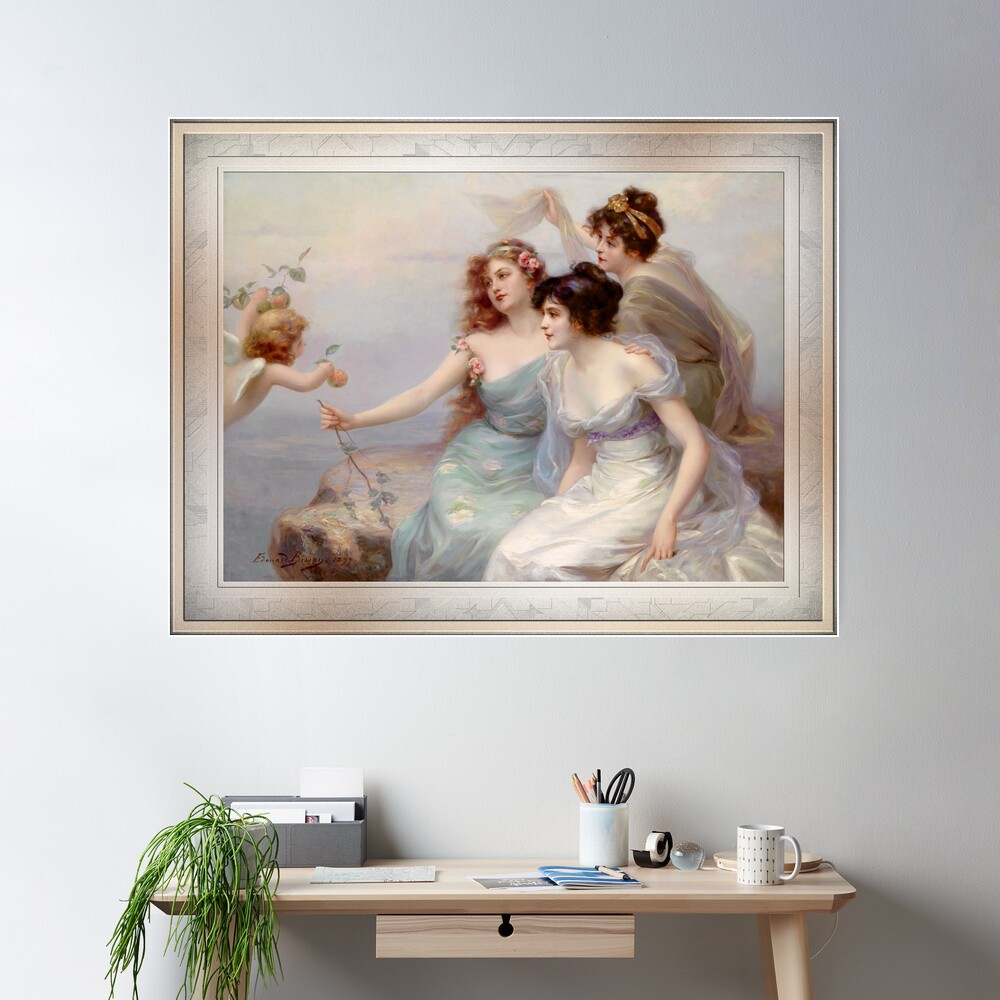
This beautiful painting that depicts three young women that are the Three Graces of Greek Mythology; said to be the daughters of Zeus and Eurynome and according to Greek Poet and Philosopher Hesiod were: Aglaia which is Brightness, Euphtosyne which is Joyfulness, and Thalia which is Bloom
They are sitting on the edge of a cliff that is high up in the sky huddled together with two of them side by side and the third behind them looking at an approaching cherub that is carrying in its left hand a branch with two apples and in its right hand another apple.
The young women that is dressed in a flannel like blue dress with pink and white embroidered flowers, a blue headband and pink roses in her red hair and around right should; is extending her right arm out toward the cherub while holding a tree branch in her right hand.
Her sister with dark brown is wearing a white silk dress with a violet floral sash, seems to be saying something to the cherub; while the third sister who is sitting behind them, is wearing a tan dress and has a golden ribbon in her medium brown hair, is waving at the approaching cherub with a light pink scarf that is in her right hand which flows over her right shoulder and down her back.
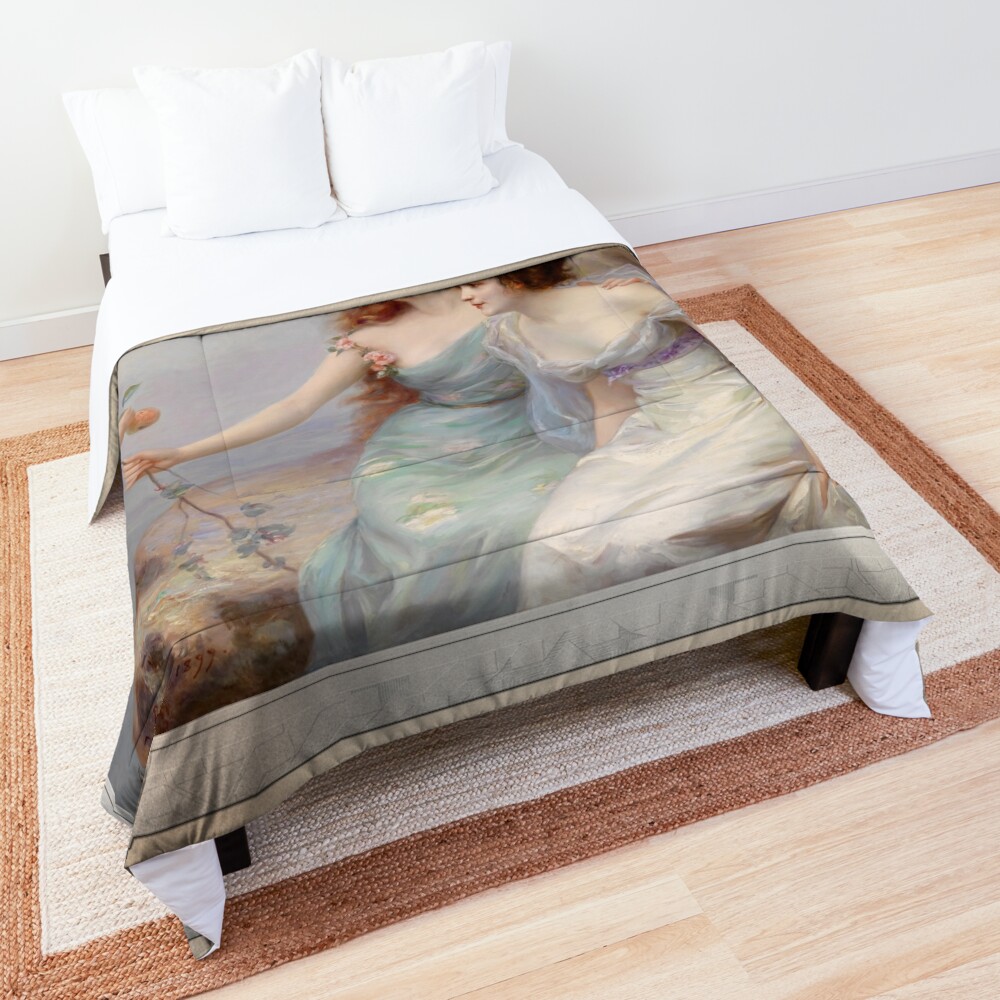
This is a remastered digital art old masters reproduction of a public domain image that, as with all the artwork found on the Xzendor7 website is available for purchase online in a variety of material formats including canvas prints, printiau acrylig, printiau metel, printiau pren, printiau wedi'u fframio, posteri, ac fel printiau cynfas wedi'u rholio mewn amrywiaeth o feintiau o 12 modfedd i 72 modfeddi yn dibynnu ar faint y gwaith celf gwirioneddol a'r siop argraffu ar alw y byddwch yn dewis prynu'r celf ohoni.
Gwybodaeth Isod O Wikipedia.org
Ganed Edouard Bisson ym Mharis yn 1856 ac roedd yn fyfyriwr i'r Paentiwr Ffrengig Jean-Léon Gérôme a'i fyfyriwr mwyaf dawnus. Roedd yn beintiwr golygfeydd genre, portreadau merched a golygfeydd morwrol, ac roedd yn rhan o'r Cyfnod Academaidd Hwyr.
Enillodd gwaith celf Edouard Bisson boblogrwydd tua'r 1900au, ennill llawer o wobrau gan gynnwys medal efydd yn yr Exposition Universelle yn 1900 a gwnaed ef yn Chevalier o'r Lleng Anrhydedd yn 1908.
Mae gwaith celf Bisson yn nodweddiadol o waith celf y chwaeth Academaidd oedd yn boblogaidd ym Mharis ar droad yr ugeinfed ganrif, a oedd yn adlewyrchu harddwch merched yn La Belle Epoque.
Bu'n arddangos yn gyson yn y Salon hyd ei farwolaeth yn 1939, ac atgynhyrchid ei baentiadau yn aml gan ysgythrwyr a phapurau newydd cyfoes.