

Dolce Far Niente
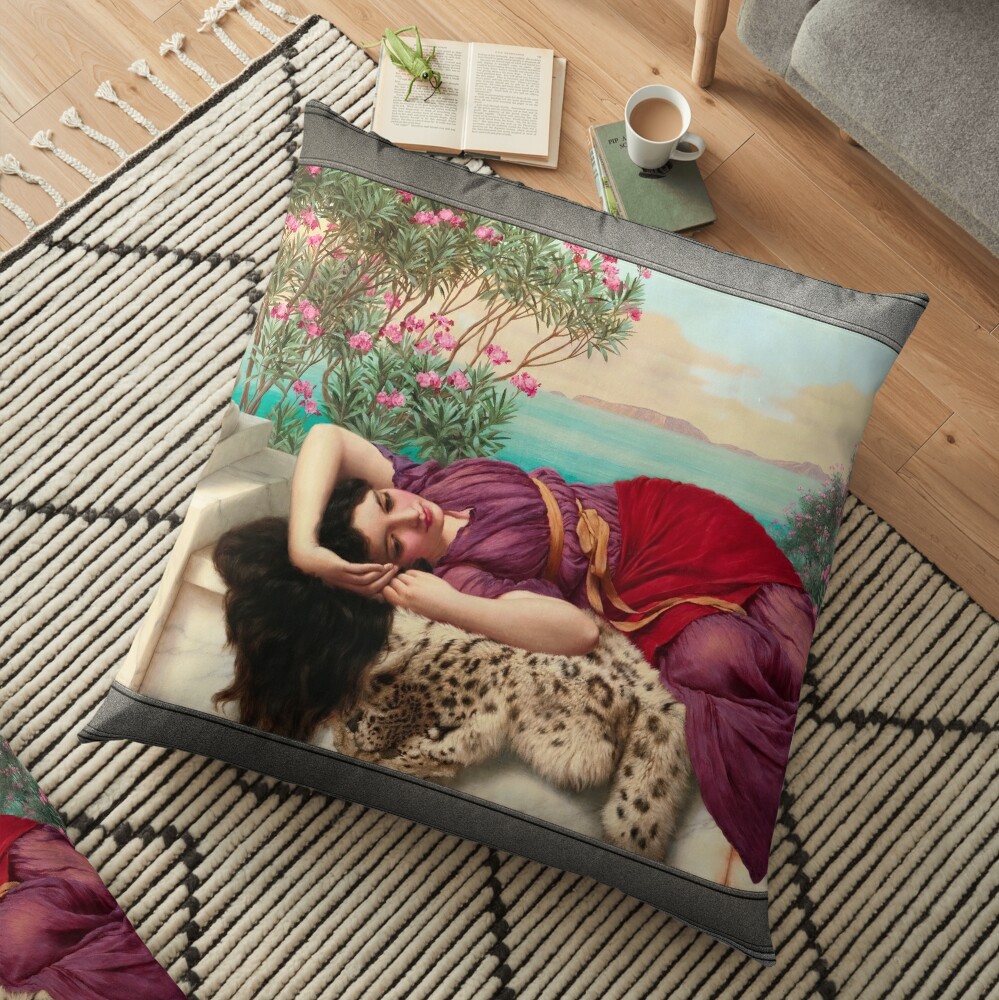
“Dolce Far Niente,” created by the British painter John William Godward yn 1904, embodies the essence of leisurely tranquility in classical art. John William Godward (1861 – 1922) is renowned for his dedication to depicting serene and opulent scenes inspired by ancient Rome and Greece, often focusing on beautiful women in idealized settings.
Yn y paentiad hwn, Godward captures a moment of pure relaxation, where the subject reclines in a luxurious setting, offering the viewer a window into a world of unhurried elegance. Y teitl, which translates from Italian as “The Sweetness of Doing Nothing,” is a fitting description of the painting’s mood. This theme of languor and contentment is a hallmark of Godward’s work and reflects a classical ideal of living in harmony with nature and luxury.
Tabl Cynnwys
Y prif bwnc: A Reclining Woman
At the heart of the composition lies a young woman, the focal point of the painting. Draped in flowing, rich fabrics, she reclines languidly on a marble terrace. Her pose suggests both comfort and contemplation, her head resting gently on her right arm, while her other hand lies relaxed by her side. The woman’s attire is a blend of classical Greek and Roman influences, with a deep red robe cinched at the waist by a golden sash, flowing loosely around her body.
The fabric of her clothing flows with remarkable realism, draping gracefully over her form and pooling around her on the marble. The woman’s expressive face is calm and serene, exuding a sense of peace and satisfaction. Ei hir, dark hair tumbles softly over her shoulder and down her back, enhancing her delicate beauty.
The figure is sculpted in a manner that emphasizes classical ideals of beauty, graceful, slender, and harmonious. The figure’s serene expression is a key aspect of Godward’s work, reinforcing the theme of repose and quiet indulgence. Her classical beauty is not only visual but also imbued with the quiet strength of timeless femininity. Her natural poise suggests an air of nobility or refinement, which Godward often associated with the ancient world.
The Surrounding Environment
The setting is a classical terrace that overlooks a tranquil, Mediterranean-style landscape. The woman is positioned in front of a marble railing, part of a larger architectural structure, perhaps an ancient villa or temple. The terrace’s polished marble surface reflects light beautifully, its smooth, lustrous quality enhancing the overall luxurious atmosphere. The colors of the marble subtly contrast with the rich hues of the woman’s attire, bringing attention to her figure.
Beyond the terrace, the landscape stretches into a serene view of the sea. The coastline is bathed in soft, golden sunlight, with distant hills rolling gently toward the horizon. This idyllic landscape evokes a sense of peace and isolation, where nature and human beauty coexist harmoniously. Several clusters of lush foliage, including pink and purple flowers, border the scene, enhancing the natural beauty of the environment. The plants are rendered with incredible attention to detail, their vibrant colors and intricate shapes adding depth and dimension to the scene.
The landscape, with its gentle slopes and clear skies, reinforces the theme of relaxation and the gentle passage of time. The sea, calm and expansive, suggests infinity and timelessness, while the distant hills provide a sense of tranquility and permanence. These natural elements frame the scene in a way that invites the viewer to contemplate the idyllic stillness of the moment.
Deunyddiau a Thechnegau
Godward’s expertise in depicting texture and light is evident in his meticulous rendering of the materials in the painting. The marble terrace is finely detailed, its polished surface capturing the play of light and shadow in a way that heightens the realism of the scene. The luxurious fabrics of the woman’s attire are painted with such precision that one can almost feel the softness and weight of the cloth. The vivid reds and purples of her robe contrast beautifully with the more subdued tones of the landscape, drawing the viewer’s attention to her figure.
Godward’s brushwork is delicate and refined, with a focus on smooth surfaces and clarity of form. The light in the painting is soft and even, contributing to the overall sense of calm and timelessness. There are no harsh contrasts or sharp shadows, which emphasizes the restful mood of the piece. The artist’s use of color is also notable, as he employs a rich yet harmonious palette to evoke warmth and serenity. The overall composition is balanced, with each element of the scene working together to create a cohesive and pleasing visual experience.
The Style and Mood of the Artwork
“Dolce Far Niente” embodies the style of academic realism, a movement that prioritized the accurate depiction of human figures, classical themes, and idealized settings. Godward was a part of the late Victorian tradition, and his works often aligned with the aesthetic tastes of the time, which favored classical themes and polished finishes. The painting’s subject matter, a beautiful woman at rest in an idyllic classical setting, is typical of Godward’s oeuvre, where he often sought to create timeless moments of beauty and serenity.
The mood of the painting is one of complete relaxation and peace. There is no urgency or turmoil; yn lle, the viewer is invited to share in the quiet pleasure of the woman’s repose. This sense of timeless, unhurried contentment is central to the painting’s appeal. The serene landscape, the softness of the light, and the tranquility of the scene combine to evoke feelings of nostalgia for a more harmonious and slower-paced world. Mae thema “Dolce Far Niente” reminds the viewer of the simple joys of leisure, free from the pressures of modern life.
Nghasgliad
“Dolce Far Niente” is a masterful example of John William Godward’s ability to evoke the beauty of the classical world through the lens of academic realism. The painting captures a moment of pure relaxation, where the lines between the natural world and human beauty blur, creating a sense of timeless serenity. The luxurious setting, coupled with the delicate portrayal of the reclining woman, invites the viewer to step into a world where tranquility reigns and time seems to stand still.
Dolce Far Niente is a remastered digital art old masters reproduction of a public domain image that is available as a print cynfas ar-lein.
Y greadigaeth gelfyddyd ddigidol hon, fel gyda'r holl waith celf sydd i'w gael ar wefan Xzendor7 ar gael i'w brynu ar-lein mewn amrywiaeth o fformatau deunydd gan gynnwys printiau cynfas, printiau acrylig, printiau metel, printiau pren, printiau wedi'u fframio, posteri, ac fel printiau cynfas wedi'u rholio mewn amrywiaeth o feintiau o 12 modfedd i 72 modfeddi yn dibynnu ar faint y gwaith celf gwirioneddol a'r siop argraffu ar alw y byddwch yn dewis prynu'r celf ohoni.
Mae’r gwaith celf hefyd ar gael ar ystod eang o ddillad dynion a merched, mygiau, totes, sgarffiau, llyfrau nodiadau a chyfnodolion a llawer o gynhyrchion addurno cartref.
Bio artist
Gwybodaeth Isod O Wikipedia.org
John William Godward oedd yr hynaf o bump o blant, ac fe'i enwyd ar ôl ei dad John a'i dad-cu William.
Arddangosodd yn yr Academi Frenhinol o 1887. Pan symudodd i'r Eidal gydag un o'i fodelau yn 1912, torrodd ei deulu bob cysylltiad ag ef a thorri ei ddelwedd o luniau teulu hyd yn oed. Dychwelodd Godward i Loegr yn 1921, bu farw yn 1922, ac wedi'i gladdu ym Mynwent Brompton, Gorllewin Llundain.
Un o'i baentiadau mwyaf adnabyddus yw Dolce Far Niente (1904), a brynwyd ar gyfer casgliad Andrew Lloyd Webber yn 1995. Fel yn achos sawl llun arall, Paentiodd Godward fwy nag un fersiwn; Yn yr achos hwn, yn gynharach (ac yn llai adnabyddus) 1897 fersiwn gyda pellach 1906 fersiwn.
Cyflawnodd hunanladdiad yn oed 61 a dywedir iddo ysgrifennu yn ei nodyn hunanladdiad hynny “nid yw'r byd yn ddigon mawr ar gyfer [y ddau] fy hun a Picasso”.
Ei deulu sydd wedi ymddieithrio, a oedd wedi anghymeradwyo ei fod yn dod yn arlunydd, yn cywilyddio o'i hunanladdiad a llosgi ei bapurau. Dim ond un ffotograff o Godward y gwyddys ei fod yn goroesi.
Roedd Godward yn Neo-Clasurydd Fictoraidd, ac felly, mewn theori, un o ddilynwyr Frederic Leighton. Fodd bynnag, mae'n gysylltiedig yn agosach â Syr Lawrence Alma-Tadema o ran arddull, y rhannodd ef â phenchant ar gyfer rendro pensaernïaeth Glasurol - yn benodol, nodweddion tirwedd statig wedi'u hadeiladu o farmor.
Mae'r mwyafrif helaeth o ddelweddau sy'n bodoli gan Godward yn cynnwys menywod mewn gwisg glasurol yn erbyn nodweddion tirwedd; er bod rhai ffigurau lled-noethlymun a hollol noethlymun wedi'u cynnwys yn ei oeuvre, enghraifft nodedig yw “Yn Y Tepidarium c1913”.
Teitl a rennir gyda phaentiad dadleuol alma-tasgema o'r un pwnc sy'n byw yn y “Oriel Gelf Lady Lever”. Mae'r teitlau yn adlewyrchu ffynhonnell ysbrydoliaeth Godward; a oedd yn wareiddiad clasurol, yn fwyaf nodedig Rhufain Hynafol; Pwnc yn rhwymo Duwward yn agos i Alma-Tadema yn artistig.
O ystyried bod ysgolheictod clasurol yn fwy eang ymhlith y gynulleidfa bosibl am ei luniau yn ystod ei oes nag yn yr oes sydd ohoni, Roedd ymchwil fanwl o fanylion yn bwysig er mwyn cyrraedd safle fel arlunydd yn y genre hwn.
Roedd Alma-Tadema yn archeolegydd yn ogystal ag arlunydd, a fynychodd safleoedd hanesyddol a chasglu arteffactau a ddefnyddiodd yn ddiweddarach yn ei luniau: Godward, hefyd, astudio manylion fel pensaernïaeth a gwisg, er mwyn sicrhau bod ei weithiau'n dwyn y stamp dilysrwydd.
Yn ychwanegol, Godward yn ofalus ac yn ofalus iawn wedi rhoi nodweddion pwysig eraill yn ei luniau, crwyn anifeiliaid y mae'r paentiadau ohonynt “Gorffwys Diwrnod hanner dydd C1910” a “Encil Cŵl C1910” yn cynnwys enghreifftiau o ddehongliad o'r fath yn ogystal â blodau gwyllt “Nerissa C1906” a “Blodau Haf C1903”.
Mae ymddangosiad menywod hardd mewn peri a astudiwyd mewn cymaint o gynfasau Godward yn achosi i lawer o newydd-ddyfodiaid ei weithiau ei gategoreiddio ar gam fel cyn-raphaelite, yn enwedig gan fod ei balet yn aml yn un bywiog o liwgar. Y dewis o bwnc (gwareiddiad hynafol yn erbyn, er enghraifft, Chwedl Arthuraidd) yn fwy cywir y neo-glasurwr Fictoraidd.
Yn yr un modd â nifer o beintwyr sy'n gyfoes ag ef, Roedd Godward yn ‘Breuddwydiwr Fictoraidd Uchel’, cynhyrchu delweddau o fyd delfrydol a rhamantus sydd, yn achos Godward ac Alma-Tadema, daeth i gael ei feirniadu fel golwg fyd-eang ar Fictoriaid mewn togas.
Godward “sefydlodd enw da yn gyflym am ei luniau o ferched ifanc mewn lleoliad clasurol a'i allu i gyfleu â sensitifrwydd a meistrolaeth dechnegol naws gweadau cyferbyniol cnawd, marmor, ffwr a ffabrigau.
Mae'n debyg bod Godward’s Penchant am greu gweithiau celf a osodwyd yn y cyfnod clasurol wedi dod o’r cyfnod amser y cafodd ei eni ynddo; gan mai hwn oedd yr adfywiad clasurol ar raddfa lawn olaf mewn paentiadau gorllewinol, a ffynnodd yn Lloegr o'r 1860au hyd at y 1890au.