

Eavesdropping
Vittorio Reggianini’s painting, “Eavesdropping,” created in the late 19th or early 20th century, is a stunning representation of his mastery in capturing detailed, intimate moments through a blend of refined realism and refined elegance. Urodzony w 1858 i przejście 1938, Reggianini was renowned for his exquisite depictions of elegant women and interiors, often set within luxurious surroundings that evoke the grace and sophistication of the Belle Époque period. This particular klasyczny painting encapsulates his signature style: a delicate interplay between opulence and intimate, often suggestive, narrative elements.
Spis treści
Temat i nastrój
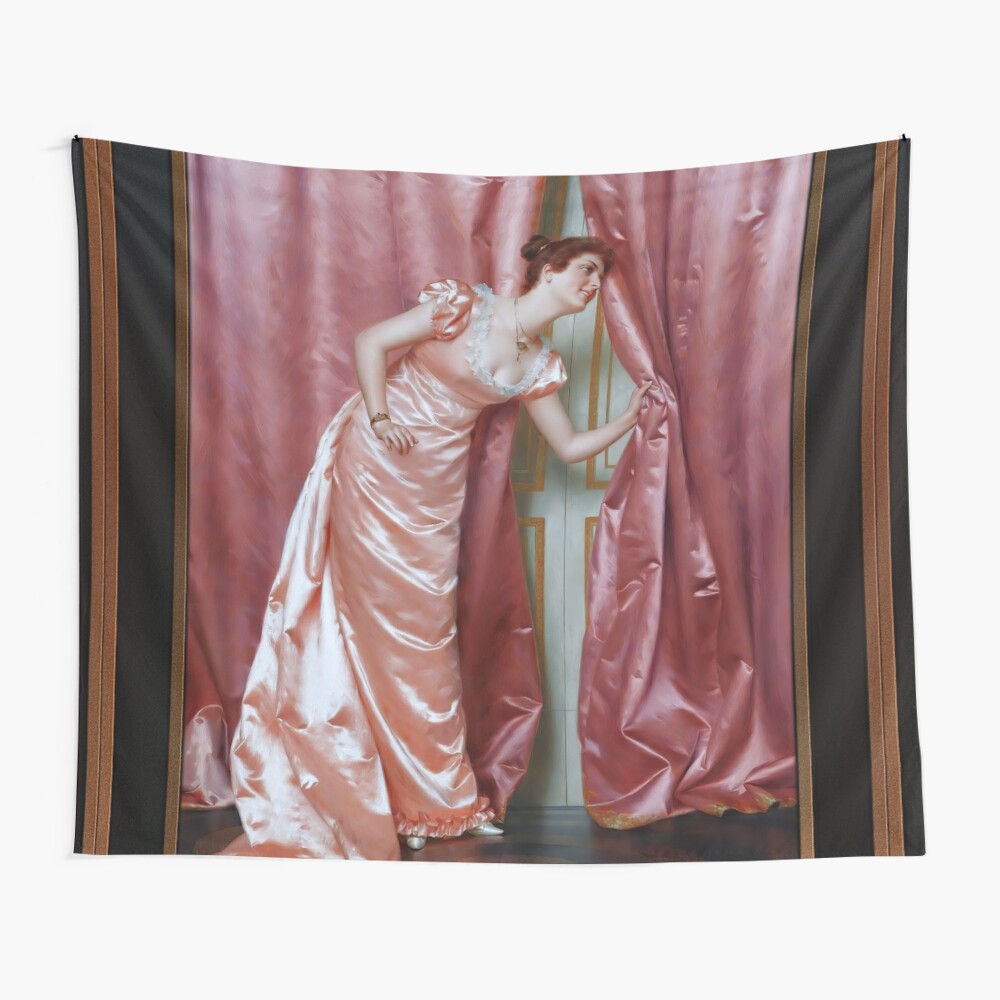
W sercu “Eavesdropping” stands a young woman dressed in a flowing, satin gown of soft pink. Jej postawa, pochylając się lekko do przodu, jedną ręką chwytając krawędź grubego materiału, aksamitna zasłona, sugeruje, że słucha uważnie, prawdopodobnie starając się uchwycić szeptaną rozmowę lub sekret. Jej wyraz twarzy to subtelna mieszanka ciekawości i intrygi, z lekkim uśmiechem igrającym na jej ustach. Widz zostaje wciągnięty w tę chwilę z poczuciem napięcia, jakby została przyłapana na podsłuchiwaniu czegoś poufnego. Wyraz jej twarzy jest jednocześnie urzekający i tajemniczy, pozostawiając miejsce na spekulacje na temat tego, co może podsłuchiwać.
Temat piękny, arystokratka prywatnie, niemal voyerystyczny akt podsłuchiwania, tworzy dynamikę, która jest zarówno osobista, jak i ulotna. Spokój tej chwili podkreślają delikatne różowe odcienie jej sukni i wystawność, bogata tkanina zasłony. Jej postawa ma w sobie pewną zmysłowość, gdy pochyla się lekko na bok, co podkreśla ogólną intymną i prywatną atmosferę obrazu.
Composition and Space
Kompozycja utworu jest elegancka i wyważona, gdy charakterystyczna dbałość Reggianini o szczegóły przyciąga wzrok widza do tematu, oprawiając go na tle bogatej draperii i detali architektonicznych. Same zasłony nie są jedynie elementami dekoracyjnymi, ale odgrywają ważną rolę w narracji. Sposób, w jaki tkanina składa się i układa z taką precyzją, w połączeniu z odbijającym się od niego światłem, nadaje obrazowi walory dotykowe. Tekstura zasłon, heavy and luxurious in appearance, contrasts with the smoothness of the satin gown worn by the woman. This juxtaposition serves to highlight her graceful, almost ethereal presence within the scene.
The framing of the curtains also draws attention to the central figure by creating a natural boundary, guiding the viewer’s gaze to the woman’s face and hands. Światło, subtly diffused, creates an almost cinematic glow around her, making the scene feel timeless and fleeting at the same time. The space around her is filled with enough details to suggest a room of importance, perhaps a salon or a private study, though the surrounding objects are not the focus of the piece. Reggianini’s skill in creating depth through the interplay of light and shadow adds an air of mystery to the scene.
Paleta kolorów i materiały
The color palette is composed of soft, harmonious hues, with the rich pink of the curtains and gown creating an overall sense of calm and femininity. The glossy sheen of the satin dress contrasts subtly with the matte texture of the velvet curtains, drawing attention to the woman’s attire and suggesting wealth and status. These colors are complemented by delicate highlights of gold in the architectural features, suggesting a lavish setting.
The artist’s use of light is exquisite, particularly in the way it caresses the folds of the fabric and illuminates the woman’s face, drawing her features into soft relief. This careful attention to light plays a vital role in the narrative tension of the scene. The mood conveyed is both serene and suggestive, creating an atmosphere where everything feels suspended in time. Reggianini’s meticulous handling of textures, from the luxurious fabrics to the smooth skin of the subject, creates a tangible sense of opulence that elevates the subject’s position within the painting.
Influence of Reggianini’s Style
Reggianini was greatly influenced by academic realism and the growing fascination with intimate, highly detailed scenes of private life that were so popular among wealthy patrons of the late 19th century. His works, which often feature well-dressed women in lavish settings, reflect an era marked by the pursuit of beauty, elegancja, and the celebration of the feminine form. He brought to life a world of grandeur, łaska, and refinement—qualities that are evident in “Eavesdropping.” Sama tematyka, with its gentle eroticism and hints of voyeurism, aligns with the period’s preoccupation with private, personal moments made public through art.
Symbolika i interpretacja
While the subject is seemingly innocent, simply a woman eavesdropping, the underlying symbolism suggests a deeper layer. The act of eavesdropping can be interpreted as a metaphor for the intrusion of privacy, or perhaps a subtle commentary on the role of women in society during Reggianini’s time. The figure of the woman appears to occupy a space between the public and private spheres, where she can observe, but is not directly involved. This duality, between visibility and invisibility, mirrors the cultural expectations of women in the late 19th and early 20th centuries, where their roles were often confined to the domestic realm, yet they were continuously subject to the gaze of the public eye.
The choice of pink for the woman’s gown may also carry significance. Pink, traditionally associated with femininity and softness, lends a sense of delicacy to the figure, while the opulence of the gown and the setting suggests a position of high status. It can be interpreted as an expression of the complex roles women were expected to play in the context of luxury and refinement—always in the background but still within the view of society.
Wniosek
“Eavesdropping” by Vittorio Reggianini is a masterpiece of refinement, subtle sensuality, and social commentary. The artist’s skillful composition, use of color, and attention to texture create a deeply atmospheric and intimate portrait of a moment in time. The painting captures the beauty and complexity of its subject, evoking both the allure of the scene and the underlying tension of what might be heard behind the curtain.
This is a beautifully painted vintage art painting with a similar style to that of French-Italian Painter Frédéric Soulacroix (1858 – 1933); especially on how they handle the texture of the materials.
Jest to zremasterowana cyfrowa reprodukcja starych mistrzów obrazu z domeny publicznej, która jest dostępna jako druk na płótnie online.