

Elegant Lady with a Bouquet of Roses
Elegant Lady with a Bouquet of Roses c~ by French Painter Emile Vernon (1872 – 1919); akuarelak margotzen espezializatu zena, bere gai nagusia landa ingurune argi eta koloretsuetako emakumeak eta haurrak izanik. William Bouguereau eta Auguste Trouphèmeren eskutik trebatu zen Parisko Frantziako Arte Ederren Eskolan.
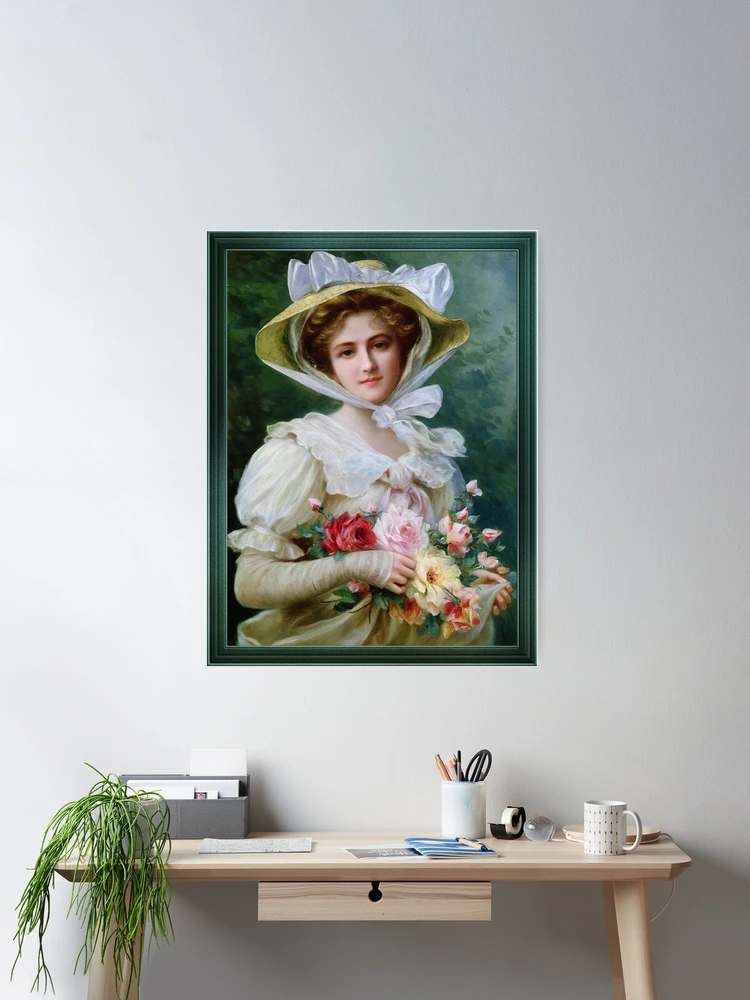
Izenburua duen koadroa Lady with a Bouquet of Roses presents an elegant depiction of a young woman, evoking the charm and sophistication typical of late 19th-century French portraiture. Artista, known for his meticulous attention to detail, uses soft, natural lighting and vibrant color contrasts to breathe life into the subject. The painting showcases the subject against a muted yet lush green background, which not only highlights her but also enhances the serene, idyllic atmosphere typical of Vernon’s work.
The lady at the heart of the composition is presented as an embodiment of grace and femininity. She wears a soft, billowy white dress, typical of the era’s fashion, with delicate ruffles at the neckline and sleeves that add a touch of romanticism. Her attire is modest but opulent, a contrast that reflects the refined sensibilities of her time.
The dress gently hugs her form, flowing elegantly, and its white fabric serves to emphasize the soft hues of her face and the bouquet she holds. Her features are soft and youthful, exuding an air of quiet confidence and gentleness. The woman’s expression is serene, her lips ever so slightly curved into a delicate smile, inviting the viewer into her world of timeless grace.
Her accessories include a wide-brimmed straw hat, adorned with a large white ribbon that frames her face, lending an additional layer of charm and freshness to the portrait. Biguna, haize-zintak eta kapeluaren estalki axolagabeak udako epeltasun sentsazioa sorrarazten dute, are gehiago baketsua azpimarratuz, eszenaren izaera idilikoa. Txapela bere buruan fin kokatuta dago, nahasten zuen bitartean, ile urre-marroia ateratzen da azpitik, edertasun naturalaren zentzua gehituz. Bere ilearen ehundura leuna eta kalitate distiratsua aparteko arretaz ematen dira, horrek margolanaren bizitasun-kalitate orokorra hobetzen du.
Bere eskuetan, arrosa sorta bat dauka, biziak eta ugariak direnak, bere soinekoaren fintasunarekin kontrastean. Arrosak, beren gorri aberatsekin, pinks, eta hori zurbilak, kontraste deigarria eman hondoko berde freskoei, piezari kolore leherketa batekin infusiz. Arrosak aske daude bere eskuetan, creating a sense of harmony and elegance that further highlights her soft femininity. The floral arrangement symbolizes natural beauty, gazteria, eta maitasuna, traditional themes in French portraiture from the period. The choice of roses, a symbol of romance and purity, complements the subject’s youthful, graceful appearance and adds an element of symbolic depth to the portrait.
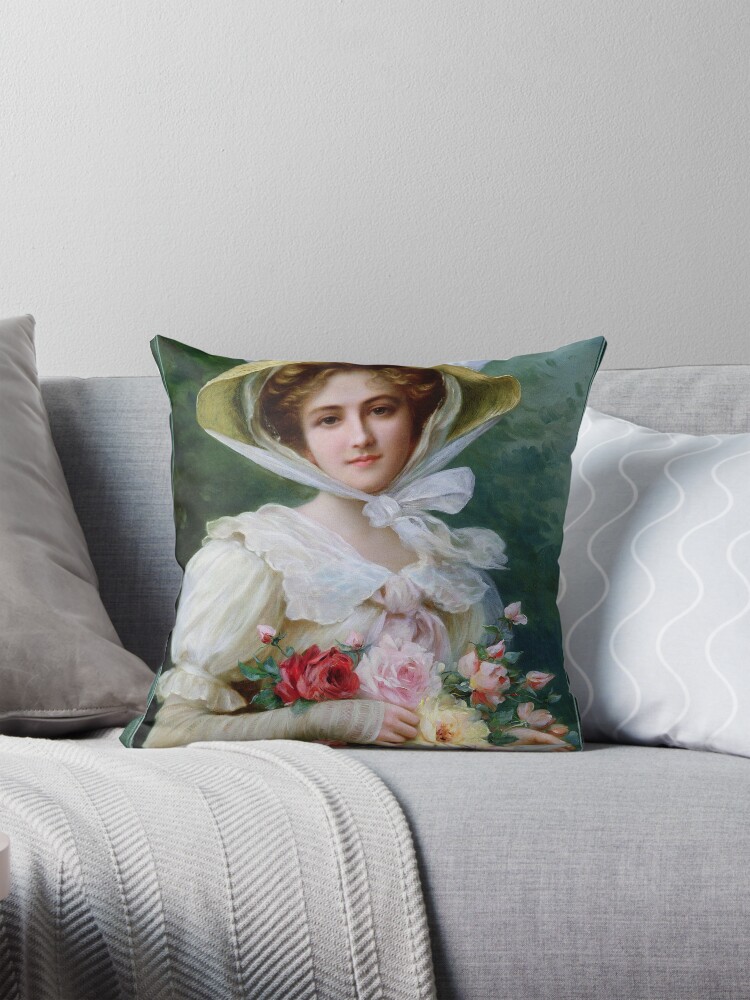
The lush background, painted in various shades of green, is subtly blurred, allowing the subject to remain the focal point. This technique of softening the background—allowing the greenery to gently merge together—enhances the sense of depth in the artwork and directs the viewer’s attention to the delicate detailing of the woman’s face and the bouquet she holds. The gentle brushstrokes and rich texture of the green backdrop suggest a secluded garden or a peaceful natural setting, further reinforcing the romantic and tranquil theme of the painting.
The overall mood of the painting is one of calm, fintasuna, and nostalgia. It captures a fleeting moment of quiet elegance, evoking the gracefulness of a summer day in a bygone era. The soft color palette, consisting of pastel tones and earthy hues, amplifies this sense of serenity and timeless beauty. The detailed rendering of the roses, andrearen adierazpen leuna, eta konposizio harmoniatsuak obraren lasaitasun eta xarma sentipenari laguntzen dio.
Vernonen maisutasun teknikoa argi eta itzalaren erreprodukzioan nabari da. Emakumearen aurpegian eta janzkeran dagoen argi-joko delikatuak errealismo sentsazioa sortzen du, itzal leunek eta argiek, berriz, koadroaren hiru dimentsioko kalitatea hobetzen dute. Emakumearen larruazaleko ehunduraren tratamendu naturalista, arropa, eta bouquet-ek Vernonek bere gaien ukimen-izaera harrapatzeko duen trebetasuna erakusten du, koadroa esperientzia bisuala ez ezik, eszenaren barruko ehundurak irudikatzeko gonbidapena ere bihurtuz.
Estilo aldetik, this artwork adheres to the traditions of French academic painting while also embracing a certain softness and romanticism that became more prevalent in the late 19th century. The use of delicate brushwork, the focus on elegance and refinement, and the emphasis on natural beauty are all hallmarks of Vernon’s approach to portraiture. It is a reflection of the French fascination with idealized beauty and natural grace during this period, a time when the Rococo influences of the 18th century were still lingering in the art world.
Ezarpena, the woman’s attire, and the symbolic presence of the roses all contribute to a painting that encapsulates the spirit of its time—an era where romance, edertasuna, and nature were cherished ideals. The subject’s tranquil, almost ethereal quality invites the viewer to step into a world where these ideals are immortalized, forever preserved in the vibrant strokes of paint.
Hau arte digitala ukituta dagoen domeinu publikoko irudi baten erreprodukzioa da.