

Lagun onenak
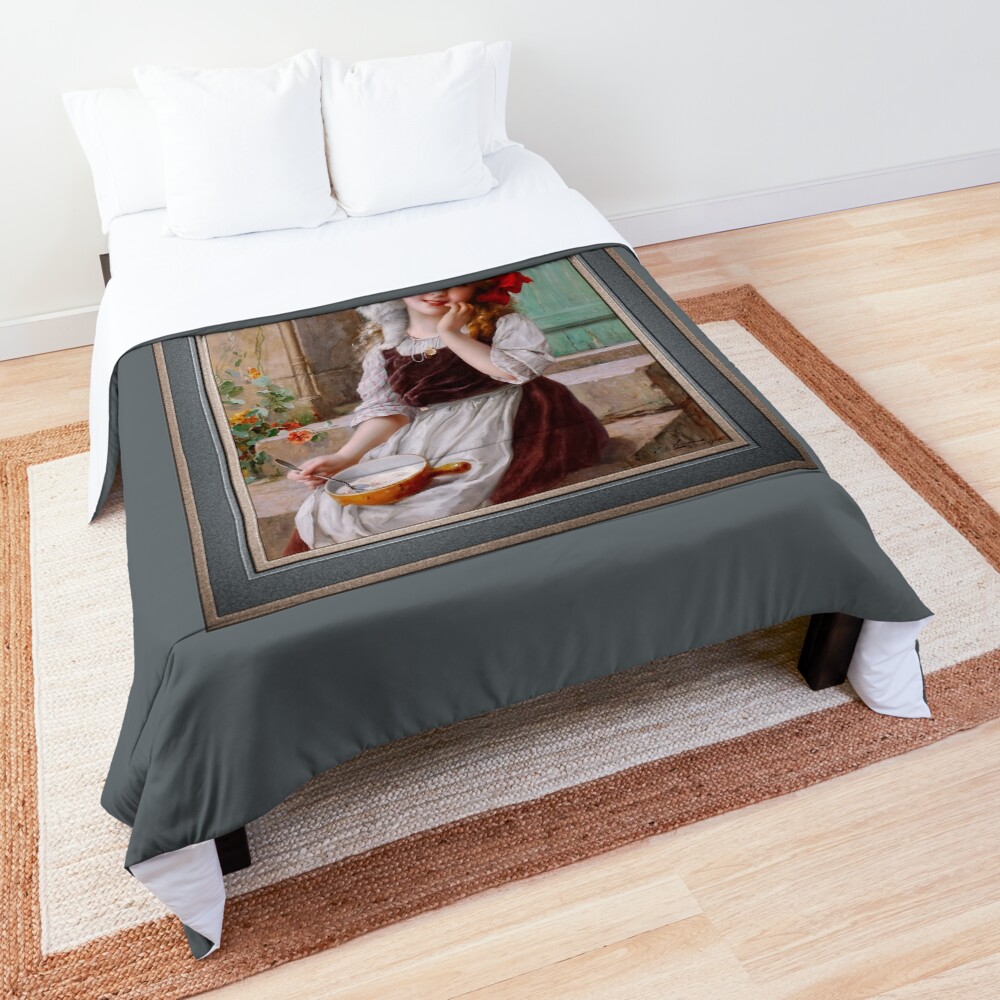
“Lagun onenak” urtean Emile Vernon margolari frantsesak sortutako artelan xarmagarri eta xelebrea da 1903. urtean jaioa 1872 eta aktiboa hil zen arte 1920, Vernon bere irudi delikatu eta zehatzengatik ezaguna zen neska gazteak intimoan, sarritan eguneroko bizitzako une lasaiak. Pieza berezi honek xalotasuna eta poztasun jostalari bat uztartzeko duen gaitasuna erakusten du, neska gazte bat kanpoko ingurune batean aurkezten du bere lagun jostalariarekin batera, katutxo bat. Laguntasunaren gaia, garbitasun, eta bizitzaren plazer xumeek oihartzuna dute koadroan zehar, haurtzaroko grazia eta samurtasuna bilduz.
Edukien taula
Gai nagusia: Neska eta katutxoa
Margolanaren gai nagusia neska gazte bat da, with a light, fair complexion and bright blonde hair cascading in loose waves. Her youthful face is illuminated by a soft smile, revealing the natural innocence that defines the subject matter of many of Vernon’s works. The girl’s red ribbon, which is tied at the side of her head, adds a touch of bold color to the otherwise soft and natural tones of the painting. Her expression is playful yet serene, as if caught in a moment of quiet joy, engaged in the act of feeding or caring for her small kitten.
The kitten, perched comfortably on her shoulder, adds an element of whimsy to the scene. The playful creature, a fluffy gray and white cat, wears a light blue bow around its neck, complementing the girl’s attire. The cat’s curious gaze and tilted head reflect the youthful energy of the pair, hinting at their strong bond. This gentle companionship between the girl and her pet is a testament to the artist’s exploration of childhood innocence, where pets and playmates are not only companions but also confidantes in the imaginary worlds that children create.
Ezarpena: Kanpoan natura kutsu batekin
-ren ezarpena “Lagun onenak” appears to be an outdoor garden or courtyard, captured with vivid, yet soft brushwork. The stone walls, painted in light neutral tones of beige and taupe, create a warm backdrop for the young girl and her kitten. A wooden door, painted in a soft greenish hue, opens to a slightly blurred, sun-dappled space, suggesting a transition from the enclosed space of the building to the wide world beyond. The architectural elements—the stone and the wooden door—serve as a grounding element in the painting, offering stability to the otherwise soft and flowing nature of the girl’s figure.
In front of the girl, the small table where she sits is adorned with a bowl of porridge or oatmeal, which she delicately holds with a spoon. The bowl, a simple yet elegant piece of pottery, has an earthy, natural tone, tying it to the setting’s overall rustic charm. Haren atzean, clusters of soft, colorful flowers in the garden provide a gentle burst of natural color. They seem almost to echo the girl’s youthfulness, with delicate petals and trailing vines that invite a closer inspection of the detailed brushwork, which Vernon was known for.
Aldartea eta Gaia: Inozentzia, Jolaskeria, eta Laguntasuna
The mood of the artwork is light-hearted and joyful, haurtzaroko xalotasun une iheskor bat harrapatzen. Neskaren adierazpen leunak eta bere katuarekiko elkarrekintza jostariak berotasun eta samurtasun sentimenduak sorrarazten ditu. Bere jarrera: eroso eserita, koilara eskuan, bere katutxoa sorbaldan jarrita duela, margolanak ematen duen erraztasun eta poztasun sentsazioa areagotzen du. Hau lasaia da, laguntasun une intimoa, kanpoko etenaldirik gabe, ikuslea haurtzaroko mundu baketsuan guztiz murgiltzeko aukera emanez.
Gaia “Lagun onenak” gaztaroaren garbitasunaren eta haur baten eta bere maskotaren arteko hitz gabeko loturaren inguruan datza. Vernonek bere katuarekin neskaren irudikapenak hurbiltasun sentsazioa transmititzen du, neska gaztea bere maskotaren aurrean makurtzen den bitartean, bai figuratiboki eta bai fisikoki. Interakzio hau betikoa da, representing the uncomplicated and unconditional love that exists between children and their animals. The kitten, though a small creature, plays a significant role in enhancing the scene’s emotional depth, symbolizing the simplicity and joy that animals bring to our lives.
Estilo Artistikoa: Realism with a Touch of Romanticism
Emile Vernon’s style in “Lagun onenak” is rooted in the realism movement, yet it carries the romanticism of the time. Artistak argiaren eta itzalaren menderatzea, along with his precise attention to detail, showcases his technical skill and ability to capture the world around him with striking clarity. The textures of the girl’s hair, the softness of her dress, and the fluffy fur of the kitten are all meticulously rendered, drawing the viewer into the intimacy of the moment.
Vernon’s brushwork is delicate and nuanced, lending a softness to the composition that enhances the overall feeling of tranquility. The palette is gentle, featuring warm, earthy tones of browns, berdeak, and beiges, which complement the girl’s attire and the natural surroundings. The application of light, particularly on the girl’s face and the kitten’s fur, gives the painting a luminous quality, evoking a sense of warmth and affection. This blend of realism and romanticism in Vernon’s work was characteristic of the late 19th and early 20th centuries, when the push for technical accuracy in painting was often tempered by an emphasis on emotional and idealized representation.
Bukaera
In “Lagun onenak,” Emile Vernon presents a timeless portrayal of the pure bond between a young girl and her pet. Through the delicate depiction of their interaction and the gentle setting, Vernon captures a moment of serene joy and companionship, reminding us of the simple, yet profound, pleasures of childhood. Konposizioa, argia, and subject matter combine to create an artwork that not only illustrates the artist’s skill but also evokes an enduring sense of warmth and nostalgia.
Arte digital birmasterizatua da, sarean mihise inprimatu gisa eskuragarri dagoen domeinu publikoko irudi baten erreprodukzioa..

Arte digitalaren sorkuntza hau, Xzendor7 webgunean aurki daitezkeen artelan guztiak bezala sarean erosteko eskuragarri dago hainbat material formatutan, mihise inprimatuak barne., estanpatu akrilikoak, metal estanpatuak, egur estanpatuak, marko estanpatuak, kartelak, eta ijetzitako mihise estanpatu gisa hainbat tamainatan 12 zentimetroetara 72 hazbeteko artelanaren eta artea erosteko aukeratzen duzun eskaeraren arabera inprimatzeko dendaren tamainaren arabera.
Artelana gizonezkoen eta emakumezkoen arropa sorta zabal batean ere eskuragarri dago, katiluak, totes, zapiak, koadernoak eta aldizkariak eta etxeko dekorazio produktu ugari.
Artistari buruz
Beheko informazioa Galeria Ary Jan
Émile Vernon Tourseko Arte Ederren eskolan ikaslea zen eta bertan marrazketako lehen saria irabazi zuen 1888; ondoren, William Bouguereau eta Auguste Truphèmeren tutorea izan zen.
Gero sartu 1898 Arte Ederretako eta Arte Dekorazioko Tours erakusketan parte hartu zuen eta urte horretan bertan, Frantziako Artisten Erakusketan eta maiz bertan erakutsi zituen bere lanak 1898 to 1913; erretratuak aurkezten, paisaiak, Bretainiako eszenak, akuarelaz margotu zituen bodegoien sortak, baita figura femeninoak ere, gerora espezialitate bihurtu zena.
Émile nabarmendu zen argiztaturiko margolanetan, Haurren eta emakume gazte dotoreen figura adoragarriak, harekin maiz lotzen zuen maskota bat, adibidez, katua, txakurra edo txoria, eta bere irudiak garlandaz edo lore-sortaz apaindu zituen, bere ibilbide osoan; baina oso artista polifazetikoa ere bazen, zorroztasunez eta indarrez margo zezakeena, bere lanetan Madame Vernon eta Sous la Lamperen erretratua bezala. (Lanpara azpian).