

Czarodziejka: A Glimpse into Exotic Beauty by Luis Ricardo Falero
Enchantress by Luis Ricardo Falero (1851-1896) was a Spanish painter known for his depictions of idealized figures within richly detailed, often exotic settings. His work frequently explored themes of beauty, zmysłowość, and the allure of faraway lands, reflecting the popular Orientalist trends prevalent in 19th-century European art. “Czarodziejka,” malowane w 1878, exemplifies these characteristics with remarkable clarity and technical skill. The painting presents a captivating scene featuring a young woman seated upon an ornate architectural structure, evoking a sense of mystery and quiet contemplation.
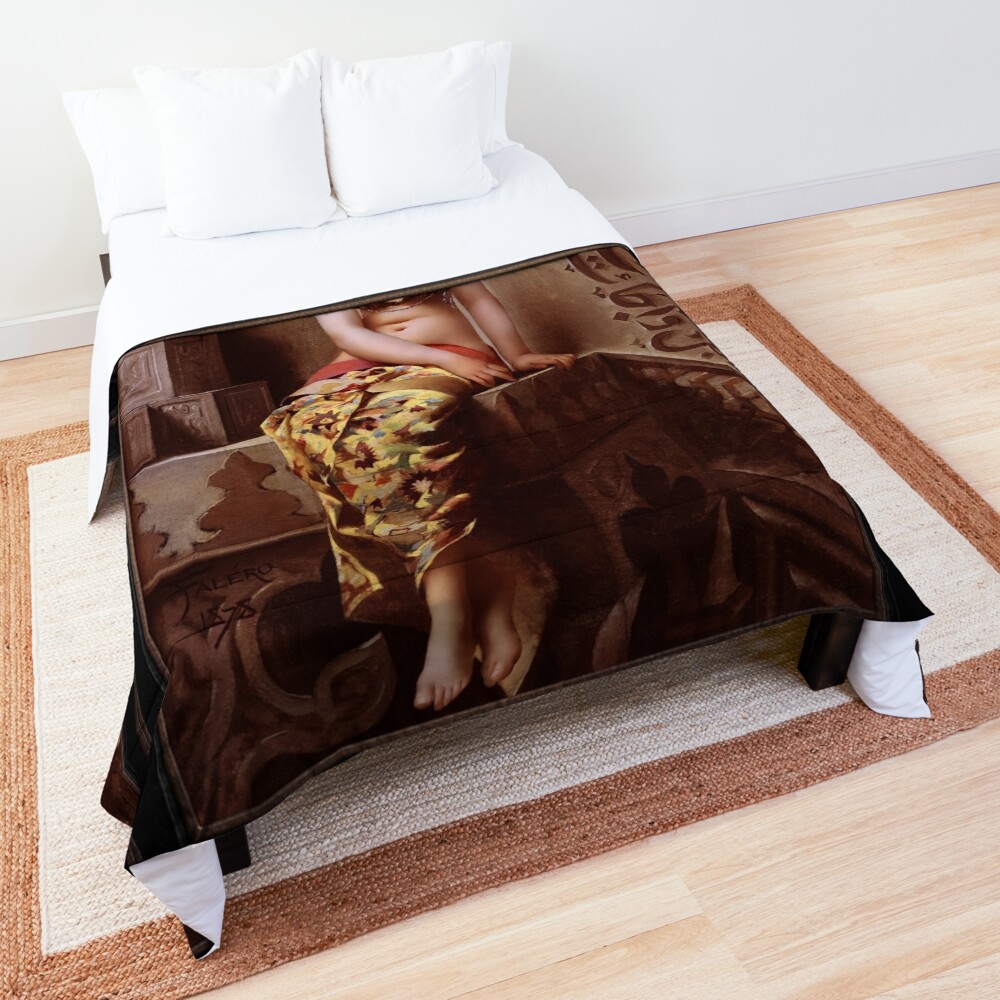
Spis treści
Elementy kompozycyjne & Ustawienie
The composition is carefully structured to draw the viewer’s eye towards the central figure. Falero utilizes a triangular arrangement, with the woman forming the apex and the surrounding architecture providing a stable base. The setting appears to be an interior space, possibly within a palace or temple, suggested by the elaborate carvings and decorative elements that frame the scene on either side. These architectural details are rendered with meticulous precision, showcasing Falero’s mastery of perspective and his ability to create a convincing sense of depth. The background is softly blurred, further emphasizing the figure and isolating her from the surrounding environment. This technique creates an intimate atmosphere, inviting the viewer into the woman’s private world.
The Figure: Poza & Strój
The young woman occupies the majority of the canvas space, commanding attention with her graceful pose and captivating gaze. She is seated in a relaxed yet poised manner, one leg slightly extended while she rests against the architectural ledge. Her body language suggests a state of quiet introspection or perhaps a wistful longing. The figure’s attire contributes significantly to the painting’s overall aesthetic. She wears a revealing bodice adorned with intricate beading and a flowing shawl draped across her lap and shoulders. The shawl is patterned with vibrant floral motifs in shades of yellow, złoto, and brown, providing a striking contrast against her pale skin tone. The combination of these elements creates an image that is both alluring and refined.
Paleta kolorów & Oświetlenie
Falero’s use of color is masterful, employing a warm and muted palette to create a sense of intimacy and tranquility. Earth tones – browns, ochres, and creams – dominate the scene, reflecting the natural materials of the architecture and complementing the woman’s skin tone. The vibrant colors of the shawl provide a focal point, drawing the eye and adding visual interest. Lighting plays a crucial role in shaping the mood of the painting. Miękki, diffused light source illuminates the figure from above, casting gentle shadows that accentuate her form and create a sense of depth. This lighting technique also contributes to the overall atmosphere of mystery and enchantment.

Facial Expression & Details
The woman’s face is rendered with remarkable detail, capturing a subtle expression of melancholy or perhaps quiet amusement. Her eyes are downcast, suggesting introspection, while her lips are slightly parted in an enigmatic smile. Falero’s attention to detail extends to the woman’s hair, which is styled in elaborate curls and adorned with delicate jewelry. The rendering of skin tones is particularly noteworthy, demonstrating Falero’s skill in capturing the nuances of human anatomy and conveying a sense of realism.
Wpływ artystyczny & Kontekst
“Czarodziejka” reflects several artistic trends prevalent during the 19th century. The Orientalist movement, which gained popularity throughout Europe, sought to romanticize cultures from the Middle East and North Africa, often portraying them through an idealized lens. Falero’s painting aligns with this trend by depicting a woman in exotic attire within a richly decorated setting. dodatkowo, the work demonstrates influences from Academic art, charakteryzuje się naciskiem na umiejętności techniczne, realistyczna reprezentacja, and classical composition. The meticulous detail, zrównoważony skład, and refined aesthetic all point to Falero’s training within the traditional academic system.
Signature & Date
The painting is signed “Falero 1878” in elegant script at the bottom left corner, confirming its authorship and date of creation. This signature adds a layer of authenticity and historical significance to the artwork. The presence of the date provides valuable insight into the context within which the painting was created, reflecting the artistic trends and cultural values of the late 19th century.
Artysta Bio pochodna Wikipedia.org
Falero urodził się w Granadzie i początkowo pracował w hiszpańskiej marynarce wojennej, ale zrezygnował z rozczarowania rodziców; jak postanowił pojechać do Paryża, gdzie studiował sztukę, chemia i inżynieria mechaniczna.
W trakcie studiów z chemii i budowy maszyn; uważał eksperymenty, które musiał przeprowadzić, za zbyt niebezpieczne, co doprowadziło go do skupienia uwagi na samym malowaniu.
W rezultacie został uczniem francuskiego portrecisty i orientalisty Gabriela-Josepha-Marie-Augustina Ferriera (1847 – 1914). Po Paryżu, przeprowadził się do Londynu, gdzie kontynuował studia, i ostatecznie się osiedlili.
Falero szczególnie interesował się astronomią i włączał konstelacje niebieskie do wielu swoich prac, Jak na przykład “Małżeństwo komety” i “Bliźniacze gwiazdy”. Jego zainteresowanie i znajomość astronomii skłoniły go również do zilustrowania prac Camille Flammarion.
W 1896, rok jego śmierci, Maud Harvey pozwała Falero o ojcostwo. Pozew twierdził, że Falero uwiodła Harvey, kiedy była 17, pierwszy służący jako pokojówka, a potem jego model. Kiedy odkrył, że jest w ciąży, on ją zwolnił.
Wygrała sprawę i otrzymywała pięć szylingów tygodniowo na wsparcie swojego dziecka. Falero zmarł w University College Hospital, Londyn, w wieku 45
Jest to retuszowana cyfrowa reprodukcja starych mistrzów obrazu z domeny publicznej, która jest dostępna jako rolowany druk online.