

Erato Muse of Lyrical Poetry
הציור שכותרתו Erato, Muse of Lyrical Poetry, נוצר מסביב 1800 מאת האמן הצרפתי צ'רלס מיינייה (1763-68 -1832), is a classical work that evokes a sense of ethereal beauty and harmonious unity between the divine and mortal realms. It is a stunning example of Neoclassical art, a period characterized by the revival of classical forms, אידיאלים, and themes. This particular piece embodies the spirit of the Enlightenment era, which sought to reconnect with the intellectual and aesthetic traditions of Ancient Greece and Rome. Meynier’s representation of Erato, the Muse of lyrical and love poetry, is both tender and allegorical, capturing the harmonious blend of art, אהבה, והאלוהי.
תוכן העניינים
נושא והרכב
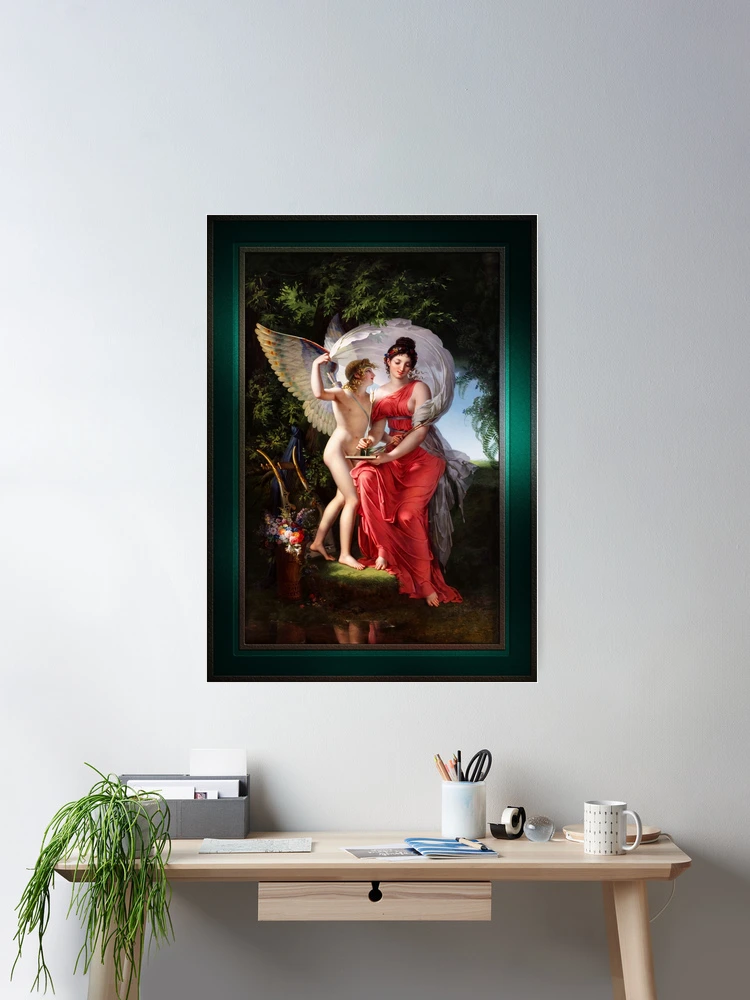
At the heart of the composition is the figure of Erato, depicted as a young, radiant woman dressed in flowing classical attire. She sits gracefully on a grassy knoll, with her posture relaxed yet poised. Her red drapery, which clings delicately to her form, enhances her elegance while contrasting beautifully with the soft greens of the surrounding landscape.
The rich texture of her dress and the fluidity of the fabric suggest the weightlessness and ethereal quality associated with the Muse. Her delicate features and serene expression convey both the wisdom and beauty of the Muse, embodying the ideals of classical femininity and intellectual grace.
Erato holds a lyre, the symbol of her domain as the Muse of lyrical poetry. הליירה, finely crafted, is an important object within the painting, symbolizing the connection between the Muse and the poetic arts. Its precise depiction in the artist’s brushwork emphasizes the importance of music and poetry in the classical tradition.
With one hand, Erato gently cradles the instrument, while with her other hand, she touches a quill poised above a writing tablet, reinforcing her role as a conduit between divine inspiration and human creativity. The interplay between the quill and the lyre further accentuates the dual nature of lyrical poetry: the written word and the music of the soul.
Accompanying Erato is a youthful figure, a cherubic, winged male figure, possibly representing Cupid or another divine presence associated with love and inspiration. He is shown standing behind Erato, his wings extending in soft, feathered curves. His posture is playful yet tender as he gazes at Erato, and his involvement with the scene adds an element of divine support, perhaps suggesting that love is an essential muse for the creation of lyrical poetry. The youthful figure holds a bow in one hand, a symbol of love’s power, while the other hand supports a golden arrow.
The background of the artwork consists of a dense, yet delicate, סביבה טבעית. רך, verdant landscape stretches out into the distance, where a gentle stream and foliage blend seamlessly into the sky. The light that bathes the scene is soft and natural, suggesting an idealized landscape bathed in divine light. The tranquil and harmonious background enhances the serene mood of the work and reinforces the notion of a celestial world that is intertwined with human emotions and artistic creation.
סגנון וטכניקה
Charles Meynier’s style is firmly rooted in the Neoclassical tradition. The artist employs clean lines, פרופורציות אידיאליות, and smooth brushwork to convey the beauty of the human form. The figures are rendered with meticulous attention to detail, especially the soft folds of the clothing and the play of light and shadow on the skin.
עבודת המכחול, though precise, possesses a certain fluidity, which enhances the liveliness of the figures, especially Erato and her youthful companion. Meynier’s mastery of light and color is particularly evident in the way the figures seem to glow against the darker backdrop of foliage, evoking a sense of divine radiance.
The artist’s use of color further contributes to the overall mood of the painting. The rich red of Erato’s dress symbolizes passion and vitality, בעוד הרך, almost translucent whites of her veil and wings signify purity and otherworldliness. The soft greens and browns of the landscape ground the figures in nature, yet they are bathed in a celestial light that elevates the scene to a divine level. The warm tones of the cherub’s skin and the delicate pinks and blues in the flowers of the foreground all work together to create an atmosphere that is both tranquil and harmonious.
נושא ומצב רוח
The primary theme of Erato, Muse of Lyrical Poetry is the divine inspiration that guides poets and musicians. The connection between love, אומנות, and poetry is central to the Neoclassical ideals of intellectual and emotional balance. The serene and harmonious composition of the painting conveys a sense of tranquility, making it a celebration of the arts as a means of expressing the beauty and complexity of the human experience. The depiction of Erato as a graceful and nurturing figure, surrounded by symbols of love and poetry, conveys a message that creation, whether through music, poetry, or art, is divinely inspired.
The mood of the painting is one of reverence, לְהַרְגִיעַ, והשראה. The figures of Erato and the youthful companion are depicted in a tender moment of interaction, their gazes soft yet full of meaning. This creates a contemplative mood, inviting the viewer to reflect on the themes of divine inspiration, יְצִירָתִיוּת, ואהבה.
The natural elements in the background, lush foliage, gentle light, and distant skies—suggest an idealized world where art and nature coexist in harmony. The soft light and glowing figures also evoke a sense of reverence for the classical world, a world where the divine and human realms are interconnected.
חפצים וסמליות
In addition to the lyre and the quill, several other objects in the painting contribute to its allegorical meaning. The bouquet of flowers at the foot of the scene symbolizes the beauty and fragility of life, much like the fleeting nature of poetic inspiration. The cherub’s bow and arrow, כפי שהוזכר קודם לכן, represent love—an essential source of poetic creation in many classical traditions. These objects work together to weave a narrative of divine inspiration, אומנות, and the eternal connection between beauty, אהבה, and creativity.
Erato Muse of Lyrical Poetry c1800 by French Painter צ'רלס מיינייה (1763-68 – 1832); של נושאים היסטוריים ומיתולוגיים בסוף המאה ה-18 ותחילת המאה ה-19.
This is a beautiful portrait of a young lady that is sitting by the water on a grass covered ledge, that is illuminated by a heavenly light.
She is dressed in Greek attire with a rose-pink gown and a sheer white over cloth that is partly blowing in the wind by ethereal forces.
While sitting on the she is writing a poem on two clay tablets using an arrow as a winged Erato, one of the nine muses of Greek Mythology, known as the patron of lyric and erotic poetry or hymns, whispers words into her right ear.
Erato is holding two additional arrows in his left hand that is tucked underneath her right arm and slightly resting on her left forearm; he is also carry a quiver over his right shoulder that has an additional two arrows.

He is also holding by the edge the white sheer cloth that is blowing in the wind by the edge , which forms a small canopy be hind the young lady.
(הערה: בציור הזה, Meynier has interpreted Erato to be a male, though Erato is generally depicted as a female.)
Beside Erato, behind him and to the left of the painting is his lyre (an early harp like instrument), that is partially covered with gold and gold strings, and a large basket filled with a beautiful assort of colorful wildflowers.
זהו רפרודוקציה של אמנות דיגיטלית משוחזרת של תמונה ברשות הרבים הזמינה בתור א הדפסת קנבס באינטרנט.
מידע למטה נגזר Wikipedia.org
מנייר היה בנו של חייט; וגיל צעיר הראה כישרון לאמנות, והחל את הכשרתו בהדרכתו של השרטט והחרט הצרפתי פייר-פיליפ שופרד *1731 – 1809).
כתלמידו של הצייר הצרפתי הניאו-קלאסי וההיסטורי פרנסואה-אנדרה וינסנט (1746 – 1816), מיינייר זכה בפרס השני ב 1789 תחרות Prix de Rome; ואילו אן-לואי ז'ירודט דה רוסי-טריסון לקחה את הפרס הראשון. ארבע שנים מאוחר יותר 1793 מיינייה חזר לפריז.
ב 1815 מיינייה הפך לחבר באקדמיה דה פראנס ברומא; ובמהלך התקופה שבין 1819 ל 1822, הוא יצר את העיטור הגדול לתקרה של הלובר; כמו גם יצירת עבודות רבות שהאדירו את האגדה הנפוליאנית, שנשאר ברובו בטירת ורסאי.
הוא גם עשה עיצובים לתבליטים ולפסלים בשער הניצחון של קרוסל ובבורסת פריז.. מ 1816 הָלְאָה, מיינייה היה חבר באקדמיה לאמנויות היפות; ובתוך 1819 הוא מונה למורה באקדמיה לאמנויות.