

Erato muza poezji lirycznej
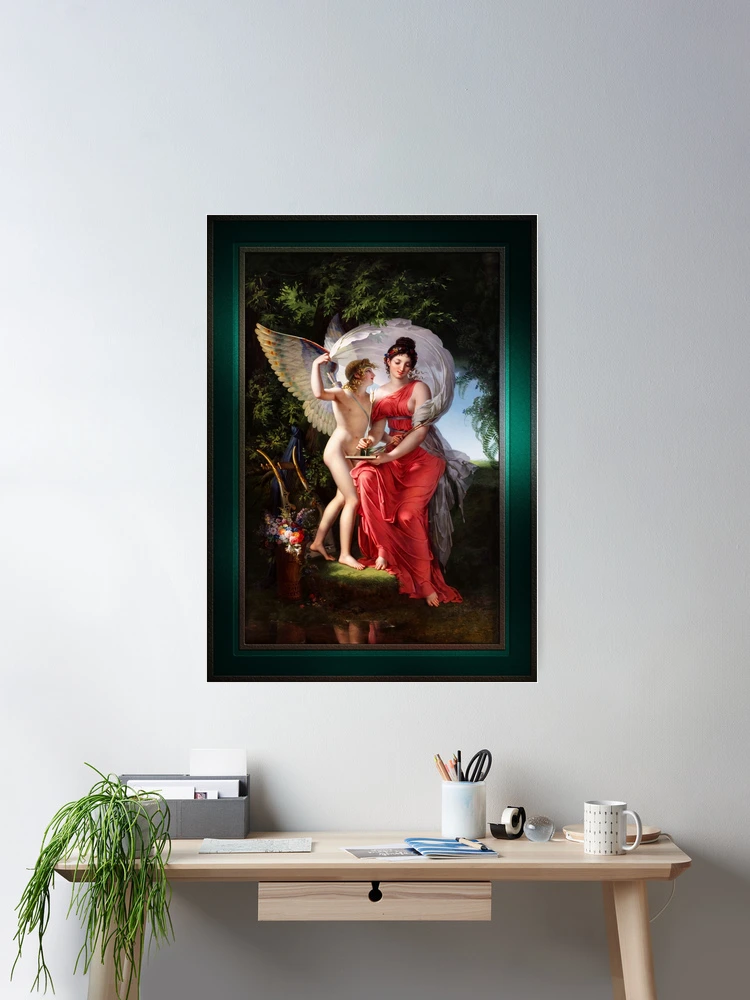
Obraz pt Erato, Muse of Lyrical Poetry, stworzone wokół 1800 przez francuskiego artysty Karola Meyniera (1763-68 -1832), is a classical work that evokes a sense of ethereal beauty and harmonious unity between the divine and mortal realms. It is a stunning example of Neoclassical art, a period characterized by the revival of classical forms, ideały, and themes. This particular piece embodies the spirit of the Enlightenment era, which sought to reconnect with the intellectual and aesthetic traditions of Ancient Greece and Rome. Meynier’s representation of Erato, the Muse of lyrical and love poetry, is both tender and allegorical, capturing the harmonious blend of art, Miłość, i boskie.
Spis treści
Przedmiot i kompozycja
At the heart of the composition is the figure of Erato, depicted as a young, radiant woman dressed in flowing classical attire. She sits gracefully on a grassy knoll, with her posture relaxed yet poised. Her red drapery, which clings delicately to her form, enhances her elegance while contrasting beautifully with the soft greens of the surrounding landscape.
The rich texture of her dress and the fluidity of the fabric suggest the weightlessness and ethereal quality associated with the Muse. Her delicate features and serene expression convey both the wisdom and beauty of the Muse, embodying the ideals of classical femininity and intellectual grace.
Erato holds a lyre, the symbol of her domain as the Muse of lyrical poetry. The lyre, finely crafted, is an important object within the painting, symbolizing the connection between the Muse and the poetic arts. Its precise depiction in the artist’s brushwork emphasizes the importance of music and poetry in the classical tradition.
With one hand, Erato gently cradles the instrument, while with her other hand, she touches a quill poised above a writing tablet, reinforcing her role as a conduit between divine inspiration and human creativity. The interplay between the quill and the lyre further accentuates the dual nature of lyrical poetry: the written word and the music of the soul.
Accompanying Erato is a youthful figure, a cherubic, winged male figure, possibly representing Cupid or another divine presence associated with love and inspiration. He is shown standing behind Erato, his wings extending in soft, feathered curves. His posture is playful yet tender as he gazes at Erato, and his involvement with the scene adds an element of divine support, perhaps suggesting that love is an essential muse for the creation of lyrical poetry. The youthful figure holds a bow in one hand, a symbol of love’s power, while the other hand supports a golden arrow.
The background of the artwork consists of a dense, yet delicate, naturalne otoczenie. Miękki, verdant landscape stretches out into the distance, where a gentle stream and foliage blend seamlessly into the sky. The light that bathes the scene is soft and natural, suggesting an idealized landscape bathed in divine light. The tranquil and harmonious background enhances the serene mood of the work and reinforces the notion of a celestial world that is intertwined with human emotions and artistic creation.
Styl i technika
Charles Meynier’s style is firmly rooted in the Neoclassical tradition. The artist employs clean lines, idealized proportions, and smooth brushwork to convey the beauty of the human form. The figures are rendered with meticulous attention to detail, especially the soft folds of the clothing and the play of light and shadow on the skin.
Praca pędzla, though precise, possesses a certain fluidity, which enhances the liveliness of the figures, especially Erato and her youthful companion. Meynier’s mastery of light and color is particularly evident in the way the figures seem to glow against the darker backdrop of foliage, evoking a sense of divine radiance.
The artist’s use of color further contributes to the overall mood of the painting. The rich red of Erato’s dress symbolizes passion and vitality, podczas gdy miękkie, almost translucent whites of her veil and wings signify purity and otherworldliness. The soft greens and browns of the landscape ground the figures in nature, yet they are bathed in a celestial light that elevates the scene to a divine level. The warm tones of the cherub’s skin and the delicate pinks and blues in the flowers of the foreground all work together to create an atmosphere that is both tranquil and harmonious.
Temat i nastrój
Głównym tematem Erato, Muse of Lyrical Poetry is the divine inspiration that guides poets and musicians. The connection between love, Sztuka, and poetry is central to the Neoclassical ideals of intellectual and emotional balance. The serene and harmonious composition of the painting conveys a sense of tranquility, making it a celebration of the arts as a means of expressing the beauty and complexity of the human experience. The depiction of Erato as a graceful and nurturing figure, surrounded by symbols of love and poetry, conveys a message that creation, whether through music, poezja, or art, is divinely inspired.
The mood of the painting is one of reverence, spokój, and inspiration. The figures of Erato and the youthful companion are depicted in a tender moment of interaction, their gazes soft yet full of meaning. This creates a contemplative mood, inviting the viewer to reflect on the themes of divine inspiration, creativity, and love.
The natural elements in the background, lush foliage, gentle light, and distant skies—suggest an idealized world where art and nature coexist in harmony. The soft light and glowing figures also evoke a sense of reverence for the classical world, a world where the divine and human realms are interconnected.
Przedmioty i symbolika
In addition to the lyre and the quill, several other objects in the painting contribute to its allegorical meaning. The bouquet of flowers at the foot of the scene symbolizes the beauty and fragility of life, much like the fleeting nature of poetic inspiration. The cherub’s bow and arrow, as mentioned earlier, represent love—an essential source of poetic creation in many classical traditions. These objects work together to weave a narrative of divine inspiration, Sztuka, and the eternal connection between beauty, Miłość, and creativity.
Erato muza poezji lirycznej około 1800 roku autorstwa francuskiego malarza Karola Meyniera (1763-68 – 1832); o tematyce historycznej i mitologicznej końca XVIII i początków XIX wieku.
To piękny portret młodej damy siedzącej nad wodą na porośniętej trawą półce, który jest oświetlony niebiańskim światłem.
Jest ubrana w grecki strój, różowo-różową suknię i przezroczystą białą tkaninę, która częściowo jest rozwiana przez siły eteryczne.
Siedząc na nim, pisze wiersz na dwóch glinianych tabliczkach, używając strzały jako skrzydlatego Erato, jedna z dziewięciu muz mitologii greckiej, znany jako patron poezji lirycznej i erotycznej oraz hymnów, szepcze słowa do jej prawego ucha.
Erato trzyma dwie dodatkowe strzały w lewej ręce, która jest schowana pod prawym ramieniem i lekko opiera się na lewym przedramieniu; nosi także kołczan na prawym ramieniu, na którym znajdują się dodatkowe dwie strzały.

Trzyma także za krawędź białą, przezroczystą tkaninę, która powiewa na wietrze , który tworzy mały baldachim za młodą damą.
(Notatka: W tym obrazie, Meynier zinterpretował Erato jako mężczyznę, chociaż Erato jest ogólnie przedstawiany jako kobieta.)
Obok Erato, za nim i na lewo od obrazu znajduje się jego lira (wczesny instrument przypominający harfę), częściowo pokryta złotem i złotymi sznurkami, i duży kosz wypełniony piękną różnorodnością kolorowych kwiatów.
Jest to retuszowana cyfrowa reprodukcja starych mistrzów obrazu z domeny publicznej, która jest dostępna jako druk na płótnie online.
Informacje poniżej pochodzą z Wikipedia.org
Meynier był synem krawca; i młody wiek wykazał talent plastyczny, i rozpoczął szkolenie pod okiem francuskiego rysownika i rytownika Pierre-Philippe Choffarda *1731 – 1809).
Jako uczeń francuskiego neoklasycystycznego i historycznego malarza François-André Vincenta (1746 – 1816), Meynier zdobył drugą nagrodę w konkursie im 1789 cena konkurencji w Rzymie; podczas gdy Anne-Louis Girodet de Roussy-Trioson zdobyła pierwszą nagrodę. Cztery lata później w 1793 Meynier wrócił do Paryża.
W 1815 Meynier został członkiem Akademii Francuskiej w Rzymie; oraz w okresie pomiędzy 1819 do 1822, stworzył wspaniałą dekorację sufitu Luwru; a także tworząc liczne dzieła gloryfikujące legendę napoleońską, który w większości pozostaje w Château de Versailles.
Wykonał również projekty płaskorzeźb i posągów na Łuku Triumfalnym Carrousel i Paris Bourse. Od 1816 naprzód, Meynier był członkiem Akademii Sztuk Pięknych; i w 1819 został mianowany nauczycielem w École des Beaux-Arts.