

Esther
Esther c1885 by French Painter Hugues Merle (1823 – 1881); która specjalizowała się w scenach matczynych uczuć, niewinność dzieciństwa i konsekwencje moralne.
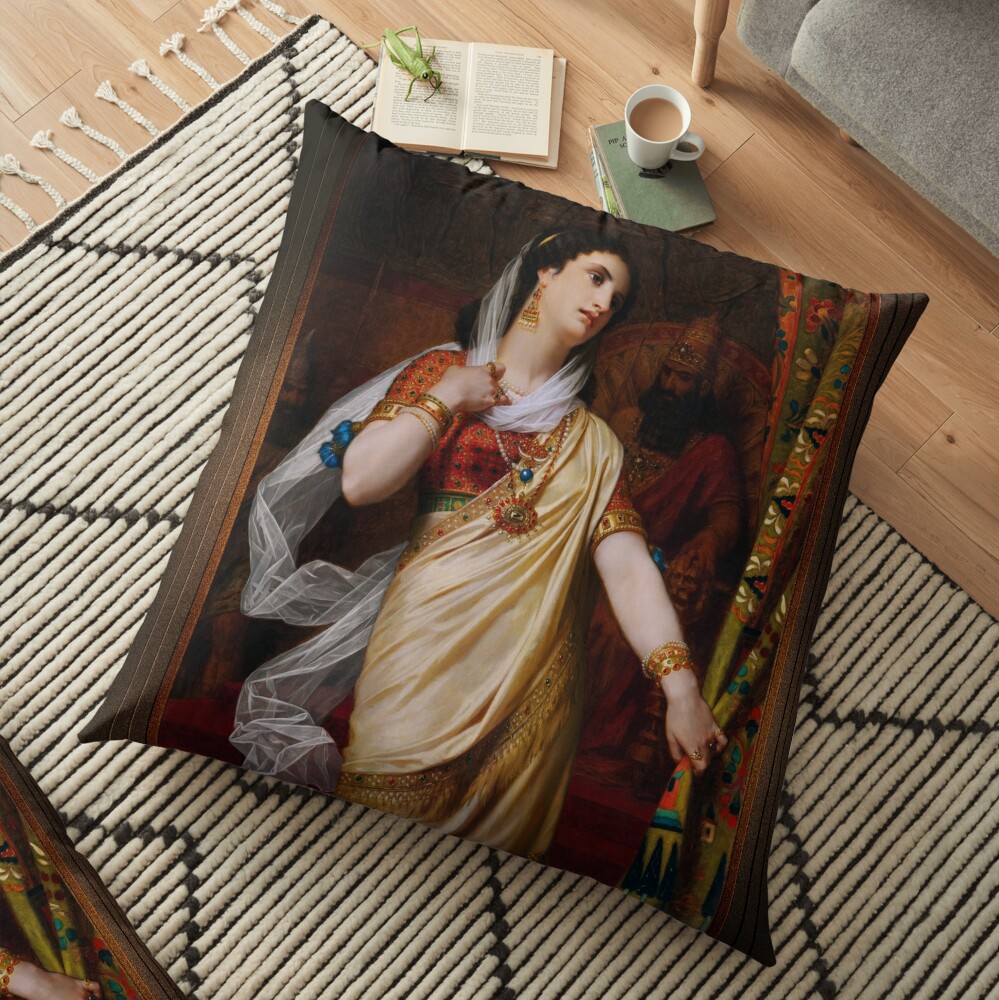
Ten religijny portrait is based on the Biblical tale from the book of Esther; in which a beautiful young Jewish woman becomes Queen to the Persian King Ahasuerus, after he banishes his queen Vashti; and later is able to avert the slaughter of her people throughout the Persian Empire.
The painting shows Esther in beautiful attire of fine silks and adorned jewels, precious stones and gold as she holds onto a decorative light green drape with her left hand; while in the background we see the king seated on his throne, finely dressed and adorned with jewels on his crown and chest plate, with a guard holding a spear to his right.
Esther is wearing a gold band around her long black hair, that is partially covered by a sheer white silk scarf that loops across the lower portion of her neck and around her back.
Esther’s dress which is composed of three different materials, starts with a red top portion that in embellished gold squares that have pearls at each corner and emeralds at the center of each square surrounded by another gold square rotated 90 degrees, creating and eye like appearance.
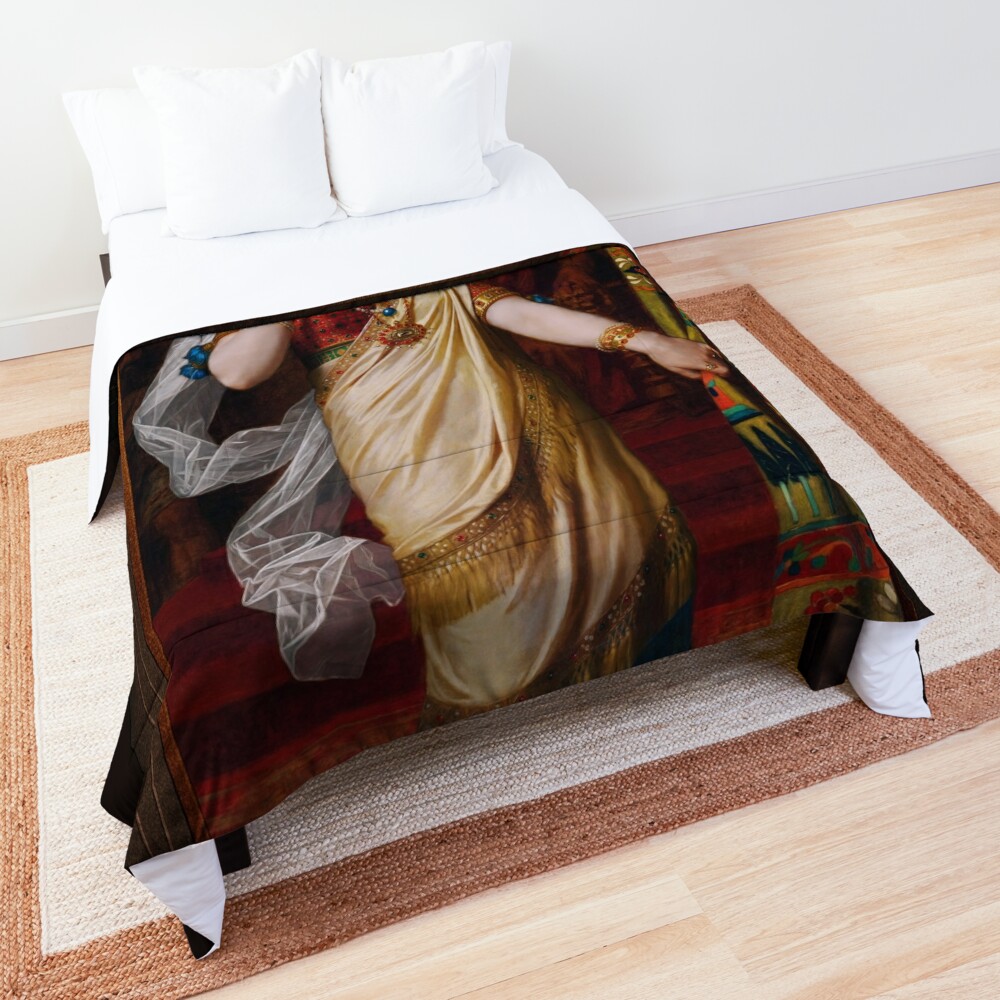
Then around her waist is a gold like sash that is overlaid with a bright green geometric design; and this transitions to the green full length portion of the dress.
She is then covered in a light gold tone wrap that has dark gold tone tassels along the edges, with a wide dark band that is sectioned into squares that have alternate clusters of four pearls, round rubies and emeralds.
Around her neck is a large loop necklace, a ruby necklace from which a gold and ruby amulet hands along with blue opal connected to silver wing like elements.
Around her upper arms of the short sleeve dress she is wearing are wide band arm bracelets made of gold with alternating squares of rubies and diamonds, that match the triangular square earrings she wearing comprised of gold, emeralds, rubiny, diamonds and pearls.
On her wrist she is wearing gold bracelets that are embellished with rubies and emeralds, pearl bracelets and a single ruby bracelet on her left wrist; while most of her fingers are adorned with gold rings that have precious stones embedded in them.
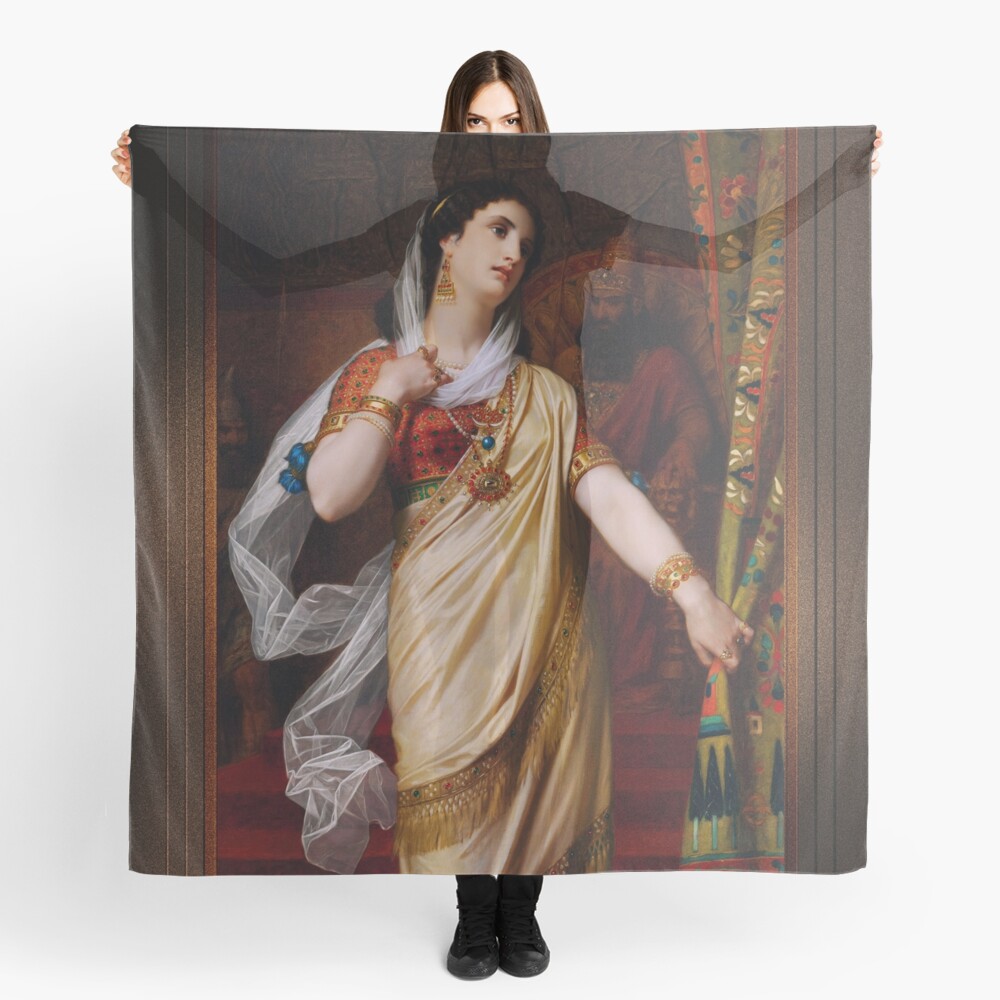
Jest to zremasterowana cyfrowa reprodukcja starych mistrzów obrazu z domeny publicznej, która jest dostępna jako druk na płótnie online.
Poniższe informacje pochodzą z Wikipedia.org i Rehs.com
Hugues Merle urodził się w 1822 lub 1823 w La Sône, Francja i około wieku 21 przybył do Paryża, we Francji, gdzie studiował malarstwo u francuskiego malarza historycznego i portrecisty Léona Cognieta (1794 – 1880).
Chociaż niewiele wiadomo o wczesnym życiu Huguesa, zakłada się, że otrzymał on pewien stopień wykształcenia artystycznego przed przybyciem do Paryża w 1970 roku 1843; ponieważ zaczął wystawiać na Salonie Paryskim w r 1847 swoim utworem Portrait de L’auteur i in 1848 wystawił utwór Légende des Willis.
Z biegiem czasu reputacja Huguesa jako portrecisty znacznie wzrosła w latach pięćdziesiątych XIX wieku; a jako odnoszący sukcesy i wybitny malarz był w stanie przyciągnąć poważnych miłośników sztuki, którzy chcieli zbudować swoje kolekcje dzieł sztuki.
Jednym z tych wczesnych kolekcjonerów sztuki była 4. markiz Hertford, Richarda Seymoura-Conwaya (1800-1870); który kupił jego zgłoszenie do salonu Czytając Biblię 1859.
W latach 60. XIX wieku, Lista kolekcjonerów klientów Hugues obejmowała nie tylko osoby z kontynentu europejskiego, ale także amerykańscy kolekcjonerzy, takich jak William Walters z Baltimore, który zamówił The Scarlet Letter.