

The Neapolitan Girl
The Neapolitan Girl c1876 by French Painter Hugues Merle (1823 – 1881); która specjalizowała się w scenach matczynych uczuć, niewinność dzieciństwa i konsekwencje moralne.
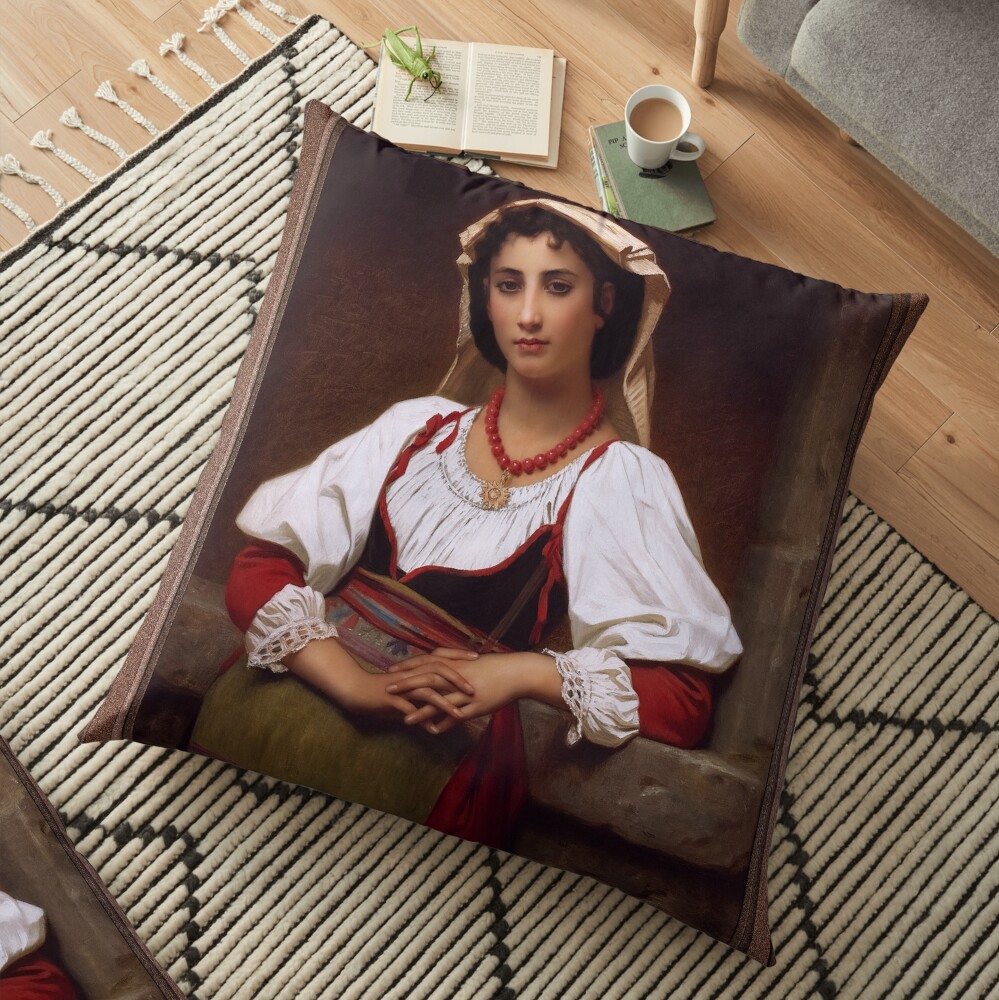
By an alcove on the side of a building stands an alluring brunette maiden of the late 19th century basking in the suns warm glow.
She is wearing a tan ruffled kerchief on the top of her head that nicely contrast the reddish-brown color of the alcove wall.
Along with the kerchief she is wearing a white long baggy sleeve blouse with partial red material from her forearm, up to her upper arm.
The blouse is complimented with the strap on dress she is wearing that is comprised of a black vest with red trim and a red long length bottom that matches the sleeves.
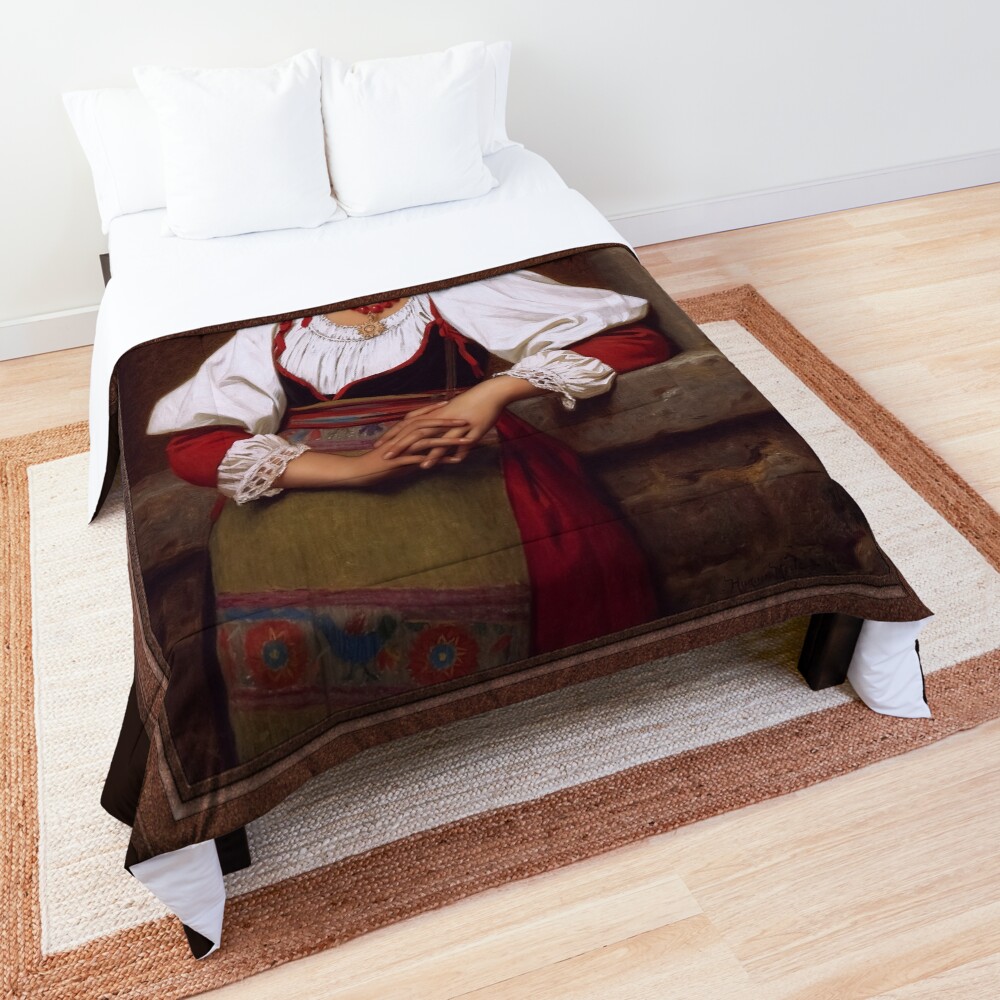
Then she has on the front a lime green apron with floral patterns on the top and a floral pattern on the bottom with a blue chicken; she is also wearing a large red beaded necklace with a gold star emblem hanging from the end.
This portrait of a young lady has her leaning on the stone ledge of the alcove that sits on a large brick wall of tan and light brown cut bricks.
Jest to zremasterowana cyfrowa reprodukcja starych mistrzów obrazu z domeny publicznej, która jest dostępna jako druk na płótnie online.
Poniższe informacje pochodzą z Wikipedia.org i Rehs.com
Hugues Merle urodził się w 1822 w La Sône, Francja i około wieku 21 przybył do Paryża, we Francji, gdzie studiował malarstwo u francuskiego malarza historycznego i portrecisty Léona Cognieta (1794 – 1880).
Chociaż niewiele wiadomo o wczesnym życiu Huguesa, zakłada się, że otrzymał on pewien stopień wykształcenia artystycznego przed przybyciem do Paryża w 1970 roku 1843; ponieważ zaczął wystawiać na Salonie Paryskim w r 1847 swoim utworem Portrait de L’auteur i in 1848 wystawił utwór Légende des Willis.
Z biegiem czasu reputacja Huguesa jako portrecisty znacznie wzrosła w latach pięćdziesiątych XIX wieku; a jako odnoszący sukcesy i wybitny malarz był w stanie przyciągnąć poważnych miłośników sztuki, którzy chcieli zbudować swoje kolekcje dzieł sztuki.
Jednym z tych wczesnych kolekcjonerów sztuki był 4. markiz Hertford, Richarda Seymoura-Conwaya (1800-1870); który kupił jego zgłoszenie do salonu Czytając Biblię 1859.
W latach 60. XIX wieku, Lista kolekcjonerów Huges obejmowała nie tylko osoby z kontynentu europejskiego, ale także amerykańscy kolekcjonerzy, takich jak William Walters z Baltimore, który zamówił The Scarlet Letter.