

Ausstellung
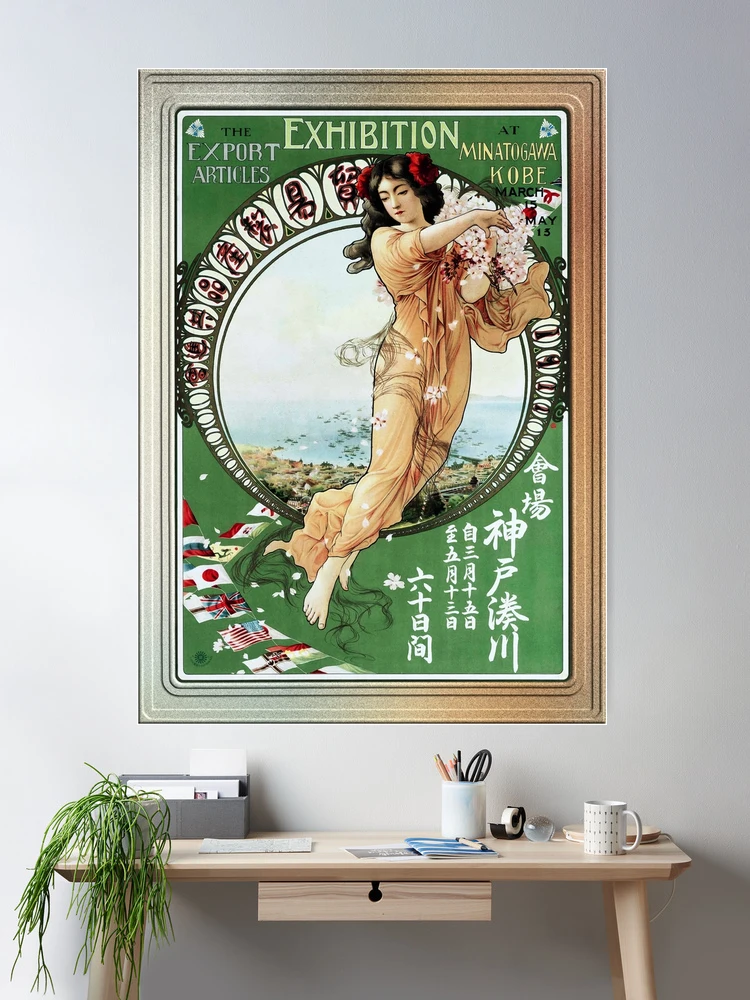
“Ausstellung – Die Exportartikel bei Minatogawa Boeki Seisanhin Kyoshin-Kai” (1880 – 1947) von Kitano Tsunetomi ist ein faszinierendes Beispiel japanischer Plakatkunst des frühen 20. Jahrhunderts, Es verbindet komplizierte Designelemente mit kultureller Symbolik, um ein dauerhaftes visuelles Erlebnis zu schaffen. Kitano Tsunetomi, ein bekannter japanischer Künstler, verlieh dieser Arbeit einen Sinn für Eleganz, Es kombiniert sowohl traditionelle japanische Ästhetik als auch westliche Einflüsse, die während der Meiji- und Taisho-Zeit immer stärker in den Vordergrund traten. Das Kunstwerk entstand als Teil eines Werbeartikels für eine Ausstellung in Minatogawa, Kobe, und repräsentiert Japans dynamisches Engagement im internationalen Handel und kulturellen Austausch zu dieser Zeit.
Die auf dem Plakat dargestellte Szene hat einen hohen Symbolgehalt, gefüllt mit lebendigen Farben und komplizierten Designmotiven. Der Künstler nutzt diese Elemente nicht nur, um für die Ausstellung zu werben, sondern auch, um eine tiefere Erzählung über Japans Platz in der Weltwirtschaft in einer Zeit der raschen Modernisierung zu vermitteln. Das Kunstwerk verkörpert die Stimmung des Optimismus und des Nationalstolzes, die Japans Ära der industriellen Expansion und des kulturellen Wiederauflebens kennzeichnete.
Inhaltsverzeichnis
Hauptthema: Die zentrale weibliche Figur
Im Mittelpunkt des Kunstwerks steht eine anmutige Frauenfigur, strahlt ein Gefühl ruhiger Schönheit und Eleganz aus. Sie ist fließend gekleidet, Sanftes Kleid, das das Licht mit einer fast ätherischen Qualität einfängt. The gown’s fabric appears to flutter, as if in motion, symbolizing the gentle yet constant forward movement of Japan into the global stage. Ihr lang, dark hair cascades around her shoulders and flows effortlessly into the space around her, amplifying the feeling of fluidity and grace.
The figure’s gentle, outstretched arm holds a cluster of cherry blossoms, which seem to be scattering in the breeze. This delicate detail serves as a symbol of both the fragility and beauty of nature, as well as a representation of Japan’s cultural heritage. The cherry blossom, a quintessential symbol of Japan, evokes themes of transience and renewal. Das Gesicht der Frau ist weich und gelassen, gazing downward in contemplation, reinforcing the tranquil, yet powerful mood that pervades the piece.
Das umgebende Design und die Landschaft
The backdrop of the artwork includes a sweeping panoramic view of the port city of Kobe, with its bustling docks, ships, and the distant hills. The city is depicted with a level of detail that showcases the busy commerce of the time, reflecting Japan’s growing prominence in international trade. The ships in the harbor are clearly intended to represent Japan’s expanding reach in global markets, particularly the exportation of goods.
Around the central figure, a decorative floral border frames the scene. The circular design evokes both traditional Japanese patterns and Western Art Nouveau influences, with flowing lines and intricate geometric shapes. This fusion of Eastern and Western artistic elements is emblematic of the period’s cultural blend. The design also includes various national flags at the bottom, representing the international nature of the exhibition and highlighting the country’s connection to the global community.
Farbpalette und Stimmung
The color palette of the poster is rich and vibrant, dominated by shades of green, which are seen in the background and surrounding elements, suggesting fertility, Wachstum, and prosperity. The light cream-colored tones of the woman’s gown contrast beautifully with the darker greens and blues of the backdrop, emphasizing her as the focal point of the artwork. The pink hues of the cherry blossoms add a touch of softness, their delicate petals drifting through the air, symbolisiert Schönheit, Frieden, and the fleeting nature of life.
The overall mood of the artwork is one of serene confidence and national pride. There is a sense of forward-looking optimism, as the female figure not only represents Japan’s cultural and natural beauty but also the country’s readiness to engage in the global marketplace. Das Weiche, fließende Linien, combined with the strong, almost monumental presence of the woman, imbue the poster with a sense of grace and power, showcasing both Japan’s traditional values and its embrace of the future.
Typografie und Textelemente
The text on the poster is arranged in a harmonious yet assertive manner, situated at the top and bottom of the artwork. Die Worte “Exhibition at Minatogawa Kobe” are rendered in a bold, Western-style serif font that stands out against the more intricate background, further emphasizing the international nature of the event. The other text, written in Japanese characters, is neatly placed around the circular border, offering additional details about the exhibition dates and location. These textual elements are carefully integrated into the overall composition, adding to the poster’s function as both an advertisement and a piece of art.
Symbolik und kultureller Kontext
Kitano Tsunetomi’s poster is not just a visual promotion of the exhibition but also a celebration of Japan’s participation in the global community. The use of the cherry blossoms can be seen as a metaphor for the transient beauty of both nature and culture, a reflection of the nation’s deep connection to its natural environment and history. The woman’s graceful posture and serene expression further symbolize Japan’s poised and composed interaction with the rest of the world.
The inclusion of national flags, with their various designs, suggests a welcoming of foreign influences and recognition of Japan’s growing role in the global sphere. The exhibition itself, housed in the port city of Kobe, underscores the importance of international trade during the period, while the vibrant colors and strong design evoke a sense of national pride and optimism for the future.
Abschluss
Abschließend, “Ausstellung – Die Exportartikel bei Minatogawa Boeki Seisanhin Kyoshin-Kai” by Kitano Tsunetomi is a masterful work of art that blends both artistic beauty and cultural significance. The artist’s careful use of symbolism, intricate design elements, and a harmonious color palette brings forth a sense of cultural pride and optimism. Durch dieses Kunstwerk, Tsunetomi captures the essence of a transformative period in Japanese history, illustrating the nation’s blossoming role on the world stage and its deep connection to both tradition and progress.
Dies ist eine retuschierte Reproduktion eines gemeinfreien Bildes durch digitale Meister alter Meister.
Biografie des Künstlers
Info unten von Wikipedia.org
Kitano Tsunetomi stellte zunächst Druckplatten für Illustrationen in Zeitungen her. Bei 17 er ging nach Osaka, um Maler zu werden.
Jetzt entwarf er Illustrationen für Geschichten, die in Zeitungen erschienen. Auch seine großformatigen Werbeplakate mit schönen Frauen fanden Anerkennung.
Im 1910 sein Bild „Montage der Käfer“ (Insekten, Sudaku-mushi) und im folgenden Jahr das Bild „Sunshine in the Rain“ (Sonnenschein Regen, soba) wurden bei der Bunter-Ausstellung mit dem 3. Preis ausgezeichnet.
Damit hatte er sich als Maler im Nihonga-Stil etabliert.
Im 1914 Kitano stellte das Bild „The Thread of Request“ aus (Wunsch-Thread, Negai nein ito) in der auferstandenen Inten-Ausstellung .
Von da an blieb er dieser Ausstellungsreihe verbunden und gehörte, zusammen mit dem Tokyo Kaburagi Kiyokata und Uemura Shōen in Kyoto, an die prominenten Maler schöner Frauen.
Da Kitano anfangs „magische“ schöne Frauen porträtierte, er zählte zu den Flügeln der Malerei, die sich mit dem Ungewöhnlichen beschäftigten, der „Gadan no Akuma-ha“ (Böse Sekte des Malers).
Aus der mittleren Taishō-Zeit, das Bild des Yodogimi sollte hervorgehoben werden, die eine neue Darstellungstiefe hat.
Mit der Shōwa-Zeit, Kitano hat das moderne Japan auf frische Weise eingefangen.
Kitano wurde gezeigt in 1931 auf der „Ausstellung japanischer Malerei“ in Berlin. Im 1989 die japanische Post gab zwei Briefmarken für 62 Yen jeweils mit einer Tänzerin aus dem „Awa Odori“, die festliche Prozession in der Präfektur Tokushima (historisch Provinz Awa).