

展示
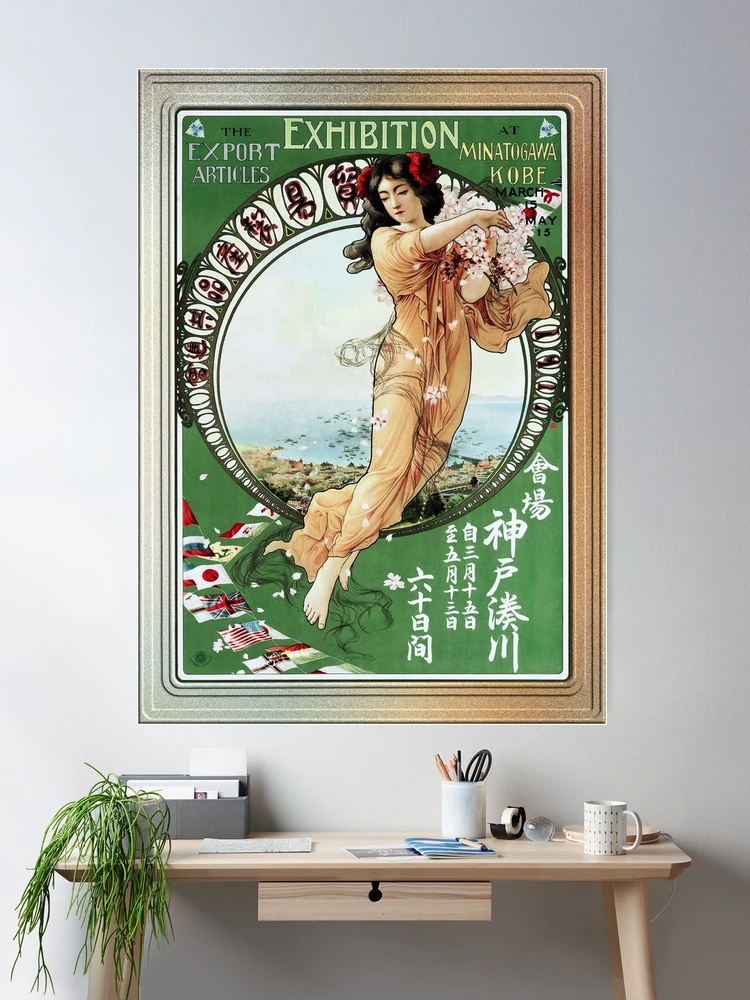
“展示 – The Export Articles At Minatogawa Boeki Seisanhin Kyoshin-Kai” (1880 – 1947) に Kitano Tsunetomi is a captivating example of early 20th-century Japanese poster art, blending intricate design elements with cultural symbolism to create an enduring visual experience. Kitano Tsunetomi, a noted Japanese artist, imbued this work with a sense of elegance, combining both traditional Japanese aesthetics and Western influences that were becoming more prominent during the Meiji and Taisho periods. The artwork was created as part of a promotional piece for an exhibition at Minatogawa, Kobe, and represents Japan’s dynamic engagement with international trade and cultural exchange at the time.
The scene depicted on the poster is highly symbolic, filled with vivid colors and intricate design motifs. The artist uses these elements not only to advertise the exhibition but also to convey a deeper narrative about Japan’s place in the global economy during a period of rapid modernization. The artwork embodies the mood of optimism and national pride that characterized Japan’s era of industrial expansion and cultural resurgence.
目次
主な主題: The Central Female Figure
At the heart of the artwork is a graceful female figure, exuding a sense of calm beauty and elegance. She is dressed in a flowing, soft-toned gown that catches the light with an almost ethereal quality. The gown’s fabric appears to flutter, as if in motion, symbolizing the gentle yet constant forward movement of Japan into the global stage. 彼女の長い, dark hair cascades around her shoulders and flows effortlessly into the space around her, amplifying the feeling of fluidity and grace.
The figure’s gentle, outstretched arm holds a cluster of cherry blossoms, which seem to be scattering in the breeze. This delicate detail serves as a symbol of both the fragility and beauty of nature, as well as a representation of Japan’s cultural heritage. The cherry blossom, a quintessential symbol of Japan, evokes themes of transience and renewal. The woman’s face is soft and serene, gazing downward in contemplation, reinforcing the tranquil, yet powerful mood that pervades the piece.
The Surrounding Design and Landscape
The backdrop of the artwork includes a sweeping panoramic view of the port city of Kobe, with its bustling docks, ships, and the distant hills. The city is depicted with a level of detail that showcases the busy commerce of the time, reflecting Japan’s growing prominence in international trade. The ships in the harbor are clearly intended to represent Japan’s expanding reach in global markets, particularly the exportation of goods.
Around the central figure, a decorative floral border frames the scene. The circular design evokes both traditional Japanese patterns and Western Art Nouveau influences, with flowing lines and intricate geometric shapes. This fusion of Eastern and Western artistic elements is emblematic of the period’s cultural blend. The design also includes various national flags at the bottom, representing the international nature of the exhibition and highlighting the country’s connection to the global community.
Color Palette and Mood
The color palette of the poster is rich and vibrant, dominated by shades of green, which are seen in the background and surrounding elements, suggesting fertility, 成長, and prosperity. The light cream-colored tones of the woman’s gown contrast beautifully with the darker greens and blues of the backdrop, emphasizing her as the focal point of the artwork. The pink hues of the cherry blossoms add a touch of softness, their delicate petals drifting through the air, symbolizing beauty, 平和, and the fleeting nature of life.
The overall mood of the artwork is one of serene confidence and national pride. There is a sense of forward-looking optimism, as the female figure not only represents Japan’s cultural and natural beauty but also the country’s readiness to engage in the global marketplace. ソフト, 流れるようなライン, combined with the strong, almost monumental presence of the woman, imbue the poster with a sense of grace and power, showcasing both Japan’s traditional values and its embrace of the future.
Typography and Text Elements
The text on the poster is arranged in a harmonious yet assertive manner, situated at the top and bottom of the artwork. The words “Exhibition at Minatogawa Kobe” are rendered in a bold, Western-style serif font that stands out against the more intricate background, further emphasizing the international nature of the event. The other text, written in Japanese characters, is neatly placed around the circular border, offering additional details about the exhibition dates and location. These textual elements are carefully integrated into the overall composition, adding to the poster’s function as both an advertisement and a piece of art.
Symbolism and Cultural Context
Kitano Tsunetomi’s poster is not just a visual promotion of the exhibition but also a celebration of Japan’s participation in the global community. The use of the cherry blossoms can be seen as a metaphor for the transient beauty of both nature and culture, a reflection of the nation’s deep connection to its natural environment and history. The woman’s graceful posture and serene expression further symbolize Japan’s poised and composed interaction with the rest of the world.
The inclusion of national flags, with their various designs, suggests a welcoming of foreign influences and recognition of Japan’s growing role in the global sphere. The exhibition itself, housed in the port city of Kobe, underscores the importance of international trade during the period, while the vibrant colors and strong design evoke a sense of national pride and optimism for the future.
結論
結論は, “展示 – The Export Articles At Minatogawa Boeki Seisanhin Kyoshin-Kai” by Kitano Tsunetomi is a masterful work of art that blends both artistic beauty and cultural significance. The artist’s careful use of symbolism, intricate design elements, and a harmonious color palette brings forth a sense of cultural pride and optimism. このアートワークを通して, Tsunetomi captures the essence of a transformative period in Japanese history, illustrating the nation’s blossoming role on the world stage and its deep connection to both tradition and progress.
これは、パブリックドメインの画像のレタッチされたデジタルアートオールドマスターの複製です.
アーティスト略歴
以下の情報から Wikipedia.org
北野常富は新聞挿絵用の刷版を作っていた. で 17 彼は画家になるために大阪に行った.
彼は現在、新聞に掲載された記事のイラストをデザインしています. 美しい女性を描いた大判の広告ポスターも評価を得た.
に 1910 彼の絵「甲虫の集まり」 (す だ く 虫, Sudaku mushi) そして翌年、絵「雨の中の太陽」 (晴れ雨, そばえ) Bunter展で3等賞を受賞.
日本画の画家としての地位を確立した.
に 1914 北野が絵「依頼の糸」を出品 (願 い の 糸, Negai no ito) 復活した院展にて .
それ以来、彼はこの一連の展覧会に関わり続け、所属していました。, together with the Tokyo Kaburagi Kiyokata and Uemura Shōen in Kyoto, 美しい女性の著名な画家に.
北野はもともと「魔法のような」美女を描いていたので, 彼は異常なものを扱う絵画の一翼に数えられた., the “Gadan no Akuma-ha” (画壇 の 悪 魔 派).
大正中期から, 淀君の絵を強調すべき, 新たな表現の深さを持つ.
昭和時代と, 近代日本を新鮮に捉えた北野.
北野が出演した 1931 ベルリン「日本画展」にて. に 1989 日本郵便は、 62 「阿波おどり」の踊り手と一緒に各円, 徳島県のお祭り行列 (歴史的に阿波国).