

Faust's Dream
Faust's Dream: In fisy fan ferlieding yn Falero's Brushstrokes
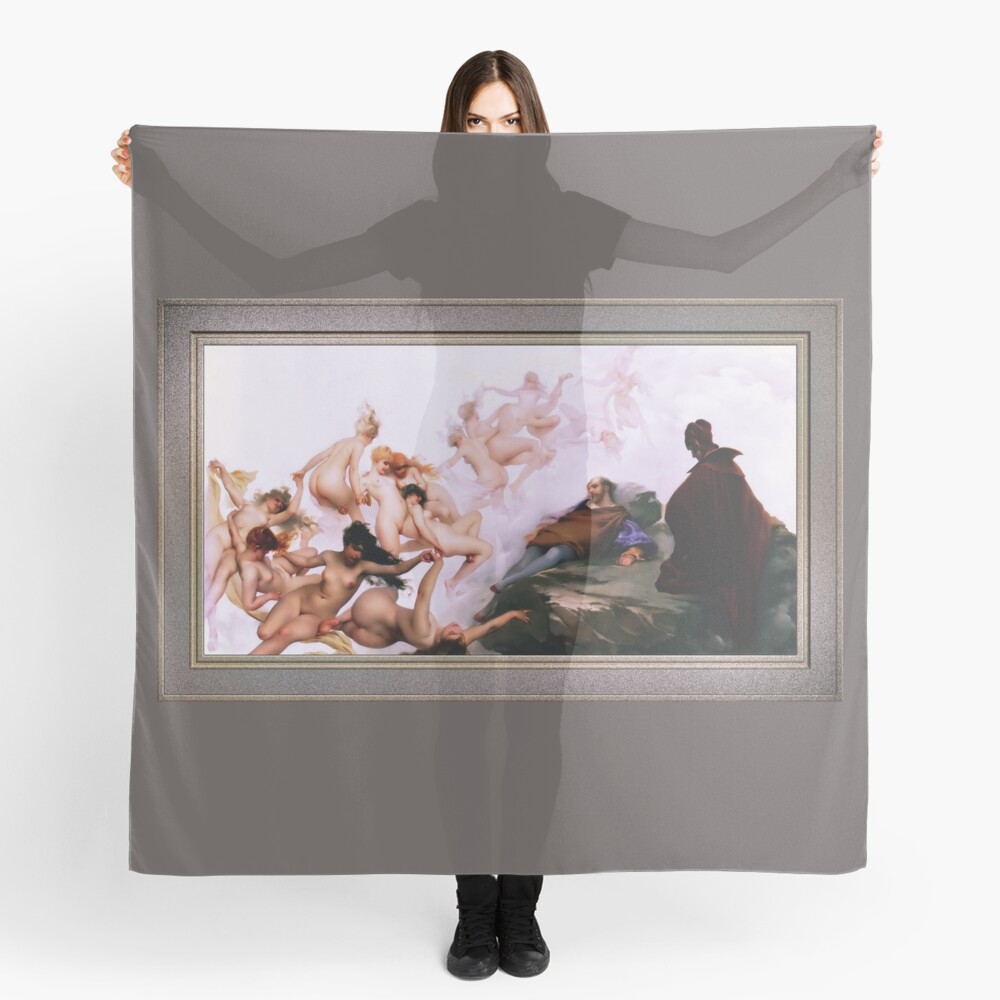
Luis Ricardo Falero'Faust's Dream,” rûnom skildere 1880, is in boeiend wurk dat sterk lûkt út it dramatyske gedicht fan Goethe, Faust. It skilderij ferbyldet in pivotal momint yn it ferhaal - Faust's dreamsekwinsje wêr't hy wurdt presintearre mei in oanlokkende fyzje fan sensueel wille en flechtige skientme. Falero fertaalt dit literêre konsept masterlik yn in fisueel arrestearjend sêne fol mei beweging, ljocht, en in taastber gefoel fan langstme. Dit stik is in foarbyld fan de akademyske styl dy't yn 'e lette 19e-ieuske Spaanske skilderij foarkomt, showcasing technical skill alongside a dramatic narrative sensibility.

Ynhâldsopjefte
Komposysje Struktuer & Narrative Focus
The composition is dominated by two distinct zones: an ethereal upper realm populated by numerous figures and a more grounded lower section where Faust himself resides. The arrangement immediately establishes a hierarchical relationship between the dream world and the protagonist’s reality. Faust, depicted in dark robes, occupies the right foreground, his back largely to the viewer, emphasizing his passive role as an observer of this unfolding spectacle.
He is positioned on a rocky outcrop that rises from a swirling mist, creating a visual barrier between him and the dreamscape above. The figures within the dream are arranged in dynamic groupings, their bodies intertwined in poses suggesting both playful abandon and seductive allure. It totale effekt is ien fan kontrolearre gaos; a vibrant swirl of forms contained within a carefully structured frame.
Figures & Their Representation
The central focus of the painting lies with the numerous nude female figures that populate the dreamscape. They are not portrayed as individuals but rather as embodiments of sensual delight, their bodies rendered with meticulous anatomical detail and a soft, idealized beauty characteristic of academic art. Their poses range from languid reclining positions to graceful leaps and swirling dances, all contributing to the sense of movement and fleeting pleasure.
The figures are bathed in a luminous light that highlights their forms and creates an otherworldly atmosphere. Their expressions are largely ambiguous – some appear serene, others playful, but none convey a sense of individual personality or narrative depth. They function as archetypes representing temptation and ephemeral beauty.
One figure lies prone at the base of the rocky outcrop, seemingly reaching towards Faust, while others float and dance above. The arrangement suggests an invitation, a beckoning toward a world of fleeting gratification. The sheer number of figures contributes to the overwhelming nature of the dream, emphasizing its seductive power and potential for distraction from more meaningful pursuits.
Kleurpalet & Lighting Effects
Falero’s use of color is integral to the painting’s overall effect. A predominantly warm palette – dominated by pinks, crèmes, gouden, and pale blues – creates a sense of warmth and sensuality. De ferljochting is dramatysk en teatraal, with strong contrasts between light and shadow that accentuate the forms of the figures and create a heightened emotional atmosphere. The dreamscape itself appears to be illuminated from within, giving it an ethereal glow that sets it apart from Faust’s more grounded reality. The dark tones of Faust’s robes further emphasize his separation from this alluring vision.
Artistike ynfloeden & Styl
“Faust's Dream” reflects the influence of several artistic traditions. The academic style is evident in the meticulous rendering of anatomy, the idealized beauty of the figures, and the overall emphasis on technical skill. The painting also draws inspiration from classical mythology and Renaissance art, particularly in its depiction of nude figures within a fantastical setting. Falero’s work shares affinities with the works of artists like Jean-Léon Gérôme and William-Adolphe Bouguereau, who were known for their large-scale historical paintings and allegorical scenes. The dramatic lighting and swirling composition also echo the Baroque tradition, particularly the works of Peter Paul Rubens.
Technyske útfiering & Borstelwurk
Falero’s technical skill is evident in every detail of the painting. It boarstelwurk is glêd en kontrolearre, with a focus on creating realistic textures and subtle gradations of tone. The figures are rendered with remarkable anatomical accuracy, while the background details – the rocky outcrop, the swirling mist – are painted with a delicate touch. Despite the complexity of the composition, the painting maintains a sense of visual harmony and balance. The artist’s mastery of oil paint is apparent in his ability to create luminous highlights and deep shadows that enhance the dramatic impact of the scene.
Ynterpretaasje & Legacy
“Faust's Dream” offers a compelling visual interpretation of Goethe’s exploration of human desire, ferlieding, en it stribjen nei kennis. The painting captures the allure of fleeting pleasure while also hinting at its potential for deception and ultimately, disappointment. Falero’s work remains an important example of late 19th-century Spanish academic art, demonstrearje de technyske feardigens fan 'e keunstner en syn fermogen om komplekse literêre tema's oer te setten yn in fisueel twingend ferhaal. It tsjinnet as in testamint foar de bliuwende krêft fan Faustianske tema's yn 'e westerske kultuer.
Artist Bio Derived Wikipedia.org
Falero waard berne yn Granada en folge oarspronklik in karriêre yn 'e Spaanske marine, mar joech it oan syn âlden teloarstelling; doe't hy besleat om nei Parys te reizgjen, dêr't er keunst studearre, skiekunde en meganyske technyk.
Tidens is stúdzjes yn skiekunde en meganyske technyk; hy achte de eksperiminten dy't er dwaan moast te gefaarlik, sa liedt er him syn oandacht allinnich op it skilderjen te rjochtsjen.
Dêrtroch waard hy studint fan de Frânske portretskilder en oriïntalist Gabriel-Joseph-Marie-Augustin Ferrier (1847 – 1914). Nei Parys, hy ferhuze nei Londen, dêr't er syn stúdzje trochgie, en úteinlik fêstige.
Falero hie in bysûndere belangstelling foar astronomy en ferwurke himelske konstellaasjes yn in protte fan syn wurken, lykas “It houlik fan in komeet” en “Twin Stars”. Syn belangstelling en kennis fan astronomy late him ek ta it yllustrearjen fan it wurk fan Camille Flammarion.
Yn 1896, it jier fan syn dea, Maud Harvey oanklage Falero foar heitemskip. It pak bewearde dat Falero Harvey ferliede doe't se wie 17, earst tsjinne as syn húsfrou, en dan syn model. Doe't er ûntduts dat se swier wie, hy joech har ôf.
Se wûn de saak en waard fiif shilling per wike takend yn stipe fan har bern. Falero stoar yn University College Hospital, Londen, yn de âldens fan 45
Faust's Dream is in retoucheerde reproduksje fan âlde masters fan digitale keunst fan in ôfbylding yn it iepenbier domein dat online te keap is as in opgerold canvas print.