

Female Portrait Of A Young Woman
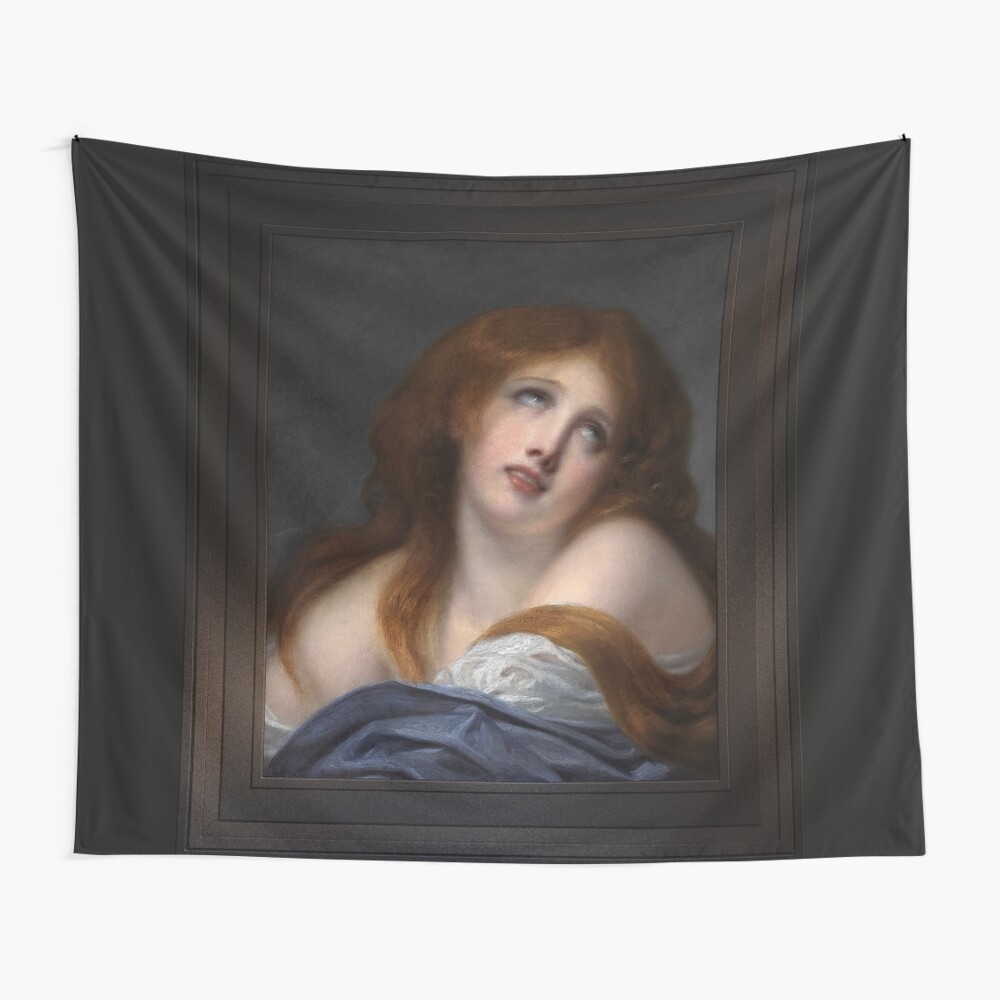
Erretratu bikain hau, izenburupean Female Portrait Of A Young Woman, was painted by Jean-Baptiste Greuze, a renowned French painter active during the 18th century. urtean jaioa 1725 eta bertan hiltzea 1805, Greuze was known for his tender and emotive portrayals of the human condition. His work often captured moments of profound emotional depth, eta Female Portrait Of A Young Woman is a stunning example of this. The subject of the portrait, emakume gazte bat, appears with her head slightly tilted, gazing upward with a melancholic expression that seems to embody a complex emotional state.
Edukien taula
Estiloa eta Teknika
Greuze’s style is a blend of Rococo elegance and the emerging Neoclassical trends of his time. The delicate brushwork in this painting, along with the subtle use of light and shadow, highlights his mastery of chiaroscuro, a technique that plays with contrasts between light and dark to create a sense of depth and volume. Biguna, almost ethereal rendering of the woman’s skin and the luxurious folds of fabric surrounding her shoulders are characteristic of Greuze’s refined approach to portraiture. His choice of a muted, dark background further enhances the luminous quality of the figure, focusing all attention on the delicate features and graceful posture of the woman.
The artist’s use of light serves not only to model the figure, but also to emphasize the emotional intensity of the subject. The way the light gently caresses the skin of the subject, especially her face and shoulder, adds a layer of tenderness and vulnerability to the portrait. This technique is often seen in Greuze’s work, non argiak argitasun emozionala sinbolizatzen duen, lañotasun, edo garbitasuna.
The Subject and Mood
Margolanean ageri den emakume gaztea pentsamenduetan galduta agertzen da, bere espresioa kontenplazio edo barneratze une batean harrapatuta. Bere begiak, apur bat gorantz, biguna eta urrunera begira, irrika bat iradoki dezakeena, hausnarketa pentsakorren unea, edo atsekabe lasai bat ere. Bere aurpegiaren kurba leunak, argiz argituta, hauskortasun eta grazia sentimendua sorrarazten du, ahultasun emozionalaren sentimendua areagotuz. Emakumearen ezpain apur bat irekiek bere kontenplazio-espresioa areagotzen dute, hitz egiteko zorian balego bezala baina isilik geratzea hautatzen du.
Margolanaren aldartea lasai eta gogotsu bezala interpreta daiteke. Emakumearen begiradan malenkonia sotil bat dago, esan gabeko zerbaiten iradokizuna. The portrait’s emotional depth is characteristic of Greuze’s work, which often explored themes of virtue, emotional turmoil, and human connection. Unlike more formal portraits of the time that focused on the outward grandeur and nobility of the subject, this portrait delves into the interior world of the figure, inviting the viewer to imagine the thoughts and emotions that lie behind the soft gaze.
Objektuak eta materialak
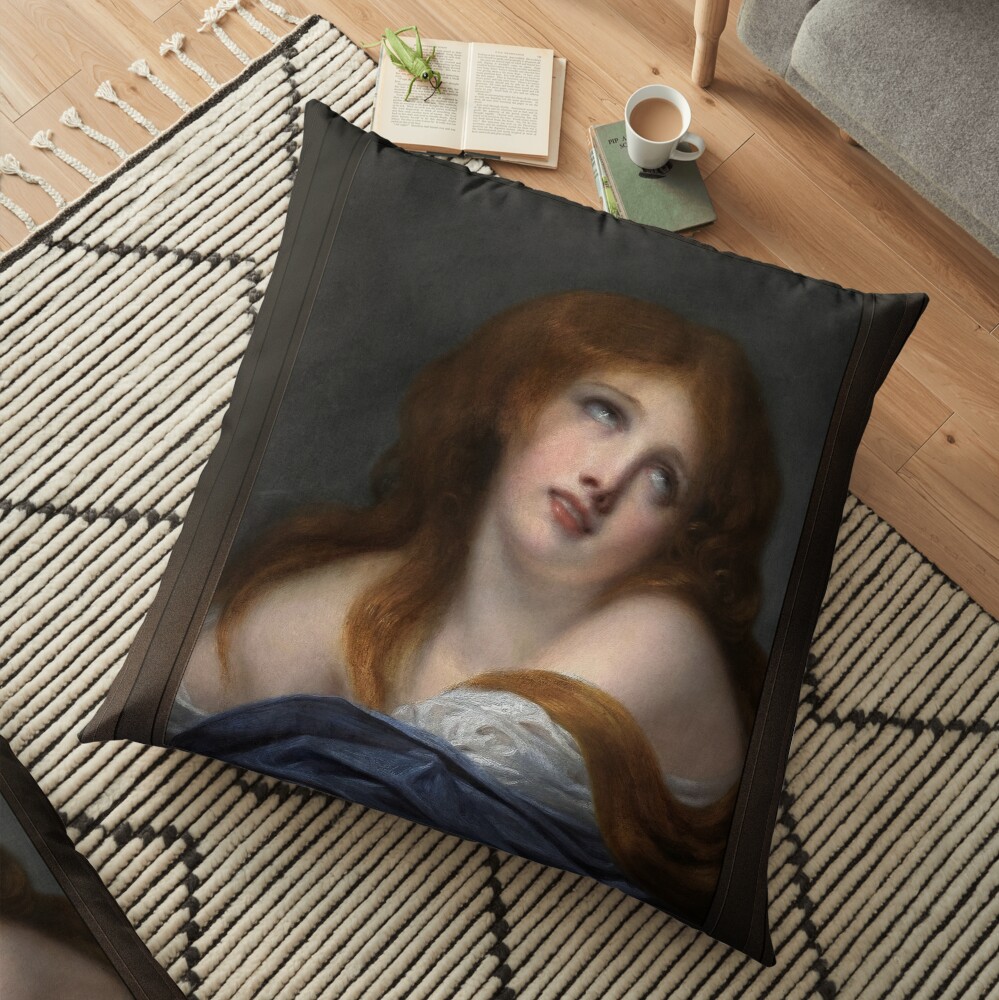
The primary focus of the painting is, noski, the young woman herself, but the objects surrounding her also play a significant role in conveying the mood and context of the portrait. The fabric draped around her shoulders, possibly satin or silk, suggests a sense of aristocratic elegance. The fabric’s folds are meticulously rendered, each curve and crease captured with great precision, adding texture and depth to the image. The soft interplay of light on the fabric contrasts with the smoothness of her skin, further enhancing the contrast between her delicate figure and the luxurious materials she is draped in.
While the background is dark and unadorned, serving to accentuate the figure, the overall effect of the composition feels balanced. The simplicity of the background and the focus on the woman’s features suggest that she is the subject of utmost importance, both in terms of emotional significance and personal identity.
Kolore Paleta
The color palette employed by Greuze is restrained but harmonious, leunarekin, muted tones that emphasize the delicate nature of the portrait. The colors of the fabric, a deep blue or grey, provide a subtle contrast to the pale complexion of the subject. The combination of blue and white gives the portrait an air of calm and tranquility, while the faint touches of warmth in the woman’s hair and skin tone create a sense of life and vitality. The careful application of these colors allows the subject to appear as if she is gently illuminated by a soft, argi naturala, giving the painting an almost lifelike presence.
Bukaera
Jean-Baptiste Greuze’s Emakumezkoen Erretratua is a testament to his ability to capture the emotional subtleties of his subjects, conveying not just their physical likeness but also the deeper currents of their inner worlds. The delicate rendering of the subject, the serene but melancholic expression, eta biguna, evocative use of light and shadow all work together to create a timeless piece of art that transcends the moment of its creation. The mood of the painting, suffused with a quiet sadness and introspection, invites the viewer to pause and reflect on the emotional complexities of the human experience. Greuze’s ability to infuse his portraits with such emotional depth makes this work a stunning example of 18th-century French portraiture.
Arte digital birmasterizatua da, sarean mihise inprimatu gisa eskuragarri dagoen domeinu publikoko irudi baten erreprodukzioa..
Arte digitalaren sorkuntza hau, Xzendor7 webgunean aurki daitezkeen artelan guztiak bezala sarean erosteko eskuragarri dago hainbat material formatutan, mihise inprimatuak barne., estanpatu akrilikoak, metal estanpatuak, egur estanpatuak, marko estanpatuak, kartelak, eta ijetzitako mihise estanpatu gisa hainbat tamainatan 12 zentimetroetara 72 hazbeteko artelanaren eta artea erosteko aukeratzen duzun eskaeraren arabera inprimatzeko dendaren tamainaren arabera.
Artelana gizonezkoen eta emakumezkoen arropa sorta zabal batean ere eskuragarri dago, katiluak, totes, zapiak, koadernoak eta aldizkariak eta etxeko dekorazio produktu ugari.
Artistari buruz
Beheko informazioatik eratorria da NGA.gov
Jean Tournusen jaio zen, Frantzian 1725 adin txikitatik bere talentua aitortu zuen maisu teilatzaile baten seigarren semea baita; Lyonera bidaliz, Frantzia Charles Grandon margolari frantsesarekin ikasteko (1691 – 1762).
Urte gutxi gorabehera 30 Lyon utzi zuen, eta Parisera bidaiatu zuen, Frantziak Académie royale de peinture et de sculpture edo Pintura eta Eskultura Errege Akademian ikasteko; garai hartan Frantziako arte-erakunde nagusia zen Antzinako Erregimenaren azken zatian (Erregimen Zaharra ~ 1500 to 1789), urtean deuseztatu zen arte 1793 Frantziako Iraultzan.
Nahiz eta talentu handikoa eta arrakasta handia izan 1760 eta 1770eko hamarkadetan zehar, Pompadour markesa bezalakoen patroiak izatea (1721 – 1764), Katalina II.a Errusiako enperatriz (r. 1762 – 1796), eta La Live de Jully taldeko Ange Laurent (1725 – 1779); bere izaera errebeldea eta Akademiako eta Saloneko funtzionarioekin izandako gatazkak bere zorigaitza izango ziren; batez ere, Anne Marie Babutyrekin ezkondu ondoren 1759; berarentzat hondamendia izango litzatekeena, jakina baitzen bere ikasleekin eta eserlekuekin hainbat kontu izan zituela, horrek diru-sarreren galera eta umiliazio publikoa eragin zion.
Ezkontza amaitu zenean 34 urte geroago bere emazteak likidazio handia jaso zuen, horrek egoera ekonomiko larrian utzi zuen eta hil zenerako 1805 urterekin 80 ia apurtuta zegoen.