

Head Of A Young Woman c1780s
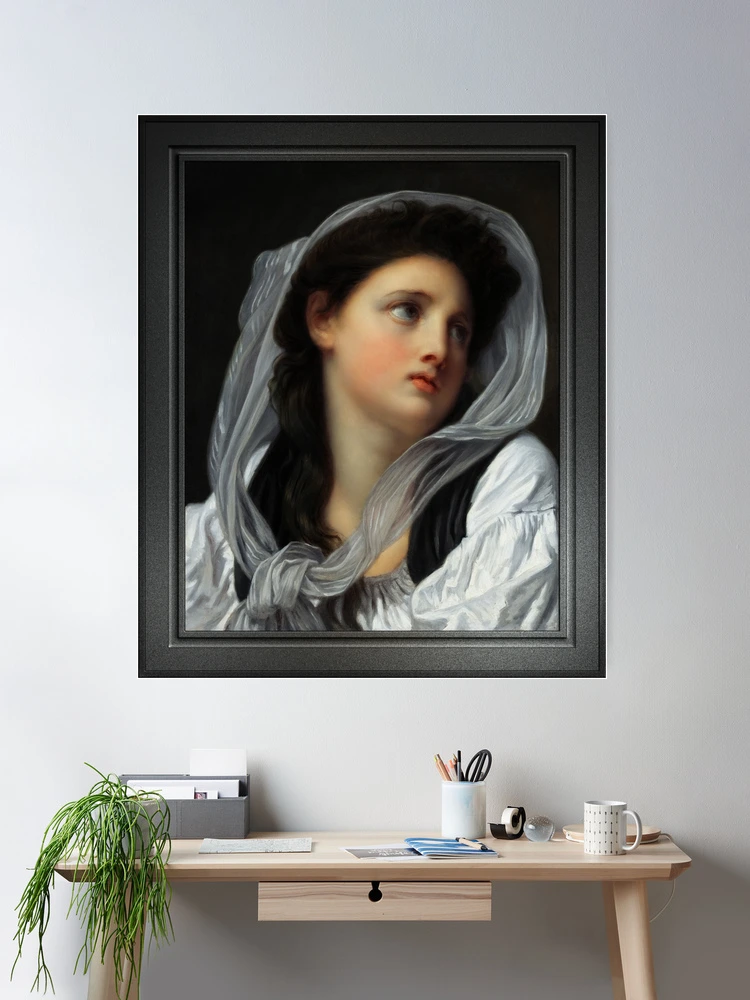
Artelana “Head Of A Young Woman c1780s” was created by the renowned French artist Jean-Baptiste Greuze (1725 – 1805). Greuze, a master of the Rococo and Neoclassical movements, has long been celebrated for his emotional portrayal of the human form, particularly in his genre scenes and portraiture. Margolan honetan, Greuze presents a close-up view of a young woman, capturing her delicate features and emotional expression. The subject’s appearance and pose evoke a quiet sense of vulnerability and contemplation, typical of the artist’s focus on intimate, personal moments.
Edukien taula
Gaia: A Moment of Vulnerability
The young woman portrayed in this painting seems to be in a state of introspection, her gaze directed upward and slightly to the side, as though lost in thought or perhaps caught in a fleeting moment of emotion. Burua apur bat okertuta dago, and her face, framed by flowing, soft fabric, adds an element of delicacy to the composition. The transparent veil-like material, which drapes gently over her head and shoulders, creates a soft contrast to the more defined features of her face, enhancing the subject’s fragile and ethereal quality. The veil’s soft folds suggest an underlying sense of modesty and demureness, qualities often emphasized in Greuze’s portraits of young women.
Her pale complexion, highlighted by soft brushstrokes, adds to the overall gentle mood of the piece. Bere begiak, slightly wide, exude a quiet vulnerability. The expression is not one of distress but rather one of thoughtful quietude, inviting the viewer to engage with her internal world, though it remains shrouded in mystery. The subtle play of light on her face further enhances her youthful innocence and purity, while the deep shadows surrounding her create a mood of melancholy, emphasizing her isolation in this intimate moment.
Materialak eta Teknikak: A Masterful Rendering of Light and Texture
Greuze, known for his meticulous attention to detail, employed traditional oil painting techniques to create a strikingly realistic and textured portrait. The rendering of the young woman’s face and veil shows the artist’s exceptional ability to manipulate light and shadow, particularly in his treatment of the skin’s texture and the translucent fabric.
Artistak argi-ilunaren menderatzeak –argiaren eta ilunaren arteko kontrastea– bolumen-sentsazio sakona sortzen du subjektuaren aurpegian, sestra delikatu bakoitza azaleratzen utziz. Bere aurpegiaren tonu zurbilak sotilki berotzen dira kolorearen aplikazio naturalistak, ia ukigarria den leuntasuna sortuz. Greuzek bere ilearen xehetasun finen eta belo gardenaren erabilerak erretratua itxura soiletik haratago altxatzen du, horren ordez, gaiaren sakontasun emozionalaren irudikapen ñabardura bat eskainiz.
Beloa, konposizioan funtsezko elementua, aparteko arretaz ematen da. Tolestura eta geruza bakoitza pisu eta jariakortasun sentsazioa iradokitzeko egina dago, eta bere arintasunak emakume gaztearen aurpegiaren ezaugarri zehaztuagoekin kontrastatzen du. The contrast between the smoothness of her skin and the texture of the veil emphasizes the artist’s understanding of fabric as both an element of fashion and a device to enhance the mood and meaning of the composition.
The Emotional Tone and Psychological Depth
Greuze’s work is often praised for its emotional depth, and this portrait of the young woman is no exception. The expression on her face hints at complex psychological states: she appears to be caught in a moment of emotional tension, one that does not necessarily suggest joy or sorrow but rather a contemplative or pensive state. The choice to depict the subject in such a vulnerable moment rather than in a more formal or rigid pose adds an element of relatability to the viewer, drawing them into the scene and inviting them to interpret her emotional state.
The mood created by the painting is one of quiet introspection, heightened by the somber dark background that isolates the young woman from her surroundings. This dark backdrop allows the viewer’s focus to remain entirely on the subject, further deepening the emotional resonance of the portrait.
The juxtaposition of light and dark, along with the contrast between the soft skin and the flowing fabric, creates a feeling of fragility that permeates the entire composition. This exploration of emotional depth was characteristic of the Rococo period, where portraiture was often used to convey not only the physical likeness of a subject but also their inner emotional life.
Bukaera: A Timeless Portrait of Youth and Vulnerability
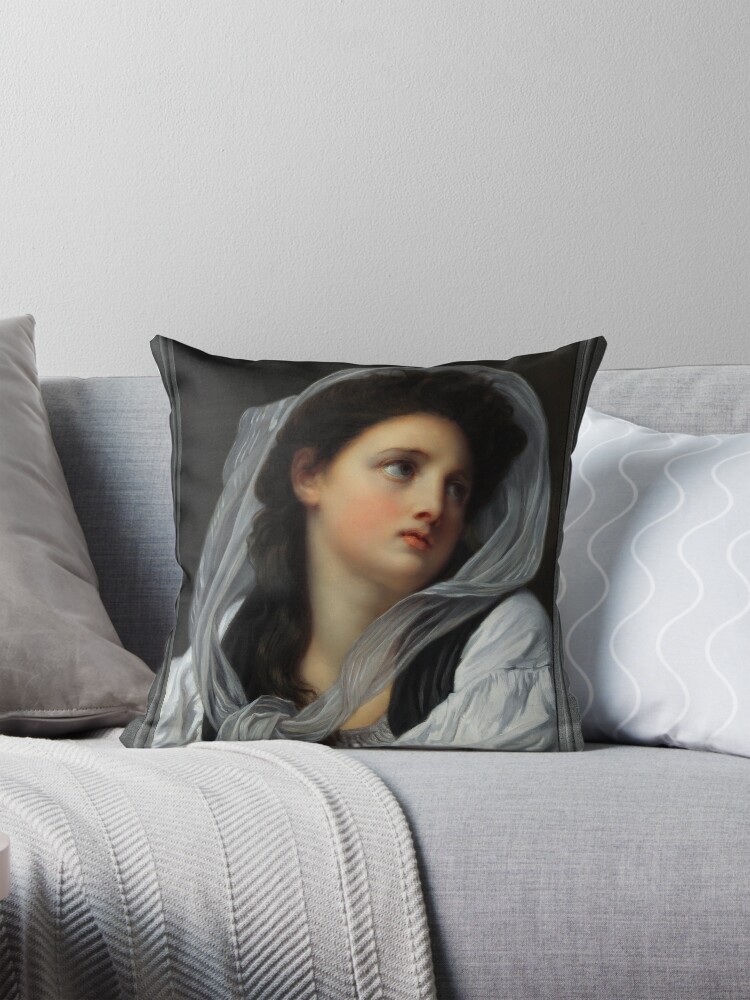
“Emakume Gazte baten burua” Jean-Baptiste Greuzek giza irudiaren konplexutasun emozionala erretratatzeko duen trebetasunaren adibide nabarmena da.. Bere argiaren maneiu maisuaren bidez, geriza, eta ehundura, Greuzek edertasun eta introspekzio delikatuaren une bat jasotzen du, ikuslea subjektuaren kanpoko ezaugarriak ez ezik bere barne-mundua ere kontenplatzera gonbidatuz. Artelanak artistak olio-pinturaren bitartez egoera psikologiko eta emozional konplexuak sorrarazteko duen gaitasunaren froga da., denbora gainditzen duen eta gaur egun ere hunkigarria izaten jarraitzen duen erretratua eskainiz.
Arte digitalaren sorkuntza hau, Xzendor7 webgunean aurki daitezkeen artelan guztiak bezala sarean erosteko eskuragarri dago hainbat material formatutan, mihise inprimatuak barne., estanpatu akrilikoak, metal estanpatuak, egur estanpatuak, marko estanpatuak, kartelak, eta gisa ijetzitako mihise inprimatuak hainbat tamainatan 12 zentimetroetara 72 hazbeteko artelanaren eta artea erosteko aukeratzen duzun eskaeraren arabera inprimatzeko dendaren tamainaren arabera.
Artelana gizonezkoen eta emakumezkoen arropa sorta zabal batean ere eskuragarri dago, katiluak, totes, zapiak, koadernoak eta aldizkariak eta etxeko dekorazio produktu ugari.
Artistari buruz
Beheko informazioatik eratorria da NGA.gov
Jean Tournusen jaio zen, Frantzian 1725 adin txikitatik bere talentua aitortu zuen maisu teilatzaile baten seigarren semea baita; Lyonera bidaliz, Frantzia Charles Grandon margolari frantsesarekin ikasteko (1691 – 1762).
Urte gutxi gorabehera 30 Lyon utzi zuen, eta Parisera bidaiatu zuen, Frantziak Académie royale de peinture et de sculpture edo Pintura eta Eskultura Errege Akademian ikasteko; garai hartan Frantziako arte-erakunde nagusia zen Antzinako Erregimenaren azken zatian (Erregimen Zaharra ~ 1500 to 1789), urtean deuseztatu zen arte 1793 Frantziako Iraultzan.
Nahiz eta talentu handikoa eta arrakasta handia izan 1760 eta 1770eko hamarkadetan zehar, Pompadour markesa bezalakoen patroiak izatea (1721 – 1764), Katalina II.a Errusiako enperatriz (r. 1762 – 1796), eta La Live de Jully taldeko Ange Laurent (1725 – 1779); bere izaera errebeldea eta Akademiako eta Saloneko funtzionarioekin izandako gatazkak bere zorigaitza izango ziren; batez ere, Anne Marie Babutyrekin ezkondu ondoren 1759; berarentzat hondamendia izango litzatekeena, jakina baitzen bere ikasleekin eta eserlekuekin hainbat kontu izan zituela, horrek diru-sarreren galera eta umiliazio publikoa eragin zion.
Ezkontza amaitu zenean 34 urte geroago bere emazteak likidazio handia jaso zuen, horrek egoera ekonomiko larrian utzi zuen eta hil zenerako 1805 urterekin 80 ia apurtuta zegoen.