

Female Portrait Of A Young Woman
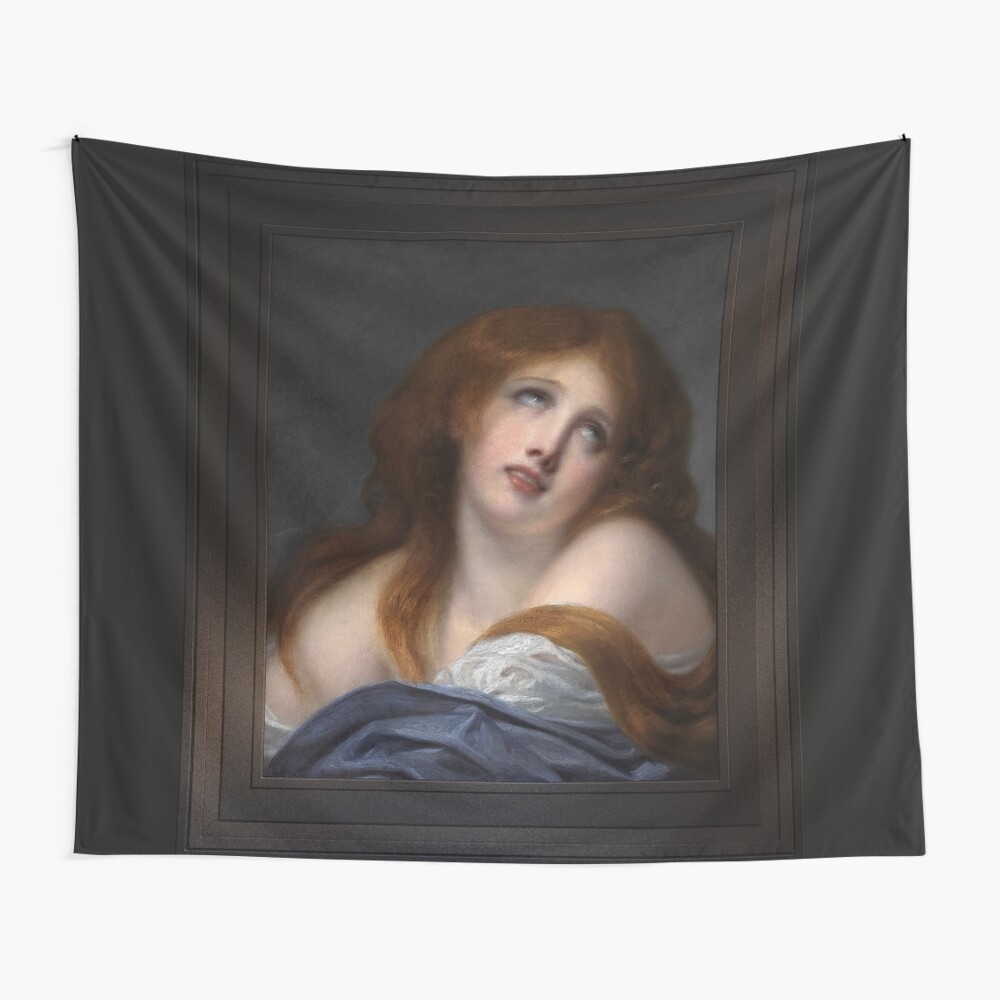
Dette utsøkte portrettet, tittelen Female Portrait Of A Young Woman, was painted by Jean-Baptiste Greuze, a renowned French painter active during the 18th century. Født i 1725 og går bort i 1805, Greuze was known for his tender and emotive portrayals of the human condition. His work often captured moments of profound emotional depth, og Female Portrait Of A Young Woman is a stunning example of this. The subject of the portrait, a young woman, appears with her head slightly tilted, gazing upward with a melancholic expression that seems to embody a complex emotional state.
Innholdsfortegnelse
Stil og teknikk
Greuze’s style is a blend of Rococo elegance and the emerging Neoclassical trends of his time. The delicate brushwork in this painting, along with the subtle use of light and shadow, highlights his mastery of chiaroscuro, a technique that plays with contrasts between light and dark to create a sense of depth and volume. Den myke, almost ethereal rendering of the woman’s skin and the luxurious folds of fabric surrounding her shoulders are characteristic of Greuze’s refined approach to portraiture. His choice of a muted, dark background further enhances the luminous quality of the figure, focusing all attention on the delicate features and graceful posture of the woman.
The artist’s use of light serves not only to model the figure, but also to emphasize the emotional intensity of the subject. The way the light gently caresses the skin of the subject, especially her face and shoulder, adds a layer of tenderness and vulnerability to the portrait. This technique is often seen in Greuze’s work, where light symbolizes emotional clarity, uskyld, or purity.
The Subject and Mood
The young woman depicted in the painting appears to be lost in thought, her expression caught in a moment of contemplation or introspection. Øynene hennes, slightly upturned, are soft and gazing into the distance, which could suggest a longing, a moment of pensive reflection, or even a quiet sorrow. The soft curves of her face, illuminated by the light, evoke a sense of fragility and grace, enhancing the feeling of emotional vulnerability. The woman’s slightly parted lips further add to her contemplative expression, as if she is on the verge of speaking but chooses instead to remain silent.
The mood of the painting can be interpreted as both serene and wistful. There is a subtle melancholy to the woman’s gaze, a suggestion of something unspoken. The portrait’s emotional depth is characteristic of Greuze’s work, which often explored themes of virtue, emotional turmoil, and human connection. Unlike more formal portraits of the time that focused on the outward grandeur and nobility of the subject, this portrait delves into the interior world of the figure, inviting the viewer to imagine the thoughts and emotions that lie behind the soft gaze.
Gjenstander og materialer
The primary focus of the painting is, selvfølgelig, the young woman herself, but the objects surrounding her also play a significant role in conveying the mood and context of the portrait. The fabric draped around her shoulders, possibly satin or silk, suggests a sense of aristocratic elegance. The fabric’s folds are meticulously rendered, each curve and crease captured with great precision, adding texture and depth to the image. The soft interplay of light on the fabric contrasts with the smoothness of her skin, further enhancing the contrast between her delicate figure and the luxurious materials she is draped in.
While the background is dark and unadorned, serving to accentuate the figure, the overall effect of the composition feels balanced. The simplicity of the background and the focus on the woman’s features suggest that she is the subject of utmost importance, both in terms of emotional significance and personal identity.
Fargepalett
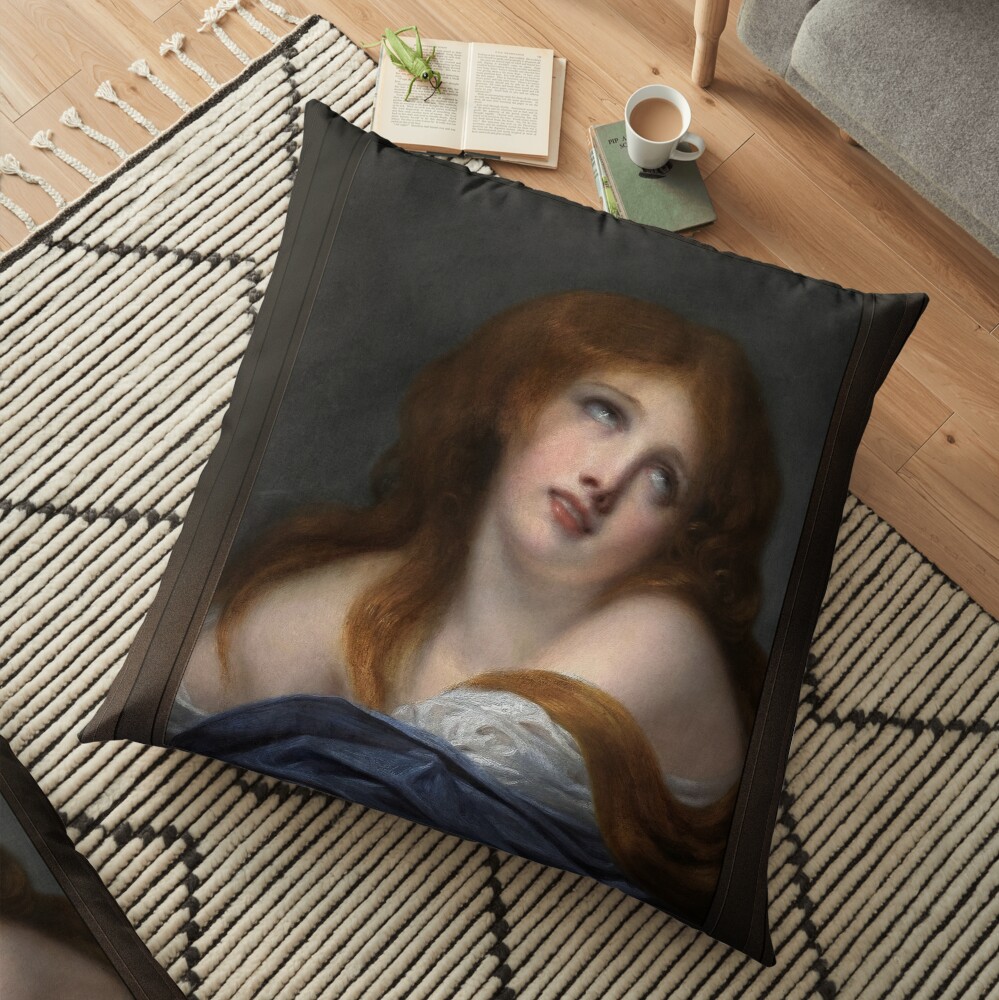
The color palette employed by Greuze is restrained but harmonious, med myk, muted tones that emphasize the delicate nature of the portrait. The colors of the fabric, a deep blue or grey, provide a subtle contrast to the pale complexion of the subject. The combination of blue and white gives the portrait an air of calm and tranquility, while the faint touches of warmth in the woman’s hair and skin tone create a sense of life and vitality. The careful application of these colors allows the subject to appear as if she is gently illuminated by a soft, naturlig lys, giving the painting an almost lifelike presence.
Konklusjon
Jean-Baptiste Greuze’s Female Portrait is a testament to his ability to capture the emotional subtleties of his subjects, conveying not just their physical likeness but also the deeper currents of their inner worlds. The delicate rendering of the subject, the serene but melancholic expression, and the soft, evocative use of light and shadow all work together to create a timeless piece of art that transcends the moment of its creation. The mood of the painting, suffused with a quiet sadness and introspection, invites the viewer to pause and reflect on the emotional complexities of the human experience. Greuze’s ability to infuse his portraits with such emotional depth makes this work a stunning example of 18th-century French portraiture.
Dette er en remastret digital kunst av gamle mestere-reproduksjon av et offentlig domenebilde som er tilgjengelig som et lerretstrykk online.
Denne digitale kunstkreasjonen, som med alle kunstverkene som finnes på Xzendor7-nettstedet, er det tilgjengelig for kjøp online i en rekke materialformater, inkludert lerretstrykk, akryltrykk, metalltrykk, treutskrifter, innrammede trykk, plakater, og som rullede lerret utskrifter i en rekke størrelser fra 12 tommer til 72 tommer avhengig av størrelsen på det faktiske kunstverket og print on demand-butikken du velger å kjøpe kunsten fra.
Kunstverket er også tilgjengelig på et bredt utvalg av herre- og dameklær, krus, totes, skjerf, notatbøker og journaler og mange hjemmeinnredningsprodukter.
Om kunstneren
Informasjonen nedenfor er hentet fra NGA.gov
Jean ble født i Tournus, Frankrike i 1725 som den sjette sønnen til en flisleggermester som anerkjente talentet hans i en veldig tidlig alder; sende ham til Lyon, Frankrike for å studere med den franske portrettmaleren Charles Grandon (1691 – 1762).
I en alder av ca 30 han forlot Lyon, og reiste til Paris, Frankrike for å studere ved Académie royale de peinture et de sculpture eller Royal Academy of Painture and Sculpture; som på den tiden var den fremste kunstinstitusjonen i Frankrike under siste del av Ancien Régime (Gamle Regiem ~1500 til 1789), inntil den ble avskaffet 1793 under den franske revolusjonen.
Selv om han er svært talentfull og veldig vellykket i løpet av 1760- og 1770-årene, å ha beskyttere av slike som Marquise de Pompadour (1721 – 1764), Keiserinne Katarina II av Russland (r. 1762 – 1796), og Ange Laurent fra La Live de Jully (1725 – 1779); hans opprørske natur og konflikter med akademi- og salongtjenestemenn skulle vise seg å være hans ulykke; spesielt etter ekteskapet med Anne Marie Babuty i 1759; som skulle vise seg å være en katastrofe for ham, ettersom hun var kjent for å ha hatt forskjellige affærer med hans elever og oppsittere, som forårsaket ham tap av inntekt og offentlig ydmykelse.
Når ekteskapet tok slutt 34 år senere fikk hans kone et betydelig oppgjør, som førte til at han var i en alvorlig økonomisk situasjon og da han døde 1805 i en alder av 80 han var nesten blakk.