

Portrait Bust Of A Young Girl
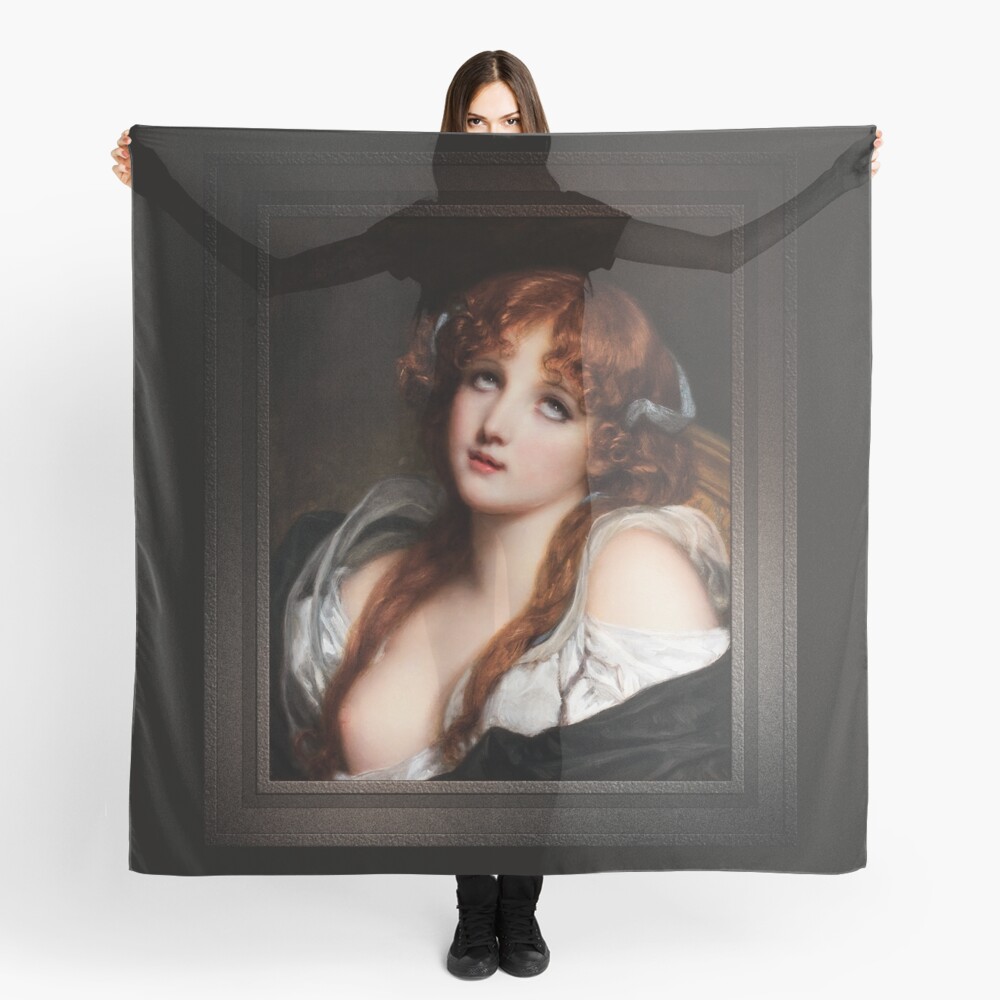
Maleriet “Portrait Bust Of A Young Girl” opprettet i 1805 av Jean-Baptiste Greuze (1725 – 1805) captures a moment of delicate yet captivating beauty. Greuze, renowned for his ability to portray both emotional depth and technical precision, paints this young girl in a manner that evokes both innocence and a quiet maturity, fitting seamlessly within the late 18th-century Rococo style. Portrettet, though a bust, is rich in detail and expressive in its portrayal of youthful innocence and the unspoken complexities behind a tender gaze.
Innholdsfortegnelse
Emne og komposisjon
In this work, Greuze focuses entirely on the bust of a young girl, her upper body and head filling the frame. The girl is presented in a soft, almost serene posture, her face turned slightly to the left, as if caught in a moment of deep thought or reverie. She gazes upward, her eyes wide yet softened, creating an expression that communicates both youth and vulnerability. Her face is delicately illuminated by soft lighting, which enhances the gentle contours of her cheeks and the curve of her neck, emphasizing her natural beauty.
The subject’s age is hard to determine precisely, though she appears to be in her early teens, a common choice for Greuze in his depictions of young women. This age group, teetering between childhood and adulthood, allows the artist to imbue the portrait with a sense of both innocence and anticipation. The girl’s facial expression remains neutral, though her slightly parted lips and the subtle tilt of her head suggest an underlying introspection or contemplation, as if she is caught between the innocence of childhood and the emerging complexities of adulthood.
The simplicity of her attire adds to the overall elegance of the portrait. The girl is dressed in a loose, flowing white gown, which contrasts subtly against the dark background. The fabric of her dress is rendered with remarkable care, its soft folds accentuating her slender frame and the natural grace with which she holds herself. The artist’s attention to detail in rendering the textures of the fabric against her skin emphasizes the painterly skill that Greuze was known for, as well as his deep understanding of light and shadow.
Background and Mood
The background of the painting is dark and neutral, allowing the viewer’s attention to remain focused on the figure of the girl. Greuze uses a subtle gradient of dark tones to give depth to the composition while ensuring that no element competes with the central subject. The lack of any elaborate or distracting background elements reinforces the mood of quiet introspection. There are no overt distractions or settings in the painting, which allows the subject’s emotional resonance to remain at the forefront.
The mood conveyed by this portrait is one of serenity mixed with a hint of mystery. The young girl’s calm yet slightly melancholic expression, coupled with the soft lighting and simple background, evokes a feeling of nostalgia and tenderness. There is a timeless quality to the work, as though the girl exists in a space removed from the pressures of time and place, captured in a fleeting moment of quiet reflection. The subdued tones and absence of bold contrasts create a soft atmosphere, with no sense of urgency, only the peaceful stillness of a moment frozen in time.
The emotional depth of the portrait can be attributed to Greuze’s mastery in rendering subtle psychological nuances. Unlike many portraits from the period that might showcase overt displays of wealth or status, this painting is deeply personal, focusing instead on the quiet expression of the sitter. The girl’s eyes, though wide, do not appear startled; ganske, they seem to observe the world around her with a sense of quiet thoughtfulness, as if the artist has captured a glimpse into her inner world. This adds a layer of complexity to the painting, inviting viewers to consider what the girl might be thinking or feeling at this moment.
Teknikk og materialer
Greuze’s technical prowess is evident in every brushstroke of the portrait. His use of oil paint allows for a depth of color and texture that contributes to the lifelike quality of the girl’s skin and the fluidity of her gown. The artist’s careful manipulation of light and shadow, particularly in the depiction of the girl’s soft features, contributes to the depth and three-dimensionality of the portrait. Greuze skillfully blends warm tones in the face and skin with cooler tones in the background, further emphasizing the subject’s warmth and presence within the composition.
One of the most striking features of the painting is the texture of the girl’s hair. Rendered with delicate curls and waves, her hair adds an element of softness and movement to the otherwise still and composed portrait. Greuze’s attention to the fine details of her hair contrasts with the simplicity of the gown, allowing the viewer’s eye to follow the gentle contours of the young girl’s form and to appreciate the artist’s ability to capture the subtleties of the human figure. The shadows are carefully placed, highlighting the natural flow of her hair and the soft curve of her neck, which further adds to the overall realism and fluidity of the composition.
Kunstnerisk stil og innflytelse
As a work from the late 18th century, “Portrait Bust Of A Young Girl” fits squarely within the Rococo tradition, characterized by an emphasis on elegance, foredling, and emotional expressiveness. derimot, Greuze’s work also bears the hallmarks of the transition towards Neoclassicism, particularly in his use of simplicity and focus on realism. Unlike the more ornate Rococo portraits of the time, Greuze’s portrayal is less concerned with grandiose embellishments and more focused on capturing the quiet inner life of his subject.
Rokokkostilen, known for its light-hearted and playful themes, is evident in the soft, pastel tones and the focus on youthful beauty. derimot, Greuze’s particular brand of Rococo incorporates more serious undertones, blending the frivolity of the period with a sense of emotional depth and psychological insight. This balance between lightness and gravitas is what sets Greuze apart from other artists of his time and gives his portraits their timeless appeal.
Konklusjon
“Portrait Bust Of A Young Girl” by Jean-Baptiste Greuze is a masterful representation of a young girl caught in a moment of quiet contemplation. Through his skillful use of light, tekstur, and subtle emotional expression, Greuze creates a portrait that transcends its immediate context and offers viewers a glimpse into the complexity of youthful innocence. The mood of serenity and introspection, coupled with the technical mastery on display, makes this painting a timeless work of art that continues to resonate with viewers today.
Dette er en remastret digital kunst av gamle mestere-reproduksjon av et offentlig domenebilde som er tilgjengelig som et lerretstrykk online.
Denne digitale kunstkreasjonen, som med alle kunstverkene som finnes på Xzendor7-nettstedet, er det tilgjengelig for kjøp online i en rekke materialformater, inkludert lerretstrykk, akryltrykk, metalltrykk, treutskrifter, innrammede trykk, plakater, og som rullede lerret utskrifter i en rekke størrelser fra 12 tommer til 72 tommer avhengig av størrelsen på det faktiske kunstverket og print on demand-butikken du velger å kjøpe kunsten fra.
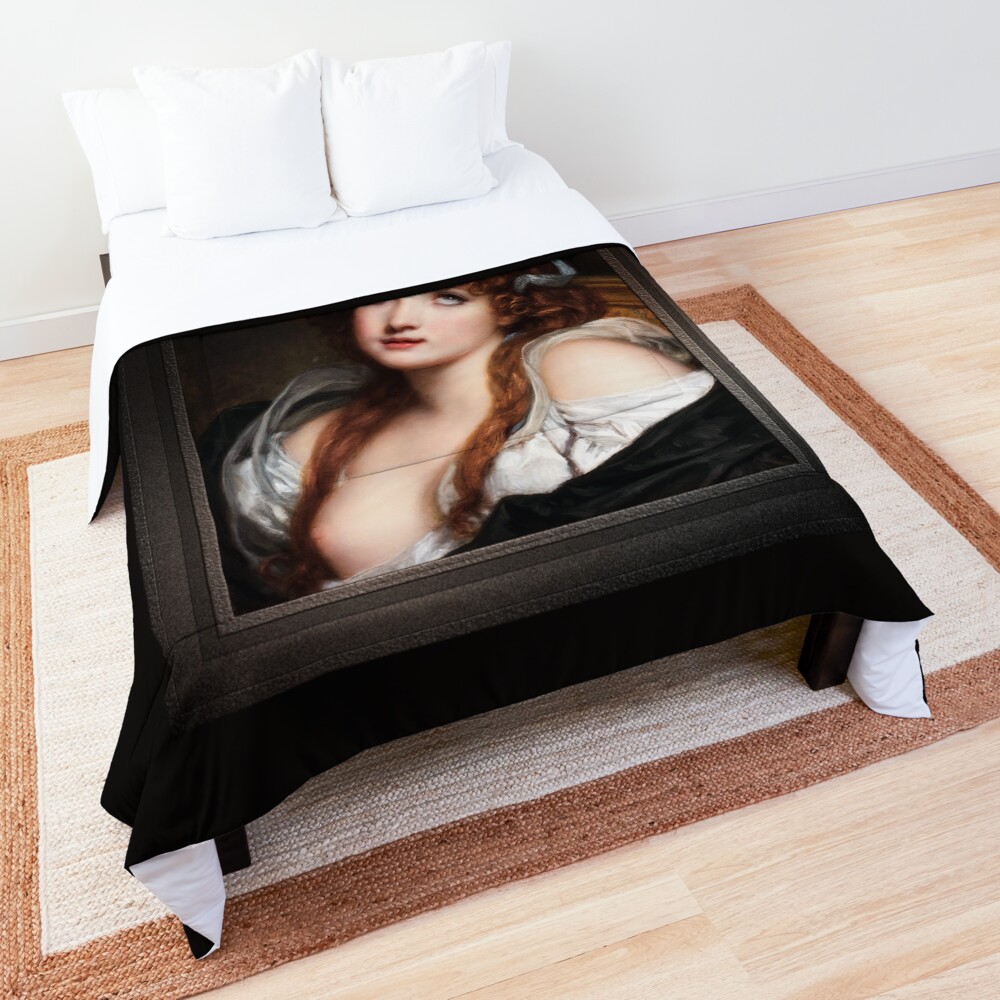
Kunstverket er også tilgjengelig på et bredt utvalg av herre- og dameklær, krus, totes, skjerf, notatbøker og journaler og mange hjemmeinnredningsprodukter.
Om kunstneren
Informasjonen nedenfor er hentet fra NGA.gov
Jean ble født i Tournus, Frankrike i 1725 som den sjette sønnen til en flisleggermester som anerkjente talentet hans i en veldig tidlig alder; sende ham til Lyon, Frankrike for å studere med den franske portrettmaleren Charles Grandon (1691 – 1762).
I en alder av ca 30 han forlot Lyon, og reiste til Paris, Frankrike for å studere ved Académie royale de peinture et de sculpture eller Royal Academy of Painture and Sculpture; som på den tiden var den fremste kunstinstitusjonen i Frankrike under siste del av Ancien Régime (Gamle Regiem ~1500 til 1789), inntil den ble avskaffet 1793 under den franske revolusjonen.
Fotoretusjering av portrettbyste av en ung jente av Jean-Baptiste Greuze
Selv om han er svært talentfull og veldig vellykket i løpet av 1760- og 1770-årene, å ha beskyttere av slike som Marquise de Pompadour (1721 – 1764), Keiserinne Katarina II av Russland (r. 1762 – 1796), og Ange Laurent fra La Live de Jully (1725 – 1779); hans opprørske natur og konflikter med akademi- og salongtjenestemenn skulle vise seg å være hans ulykke; spesielt etter ekteskapet med Anne Marie Babuty i 1759; som skulle vise seg å være en katastrofe for ham, ettersom hun var kjent for å ha hatt forskjellige affærer med hans elever og oppsittere, som forårsaket ham tap av inntekt og offentlig ydmykelse.
Når ekteskapet tok slutt 34 år senere fikk hans kone et betydelig oppgjør, som førte til at han var i en alvorlig økonomisk situasjon og da han døde 1805 i en alder av 80 han var nesten blakk.